
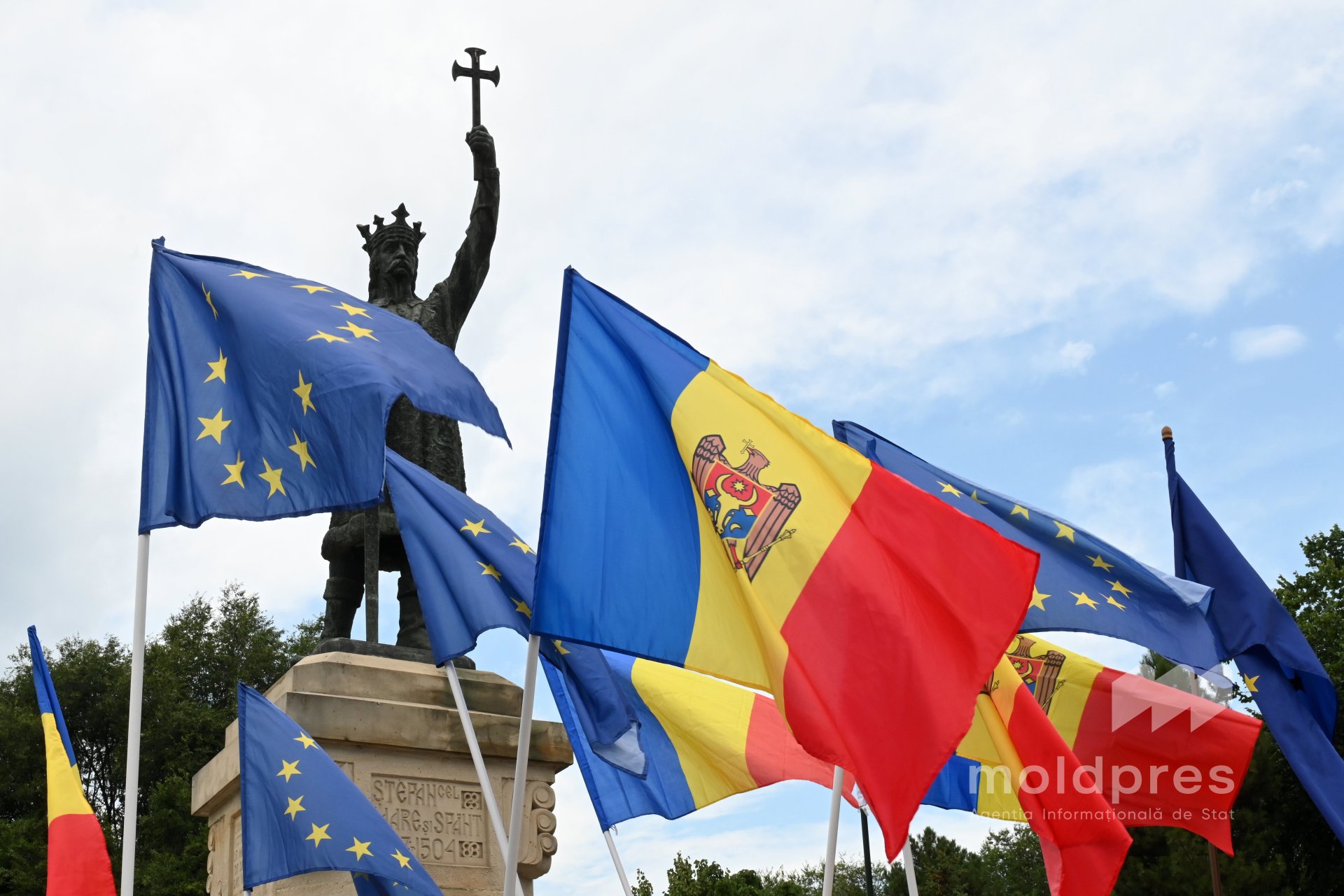
Historic moment in Brussels: Moldova opens technical negotiations for last three EU accession clusters
Moldova is marking a new fundamental stage in its European path. On March 17, in Brussels, the official launch will take place for the technical negotiations on the last three groups of accession chapters (clusters). The special envoy for European affairs and strategic partnerships to President Maia Sandu, Nicu Popescu, has made statements to this effect. He highlighted the continuity of the country’s integration efforts.

The event in Brussels will be marked by a joint statement delivered by Deputy Prime Minister for European Integration Cristina Gherasimov and European Commissioner for Enlargement Martha Kos, who will officially open these complex and important negotiation files.

A balanced approach: technical steps vs. political expectations

During the “At 360 Degrees” programme on Radio Moldova, Nicu Popescu called for a mature and balanced analysis of the process. Although the opening of these chapters represents a diplomatic and administrative success, the former foreign minister stressed that integration was a long-distance marathon, made up of thousands of specific actions.

“These technical negotiations matter, they are an important step and a very good development. At the same time, the process must be viewed in a balanced way, without being dramatized or presented in an excessively triumphalist manner. Many steps have already been taken in Moldova – necessary measures have been adopted, the EU acquis has been adjusted and reforms have been implemented, and this pace will have to be maintained in the period ahead,” underlined Nicu Popescu.

From screening to complex monitoring

Following Tuesday’s launch, the European Commission will move to a stage of rigorous and complex monitoring. European experts will assess the progress made by the Moldovan authorities for each chapter, checking the conformity of national legislation with European standards.

This development comes against the backdrop of steady progress recorded over the past year. It should be recalled that, in December 2025, under the Danish Presidency of the Council of the EU, the EU confirmed officially that Moldova was ready to open all six negotiation clusters, thus recognizing the quality of the reforms undertaken.

Structure of the negotiations: 35 chapters for the state’s transformation

The accession process is not only a political undertaking, but a complete reorganization of the state. The 35 negotiation chapters are structured into six topic-related clusters that cover essential areas: from justice reform and fundamental rights to economic policies, environment, transport and energy.

Alignment with these standards will ensure for Moldova not only membership in the European single market, but also the consolidation of democratic institutions and the rule of law, offering citizens a standard of living and security comparable to the one of the European Union member states.

The architecture of integration: the six accession negotiation clusters

The process of aligning Moldova with European standards is divided into 35 chapters, strategically grouped, so that the transformation of the state is systemic.

1. Fundamentals Cluster (The Fundamentals) This is the most important group of chapters and is the first to be opened and the last to be closed. It represents the “foundation” on which EU membership is built. Negotiations here focus on justice reform, the fight against corruption, fundamental human rights, press freedom and the working of democratic institutions. This cluster also includes standards on public procurement, statistics and financial control. Without solid progress in this cluster, negotiations in other areas may be suspended.

2. Internal Market Cluster This group of chapters prepares the economy of  Moldova to cope with competition in the largest common market in the world. The narrative of this cluster focuses on the free movement of goods, workers, services, and capital. It also includes policies on intellectual property, company law, financial services and consumers’ protection. Once completed, this is the cluster that will allow Moldovan products and specialists to move without barriers within the EU.

3. Competitiveness and Inclusive Growth Cluster Here, the emphasis is on sustainable economic development and social modernization. The chapters in this group cover digital policy and media, taxation, economic and monetary policy, as well as social and employment policies. Education and culture are also included, along with industrial and entrepreneurship policy. The goal is to create a vibrant business environment and a social system that reduces inequalities.

4. Green Agenda and Sustainable Connectivity Cluster This group of chapters transforms the way a country manages its resources and infrastructure. Negotiations focus on transport policy (road, rail, air), energy security and the transition to renewable energy. A central element is the Environment and Climate Change chapter, which imposes strict standards on nature protection and waste management, aligning Moldova with the goals of the European Green Deal.

5. Resources, Agriculture and Cohesion Cluster This cluster has a direct impact on rural areas and farmers. It includes chapters on agriculture and rural development, food safety and veterinary policy, as well as fisheries. A crucial role is played by Regional Policy and the coordination of structural instruments, which represents the mechanism through which Moldova will learn to manage European funds, in order to reduce development gaps between Chisinau and the rest of the country’s regions.

6. External Relations Cluster The last group focuses on the role of Moldova on the international stage as a future EU member. It covers external trade relations (agreements with other states and organizations) and, most importantly, the Common Foreign, Security and Defence Policy. Through this cluster, Moldova harmonizes its diplomatic positions with the ones of the EU, ensuring a unified voice in the face of global challenges.
 Facebook
 Instagram
 X/Twitter
 Telegram
VIDEO // Acting Prime Minister: Opening of negotiations for Cluster 6 marks new stage in accession process and reflects progress made by our country
Republic of Moldova and EU open accession negotiations today for Cluster 6
EU grants Moldova additional 120 million euros to strengthen defense
Republic of Moldova opens accession negotiations with EU for External Relations Cluster
Acting Prime Minister welcomes European Parliament report on Moldova
European Parliament report welcomes Moldova’s progress
Speaker after European Parliament vote on Report on the Republic of Moldova: Moldova moves forward. Step by step, ever closer to European Union
European Parliament calls for opening all negotiation clusters with Moldova: report backed by large majority
VIDEO // European Commissioner calls for opening all negotiation chapters on Moldova’s EU accession
Moldova to present position to European Union on External Relations Cluster
Speaker attends conference of speakers of EU candidate countries
VIDEO // Cristina Gherasimov visits Berlin: European integration and cooperation with Germany on agenda
EU–Moldova Summit // European leaders reaffirm Moldova's future in European Union: “Reforms open the door to accession”
European Council President says European Union to support Moldova every step of way towards EU accession
Moldovan parliament speaker in Budapest says Moldova, Hungary can open new chapter in relations between parliaments of two countries
Environment minister says Moldova to reduce Dniester’s flow, to conserve water reserves
Moldova's National Anticorruption Center, Italy’s Financial Guard to exchange information to combat economic, financial crime
Natural gas prices on European exchange continue to rise; energy minister says international energy crises directly affect Moldova
EU Ambassador: EU remains firmly committed to supporting justice reform in Moldova
President at Forum on justice reform and fighting corruption: Building rule of law most complicated commitment in EU accession program
Government approves ratification of agreement on construction of bridge over Prut River and first highway section in Moldova
 National Bank of Moldova
Agenda of Moldovan parliament's plenary meeting supplemented
Topics examined at meetings of Moldovan parliament's standing commissions on September 15–16, 2026
Investments in energy efficiency of public buildings exceeded €348 million in 2019–2025
Agreement between Moldova and Romania to continue construction of Ungheni–Ungheni bridge and modernize road infrastructure
Republic of Moldova to receive €4.3 million grant to strengthen capabilities of National Army

Government approves ratification of agreement on construction of bridge over Prut River and first highway section in Moldova
Republic of Moldova to receive €4.3 million grant to strengthen capabilities of National Army
Energy communities – new legal form of organization for everyone who produces, consumes, stores energy together
President at Justice Reform and Combating Corruption Forum: Judicial independence requires integrity and accountability
Republic of Moldova among countries in EU enlargement perspective
Moldova to launch e-Consulate system, to modernize delivery of consular services for Diaspora citizens
Special access measures at Chișinău Airport remain in effect by 17 September
VIDEO // Justice reform and fight against corruption - focus of discussions at international forum in Chișinău
Moldovan Railways state enterprise to be reorganized by late 2026
Investments of 326 million lei to modernize heating systems in Chișinău and 17 million euros for those in Bălți
Modernization works for district heating systems of Chisinau, Balti cities to be declared projects of national public utility
Ministry of Economic Development and Digitalization has new state secretary
Government appoints new directors at SFS, CNAM, APP, AIPA
Government announces new appointments to State Tax Service, APP, CNAM, AIPA
European Parliament approves temporary trade liberalization measures for Armenian products
Open Government Action Plan 2026–2028: Parliament Secretariat and civil society discussed future commitments
Receive the latest news directly to your email

Receive the latest news directly to your email