
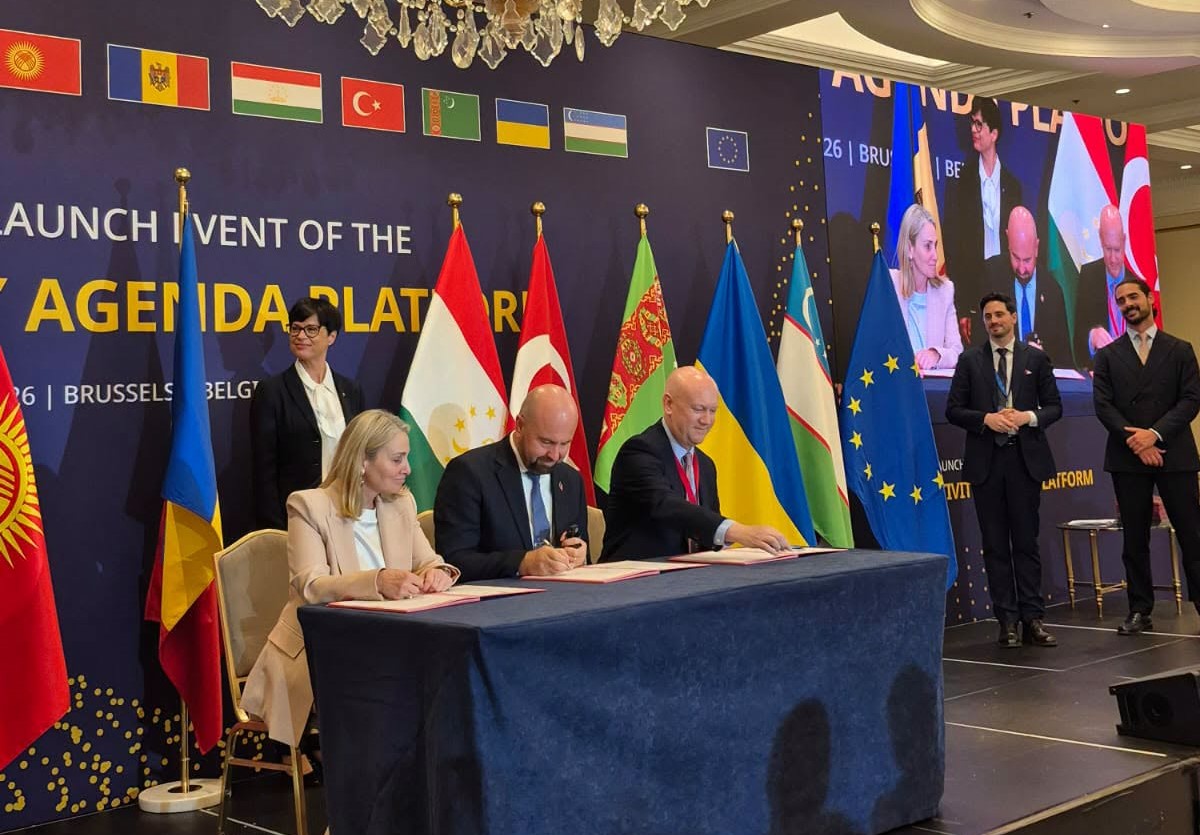
EU Connectivity Agenda Platform launched in Brussels: Moldova strengthens role as regional logistics hub through new infrastructure projects
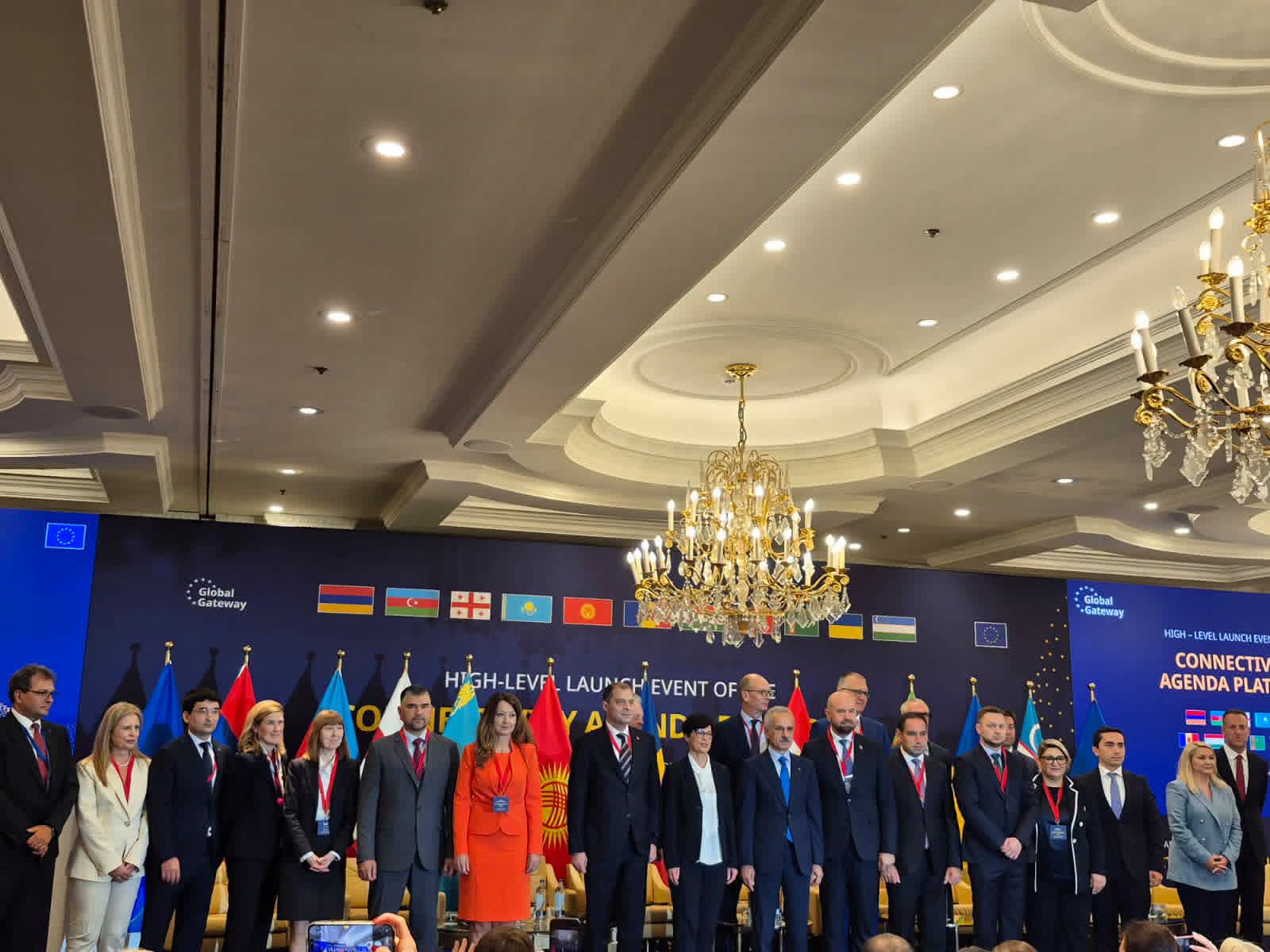
The European Union Connectivity Agenda Platform and the first regional dialogue on Europe–Asia transport corridors were launched in Brussels today. The initiative aims to strengthen connections in transport, trade, energy and digitalization along the Trans-Caspian Corridor, which links Europe to Central Asia via the South Caucasus, while Moldova is consolidating its role as a regional logistics hub in this context through new EU-supported infrastructure projects.

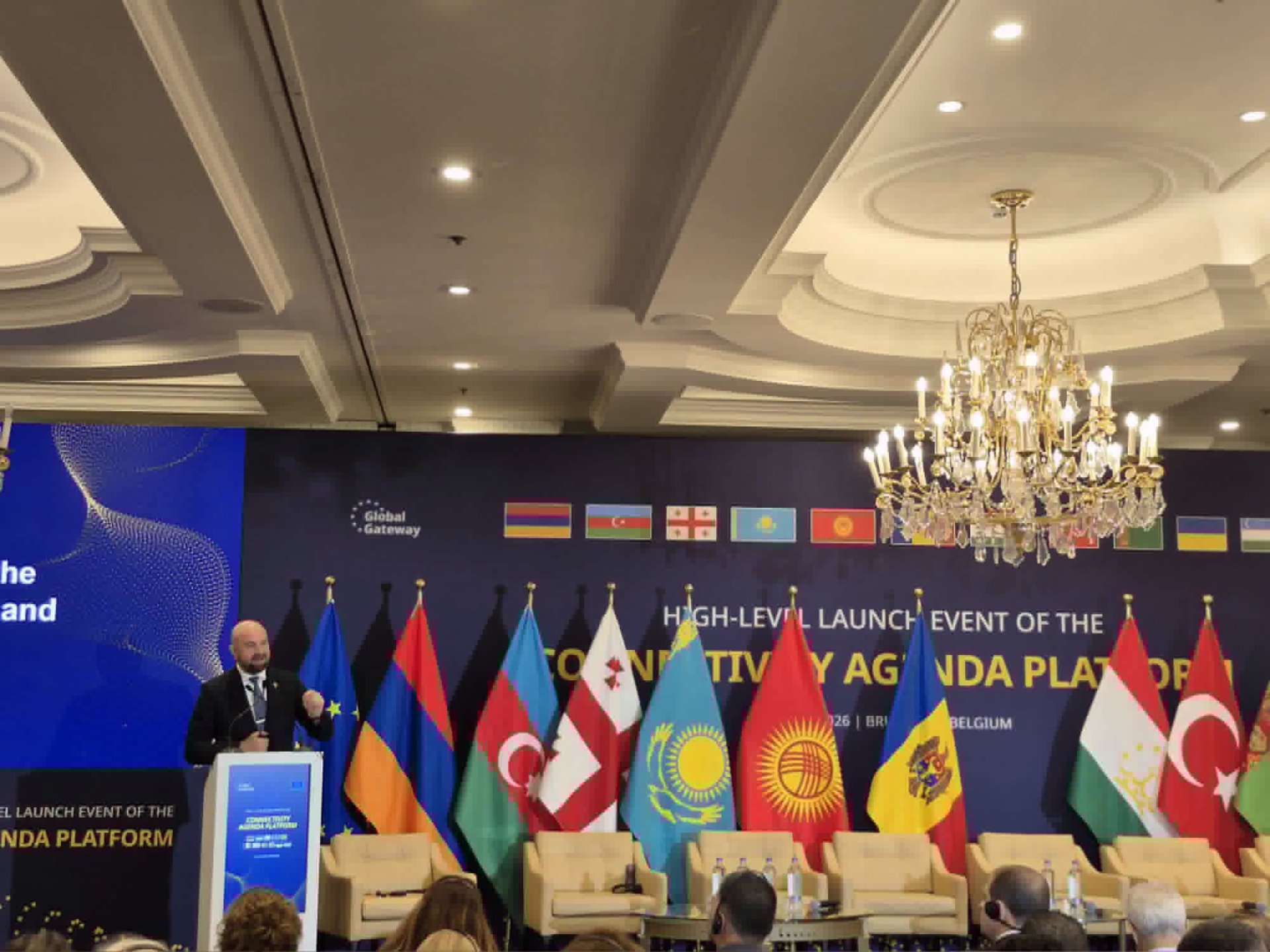
European Commissioner for Neighbourhood and Enlargement Marta Kos has announced the launch of the Platform. Moldova was represented at the event by Deputy Prime Minister, Infrastructure and Regional Development Minister Vladimir Bolea, who took part in discussions on strengthening connectivity and integrating transport networks regionally.

During the panel titled, Future prospects of the Trans-Caspian Transport Corridor in the Black Sea and South Caucasus region, the discussions focused on the 2030 horizon and the conditions needed for these corridors to become faster, more coherent and more integrated.

In the context, Deputy Prime Minister Vladimir Bolea underlined Moldova’s direction of strengthening connectivity with the European Union and the wider Black Sea area by liberalizing transport and developing the main connecting routes across all modes of transport. They include the development of an electrified railway, a motorway and a bypass road, the full use of port infrastructure capacity and the creation of logistics hubs for cargo handling.

The discussions also addressed cooperation between Moldova and Ukraine, in the context of integration into the Trans-European Transport Network (TEN-T), as well as the progress and bottlenecks affecting the working of regional corridors.

Deputy Prime Minister Vladimir Bolea referred to ongoing projects, including the modernization of border crossing points and studies for strategic connections, such as Ungheni–Chisinau–Odesa, with a direct impact on transport times and logistics capacity. At the same time, the official reaffirmed Moldova’s intention to strengthen its role as a regional logistics hub between the European Union, Ukraine and the wider Caucasus and Central Asia region.

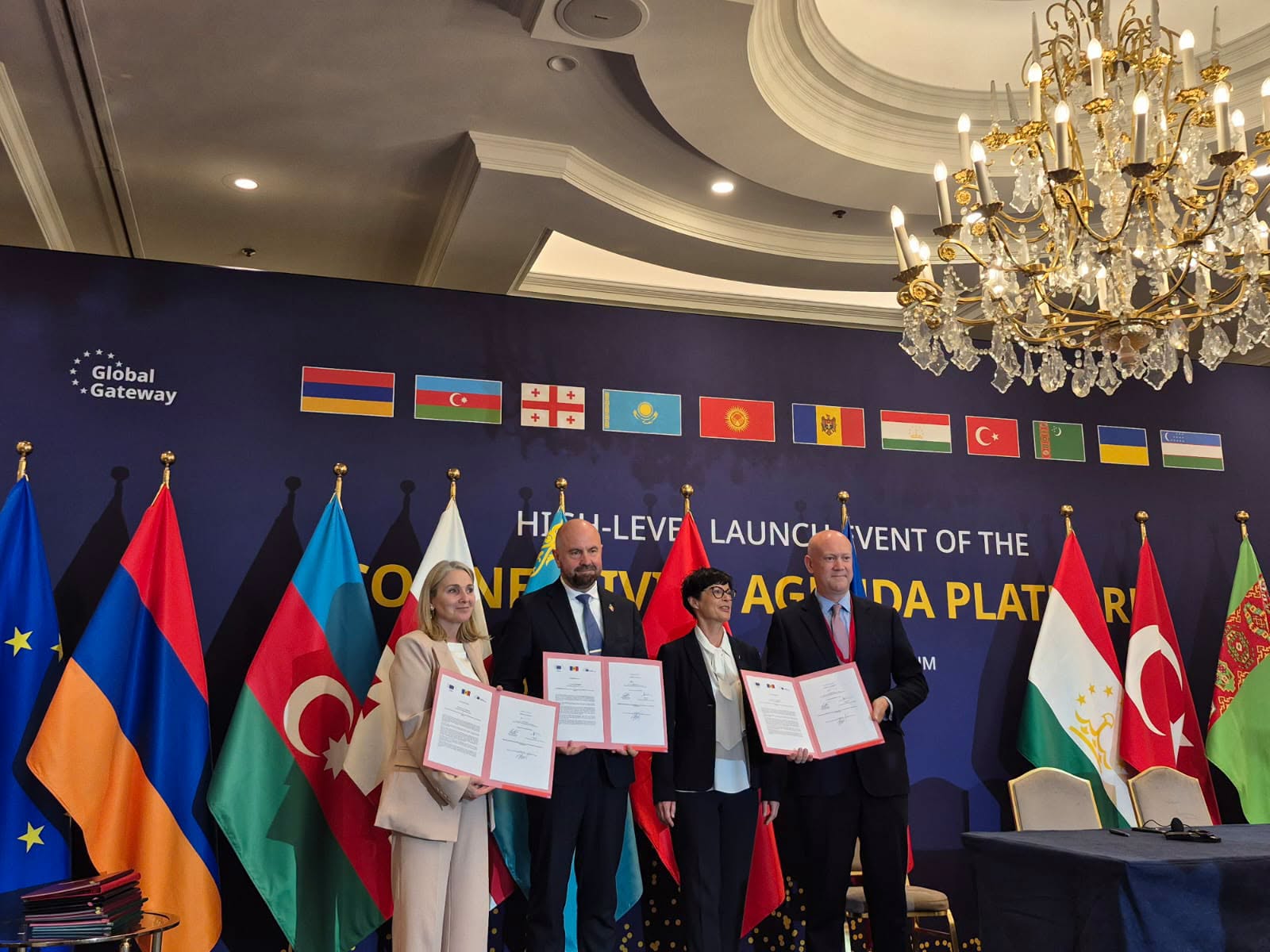
At the end of the meeting, Moldova, the European Commission and the European Bank for Reconstruction and Development signed a Declaration of Intent, through which the European Union expresses its readiness to support the modernization of strategically important road corridors that are part of the Trans-European Transport Network (TEN-T), as well as the reform of the roads’ sector.

The project will specifically support the development of a Road Sector Master Plan, including a Road Financing Strategy, the implementation of a multiannual contract, to ensure long-term funding stability for the National Road Administration, the preparation of an Action Plan on corporate governance and broader support for the implementation of the e-mobility Strategy.

At the same time, Moldova, the European Commission and the European Investment Bank marked the launch of the preparation phase for the feasibility study on the development of an electrified railway with European gauge on the Ungheni–Chisinau route. In this regard, the sides discussed possibility of providing advisory support through the EPIC Facility, an EU instrument created to support infrastructure projects that contribute to strengthening regional connectivity.
 Facebook
 Instagram
 X/Twitter
 Telegram
VIDEO // EBRD and EU to support modernization of Moldova’s irrigation infrastructure
VIDEO // Moldagrotech, Farmer 2026 exhibitions of Moldova to showcase solutions for improving agricultural efficiency
PHOTO GALLERY // Farmer from Briceni modernizes farm and prepares new investments in fruit growing
VIDEO // Moldova could import natural gas from Ukraine
EcoVoucher Programme: More than 3,300 families replaced old appliances with energy-efficient equipment
Railway of Moldova enterprise to increase freight transport tariffs by 15 per cent as of November 1
Moldova must accelerate investments under Growth Plan; EU Ambassador explains conditions for funding
EU seeks solutions to support Moldova in energy crisis, to mobilize other donors
Two internal customs posts from Chisinau to operate on weekends
Eugen Doga Chisinau International Airport serves over 761,000 passengers in last September
PHOTOS // Austria’s experience in protected areas' management, habitats' restoration studied by specialists of Moldova
PM invites European companies to invest in Moldova
Moldovan companies promote fruit at Fruit Attraction 2026 in Madrid
Moldova has nearly 243 MWh of energy storage capacity
Moldovan PM congratulates Romanian counterpart on assuming office as Romania’s prime minister
Moldovan president tells new Romanian government: “Romania can always count on us”
Moldovan Central Electoral Commission accredits 16 international observers for elections of Gagauzia's bashkan
Designated Romanian PM: “Romania must be Moldova’s main support in joining EU”
Yellow fog warning issued in Moldova; visibility to drop below 200 meters
PM has meeting with China's Ambassador to Moldova
Parliament speaker meets Ambassador of China to Moldova
 National Bank of Moldova
Implementation of Growth Plan for Moldova discussed with civil society, business community
PM has meeting with China's Ambassador to Moldova
Parliament speaker meets Ambassador of China to Moldova
Meeting between Deputy Prime Minister for Reintegration and delegation of ambassadors of Weimar format member states to OSCE
PM visits factories in two settlements of Moldova

PM has meeting with China's Ambassador to Moldova
Parliament speaker meets Ambassador of China to Moldova
Prison sentences and fines of up to 125,000 lei for selling academic theses
Made in Moldova exhibition to take place on 27-31 January 2027
Republic of Moldova has four new ambassadors. Appointment decrees published in Official Journal
Moldovan students to participate in 24 national olympiads and competitions in 2027
CFM resumes rail imports of scrap metal after several years of interruption
Four state-owned enterprises to be put up for privatization again after failing to attract investors
Energy compensation could reach 670,000 families this winter
StratCom: False claim about drone factory coordinated and amplified on Telegram, feeding Russian narrative about “militarization of country”
National Army reservists strengthen military skills during training exercise
DOC // Currency operations to be simplified
Two Ukrainian border guards detained after illegally crossing Moldova’s border near Vasilcău
Prime Minister explains why Transnistrian region was not included in administrative-territorial reform
Moldovan MP says Foreign Affairs Ministry sends protest note to Ukraine, after Ukrainian border guards illegally crossed Dniester River
Moldova's National Police to benefit from new cooperation project with Germany; initiative aims to strengthen operational, investigative capacities
Receive the latest news directly to your email

Receive the latest news directly to your email