

MOLDPRES REPORT // China’s cashless economy lesson: how phone becomes efficient anti‑corruption shield, what Moldova can learn from Beijing
A month in China without a single banknote in hand

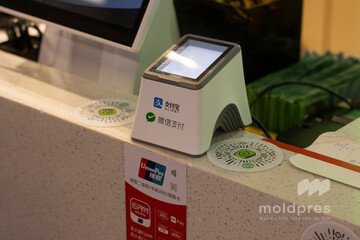
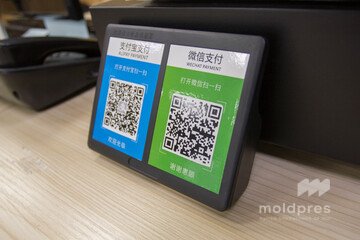
The special envoy of the MOLDPRES State Information Agency is currently on an extended journalistic mission in the People’s Republic of China. After more than a month lived at the fast pace of Asia’s major metropolises, everyday reality has imposed a striking conclusion: on the streets of Beijing, the physical wallet has become a museum piece and banknotes or coins simply no longer circulate. In a fully automated society, where everything, from a simple bunch of onions bought from an elderly street vendor, to metro or museum tickets, is paid by scanning a QR code, the elimination of cash has long ceased to be just a technological convenience, becoming instead a reliable way of ensuring transparency and combating corruption.

The yuan under the microscope: the technology that turns on the “red light”

During a recent event in Beijing, together with journalists from all corners of the world, the MOLDPRES correspondent had the opportunity to ask a direct question to a high-ranking state official. The topic was a sensitive one: the phenomenon of corruption in China – its history, current measures and their real effectiveness. Asked to give a deeply honest answer, the Chinese official outlined a strict national strategy, driven by total digital monitoring:

“China is not spared from this global scourge either, but the issue is addressed at the highest level of the country’s leadership and the ruling party. The punishments are harsh: many years of imprisonment or life sentences for those caught. But beyond punishment, the key is prevention and education. We provide motivating and sufficient salaries to officials, so they do not fall prey to the temptation of dipping into public funds. Moreover, anti-corruption is taught directly in school, and pupils are regularly taken on topic-related trips to prisons, in order to see with their own eyes how the caught thieves live. However, the main pillar remains digitalization: law- enforcement bodies do not wait for denunciations, but constantly and in real time monitor the financial flows and accounts of every official. Any suspicious or unjustified yuan that appears in income or expenses immediately turns on the red light in the system.”

This digital ecosystem, dominated by WeChat Pay and Alipay, ensures absolute traceability of money. Even foreigners no longer need complicated local bank accounts: they can download the apps directly to their smartphones, linking an international card (Visa or Mastercard) to become part of a perfectly fluid society where retail-level tax evasion has been practically reduced to zero.

The echo from Chisinau: the “Cashless Challenge” and the fight against the shadow economy

While China proves the long-term effects of radical digitalization, Moldova is not starting from scratch, but is undergoing full structural reconstruction. The year 2026 represents a turning point: the government has already laid the foundations of de-bureaucratization through the government app EVO – the citizen’s digital wallet that stores identity documents and driver’s licenses.

Moreover, right now, Finance Minister Andrian Gavrilita has decided to set a personal example with a bold experiment called the “Cashless Challenge”, refusing to use cash any longer.

In a statement to MOLDPRES, Minister Gavrilita explained the inner drivers of this initiative, making a direct reference to collective mentality and tax evasion:

“In our folk saying, when a Moldovan runs out of money, he exchanges 100 euros, but times are changing as well. I spent the last 20 lei in cash that I had in my wallet, and now I have decided: I will extend this challenge for my entire term as minister. I started this challenge being sure that it must be possible, but also to find out where we still have work to do. Reducing the use of cash can directly contribute to diminishing the shadow economy and tax evasion. I am convinced that, if we all do this, more and more of us, we will all contribute to reducing evasion, so that, in the end, we can lower the taxes we pay.”

One month after the challenge began, the finance minister has already identified the first Gordian knots of Moldova’s economy: tipping for waiters and couriers, payments in agri-food markets and the high bank fees borne by entrepreneurs.

The official pointed out that technical solutions already exist – such as the MIA Instant Payments system developed by the National Bank – but their use must be regulated and encouraged in line with European standards.

Three Chinese pillars applicable in Moldova

Viewed through the lens of the experience gained in Beijing, the Chinese model offers three clear directions that Chisinau could adapt, in order to speed up the transition towards a fully clean economy:

Transforming the EVO app into a national “super-app”: At present, EVO is an excellent tool for verifying documents. Direct integration of a government instant payment module (based on MIA) would allow citizens to pay taxes, utilities, parking or transportation directly from a single secure interface, reducing bureaucracy to a single click.

Democratizing QR codes in agricultural markets: To eliminate the bottleneck of expensive POS terminals in rural areas, the Finance Ministry could introduce a national QR-code standard for small producers. A simple QR code printed on paper would allow direct transfers from the buyer’s account to the farmer’s card account at zero commission, exactly as happens in markets in China.

Total digitalization of transport: Urban and interurban public transport in Moldova must completely eliminate manual fare collection. Scanning a code upon boarding provides not only full financial transparency, but also real-time, accurate data for optimizing infrastructure.

Transition's challenges: cybersecurity and inclusion of grandparents

A cashless society comes with certain vulnerabilities. Total dependence on mobile phones and the internet demands maximum vigilance from the authorities in combating cyberattacks. Also, unlike the Chinese model, where the state exerts total control over private life, Moldova, on its path toward European integration, must apply strict European privacy standards (GDPR) – the “leu under the microscope” must predominantly target public officials and evasive commercial flows, while at the same time protecting the data of ordinary citizens.

The second barrier is the digital literacy of elderly people. Still, China’s example shows it can be done: according to official statistics, as of June 2025, China counted 161 million internet users over the age of 60, thanks to massive campaigns in which young volunteers trained their parents and grandparents.

In Moldova, through recent reforms of the Labor and Social Protection Ministry focused on inclusion, the creation of extremely simple interfaces and support for the elderly could turn technology into an ally that spares them from exhausting queues at post offices.

The journalistic mission in China confirms a certainty: the future no longer belongs to plastic cards and even less to physical banknotes, but to integrated mobile ecosystems. Moldova has the advantage of top-tier internet infrastructure and remarkable institutional agility. By continuing the reforms undertaken by the Finance Ministry, expanding the functionalities of the EVO app, and adopting Asian pragmatism in monitoring public money, the country has the chance to prove that European modernization means, first and foremost, clean digital efficiency and zero tolerance to corruption.
 Facebook
 Instagram
 X/Twitter
 Telegram
President explains current energy crisis and urges reduced consumption during peak hours
Energocom: Electricity shortage during peak hours; consumers urged to save energy
Prime Minister: This government’s focus is to moderate rise in real estate prices
Finance Minister explains key proposed 2027 tax policy changes on income tax
DOC // Draft fiscal policy for 2027 submitted for public consultation
Government to increase personal tax exemption for employees to 40,000 lei
Prime Minister presents new fiscal policy concept for 2027
Apple harvest in Moldova could grow by 17.5% this year, while EU production expected to decline
LIVE // Prime Minister presents main provisions of fiscal policy for 2027
VIDEO // Digital transformation must be visible in people’s daily lives and in how economy works: Prime Minister visits e-Governance Agency
Fuel crisis: PM announces Romania to support Moldova
VIDEO // Prime Minister announces sweeping tax reform: lower labor taxes, higher levies for banks, tobacco and gambling
Prime Minister urges citizens to use energy rationally: To avoid paying higher costs, we must save
30 MW photovoltaic power plant to be built in Vadul lui Vodă
Restart in Education: MEC proposes reform to take effect in Chișinău, Bălți and Gagauzia starting in 2028
Parallel financial investigations to be conducted under common national mechanism
Ministry of Infrastructure provides clarification on transit of Ukrainian goods
Energocom fully purchased gas needed for upcoming cold season
 National Bank of Moldova
Prime Minister discussed with Czech counterpart
Over 23,000 residents from Transnistrian region officially employed on right bank of Dniester River
More investment in national economy: Government encourages investors through clearer rules and incentives for strategic projects
Moldovan government approves five‑year national development program
Measures to reduce risks caused by natural disasters approved by Government







MPs proposed 188 amendments and delivered 288 speeches in first 2026 session
Local Product exhibition to open on 28 August at Moldexpo: two national records and over 300 participating companies
Moldova offers Ukraine 50% railway transit discount to attract millions of euros to CFM
Prime Minister discussed with Czech counterpart
Additional 6 million lei to be provided to fund shelters for Ukrainian refugees
Ceiling for foreign exchange operations without NBM authorization to be increased to 100,000 euros
Defense Minister: Aircraft that caused explosion in Crocmaz is Russian propulsion drone
Over 23,000 residents from Transnistrian region officially employed on right bank of Dniester River
VIDEO // Moldova ready to facilitate transit of Ukrainian grain
Deputy Prime Minister about recalling Moldova’s ambassador to Moscow for consultations: It is diplomatic response, used when state’s interests affected
More investment in national economy: Government encourages investors through clearer rules and incentives for strategic projects
Approved by Government. Moldova to step up exchange of police data with European states
Key objectives in European integration process set by end of August
Prime Minister orders changes to tax procedures after entrepreneur misses tax relief due to late filing
Moldovan government approves five‑year national development program
Commission to nominate 2026 national award laureates approved
Receive the latest news directly to your email

Receive the latest news directly to your email