
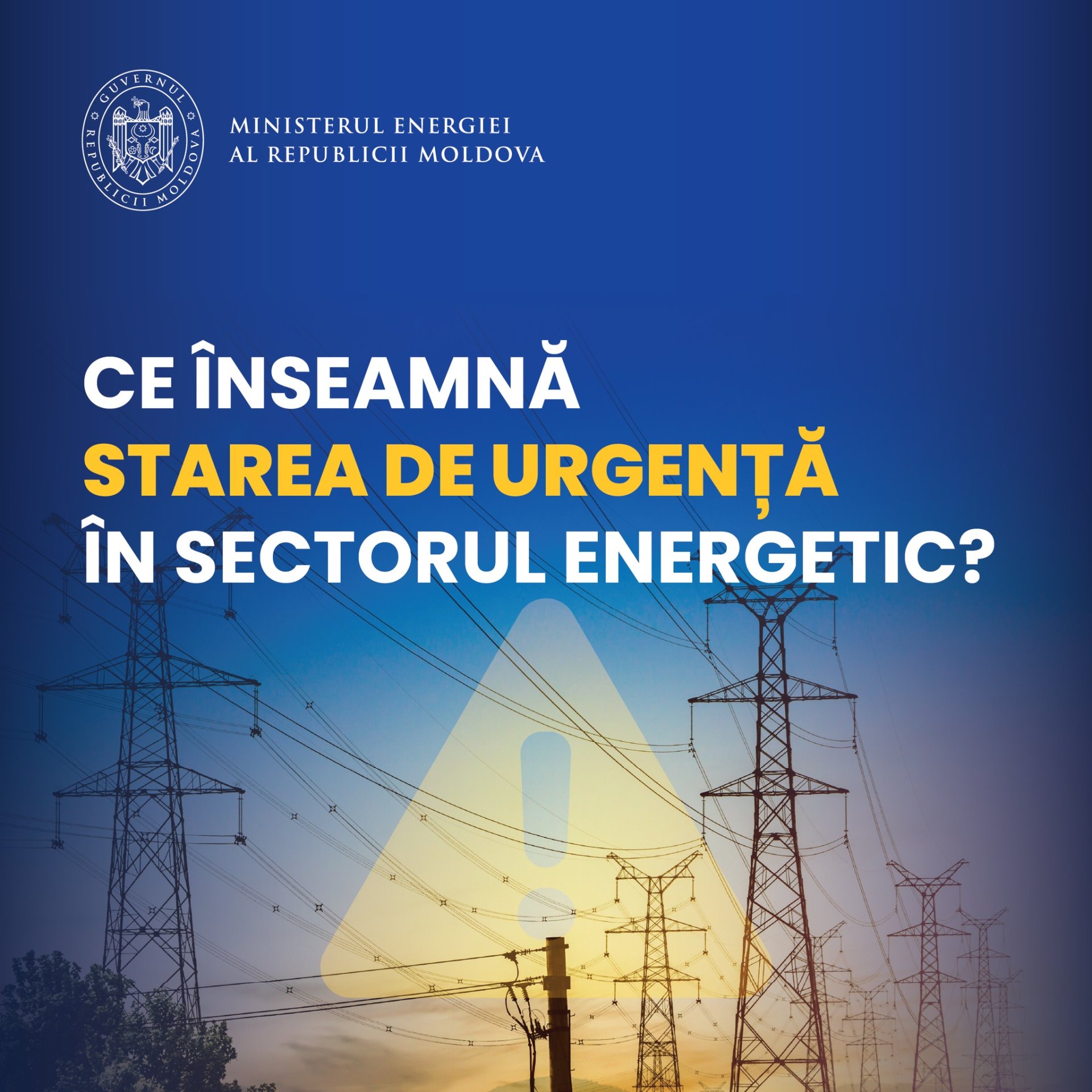
What state of emergency in energy sector means: explanations of Moldova's Energy Ministry
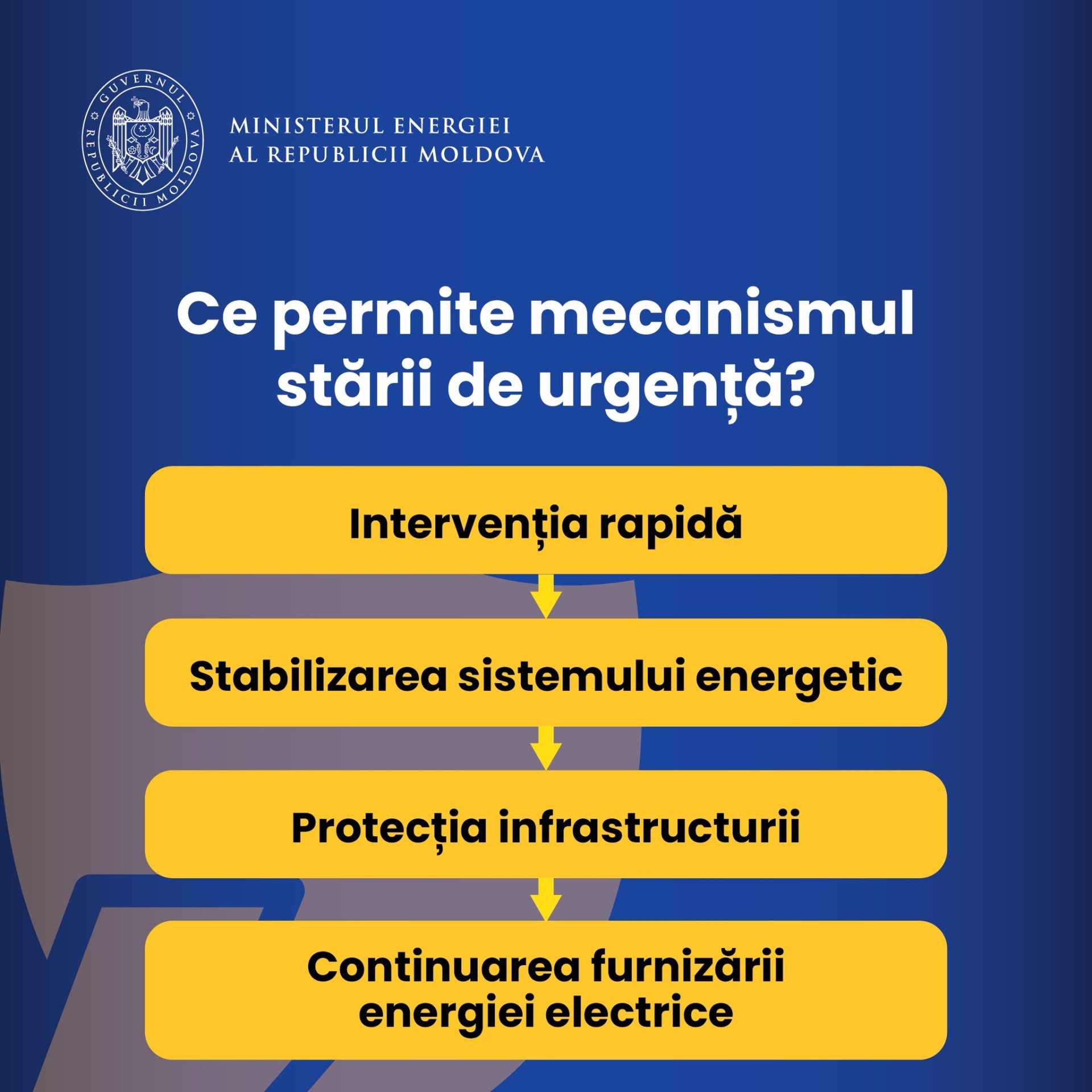
The state of emergency mechanism allows for rapid interventions, stabilization of the energy system, protection of infrastructure and continuation of electricity supply, in order to protect citizens and the economy. The Energy Ministry today made statements to this effect; the ministry explained what the state of emergency means and issued a string of recommendations for citizens.

According to the cited source, the purpose of the state of emergency is to protect critical infrastructure, ensure continuity of energy supply and prevent uncontrolled disconnections.

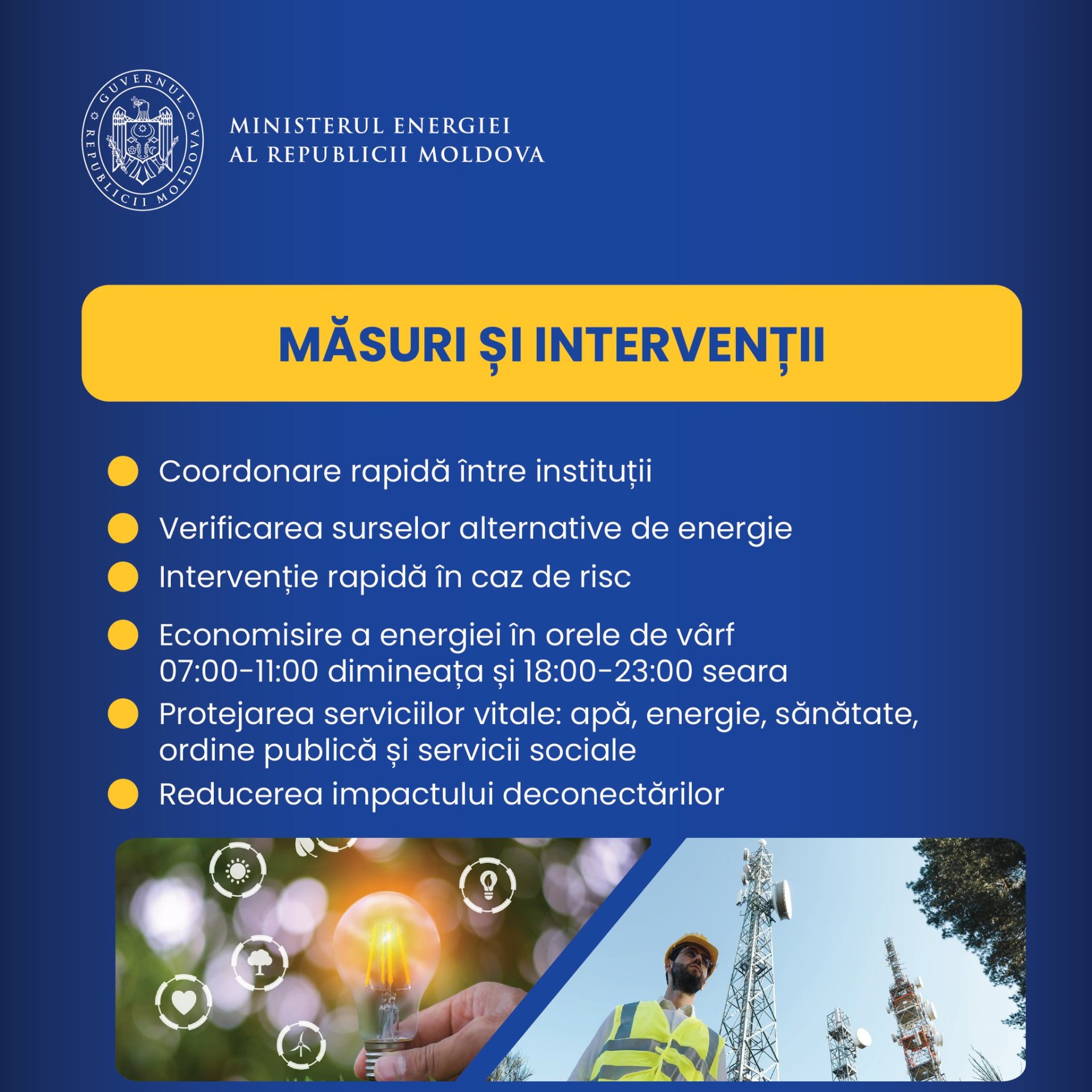
The Energy Ministry emphasized that declaring a state of emergency allows for quick coordination between institutions, verification of alternative energy sources, immediate interventions in case of risk, reduction of the impact of outages and protection of vital services, such as water, energy, healthcare, public order and social services.

The authorities assured that they would intervene rapidly in case of risk and would adjust energy consumption, in order to protect vital social services, as well as to maintain public order.

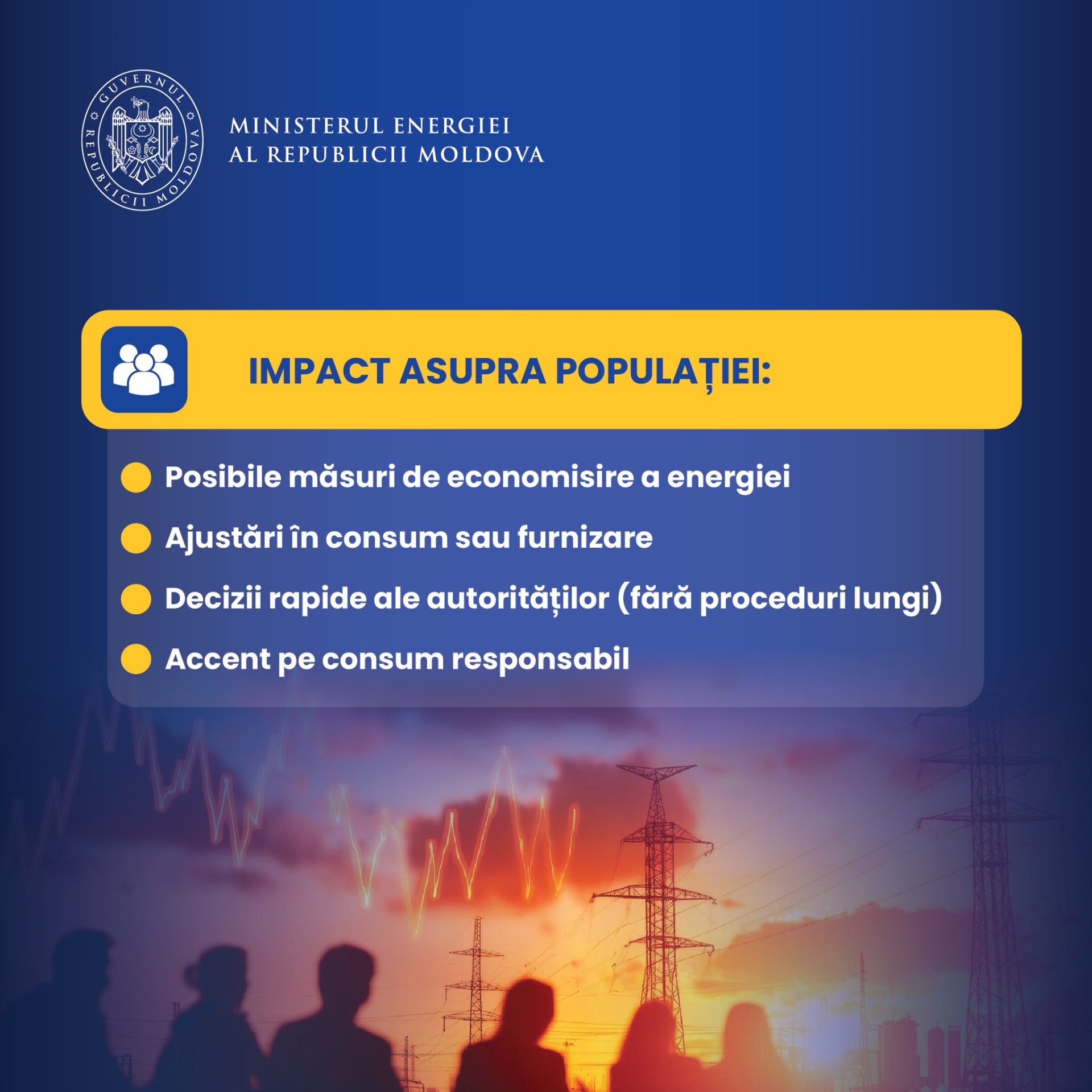
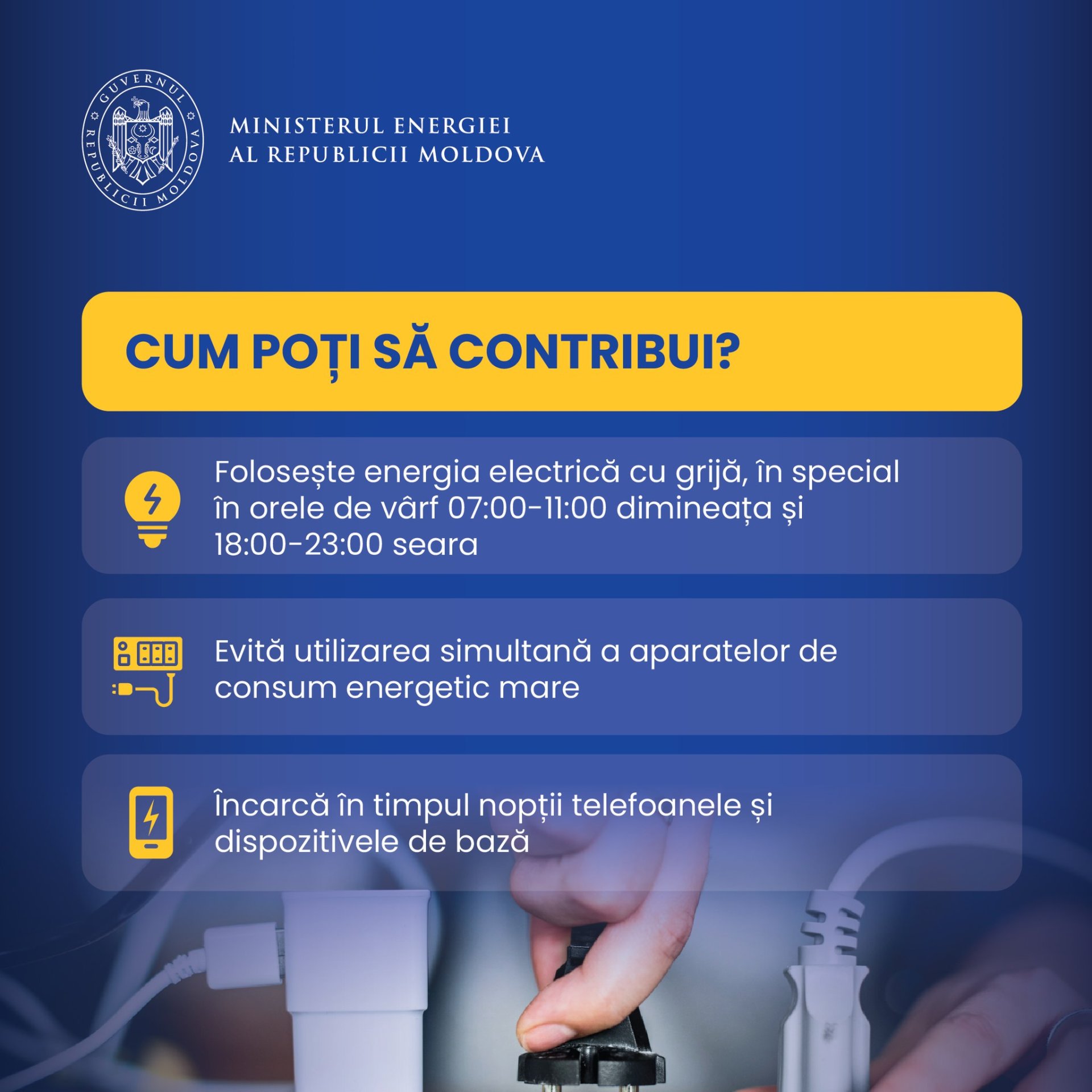
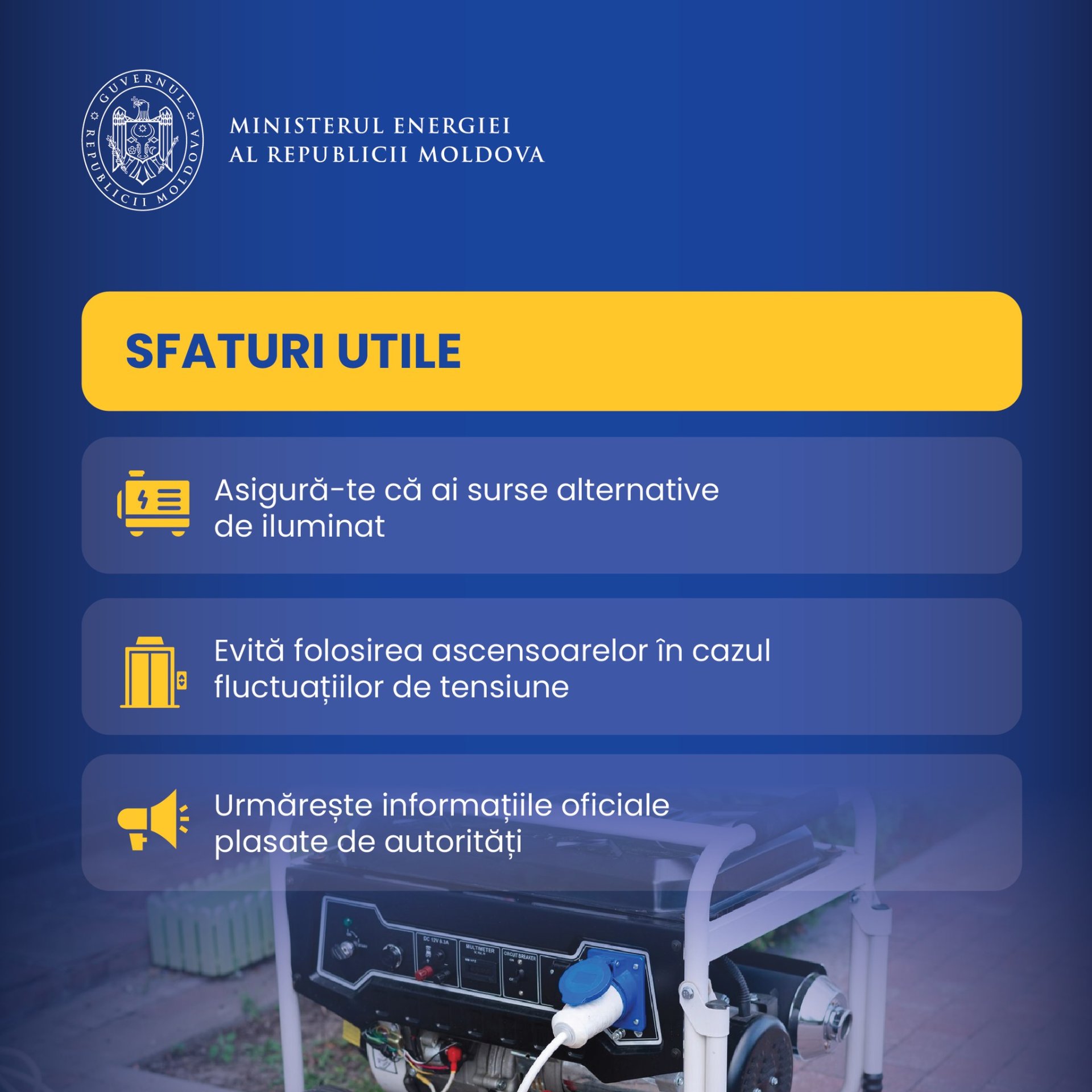
In the context of the declaration of emergency state, the Energy Ministry urges citizens to use electricity carefully, especially during peak hours, to avoid simultaneous use of high-consumption appliances, to make sure they have alternative lighting sources and to avoid using elevators in case of voltage fluctuations.

“Each of us can contribute to the stability of the energy system, by using energy responsibly, avoiding the simultaneous operation of large appliances and charging phones and essential devices outside peak consumption hours, in the morning and evening,” the Energy Ministry said.

Starting today, a state of emergency in the energy sector has entered into force in Moldova for a period of 60 days. The measure was taken following Russian attacks on energy infrastructure in southern Ukraine, including facilities owned by Moldova, which also affected the Vulcanesti–Isaccea power line.
 Facebook
 Instagram
 X/Twitter
 Telegram
Fuel prices are going down in Moldova; petrol price drops below threshold of 31 lei
State to be able to respond more quickly in event of energy emergency
Moldovan carriers to receive additional 300 permits for routes to Azerbaijan
Import duties on energy storage batteries and wind turbines to be abolished
Moldovan energy minister calls for compliance with deadlines for completing works needed to start energizing Vulcanesti–Chisinau power line
Moldova to receive 150 million euros to modernize strategic roads
Moldovan energy minister says every leu invested in energy efficiency generates significant economic impact
Energy compensations to be maintained in next cold season
Agriculture Minister after farmers’ protest: I will continue to focus on dialogue to identify solutions to all demands
Fuel prices drop: diesel falls below 29 lei
VIDEO // State introduces new incentives for green energy
Energy cooperation between Moldova and Romania discussed at conference in Chișinău
PHOTO // Investment opportunities of Moldova presented at Economic Diplomatic Club Bucharest; Moldovan ambassador to Romania says Moldova stays open to investments
Romania accelerates strategic Vulcanesti–Chisinau project: “A pillar of Moldova’s energy security and European future”
Stricter rules for taxi platforms: payments to be required to obligatorily go through banks of Moldova
Moldovan parliament speaker says each day of delay of elections in Gagauzia works against autonomy
Voted in parliament: Moldovan citizens who worked legally in Canada to be able to receive social benefits
Moldovans working in Ukraine to be able to receive pensions, other social benefits
Moldova hosts Kettlebell World Championship
Over 1 billion euros in new investment partnerships, financing announced for Moldova
Labour legislation aligned with European standards: citizens of Moldova to be able to receive unemployment benefits in EU countries
 National Bank of Moldova
Over 1 billion euros in new investment partnerships, financing announced for Moldova
Topical issues addressed at meeting of Joint Control Commission
Moldovan president, European Commissioner for Enlargement discuss reforms, next steps in accession process
Moldova strengthens institutional capacity to counter hybrid threats with support of EU Partnership Mission in Moldova
President’s speech at joint press conference with European Commissioner for Enlargement

Moldovan head of state says Russia’s interference constant, efforts must be made to counter it
Moldova secures additional funding for connection to European Road Network
ARMENPRESS: EU to provide additional support to Armenia amid Russian import restrictions
Moldova attracts over 1 billion euros in investments through new strategic partnerships announced at first Moldova–EU Investment Conference
Topical issues addressed at meeting of Joint Control Commission
Moldovan president, European Commissioner for Enlargement discuss reforms, next steps in accession process
EU Commissioner for Enlargement says Moldova on first position in its preparations for European Union membership
Moldovan president says all EU member states reconfirm Moldova ready to open accession negotiations
Moldova strengthens institutional capacity to counter hybrid threats with support of EU Partnership Mission in Moldova
Departed well-known composer of Moldova honored in Chisinau: maestro’s music returns to salon bearing his name
VIDEO // Moldova and Ukraine reaffirm: Our future in EU
President’s speech at joint press conference with European Commissioner for Enlargement
VIDEO // News from Brussels on starting preparations for Cluster I in accession negotiations of Moldova to European Union applauded in Parliament
Strong support for Ukraine reaffirmed in Chisinau Parliament
Applause in Parliament in memory of Eugen Doga
President's message to European investors: When you invest in Moldova, you invest in country whose future anchored in Europe
Receive the latest news directly to your email

Receive the latest news directly to your email