
Labour legislation aligned with European standards: citizens of Moldova to be able to receive unemployment benefits in EU countries
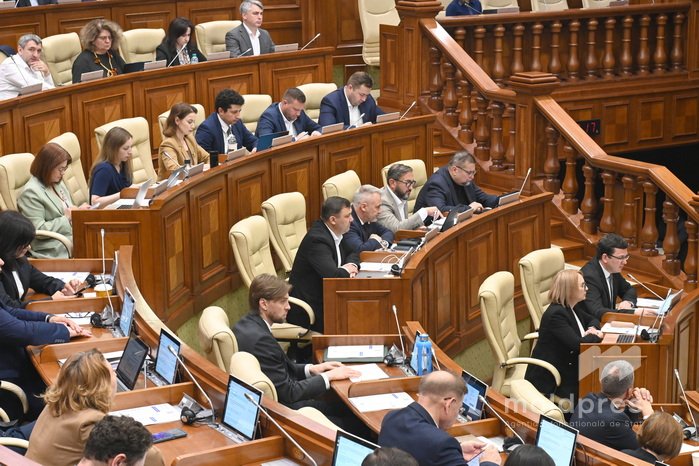
Citizens of Moldova will be able, after the country’s accession to the European Union, to receive unemployment benefits in EU member states, while citizens of the Union will enjoy the same right in Moldova. This provision is included in a draft law approved by the parliament in first reading today, with 65 votes for. The draft aims to align the regulatory framework in the field of coordination of social security systems and free movement of workers with European Union’s legislation.

At the parliament meeting, State Secretary at the Labour and Social Protection Ministry Felicia Bechtoldt said that the draft aimed to modernize employment services and adapt them to the current realities of the labour market. More precisely, the authorities intend to enhance jobseekers’ access to quality employment services and to facilitate their rapid integration into the labour market.

Thus, the draft regulates a new category of beneficiaries of unemployment benefits – frontier workers. These are persons who work in one EU member state and have their residence in another EU member state, returning home periodically, at least once a week.

“In the event that these persons lose their job, they will be able to apply for and receive unemployment benefits either in the state where they worked or in the state of residence, in accordance with the legislation of the state in which they choose to apply for unemployment benefits,” the state secretary said.

The document also regulates the situation of unemployed persons registered in Moldova, who travel to an EU member state, to a state of the European Economic Area or to another state that is a signatory to the Schengen Agreement, in order to look for a job. In such cases, the right to unemployment benefits will be maintained for a period of up to three months.

“This draft creates the necessary legal framework for citizens of Moldova to be able, after the country’s accession to the European Union, to receive unemployment benefits in the member states of the European Union, and for EU citizens to receive unemployment benefits in Moldova,” said Felicia Bechtoldt.

The document also provides for the inclusion of non-formal education in the vocational training voucher system, as well as for facilitating access to subsidies for unemployed persons who start a business and create at least one job.

“By introducing vouchers, citizens will have access not only to formal qualification programmes, but also to training focused on skills’ development, whether we are talking about digital skills, communication skills, teamwork and other competencies that are increasingly in demand by employers,” said Felicia Bechtoldt.

Another amendment concerns lowering the minimum age for registering with unemployed status from 16 to 15 years, a measure meant to facilitate the early integration of young people into the labour market, while respecting rules on the protection of minors. In addition, the authors propose extending the age range for NEET youth (not in employment, education or training) from the current 15–29 years to 15–34 years. This change will allow more effective monitoring of the NEET phenomenon and will facilitate comparative analysis of statistics data.

“Extending the age range for NEET youth will allow a larger number of beneficiaries to access employment services and support measures and will contribute to the empowerment of young people, especially women, and to bringing them back into the labour market,” said Felicia Bechtoldt.

The draft was developed by the Labour and Social Protection Ministry. The provisions in the document relating to the export and reimbursement of unemployment benefits for citizens of Moldova who move to an EU member state, and for citizens of the European Union who come to Moldova, will enter into force upon Moldova’s accession to the European Union.

The draft is to be examined and voted on by parliament in second reading.
 Facebook
 Instagram
 X/Twitter
 Telegram
Increased support for families in Moldova: birth allowance reaches 21,866 lei
Moldova has over 833,000 children; Public Services Agency says more than 9,000 babies born in first five months of 2026
Moldova marks International Children’s Day: diverse schedule of activities for whole family
PHOTO // President: It is important to keep alive customs and values that bring us together
Prime Minister: Dniester unites us more than it divides us
President: Dniester - essential for people’s health and safety of our communities
Water, roads and public services: why authorities insist on local reform
President urges citizens to double-check before transferring money to scammers
PHOTO GALLERY // Largest exhibition dedicated to children opened at Moldexpo
MOLDPRES REPORT // Solar energy, batteries and electric transport: green technologies developed in China that could be of interest to Moldova
Attention, travelers! Heavy traffic at Leușeni border crossing point on exit from Moldova
PM's emotional message at end of school year
Moldovan police officers to attend solemn assemblies dedicated to Last Bell
Ceremonies dedicated to Last Bell held in schools across Moldova; 2025–2026 school year ends
Over 1 billion euros in new investment partnerships, financing announced for Moldova
Labour legislation aligned with European standards: citizens of Moldova to be able to receive unemployment benefits in EU countries
VIDEO // ARBOM offers 80 tickets for Moldova - Bulgaria match to supporters from Taraclia
Moldovan head of state says Russia’s interference constant, efforts must be made to counter it
 National Bank of Moldova
Over 1 billion euros in new investment partnerships, financing announced for Moldova
Topical issues addressed at meeting of Joint Control Commission
Moldovan president, European Commissioner for Enlargement discuss reforms, next steps in accession process
Moldova strengthens institutional capacity to counter hybrid threats with support of EU Partnership Mission in Moldova
President’s speech at joint press conference with European Commissioner for Enlargement

Moldova attracts over 1 billion euros in investments through new strategic partnerships announced at first Moldova–EU Investment Conference
Topical issues addressed at meeting of Joint Control Commission
Moldovan president, European Commissioner for Enlargement discuss reforms, next steps in accession process
EU Commissioner for Enlargement says Moldova on first position in its preparations for European Union membership
Moldovan president says all EU member states reconfirm Moldova ready to open accession negotiations
Moldova strengthens institutional capacity to counter hybrid threats with support of EU Partnership Mission in Moldova
Departed well-known composer of Moldova honored in Chisinau: maestro’s music returns to salon bearing his name
VIDEO // Moldova and Ukraine reaffirm: Our future in EU
President’s speech at joint press conference with European Commissioner for Enlargement
VIDEO // News from Brussels on starting preparations for Cluster I in accession negotiations of Moldova to European Union applauded in Parliament
Strong support for Ukraine reaffirmed in Chisinau Parliament
Applause in Parliament in memory of Eugen Doga
President's message to European investors: When you invest in Moldova, you invest in country whose future anchored in Europe
Deputy Prime Minister: Moldova–EU Investment Conference shows we are reliable partner and will continue to move forward
LIVE TEXT // Investment Conference in Chișinău. Deputy Prime Minister: Moldova advancing toward full integration into European market
Investments exceeding 1 billion euros announced at Moldova – European Union Investment Conference
Receive the latest news directly to your email

Receive the latest news directly to your email