
Moldovan head of state says Russia’s interference constant, efforts must be made to counter it
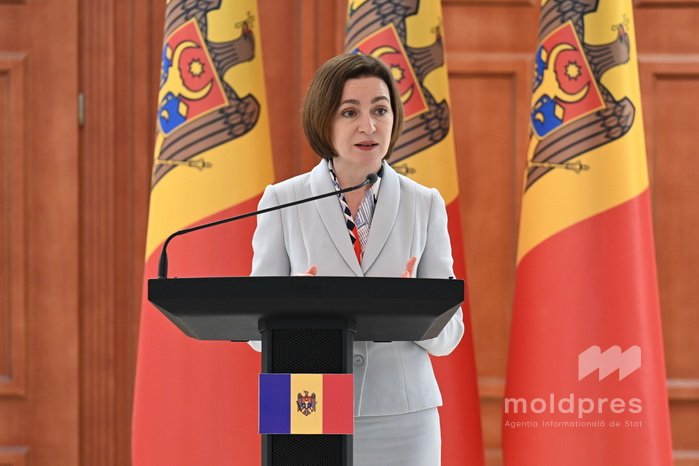
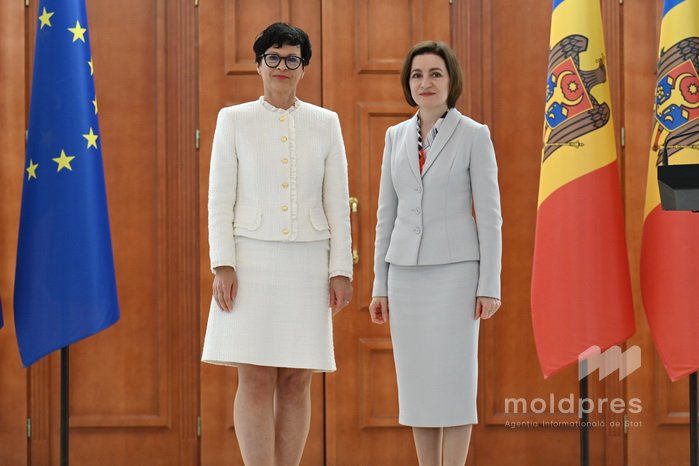
Russia’s interference is constant and we must make efforts to counter it. Moldova has worked closely with the European Union and we are very grateful for the support provided to strengthen the security sector. President Maia Sandu mas made statements to this effect at a news conference held jointly with European Commissioner for Enlargement Marta Kos.

The head of state expressed confidence that “the interference will continue even after Russia sees that Moldova is taking concrete steps to get closer to the European Union.”

“Interference occurred before the elections, during them, and continued after the vote. Unfortunately, this has become a new reality and we must cope with these processes. Regardless of whether the first negotiation chapter is opened or not, this interference will not stop; it will continue. We must make constant efforts to counter these actions. From the security point of view, the situation is the same. The war waged by Russia against Ukraine shows that no one is safe, especially in this region. If it does not use drones, Russia will resort to other tools of hybrid warfare, in order to intervene and destabilize democracies across the continent,” Maia Sandu said.

The head of state stressed that, in the process of countering foreign interference, Moldova had worked closely with the European Union.

“We are quite grateful for the support provided through the European Peace Facility, which has helped us strengthen the security sector. It is a very broad field. We are also talking about cybersecurity, and together with the European Union we have worked to strengthen this segment. Of course, as long as the Russian aggression against Ukraine continues, we all need to stay vigilant and cooperate to strengthen security,” Maia Sandu said.

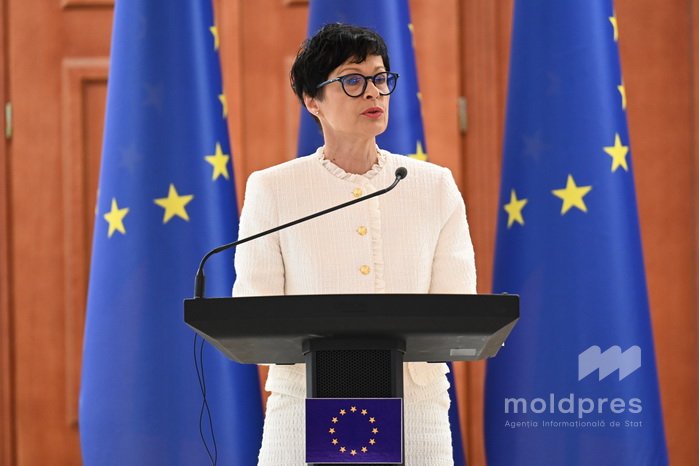
For her part, Marta Kos underlined that Moldova had managed, each time, to successfully counter Russia’s attempts to interfere in the democratic processes in our country.

“Russia has nothing to say when it comes to the European future of Moldova. This does not mean that the country is not trying to influence this process. We all know what Russia is capable of. We have lived through this experience and continue to live it, including as EU member states. When we talk about Moldova’s accession process, the geopolitical dimension becomes increasingly obvious and important. The country is already contributing to European security. For example, the experience gained during the last parliamentary elections and the referendum is now being used in Armenia. Soon, the same experience will be used in Montenegro, where we have launched more projects,” Marta Kos noted.

The European official said that Moldova and the EU would cooperate within a strategy designed to protect democracies in the European region and in candidate countries.

“This is the so-called ‘Shield of Democracy’. Soon there will be a ministerial meeting, at which candidate countries will have the opportunity to become part of a European Resilience Centre. At present, this centre is open only to member states, but we want to bring together candidate and member states, in order to share experience and best practices in this field more effectively. At the same time, I can tell you that we are witnessing today in Europe a change in citizens’ attitudes towards security. Approximately 80 per cent of citizens believe that we must do more for Europe’s security, and over 70 per cent believe that they are under threat because of Russia. This gives us a strong argument in Brussels. We can ensure Europe’s security, only if we involve neighbouring countries as well. Moldova is part of this neighbourhood. Thus, we cannot guarantee security without working together with Moldova,” Marta Kos added.

European Commissioner for Enlargement Marta Kos is paying a visit to Moldova on June 4 and 5, in order to support the country’s efforts to join the European Union. The agenda of the discussions focuses on the state’s progress in implementing reforms and encourages additional investments ahead of the second EU–Moldova Summit, due to be held in Brussels on June 22.
 Facebook
 Instagram
 X/Twitter
 Telegram
Moldovan MPs to convene at plenary meeting on September 10; agenda includes budget, energy security, EU legislation
Moldova, Israel strengthen cooperation in tourism
European Commissioner for Equality to pay first official visit to Moldova
Moldova withdraws Commonwealth of Independent States Agreement on combating human trafficking
Moldova, Bulgaria strengthen cooperation in economy, energy, security
Prime Minister: In August alone, 17 drones struck our territory. This is extremely worrying
Health Ministry to have new state secretary
Moldsilva Agency and National Probation Inspectorate without directors
Speaker: Russia’s threat not scare tactic and not propaganda. It is daily reality
Moldova's Foreign Ministry condemns Russian attacks on Ukraine
Deputy Prime Minister to pay official visit to Bulgaria
Deputy PM for reintegration says Moldova allocates more than 218 million lei to support residents of Transnistrian region in first half of 2026
Moldovan MP to run independently for governor of Gagauzia
PHOTO // French MPs visit Moldova's parliament; talks focus on strengthening cooperation, supporting European path
PHOTO // Moldova promotes gastronomy and traditions in Paris
Chisinau maintains position on withdrawal of Russian troops and demilitarization of Transnistrian region
Tudor Bratu - World University Weightlifting Champion
5+2 format no longer works
 National Bank of Moldova
Moldovan, Hungarian PMs have phone conversation
PM, European Commissioner discuss European agenda, strengthening resilience of Moldova
Message to Moldova's public authorities on absolute unacceptability, “Zero Tolerance” for arbitrary detention, extralegal transfers
Moldovan president, European Commissioner discuss European path, resilience of Moldova
Moldovan president, Hungarian PM have phone conversation

European Commissioner reconfirms EU support for advancing reforms in European integration process
Moldova stands in solidarity with United States; victims of September 11, 2001 terrorist attacks commemorated in Chisinau
Cyberattack takes place on government resources of Moldova; authorities working to restore access
Moldovan, Hungarian PMs have phone conversation
PM, European Commissioner discuss European agenda, strengthening resilience of Moldova
Message to Moldova's public authorities on absolute unacceptability, “Zero Tolerance” for arbitrary detention, extralegal transfers
Moldovan president, European Commissioner discuss European path, resilience of Moldova
Moldovan president, Hungarian PM have phone conversation
European Commissioner holds talks with Prime Minister
PHOTO // European Commissioner visited Moldova’s Urban Search and Rescue Team: practical demonstration using EU-provided equipment
Women MPs Platform held public hearings on preventing and combating violence against women and femicide
MOLDPRES INTERVIEW // Moldovan deputy PM for reintegration: “Reintegration cannot happen through a single decision. Citizens must feel that moving closer to the right bank brings them benefits”
Social worker from Chișinău involved in influence-peddling case
External assistance provided to Moldova in 2025: key results and areas of support
Moldovan President, European Commissioner for Equality approach progress in implementing reforms
New measures for child-friendly justice
Receive the latest news directly to your email

Receive the latest news directly to your email