
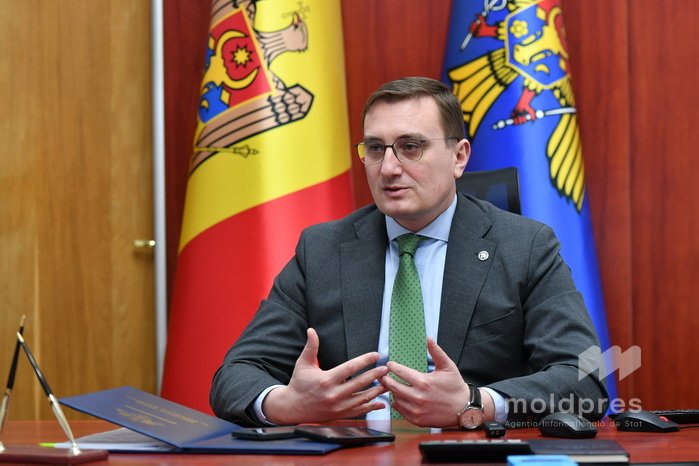
MOLDPRES INTERVIEW // Customs Service Director: Moldova has necessary experience to contribute to development of European customs system
Efficient management of border flows has become in recent years a major challenge for the authorities of the Republic of Moldova, against the backdrop of regional changes and the growing volume of transit. The reconfiguration of trade routes, especially after the outbreak of the war in Ukraine has increased the need for rapid and effective solutions to streamline traffic.

At this stage, the Customs Service has assumed an essential role in facilitating trade and ensuring effective control at border crossing points. Cooperation with the authorities of Romania and Ukraine, the implementation of coordinated control and the adaptation of infrastructure are just some of the measures aimed at reducing waiting times and supporting the business environment.

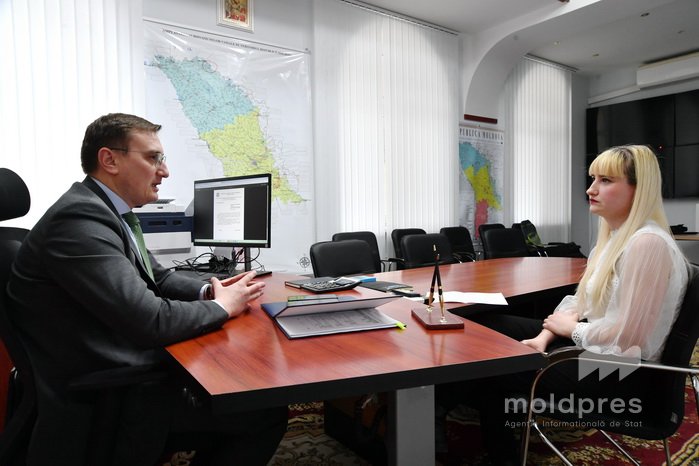
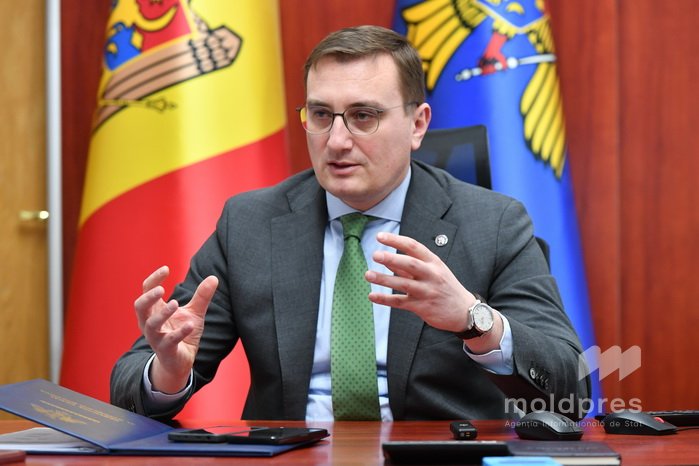
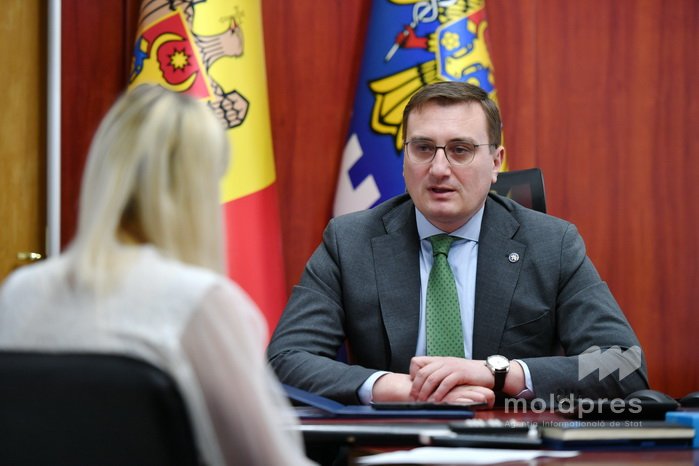
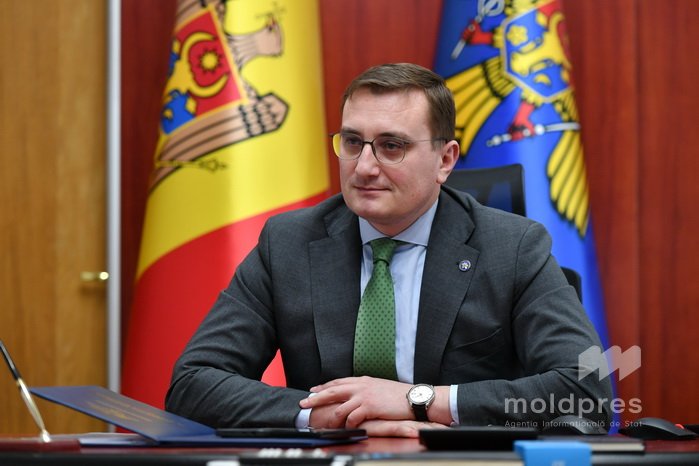
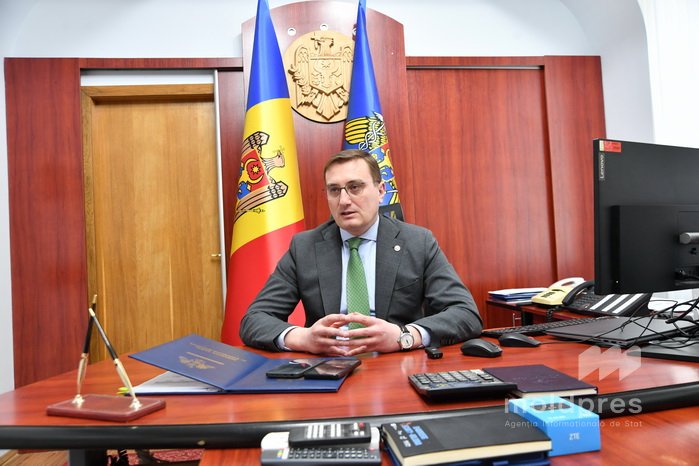
Director of the Customs Service Radu Vrabie gave an exclusive interview to MOLDPRES State News Agency, in which he spoke about the digitalization of customs services, the streamlining of border traffic, the establishment of coordinated control, the fight against smuggling and the alignment of national customs legislation with that of the European Union.

MOLDPRES: Streamlining traffic at the border crossing points with Romania and Ukraine is one of the priority actions assumed by the Customs Service. To what extent are you managing to control traffic, given the increase in the flow of people and goods?

Radu Vrabie: Streamlining traffic at customs posts is one of our priorities. We aim to facilitate trade, especially exports, in order to offer economic operators from the Republic of Moldova the possibility to reach destination markets as quickly as possible. In recent years, especially after the start of the war, most trade has been redirected to the western border with Romania. Four years ago, there were long queues. Nevertheless, my colleagues, together with those from the Border Police, managed to handle these flows.

At present, these flows are coordinated smoothly and professionally. We have very good cooperation with our partners in Romania. We hold periodic discussions, analyze flows and try to find solutions to streamlining.

Regarding coordinated control, on the border with Romania we have two customs posts where it is applied on the outbound direction: Leușeni–Albița and Giurgiulești–Galați. We intend to continue this practice, with a view to establishing coordinated control at other border customs posts/state border crossing points as well, such as Ungheni–Ungheni. We aim to have bidirectional coordinated control, meaning both on the territory of the Republic of Moldova and Romania. This mechanism has delivered results and over time we see that things have improved. There are still technical issues to be finalized, but it is a process in continuous improvement.

At Leușeni–Albița post, the Agreement on coordinated control is extended annually. Thus, we conduct an analysis of flows and deficiencies. Afterwards, together with the Border Police, we submit a proposal to our Romanian counterparts to extend this Agreement. The document is to be signed in April 2026.

Due to the war, the situation at the border with Ukraine is more specific. Despite this, all customs posts operate in normal mode. We have seven border customs posts that operate on the basis of a treaty between Moldova and Ukraine, where joint control is in place.

Together with our colleagues in Ukraine, we intend to analyze the 67 crossing points inherited from the Soviet period – international, interstate, and local – to see which ones are justified, both in terms of passenger traffic and goods traffic. We will come up with an optimization proposal: fewer points, but better equipped. The actions will not affect people’s lives, but will adapt the system to current economic realities.

We are in a favorable situation: with both neighboring states we have very good relations. At the beginning of my mandate I attended a trilateral meeting in Chernivtsi, where we set out several actions, especially regarding countering fraud and making control more efficient. I also recently visited my counterpart at the Romanian Customs Authority, where we discussed bilateral cooperation and Romania’s support in the process of European integration.

MOLDPRES: What actions will you take during the Easter holidays to streamline border traffic?

Radu Vrabie: At the end of March we will have separate meetings with colleagues from Romania and Ukraine. Usually, two weeks before Easter, the flow of travelers begins to increase, with higher volumes on the days before the holiday. During the school vacation, the flow is directed from the country towards Europe. There is also an increased flow before Easter, when citizens from the diaspora leave.

Thus, during this period we will supplement control staff. At the same time, infrastructure is optimized by opening additional control lanes and, where necessary, applying the “Reverse” procedure – redirecting traffic directions. We also apply the separation of transport flows – distinct routing for trucks, cars and coaches – which contributes to a more efficient organization of traffic. In addition, in order to ensure an efficient and comfortable crossing of the state border, the Customs Service provides a set of recommendations for travelers.

To minimize border crossing time, the authorities recommend using all existing crossing points so as not to overload only some of them and to avoid queues. It is necessary to check the validity and status of the travel document used to cross the state border. At the same time, you can consult the Online traffic at border customs posts application on the official website of the Customs Service to find out in real time the situation at border crossing points.

The Single Call Center of the Customs Service is also operational around the clock at: +373 22 78-88-88 and the Call Center of the Border Police at: +373 22 259 717, where each citizen can receive information about the situation at the border, crossing rules and other public information.

MOLDPRES: Law enforcement bodies have previously reported corruption cases involving customs officials. Currently, several investigation processes are underway. How much trust do you have in your staff, and what actions are you taking as head of the institution to minimize breaches of professional ethics?

Radu Vrabie: Despite the image that is often projected externally, the majority of my colleagues at the Customs Service are in good faith. I trust their professional abilities and their integrity. However, as in any institution exposed to corruption risk, we have internal mechanisms for managing such situations. We are under drafting the institution’s Integrity Plan, which will be published on the website and can be monitored from outside. We have an integrity unit that conducts monitoring, visits and discussions with customs officials. Last but not least, we cooperate with specialized institutions in the fight against corruption.

I also want to emphasize the importance of institutional culture. It is essential to motivate people of integrity and promote positive examples. Those who are honest will be encouraged, and those who do not respect the law will be sanctioned. I hope this message is heard and we will have more situations of corruption prevention than of corruption fighting. When concrete cases are detected, we are fully open with the competent bodies, providing all necessary information, including video footage and other relevant evidence. In parallel, we use internal mechanisms as well. We have a disciplinary committee that analyzes cases and, when violations are found, the person is dismissed. If procedural actions are necessary, the person concerned is suspended during the investigation.

Statistics show a decrease in corruption cases among customs officials. Nevertheless, each case is painful for us, as it affects the institution’s image and the trust of citizens and economic operators. I hope that during my mandate we will reduce this phenomenon and regain citizens’ trust.

Also, one of the most effective tools in combating corruption is remuneration. We are an institution funded from the state budget. Of course, we would like higher salaries for employees. There is a draft law on remuneration under approval, which could bring increases.

MOLDPRES: What is the scale of smuggling in the Republic of Moldova? What types of goods are most frequently brought into or taken out of the country illegally? What capacities does the Customs Service have to combat smuggling?

Radu Vrabie: In the recent period there have been several seizures of tobacco products, narcotic substances and an attempt to illegally export weapons. There are also cases of smuggling of consumer goods. We are continuously improving control procedures and cooperating with other institutions to support information exchange. The goal is prevention, not just combating.

Currently, the institution has scanners at Costești, Leușeni, Sculeni, Giurgiulești, Palanca, Tudora and the railway post in Ocnița. Unfortunately, most of them are old, dating from 2007–2009. We have a new scanner, operational since 2025, which allows remote monitoring and effective risk analysis. We intend to purchase more such scanners and connect them into a common system. We hope this will be possible even this year, with the support of external partners and the Ministry of Finance. They will be installed as a priority on the border with Ukraine, but also in points where equipment is worn out, such as Leușeni and Sculeni.

MOLDPRES: What are the main provisions regulating the entry and exit of money from the country?

Radu Vrabie: Indeed, we have cases where foreign citizens try to cross the border with larger amounts of money without declaring them. They need to know that amounts up to 10,000 euros may be transported without declaration, and those exceeding this threshold must be declared in accordance with the law. The amount seized by customs officials is subject to special confiscation, and the person risks being sanctioned either contraventionally or criminally.

In this context, the Customs Service recommends that citizens be informed in advance and comply with legal provisions in order to avoid sanctions or seizure of undeclared valuables.

MOLDPRES: Citizens of the Republic of Moldova who return to live permanently in the country will continue to benefit from exemption from the payment of import duties for personal belongings and one vehicle. What conditions must people meet in order to benefit from these legal provisions?

Radu Vrabie: This measure is the result of dialogue between the authorities and citizens in the diaspora, being highly requested and useful, and most importantly, it facilitates the return home.

In short, we are talking about an opportunity for our citizens to return to the Republic of Moldova without additional costs for personal belongings and under certain conditions, for one vehicle.

To benefit from these facilities, a person must be a citizen of the Republic of Moldova, be at least 18 years old and be able to prove that they have lived abroad for a long period – either at least three years in the last five years, or a period of up to 10 years.

It is also important that the return is real and lasting. The person must declare that they will settle in the country and live here at least 183 days per year, for a minimum period of three years.

Regarding the vehicle, only one vehicle can be brought in, subject to certain limitations – including in terms of age, value and engine capacity – and it must not be intended for commercial activities.

At the same time, personal belongings must be in reasonable quantities, specific to personal use, and must not indicate a commercial purpose.

A very important aspect is compliance with the procedure: the application and supporting documents must be submitted in advance to the Customs Service in electronic format, before bringing the goods into the country. After verifying the conditions, the Customs Service issues a decision, and customs clearance with the application of the exemption can then take place.

To support citizens, all detailed information, full conditions, the list of goods, sample applications and declarations can be found on the official website of the Customs Service – http://www.customs.gov.md

MOLDPRES: Customs processes directly affect the activity of economic operators for whom digitalization remains a priority. To what extent do customs services respond to entrepreneurs’ needs regarding the implementation of modern systems?

Radu Vrabie: We have an extensive digitalization program that targets at least 25 IT systems. We have already made progress: last year we joined the EU Common Transit Convention, which allows the movement of goods without repeated declarations in each country. A further 18 systems are to be digitalized. Ten customs decisions will be digitalized by the end of June.

At the same time, we are in constant dialogue with the business community to tailor solutions to real needs. In the digitalization process, we are more advanced than we initially expected. We are recording good results, despite limited resources. We have a solid plan and the motivation to continue.

Also, the digital system for scheduled border crossing – the Border Queuing System (BQS) – implemented by the Customs Service at the Costești customs post on the outbound direction, is a success. It was launched as a pilot at Costești. We want to expand it, but truck parking is needed. At this stage, we are in discussions with the Ministry of Infrastructure and Regional Development. We also encourage private investment in this area. Thus, we plan to extend the system to Leușeni, Sculeni and Giurgiulești, and then to all border customs posts.

MOLDPRES: The Republic of Moldova is approaching a decisive stage in its European path. At this important moment, how well prepared is the Customs Service, in the area it manages, to cope with the accession process?

Radu Vrabie: We are involved in several negotiation chapters. We have no backlogs; in fact, we are ahead of the established deadlines. We are working on aligning the Customs Code with EU legislation and on digitalizing systems. We hope to maintain this pace.

In the EU accession process, the main benefit for economic operators is predictability. The rules will be aligned with European ones, which will simplify exports and reduce the duplication of procedures. We have constant dialogue with economic operators. We inform them in advance and support them in implementation. They are open and involved. In this complex journey, we learn and adapt, using the experience of other countries, especially that of Romania.

MOLDPRES: About 65% of the state budget is formed from Customs Service revenues. What are the revenue targets for this year?

Radu Vrabie: Last year, the Customs Service transferred over 41 billion lei to the state budget. For this year, about 44 billion lei is planned. We are in line with the established plan. This figure is directly influenced by the level of investments and economic activity. The more active the economy, the higher the revenues.

During this mandate, my priority is to strengthen the institution, develop staff and modernize services. We want to be a predictable partner for the business environment and to reduce illicit phenomena through digitalization.

I am glad that we maintain good relations with our partners and are appreciated. We have partnerships with Romania, Ukraine, Italy and the Netherlands. At this stage, it is very important that the Republic of Moldova is not only a state requesting expertise, but can also provide it, thanks to our position on the eastern border. Thus, our country directly holds the necessary experience to contribute to the development of the European customs system.

Thank you for the interview.

Reporter: Ala Ciobanu
 Facebook
 Instagram
 X/Twitter
 Telegram
MOLDPRES INTERVIEW // Lithuanian Ambassador about prospects of Moldova’s EU accession: If you make things real, they will become achievable
MOLDPRES INTERVIEW // Moldovan finance minister says government aims to modernize financial system for benefit of businesses, citizens
MOLDPRES INTERVIEW // Ambassador of State of Qatar to Moldova: We are working to improve ways of attracting Qatari investors to Moldovan market
MOLDPRES INTERVIEW // President of Moldova's Chamber of Commerce and Industry says country must use opportunities provided by European integration to attract investments, become competitive
MOLDPRES Interview // Minister of Internal Affairs: Interior Ministry applies European security standards and is ready to advance in EU accession process
MOLDPRES INTERVIEW // Moldovan energy minister says foremost interest citizens to have secure energy at affordable prices
Moldovan justice minister says, according to European Commission’s Report, Moldova made greatest progress among EU candidate states, including in justice field
INTERVIEW MOLDPRES // Moldovan defense minister says Russia's war in Ukraine highlighted vulnerability of defense sector, need of building strong, prepared, resilient army to current challenges
INTERVIEW WITH MOLDPRES // Deputy PM says wants Moldova where a child from any village has same opportunities as a child from Chisinau
INTERVIEW MOLDPRES // Deputy Prime Minister on Ukraine Peace Agreement: No discussion about Moldova can take place without Chișinău's participation
INTERVIEW MOLDPRES // Moldovan agriculture and food industry minister says European integration fundamentally changes way leadership supports agriculture
INTERVIEW MOLDPRES // Romania's Ambassador in Chisinau says Moldova to never be alone in its efforts, Romania to stand by its side
MOLDPRES INTERVIEW // Romanian culture minister says culture adds value, rebuilds trust
MOLDPRES interview // IGP head: Russia whether through Ilan Shor or other means to constantly try to find ways to create disorder and destabilization
PHOTO // PM in New York tells Diaspora government willing to turn experience of Moldovans from United States into projects for country
Moldovan foreign affairs minister at UN says Moldova strengthening capacity to respond to health threats
Moldova under emergency state in energy, hydrological sectors as of September 26; what measures take effect
PHOTO // PM promotes Moldova's investment opportunities in New York
Balti Clinical Hospital to receive ultrasound machine through grant provided by government of Japan
Japan supports modernization of Balti Clinical Hospital with grant worth over 95,000 dollars
Moldovan parliament speaker urges students not to be afraid to express their ideas, wishes
 National Bank of Moldova
Strengthening Moldova’s cooperation with UNDP, UNOPS discussed in New York
Moldova's National Crisis Management Commission approves new measures to ensure energy security, protect water resources
Moldovan PM, U.S. investors, companies discuss potential projects in Moldova
Head of state says Moldovans must build economy where well-educated people can find opportunities at home
Moldova represented at Interparliamentary Conference on Stability, Economic Coordination and Governance in European Union

Moldova's Border Police receive six special vehicles on behalf of FRONTEX
Head of state says Moldovans must build economy where well-educated people can find opportunities at home
Moldovan president attends events dedicated to 35th anniversary of foundation of Academy of Economic Studies
New charges brought against former Moldovan president Igor Dodon in “Kuliok” case; prosecutors seek harsher sentence
Moldova represented at Interparliamentary Conference on Stability, Economic Coordination and Governance in European Union
ARMENPRESS: EU Commissioner Kos promotes Armenian products after trade measures adopted
VIDEO // Parliament speaker conveys message to coaches of Moldova
Public buildings of Moldova to undergo energy renovation with World Bank's support
Mircea Eșanu on nomination to lead Moldova Project: More information could become known in October
President’s speech at ASEM’s 35th anniversary
PHOTO GALLERY // Moldova's new passport presented by Public Service Agency
VIDEO // Moldova to introduce new passport model as of October 15; document to feature more than 100 security elements
DOC // Regulation on e-Consulat System published in Official Journal
National Award for Seniors: 15 people winners in 2026 edition
PHOTO // Moldova’s protected areas strengthened through restoration works, planting and new management tools
Moldovan, Dutch Prime Ministers discuss European path and investments
Receive the latest news directly to your email

Receive the latest news directly to your email