
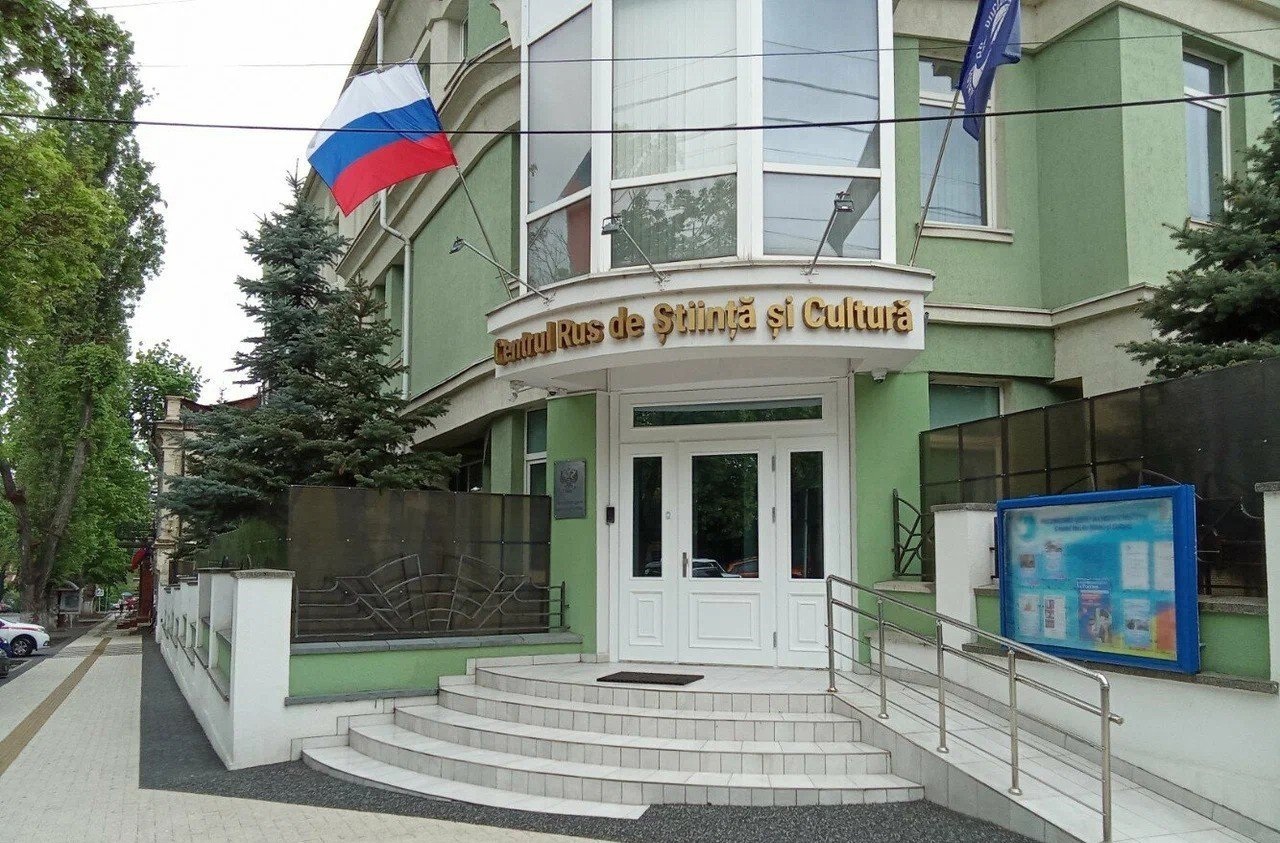
Moldovan parliament speaker describes Russia’s intention to move Russian Center of Culture to Tiraspol as political provocation
Parliament Speaker Igor Grosu describes Russia’s intention to relocate the Russian Center of Culture to Tiraspol as a new provocation by the Russian Federation. He said that this move was part of a string of measures through which Moscow is attempting to influence the situation in Moldova.

“As for the relocation of the Russian Center of Culture to Tiraspol, it is obvious that we are dealing with a provocation on behalf of the Russian Federation,” Grosu said. He noted that this fell into the same category as other recent actions by Moscow, including the visit of an unaccredited ambassador to the Autonomous Territorial Unit of Gagauzia and the decree on granting Russian citizenship through a simplified procedure.

The parliament speaker believes that these initiatives are driven by Russia’s internal electoral interests and are linked to the campaign for the elections, scheduled to take place this autumn.

“I don’t think these actions will achieve their goal. I see all of them as part of the preparations for the electoral campaign and for the so‑called elections in Russia. If we simplify things, Russia cannot provide anything concrete to its supporters, apart from symbolic gestures. These are just image‑building actions, without any real substance,” Igor Grosu said.

The speaker also addressed the issue of energy relations between Moldova and the Russian Federation, recalling that there is still a contract between Moldovagaz and Gazprom, but that it has been violated by the Russian side.

“It was not Moldova that limited or halted gas deliveries. These decisions were taken by the Russian Federation. Therefore, the questions must be addressed to the Russian side,” Grosu said.

At the same time, the official criticized politicians who continue to promote or justify the Kremlin’s actions, saying that they show obedience toward “a totalitarian and criminal regime that commits atrocities in Ukraine every day.”

In his opinion, the situation shows that Russian propaganda continues to exert influence in the European political space.

“This situation shows once again that Russian propaganda has long been present in certain segments of the European political spectrum. Unfortunately, this influence has come to be represented even in the European Parliament and in the Parliament of Romania,” the parliament speaker concluded.

The Russian Center of Science and Culture from Chisinau is to be closed on July 4, 2026, after 17 years of activity, in the context of the denunciation of the Agreement on cultural centers signed between Moldova and the Russian Federation. According to Deputy Prime Minister for Reintegration Valeriu Chiveri, relocating the institution to Tiraspol would be an action that circumvents international law, in the absence of a new bilateral agreement between the two states.

The Agreement on cultural centers was signed in 1998 and entered into force in 2001. On its basis, Russia opened the Center of Science and Culture in Chisinau in 2009. The Moldovan authorities did not create a similar center in the Russian Federation, although the document stipulated the principle of reciprocity.
 Facebook
 Instagram
 X/Twitter
 Telegram
PHOTO // Group of MPs on visit to Washington
Foreign Ministry in talks with Ukrainian authorities about drone exploded in Orhei: Responsibility for any drone that reaches our country’s territory lies with Russia
Foreign Ministry condemns incident in Orhei: Threat to security and violation of state’s sovereignty and territorial integrity
Luxembourg MPs visit Moldova for talks on European integration
Embassy of the Republic of Moldova in Israel warns of new security measures following missile attack from Iran
Vladimir Voronin steps down from leadership of Moldovan Party of Communists; Diana Caraman elected as party's president
Chișinău and Bratislava discuss next steps in EU accession negotiations
EU Commissioner in talks with Prime Minister and Deputy Prime Ministers
Right to fair trial – most frequently reported problem by Moldovan citizens in 2025: Ombudsman’s report presented in parliament
Moldovan parliament sets up inquiry committee on phone, online scams: damages exceeding 270 million lei
Moldovan parliament speaker says each day of delay of elections in Gagauzia works against autonomy
Moldovan head of state says Russia’s interference constant, efforts must be made to counter it
EU Commissioner for Enlargement says Moldova on first position in its preparations for European Union membership
Moldovan president says all EU member states reconfirm Moldova ready to open accession negotiations
Moldovan president urges citizens to learn about local public administration reform
European Parliament President: “Enlargement is our most powerful geopolitical tool, and Ukraine and Moldova belong in the EU”
EU countries agree to open first negotiation cluster with Moldova; European Commission President: “Enlargement remains one of EU’s greatest success stories”
Moldovan president has phone conversation with European Council President
EU member states approve opening of first negotiation cluster; deputy PM for European integration says decision confirms recognition of progress achieved by Moldova
PHOTO // Moldovan Energy Ministry, UNDP strengthen strategic partnership for modernization, transformation of energy sector
Deputy PM for reintegration on working visit to north Moldova district
 National Bank of Moldova
Moldovan president has phone conversation with European Council President
Deputy PM for reintegration on working visit to north Moldova district
Meeting of Monitoring Committee of Interreg NEXT Black Sea Basin Programme held in Moldovan capital
Second Voluntary National Report on implementation of 2030 Agenda presented at Moldova's government
My Village – Our Town Hall: Over 790 city halls involved in voluntary amalgamation process

Phenomenon of phone, online fraud continuously growing in Moldova; General Police Inspectorate handling 754 fraud cases
Moldovan president expresses condolences after traffic accident in Hungary
Meeting of Monitoring Committee of Interreg NEXT Black Sea Basin Programme held in Moldovan capital
Electricity prices not increasing in Moldova; National Energy Regulatory Agency makes clarifications
Second Voluntary National Report on implementation of 2030 Agenda presented at Moldova's government
Moldova gets right to export Hatching eggs to Ukraine
PHOTO GALLERY // Over 150 stops painted in Mosaic inserted in book signed by Stefan Susai
New details about accident in Hungary: Moldova's Foreign Affairs Ministry says Moldovan, Romanian passports found at the scene
ARCHIVE Chronicle // Story of more than 1,000 Bessarabians saved from exile
PHOTO // Faster interventions, safer medical services in Moldova; UN Population Fund donates 1,800 blood pressure monitors to emergency medical teams
MOLDOVA IS ME // Story of Moldovan woman who survived deportation
My Village – Our Town Hall: Over 790 city halls involved in voluntary amalgamation process
President on 85 years after first wave of Stalinist deportations: Commemorating deportations is about memory of past and the democratic future we are building together
First in Moldova's energy sector: Moldelectrica enterprise activates balancing services provided by photovoltaic plants equipped with storage systems
PHOTO GALLERY // Documents and testimonies about deportations and famine presented at exhibition “State Terror in Soviet Moldova: Scale, Victims and Perpetrators
Prime Minister: Memory of deported obliges us to build society in which such tragedies never again possible
Receive the latest news directly to your email

Receive the latest news directly to your email