
VIDEO // Moldovan environment minister inspects Novodnestrovsk Power Plant, confirms pollution source on Dniester River stopped
Environment Minister Gheorghe Hajder today paid an emergency visit to the Novodnestrovsk Hydroelectric Power Plant in Ukraine, in order to directly assess the situation regarding the oil product pollution incident. Following the on-site inspection, the Moldovan official confirmed that the main discharge source had been identified and successfully contained.

The primary purpose of the visit was to coordinate efforts with the Ukrainian authorities, in order to ensure the environmental safety of the Dniester River, the main water artery of Moldova. The minister personally made sure that the intervention protocols were correctly applied at the point of origin of the pollution.

According to the minister’s statements, the measures taken at the Hydroelectric Power Plant produced immediate results; however, risks remain present for the downstream sectors.

“I am in Ukraine, at the Novodnestrovsk Hydroelectric Power Plant, to personally ensure that the pollution source has been stopped. I inform you that, at this time, no oil slicks are visible at the source,” the minister said.

Although the discharge of new residues has ceased, the already spilled pollutant mass is moving along the river course, which keeps intervention services in of Moldova on high alert.

Environmental authorities anticipate that the film of oil products will continue to move toward the border with Moldova on the coming period. In the context, strict monitoring of water quality and the preparation of retention dams stay priorities for environmental inspectors and civil protection teams.

Minister Hajder stressed that vigilance was essential at this stage of crisis management.

“Nonetheless, we remain vigilant, we continue the work and monitoring, because there are still oil slicks on the Dniester, which will most likely reach Moldova,” the official warned.

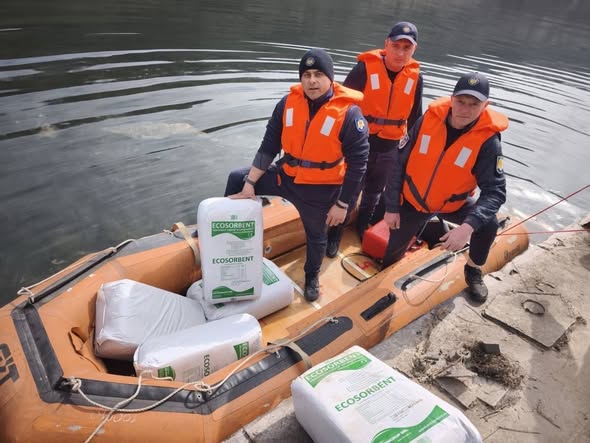
Moldova and Ukraine are working closely together in managing this cross-border pollution incident. Technical teams from both countries are constantly exchanging information, in order to identify the most effective locations for installing absorbent materials and floating barriers.

Gheorghe Hajder reiterated the ministry’s commitment to minimizing the effects on biodiversity and on drinking water intake stations: “What is important is that the pollution source has been stopped and we will continue to work, including together with our colleagues from Ukraine, to reduce the impact of this cross-border pollution.”

At the same time, the Delegation of the European Union to Moldova announced a new stage in extending the assistance provided through the EU Civil Protection Mechanism, in order to support national authorities in their efforts to contain and collect oil products from the Dniester River. The new logistical contributions from Belgium and Slovakia will strengthen rapid response capacity in critical areas affected by pollution.
 Facebook
 Instagram
 X/Twitter
 Telegram
Moldovan head of state calls for strengthening border security system, scanning of all postal parcels
VIDEO // Automated weather station installed in Old Orhei Reserve of Moldova
VIDEO // Protective device of 20 dams installed to limit pollution on Dniester River
Bank Fraud case: Prosecutors request maximum 25-year sentence for Vlad Plahotniuc
Funding of up to 350,000 lei for student projects
VIDEO // Forest Generation campaign in Strășeni
PHOTO // USMF “Nicolae Testemițanu” signed Memorandum of Understanding with International Student Surgical Network - Moldova
VIDEO // Moldova marks World Water Day
PHOTO // Republic of Moldova receives new batch of materials from Romania and Poland for intervention on Dniester
USMF "Nicolae Testemițanu" to receive medical equipment and supplies under Moldovan-Chinese project
VIDEO // New protective barriers installed on Dniester River
Foreign Ministry provides consular assistance to Moldovan citizens affected by accident in Romania
Romania provides new batch of equipment and materials for Dniester River response
DOC // Published in Official Journal. Kindergarten enrollment files can be submitted online
Detailed contravention record can be got online via EVO in Moldova
DOC // Published in Official Journal of Moldova: special measures to protect energy system, reduce consumption during state of emergency enter into force
Former leader of Moldovan Democratic Party to learn sentence in ''bank fraud'' case on April 22
Moldovan Central Electoral Commission establishes district electoral councils for settlements where new local elections, local referendums are to be held
VIDEO // Moldovan environment minister inspects Novodnestrovsk Power Plant, confirms pollution source on Dniester River stopped
Tax exemptions for eastern districts of Moldova to be gradually eliminated
Salary increases for more categories of public sector employees not to be postponed in Moldova
 National Bank of Moldova
Moldovan deputy PM for reintegration has meeting with high official of United Kingdom
Veterinary, phytosanitary experts from both banks of Dniester hold working meeting
Government approved set of measures to protect energy system and reduce consumption during state of emergency
Head of State pays official visit to Slovak Republic
Voluntary amalgamation process simplified by Government

Energocom: electricity needs for March 25 fully covered in Moldova
Isaccea–Vulcanesti power line stays disconnected; intervention teams arrive on site, make first assessments
Veterinary, phytosanitary experts from both banks of Dniester hold working meeting
State institutions make efforts to avoid power cuts
PHOTO // USMF "Nicolae Testemițanu" to receive medical equipment and supplies for Traditional Chinese Medicine Centre
European Union expands assistance for pollution management on Dniester River by mobilizing new resources
Government approved set of measures to protect energy system and reduce consumption during state of emergency
Government to change mechanism for setting transport fares
Head of State pays official visit to Slovak Republic
Government introduces measures to manage state of emergency in energy sector: prioritizing consumption and securing fuel stocks
Voluntary amalgamation process simplified by Government
Higher daily allowances for children without parental care starting 1 April 2026
Pensions and social benefits to be indexed by 6.84% starting 1 April 2026
Daily allowances for children in placement services to be indexed from 1 April
Prime Minister orders institutional mobilization amid state of emergency: Every decision must be result‑oriented
Bank Fraud case: Vladimir Plahotniuc to deliver speech at judicial debate
Receive the latest news directly to your email

Receive the latest news directly to your email