
Government introduces measures to manage state of emergency in energy sector: prioritizing consumption and securing fuel stocks
The Government has introduced concrete measures to manage the state of emergency in the energy sector, in order to protect citizens and the country’s energy security. These measures target the prioritization and securing of energy consumption, reducing non-essential consumption, and securing of fuel stocks.

Prime Minister Alexandru Munteanu assured that the authorities are making every effort to minimize risks, protect citizens and the economy, and restore the situation.

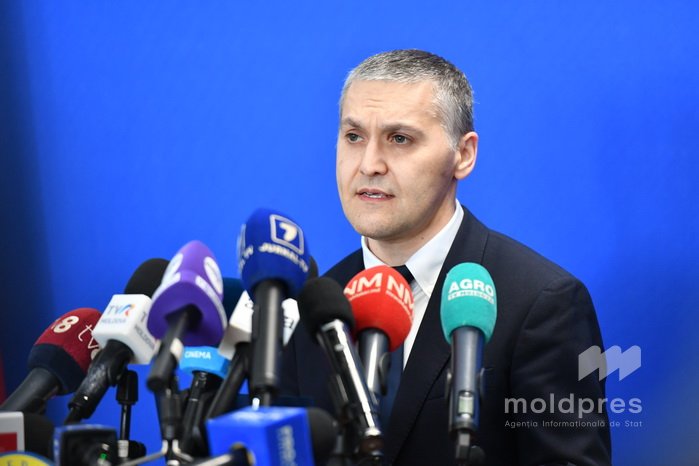
The draft decision was presented at the Government meeting by Director of the National Crisis Management Center (CNMC) Serghei Diaconu, who stressed that the proposed measures are indispensable to avoid uncontrolled manual disconnections, to maintain the functioning of the state and to protect citizens by preventing a major energy crisis.

The measures concern both electricity supply, in the context of the disconnection of the Isaccea–Vulcănești Line, and the securing of fuel stocks amid the complicated situation in the Middle East.

“Regrettably, due to circumstances beyond the control of the state authorities, the situation is critical. In the context of Russia’s military attacks on infrastructure in southern Ukraine, the 400 kV Vulcănești–Isaccea power line is unavailable. As a result of the Russian attacks on Ukrainian territory, technical incidents have occurred, creating an imminent risk of an electricity deficit estimated at 350–400 MW during peak hours. Moreover, the volatile international context, marked by tensions in the Gulf region and maintenance works at regional refineries, requires strict precautionary measures in the petroleum products sector as well, in order to avoid any disruption in the supply of the domestic market,” said Serghei Diaconu.

The CNMC Director noted that the Government-approved decision establishes a set of urgent and proportionate measures, structured along several main directions:

1. Prioritizing and securing energy consumption.

“We clearly establish that medical and healthcare institutions, critical infrastructure, and vulnerable consumers have absolute priority for power supply. At the same time, the operator Moldelectrica will halt electricity exports during peak hours (17:00–21:00 CET) in order to direct any available resource to domestic consumption,” stated Serghei Diaconu.

2. Implementing measures to reduce non-essential consumption.

“We call on administrators of public and commercial buildings to reduce indoor lighting by at least 30%, disconnect shop windows and advertising lighting, as well as limit the use of escalators during peak hours,” said the CNMC Director.

Economic operators with production processes that consume large amounts of electricity—such as the use of electric furnaces, electric arc welding equipment, or melting installations—are also urged to reorganize their work schedules outside peak consumption intervals.

3. Securing fuel stocks.

The Customs Service will continue to strictly monitor exports from the Giurgiulești International Port, allowing the export of petroleum products only if safety thresholds are exceeded. At the retail level, the sale of diesel fuel at filling stations, including sales in containers, will be limited to a maximum of 20 liters in order to prevent stock depletion.

4. Increasing domestic response capacity.

The authorities will facilitate the rapid installation of storage and generation systems by granting derogations from construction permitting requirements, such as urban planning certificates and building permits.

“This will facilitate and debureaucratize the process of connecting power generation installations for holders of technical approvals, so that the capacity to produce alternative energy can increase as quickly as possible. Combined heat and power plants will be able to generate more electricity with the guarantee that all necessary costs, including technological losses, will be covered, without penalties for the duration of the state of emergency,” explained Serghei Diaconu.

5. Providing the necessary legal tools for immediate technical interventions.

The Government’s decision stipulates that the state-owned company Moldelectrica may resort to procurement through direct negotiation procedures. Thus, technical teams can quickly purchase the emergency equipment needed to avoid electricity shortages during peak hours and to eliminate the risk of major imbalance in the power system. The Ministry of Energy is the sectoral authority responsible for crisis management and direct communication with citizens, while the CNMC will continue to ensure the coordination of actions at the national level.

The Parliament of the Republic of Moldova has declared state of emergency for a period of 60 days, starting on 25 March 2026, after the main power line supplying the Republic of Moldova—the Vulcănești–Isaccea line—was disconnected following Russia’s attacks on Ukraine’s civilian energy infrastructure. The decision was taken at the proposal of the Government, which argued that declaring the state of emergency will allow the authorities to act swiftly and protect citizens.
 Facebook
 Instagram
 X/Twitter
 Telegram
New step in development of digital payments: Open Banking standard entered into force
Over 3,000 tons of gasoline and diesel imported in Moldova on Thursday
Moldovan deputy PM in Washington says World Bank's assistance crucial for Moldova's European integration
Citizens wishing to take out loan can find out total cost
Deputy Prime Minister holds meetings at U.S. Department of State: Strengthening foreign policy and advancing strategic priorities on agenda
Base rate on main monetary policy operations maintained at 5 percent
Around 3,400 tons of gasoline and diesel imported into Moldova on Wednesday
Moldovan deputy PM, U.S. deputy trade representative analyze international trade developments, Moldova's role in regional context
OECD's report, Creating Functional Energy Markets in Moldova, unveiled in Chisinau
Moldovan deputy PM has talks with U.S. Deputy Assistant Secretary for Europe and Eurasia at Department of Commerce
Moldova to cooperate with Belgian Development Agency to modernize energy sector
Alert measures in energy sector adjusted by Government to strengthen market security and stability
Authorities to examine solutions for transport operators at meeting of Commission for Emergency Situations
Over 3,000 tons of fuel imported in Moldova on Tuesday
Attention, drivers! Traffic fines issued abroad might be recognized, enforced in Moldova
Energocom: electricity needs for March 25 fully covered in Moldova
Isaccea–Vulcanesti power line stays disconnected; intervention teams arrive on site, make first assessments
Veterinary, phytosanitary experts from both banks of Dniester hold working meeting
State institutions make efforts to avoid power cuts
PHOTO // USMF "Nicolae Testemițanu" to receive medical equipment and supplies for Traditional Chinese Medicine Centre
European Union expands assistance for pollution management on Dniester River by mobilizing new resources
 National Bank of Moldova
Veterinary, phytosanitary experts from both banks of Dniester hold working meeting
Government approved set of measures to protect energy system and reduce consumption during state of emergency
Head of State pays official visit to Slovak Republic
Voluntary amalgamation process simplified by Government
Higher daily allowances for children without parental care starting 1 April 2026

Government introduces measures to manage state of emergency in energy sector: prioritizing consumption and securing fuel stocks
Voluntary amalgamation process simplified by Government
Higher daily allowances for children without parental care starting 1 April 2026
Pensions and social benefits to be indexed by 6.84% starting 1 April 2026
Daily allowances for children in placement services to be indexed from 1 April
Prime Minister orders institutional mobilization amid state of emergency: Every decision must be result‑oriented
Bank Fraud case: Vladimir Plahotniuc to deliver speech at judicial debate
Chisinau relies on international partners’ support for withdrawal of Russian troops from Transnistrian region
Over 3,600 tons of gasoline and diesel imported into Moldova on Tuesday
Ambassador of the Republic of Moldova to Japan recalled from office
Approved by Government: pensions to be indexed by 6.8 percent and increased by fixed amount of over 50 lei as of 1 April
VIDEO // Minister of Energy explains reasons behind declaration of state of emergency
New round of national dialogue on children’s online safety held in Ungheni
European Commissioner for Justice to visit Moldova
Deputy Prime Minister: We will strive to make Moldova as little vulnerable as possible
DOC // State of emergency in Moldova
Receive the latest news directly to your email

Receive the latest news directly to your email