
MOLDPRES INTERVIEW // Head of department at Moldova's Education Ministry says technical, vocational education safe choice for people willing stable, well‑paid, relevant career
Reforms in technical and vocational education are strongly anchored in the standards and recommendations of the European Union, especially the ones targeting the development of skills relevant to the labor market, lifelong learning, and ensuring quality.

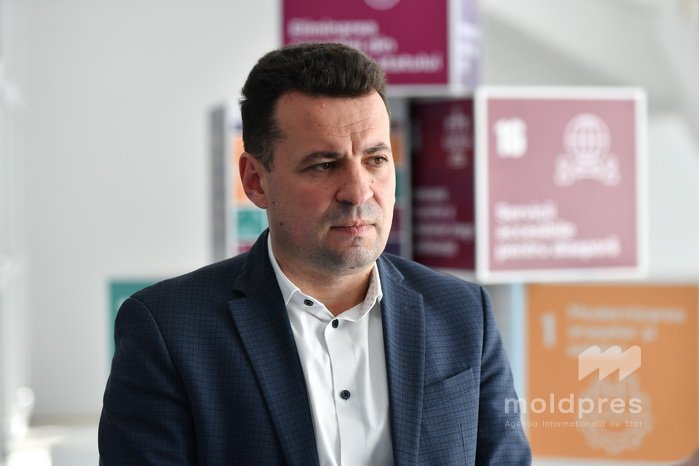
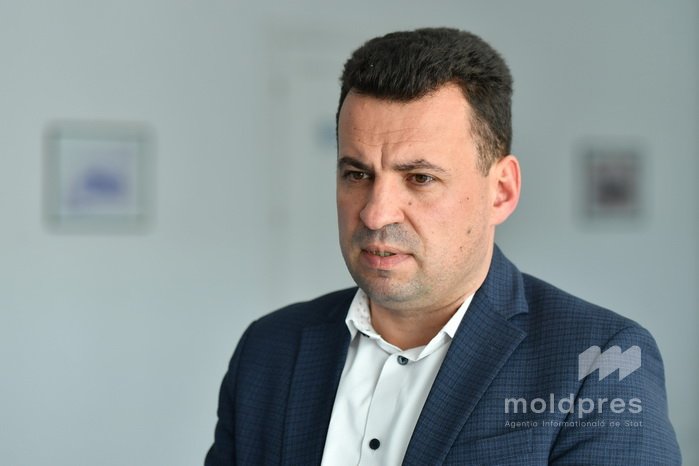
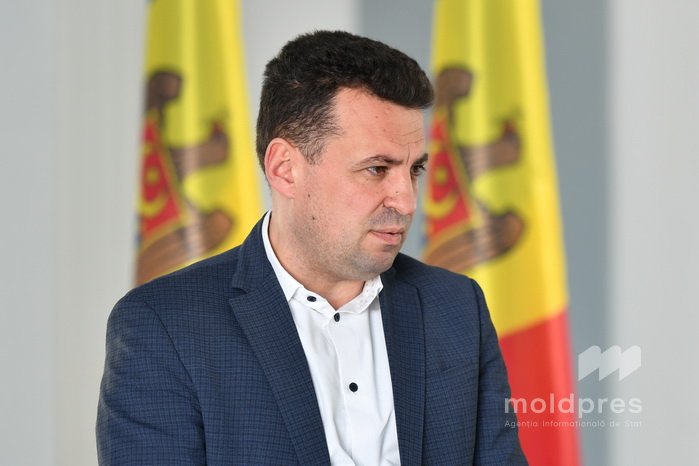
The Education and Research Ministry (MEC) plans, for 2026, to continue modernizing the educational offer in technical and vocational education by introducing new specialties and increasing the number of state‑funded places in priority areas, such as energy, information technologies, modern agriculture and industry. In an interview given with MOLDPRES, Silviu Gincu, Head of the Department for Policies in Technical and Vocational Education and Lifelong Learning at the MEC, said that these changes were meant to respond to economic and technological transformations, including digitalization and the green transition, which increasingly influence the labor market and employers’ requirements.

MOLDPRES: Mr. Gincu, what are the main reforms recently implemented in technical and vocational education of Moldova, and what major problems are they meant to solve?

Silviu Gincu: For technical and vocational education it is important to ensure that all reform components are focused on young people, so that, upon graduation, they possess professional competences demanded on the labor market and can find jobs with good salaries.

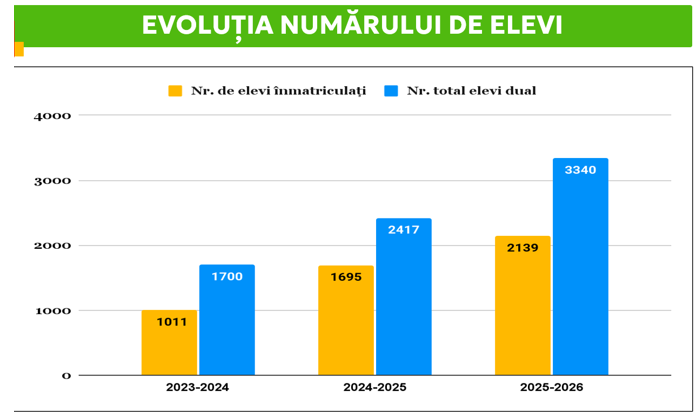
In this regard, at ministerial level, we have continued to promote dual education. In the 2025–2026 academic year, about 2,139 pupils were enrolled, compared to 1,695 in the previous year, so the total number of students in dual education this year is 3,340, compared to 2,417 in the previous year.

Dual education is an important reform in the system, but not the only one. We place increased emphasis on ensuring quality. This year, we are developing about 130 occupational standards, 130 qualification standards, 130 curricula and 130 programmes provided with learning materials, and, of course, training teaching staff for these programmes. A reform of this magnitude is being implemented for the first time in Moldova and is supported by the European Union through the Reform Agenda. We expect to finalize this reform by the end of 2027.

In the same area, we have initiated the process of developing teachers’ digital skills. Starting from next May, we aim to certify the digital competences of at least 25 per cent of the teaching staff in technical and vocational education.

The system’s infrastructure is no less important. Our analyses show investments worth more than 400 million lei in the system’s infrastructure in the last 4–5 years. It is important to mention the support of the European Union for modernizing the infrastructure of 10 centers of excellence on the period 2017–2020, as well as the constant support on behalf of EU states, such as Germany, Austria, Switzerland, and Liechtenstein, which stand by us and with which we jointly implement around 5–8 system‑capacity‑building projects annually.

In 2026, we are launching, with the support of the European Bank for Reconstruction and Development (EBRD) and the EU through the Reform Agenda, a project worth 80 million euros, in order to modernize the infrastructure of institutions in the priority sectors of the national economy, such as energy, agriculture, industry and Information and Communication Technology (ICT).

In our opinion, the impact of the reforms carried out in technical and vocational education is positive. This perception is based on the measures implemented and the feedback received from those within the system, as well as from outside it. Another indicator is that, despite the demographic situation in the country, the number of students in technical and vocational education has increased in the last 5 years.

For example:

In secondary technical and vocational education, in the 2025/26 academic year:

– 8.2 thousand people were enrolled, 13.9 per cent more compared to the previous year;

– in 2025, the number of graduates was 5.1 thousand, an increase of 8 per cent compared to the previous year;

– the total number of pupils was 15.6 thousand, an increase of 8.0 per cent compared to the previous academic year.

In post‑secondary technical and vocational education, in the 2025/26 academic year:

– 10.1 thousand pupils were enrolled, registering an increase of 6.0 per cent compared to the previous academic year;

– the number of pupils was 34.6 thousand, up by 3.9 per cent compared to the previous academic year;

– the number of graduates was 6.9 thousand, compared to 6,454 in the previous year.

MOLDPRES: How developed is dual education in the Republic of Moldova at present, what concrete benefits does this model offer compared to the classical system? Are there plans to expand this model in the coming years?

Silviu Gincu: Dual education is one of the main pillars of reform in technical and vocational education and has been experiencing constant growth. The increase in the number of pupils and economic agents involved proves the growing interest in this model.

The benefits are clear: pupils acquire practical skills directly in the workplace, receive a scholarship, remuneration (the equivalent of the minimum wage, according to the actual time spent on practical activities in companies), and have real chances of employment after graduation.

For economic agents, this model allows them to train future employees according to their own needs. The main challenges relate to expanding the number of companies involved, informing potential candidates, so they choose vocational training through dual education, ensuring the quality of workplace training and strengthening the regulatory and institutional framework.

Nevertheless, we have clear plans to expand dual education in the coming years, including by diversifying fields and increasing the number of partnerships.

While last year, the target was to enroll 2,000 pupils in dual education, this year we aim to enroll around 2,500 pupils. According to strategic documents, in the coming years, we have the goal of admitting at least 2,000 pupils annually through dual education.

MOLDPRES: Are there concrete partnerships or projects with European institutions in this field? Which European practices have already been taken over and implemented in Moldova?

Silviu Gincu: Reforms in technical and vocational education are strongly anchored in the standards and recommendations of the European Union, especially the ones targeting the development of skills relevant to the labor market, lifelong learning, and ensuring assurance.

Moldova has taken over and is implementing more European practices, such as developing occupational and qualification standards based on labor‑market requirements, promoting dual education and strengthening quality ensuring mechanisms. Emphasis is also placed on aligning study programmes with the European Qualifications Framework (EQF) and introducing modern tools for assessing competences.

International partnerships play an essential role. We work actively with European institutions and organizationsm such as ETF and other partners from Germany, Austria, Switzerland and other EU member states. Through these partnerships, we implement concrete projects for curricular modernization, institutional development and teachers’ training. At the same time, the Reform Agenda supported by the European Union is a key instrument for accelerating these processes.

MOLDPRES: To what extent is the educational offer aligned with the real needs of the labor market? What are the most in‑demand specialties at present and why? Are there areas where there is a major shortage of specialists?

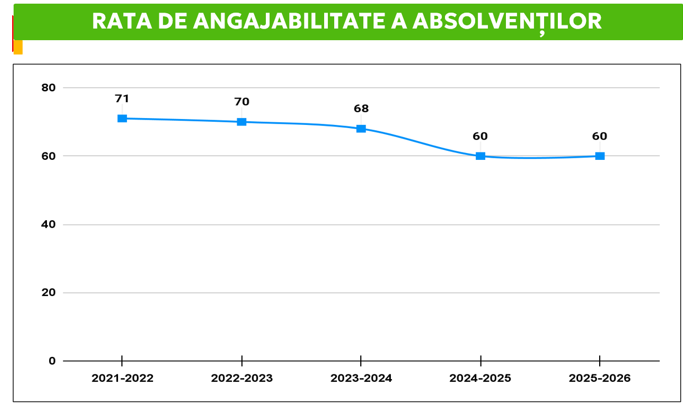
Silviu Gincu: In recent years, we have seen a steady increase in interest in technical and vocational education, including due to the real employment opportunities provided to graduates. Statistics data confirm this trend, both in terms of enrollments and total number of students.

The most in‑demand specialties are in such areas as IT, manufacturing, construction, services and energy. These are attractive because of high labor‑market demand and the prospects of quick and stable employment.

At the same time, we are constantly working to align the educational offer with economic needs. The involvement of the business community, especially through dual education, contributes directly to adjusting study programmes. However, there are still fields where a shortage of specialists is felt, especially in technical trades such as electricians, welders, mechanics or industrial operators.

MOLDPRES: What changes are planned for the 2026 admission session? Will new specialties be introduced? If so, which ones, and what has driven their creation? What other news should prospective candidates know about?

Silviu Gincu: For the 2026 admission session, we aim to continue modernizing the educational offer, including by introducing new specialties adapted to the priority sectors of the national economy, as well as by increasing the number of state‑funded places in such areas as energy, information technologies, modern agriculture and manufacturing.

These new specialties arise from the need to respond to economic and technological transformations, such as digitalization and the green transition. At the same time, study programmes are being extensively updated based on the new occupational and qualification standards.

No changes are planned in the duration of studies; however, the structure of programmes will become more flexible and more focused on practical competences. Candidates should know that they will benefit from better study conditions, modernized infrastructure and increased employment opportunities, including through dual programs.

MOLDPRES: How do you see the evolution of technical and vocational education in the next 5–10 years? What should change for this system to become more attractive to young people?

Silviu Gincu: In the next 5–10 years, we see a technical and vocational education system that is much more flexible, digitalized and connected to the real economy. The focus will be on competences, lifelong learning and rapid adaptation to technological changes.

To enhance the system’s attractiveness, it is essential to continue investing in infrastructure, strengthen partnerships with the business environment, develop teachers’ capacities, including through teaching and learning materials and promote more actively the advantages of this type of education. Career guidance and accurate information for young people also play a crucial role.

MOLDPRES: What is your message to students who are still hesitant about choosing a technical and vocational career?

Silviu Gincu: My message to students is simple: technical and vocational education provides real opportunities for personal and professional development. It is a safe choice for those who want a stable, well‑paid career that is relevant for the future.

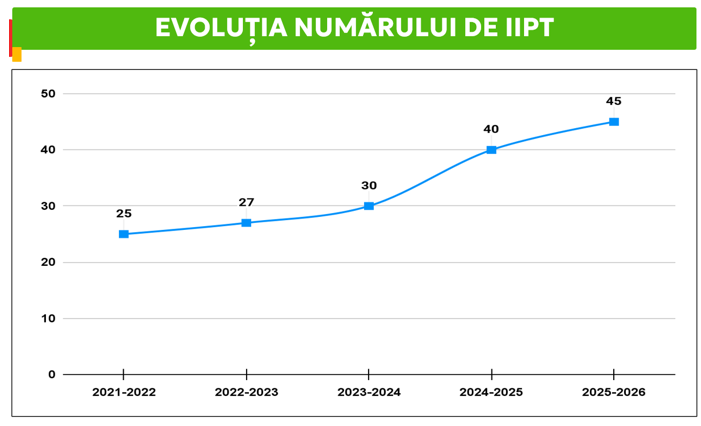
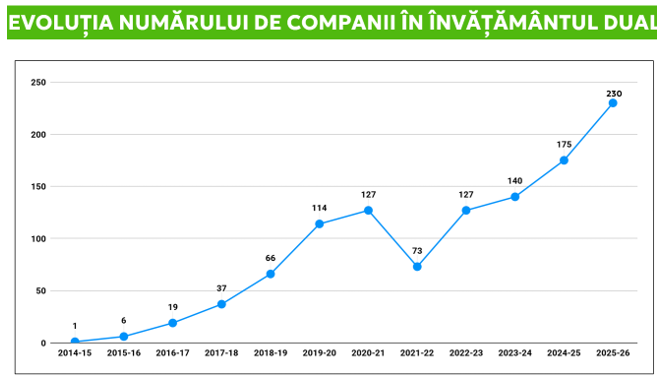
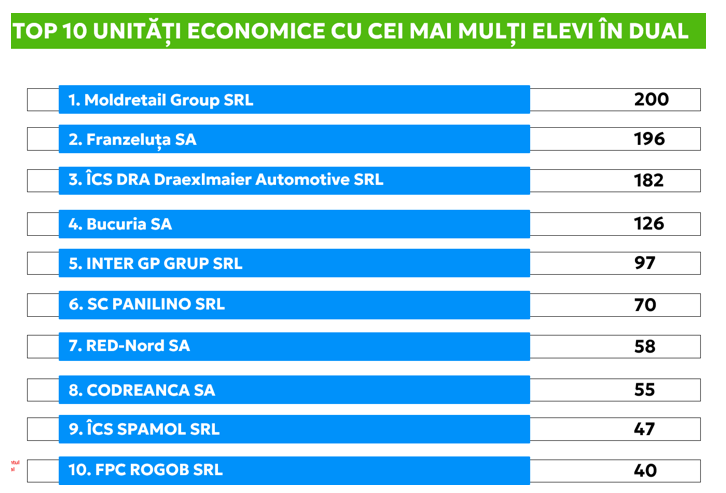
In Moldova, there are 81 technical and vocational education institutions, 45 of which provide training through the dual system in partnership with 230 companies.

Author: Cornelia Stefoglu
 Facebook
 Instagram
 X/Twitter
 Telegram
MOLDPRES INTERVIEW // Lithuanian Ambassador about prospects of Moldova’s EU accession: If you make things real, they will become achievable
MOLDPRES INTERVIEW // Moldovan finance minister says government aims to modernize financial system for benefit of businesses, citizens
MOLDPRES INTERVIEW // Ambassador of State of Qatar to Moldova: We are working to improve ways of attracting Qatari investors to Moldovan market
MOLDPRES INTERVIEW // President of Moldova's Chamber of Commerce and Industry says country must use opportunities provided by European integration to attract investments, become competitive
MOLDPRES Interview // Minister of Internal Affairs: Interior Ministry applies European security standards and is ready to advance in EU accession process
MOLDPRES INTERVIEW // Moldovan energy minister says foremost interest citizens to have secure energy at affordable prices
Moldovan justice minister says, according to European Commission’s Report, Moldova made greatest progress among EU candidate states, including in justice field
INTERVIEW MOLDPRES // Moldovan defense minister says Russia's war in Ukraine highlighted vulnerability of defense sector, need of building strong, prepared, resilient army to current challenges
INTERVIEW WITH MOLDPRES // Deputy PM says wants Moldova where a child from any village has same opportunities as a child from Chisinau
INTERVIEW MOLDPRES // Deputy Prime Minister on Ukraine Peace Agreement: No discussion about Moldova can take place without Chișinău's participation
INTERVIEW MOLDPRES // Moldovan agriculture and food industry minister says European integration fundamentally changes way leadership supports agriculture
INTERVIEW MOLDPRES // Romania's Ambassador in Chisinau says Moldova to never be alone in its efforts, Romania to stand by its side
MOLDPRES INTERVIEW // Romanian culture minister says culture adds value, rebuilds trust
MOLDPRES interview // IGP head: Russia whether through Ilan Shor or other means to constantly try to find ways to create disorder and destabilization
PHOTO // PM in New York tells Diaspora government willing to turn experience of Moldovans from United States into projects for country
Moldovan foreign affairs minister at UN says Moldova strengthening capacity to respond to health threats
Moldova under emergency state in energy, hydrological sectors as of September 26; what measures take effect
PHOTO // PM promotes Moldova's investment opportunities in New York
Balti Clinical Hospital to receive ultrasound machine through grant provided by government of Japan
Japan supports modernization of Balti Clinical Hospital with grant worth over 95,000 dollars
Moldovan parliament speaker urges students not to be afraid to express their ideas, wishes
 National Bank of Moldova
Strengthening Moldova’s cooperation with UNDP, UNOPS discussed in New York
Moldova's National Crisis Management Commission approves new measures to ensure energy security, protect water resources
Moldovan PM, U.S. investors, companies discuss potential projects in Moldova
Head of state says Moldovans must build economy where well-educated people can find opportunities at home
Moldova represented at Interparliamentary Conference on Stability, Economic Coordination and Governance in European Union

Moldova's Border Police receive six special vehicles on behalf of FRONTEX
Head of state says Moldovans must build economy where well-educated people can find opportunities at home
Moldovan president attends events dedicated to 35th anniversary of foundation of Academy of Economic Studies
New charges brought against former Moldovan president Igor Dodon in “Kuliok” case; prosecutors seek harsher sentence
Moldova represented at Interparliamentary Conference on Stability, Economic Coordination and Governance in European Union
ARMENPRESS: EU Commissioner Kos promotes Armenian products after trade measures adopted
VIDEO // Parliament speaker conveys message to coaches of Moldova
Public buildings of Moldova to undergo energy renovation with World Bank's support
Mircea Eșanu on nomination to lead Moldova Project: More information could become known in October
President’s speech at ASEM’s 35th anniversary
PHOTO GALLERY // Moldova's new passport presented by Public Service Agency
VIDEO // Moldova to introduce new passport model as of October 15; document to feature more than 100 security elements
DOC // Regulation on e-Consulat System published in Official Journal
National Award for Seniors: 15 people winners in 2026 edition
PHOTO // Moldova’s protected areas strengthened through restoration works, planting and new management tools
Moldovan, Dutch Prime Ministers discuss European path and investments
Receive the latest news directly to your email

Receive the latest news directly to your email