
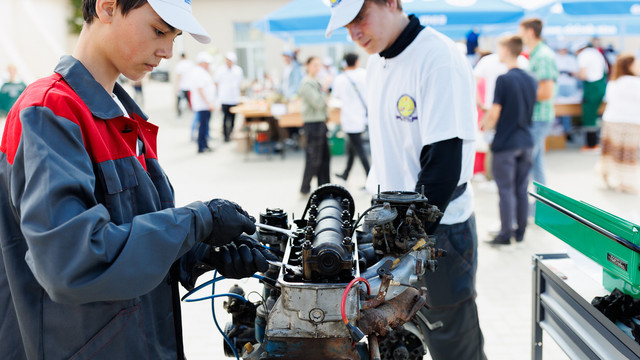
New specialties and more state-funded places in 2026: more and more young people choose technical vocational education
The number of young people choosing technical vocational education in the Republic of Moldova is increasing. This year, the total number of students studying at centers of excellence, colleges, and vocational schools has exceeded 50,000, which is 5% higher than in the previous year. The authorities explain this trend through the adaptation of the education system to labor market demands and alignment with European standards.
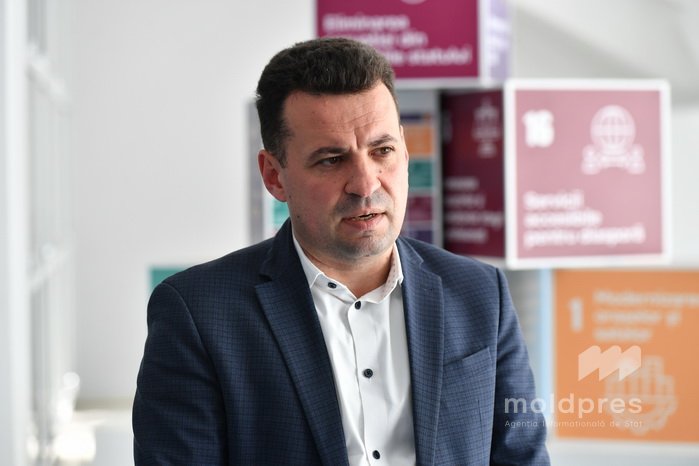
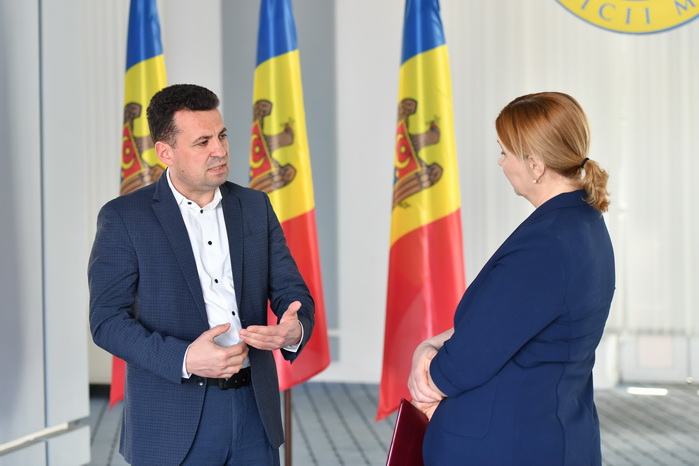
Silviu Gîncu, Head of the Technical Vocational Education Policies Directorate within the Ministry of Education and Research (MEC), told MOLDPRES that, for 2026, new specialties will be introduced and the number of state-funded places will be increased.
Gîncu noted that data from the last five years show a consistent upward trend, both in terms of enrollments and in the total number of students.
In secondary technical vocational education, in the 2025/2026 academic year, 8.2 thousand people were enrolled, 13.9% more than in the previous year. At the same time, the number of graduates reached 5.1 thousand, up by 8%, and the total number of students hit 15.6 thousand, 8% more compared to the previous year.
Growth is also recorded in post-secondary technical vocational education. Thus, 10.1 thousand students were enrolled in the same academic year, which represents an increase of 6%. The total number of students reached 34.6 thousand (+3.9%), while the number of graduates rose to 6.9 thousand.
“In recent years we have observed a steady increase in interest in technical vocational education, including in the context of the real employment opportunities offered to graduates. Statistical data confirm this trend, both in terms of enrollments and in the total number of students. The most in-demand specialties are in fields such as IT, manufacturing, construction, services, and energy. These are attractive due to the high demand on the labor market and the prospects for rapid and stable employment,” said Silviu Gîncu.
At the same time, Silviu Gîncu stressed that reforms in technical vocational education are strongly anchored in European Union standards and recommendations, especially those aimed at developing labor-market-relevant skills, lifelong learning, and quality assurance.“The Republic of Moldova has taken over and is implementing several European practices, such as developing occupational and qualification standards based on labor market requirements, promoting dual education, and strengthening quality assurance mechanisms. There is also a focus on aligning study programs with the European Qualifications Framework (EQF) and introducing modern tools for skills assessment,” Gîncu mentioned.
For 2026, the Ministry of Education and Research plans to further modernize the educational offer, including the introduction of new specialties and an increase in the number of state-funded places in priority areas such as energy, information technologies, modern agriculture, and industry.
“The emergence of these specialties is driven by the need to respond to economic and technological transformations, such as digitalization and the green transition. At the same time, study programs are undergoing extensive updates, based on new occupational and qualification standards. Although the duration of studies will not be changed, programs will become more flexible and more focused on practical skills. Applicants should know that they will benefit from better study conditions, modernized infrastructure, and enhanced employment opportunities, including through dual programs,” underlined Silviu Gîncu.
In the Republic of Moldova there are 81 technical vocational institutions, 45 of which train young people through dual education, in cooperation with 230 companies. The admission period to centers of excellence and colleges will begin on 20 July 2026.
More information about the opportunities offered by technical vocational education in Moldova can be found in the exclusive interview given to MOLDPRES by Silviu Gîncu, Head of the Technical Vocational Education and Lifelong Learning Policies Directorate within the Ministry of Education and Research. The interview will be published on Tuesday, April 21, on moldpres.md.
 Facebook
 Instagram
 X/Twitter
 Telegram
New regulations on reducing methane, other climate pollutants in Moldova: drafts presented to public
PHOTO // United States reaffirms support for modernization, economic development of Ungheni municipality of Moldova
Attention, travelers! Heavy traffic at Leuseni border crossing point on outbound direction from Moldova
Acting Minister of Defense about drone crashed near Copanca: Detection by radars depends on distance, altitude and terrain features
Recruitment into National Army under scrutiny by Ombudsman following multiple complaints
Investments in research infrastructure in universities: three institutions to implement projects with funding of 9.25 million euros
Alexei Buzu at UN Forum in New York: Sustainable development means resilient, equitable Moldova with opportunities
Ministry of Defense: Gheran-2 drone crashed in Copanca to be safely detonated by sappers
Drone in Copanca crashes near house, two people evacuated
Moldovan firefighters heading to Greece to help extinguish forest fires
Alert in south of Moldova: Gheran-2 drone exploded near village of Copanca
PHOTO // Several students and resident doctors from USMF “Nicolae Testemițanu” took part in academic mobility program in China
PHOTO GALLERY // His Eminence Antonie, new Metropolitan of Bessarabia enthroned during solemn ceremony
PHOTO // New Metropolitan of Bessarabia enthroned as Archbishop of Chișinău, Metropolitan of Bessarabia and Exarch of Lands
PHOTO GALLERY // Moldovan PM-designate presents new government’s programme in parliament: images from day of requesting vote of confidence
Moldovan PM-designate says financial support provided to amalgamated mayoralties – 3,000 lei for each resident – to be allocated according to assumed commitments
Moldova's designated PM proposes new vision for harnessing state-owned assets
VIDEO // Authorities to develop new concept of fiscal policy; Moldovan PM-designate says government to propose reform due to place emphasis where it is needed
PM-designate says grateful to Romania for its constant support of Moldova’s European path
Moldovan parliament speaker says Tofan Government to receive parliament’s vote, to immediately get to work
Moldova aims to open all EU negotiation chapters in next six months
 National Bank of Moldova
Moldovan president has meeting with mayors of Gagauz autonomy
Speech of candidate for position of Moldova's PM, delivered in parliament's plenum
Moldovan president has meeting with members of People’s Assembly of Gagauzia
Moldovan president says leadership wants relationship with India to bring concrete results for people of Moldova
Moldova–India Business Forum: new perspectives for economic partnerships, bilateral investments

Moldovan president has meeting with mayors of Gagauz autonomy
At least seven billion lei to be mobilized in coming years for public, private investments in Moldova's agri-food sector
Over one thousand voluntary amalgamation decisions approved in Moldova
Over one thousand voluntary amalgamation decisions approved in Moldova
Moldovan designated PM says Gagauzia an important bridge to Turkey
Moldovan PM-designate speaks about government team
Moldovan PM-designate says ambition is for Moldova to become most entrepreneur‑friendly European country
Moldova's prime minister-designate says shares people’s indignation as for ''outrageous'' salaries, does not tolerate such cases
Moldovan PM-designate says government must focus on real efficiency, not just tick populist box
PM-designate says rapprochement between two banks of Dniester to be pursued peacefully, step by step, without escalation
Concluding EU accession negotiations, preparing signing of Accession Treaty by 2028 among goals of Moldova's Tofan Government
Prime minister-designate in parliament has plan for Moldova, determined to fight for stronger economy
Moldovan PM-designate in parliament says asking for MPs' vote for programme with clear direction
Speech of candidate for position of Moldova's PM, delivered in parliament's plenum
PHOTO GALLERY // Results of Peer-to-Peer Mathematics campaign presented at wrap-up event in Moldova
Moldova's parliamentary opposition says not to support investiture of Government led by Vasile Tofan
Receive the latest news directly to your email

Receive the latest news directly to your email