
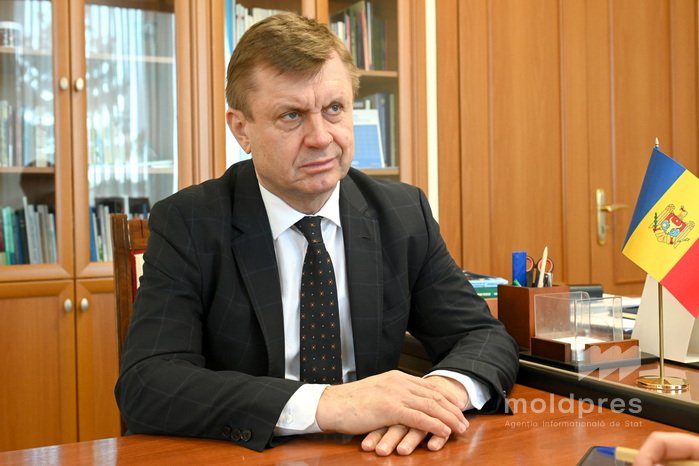
MOLDPRES INTERVIEW // Moldovan deputy PM for reintegration says gradual reintegration in different sectors path toward lasting settlement of Transnistrian conflict
In a regional context marked by the war in Ukraine and the deadlock of the 5+2 negotiations format, the Moldovan authorities have rethought, in the long term, the country’s reintegration strategy. This involves a set of gradual actions and a pragmatic dialogue in the 1+1 format, with an emphasis on the economic and social sectors, education and the environment.

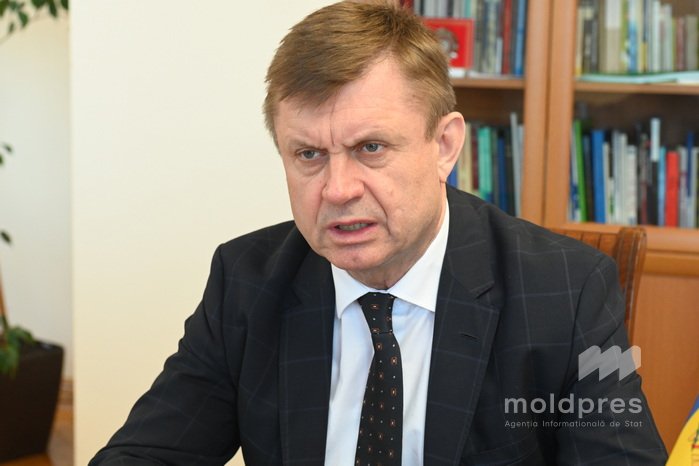
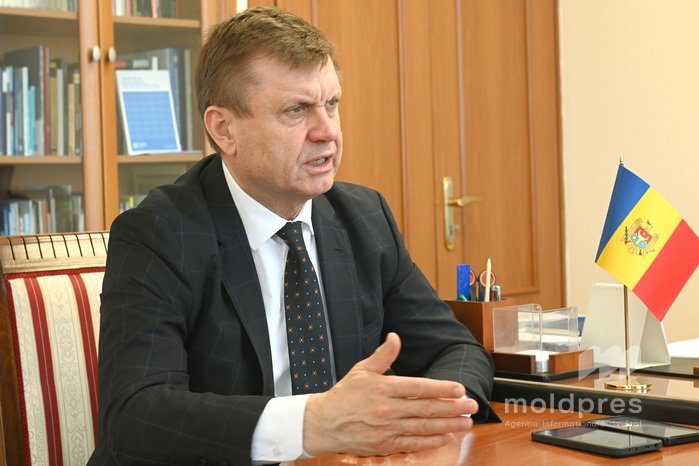
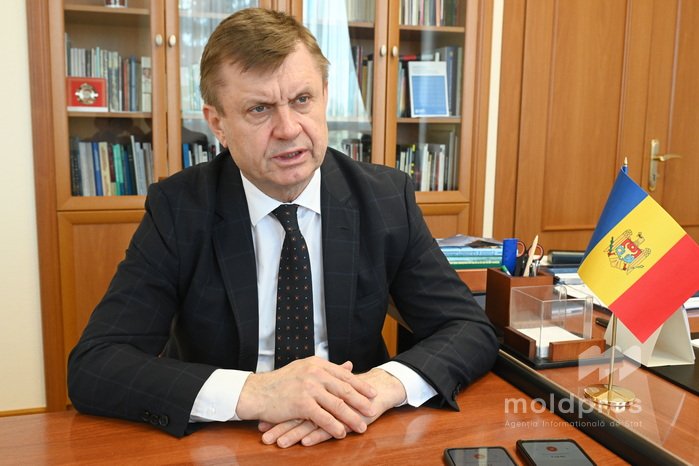
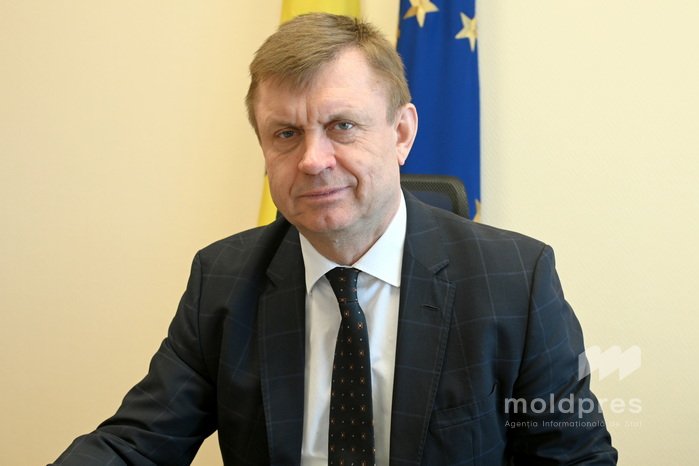
Deputy Prime Minister for Reintegration Valeriu Chiveri gave an interview with the MOLDPRES State Information Agency, in which he spoke about the country’s reintegration activities, structured by modules, the creation of a Convergence Fund meant to raise the standard of living on the left bank of Dniester, the supply of natural gas and the evolution of the reintegration process in the context of EU accession and a possible peace agreement in Ukraine.

MOLDPRES: The authorities of Moldova have announced that they are working on a new strategy for the reintegration of the Transnistrian region, given that the 5+2 negotiations format is no longer functional and cannot be resumed in the current regional context. In the public space, they discuss the drafting of a  Reintegration Plan. Could you provide more details about the content of this plan, its main stages and implementation deadlines?

Valeriu Chiveri: The settlement negotiations, which took place for a long period in the 5+2 format, can no longer be held for obvious reasons. Presently, the only discussion format is 1+1, which includes political representatives from Chisinau and Tiraspol. This platform is sufficiently relevant for discussing subjects of interest to citizens on both banks of Dniester.

Our vision for the reintegration process is well defined. We are talking about gradual reintegration in certain sectors. First of all, it is about reintegration in the economic field.

We changed this approach after a lengthy period of negotiations on the political settlement of the conflict, which did not deliver many results. We considered that a gradual approach in different sectors could create certain conditions for a comprehensive settlement of this conflict and actions were taken that would energize the process.

Thus, as of 1 January 2024, customs duties were introduced, and a group of MPs has recently come up with a legislative initiative to introduce certain taxes for economic agents on the left bank of Dniester, which would allow the unification of the fiscal space and the application of legal norms in the economic field throughout the entire territory of the country.

As for the Reintegration Plan, it is developed by modules: economic, customs, fiscal, social, educational, environmental, energy and others. At present, we are in an advanced phase on the economic module. This plan is not yet a document approved by the government, but is rather taking shape as a work in progress.

Creating a strict timetable for the reintegration process is very complicated, unlike European integration, where we have a clear calendar. Efforts or successes in the reintegration process do not depend exclusively on the government, but also on very important external factors, such as the illegal Russian military presence on the territory of our country and the war in Ukraine. These factors strongly influence the settlement process.

As far as the budget is concerned, reintegration entails costs. We are not currently talking about a strict financial budget, but about the need for financial resources depending on how fast and how advanced the process will be. For example, an approximate calculation can be made for the social sector, by relating the volume of the social insurance fund to the number of citizens of Moldova. This remains, however, a macro-level analysis, useful for international comparisons and less a practical one.

At the same time, the Transnistrian region has a production capacity that can partially cover social, educational and other needs. This means that not all resources will come from the right bank or through international contributions.

MOLDPRES: At the last meeting in the 1+1 format, the Moldovan authorities informed Tiraspol’s political representative, Vitalii Ignatiev, about the intention to create a Convergence Fund. What exactly does this initiative represent, when could it be implemented and how is it perceived by the Tiraspol administration?

Valeriu Chiveri: The unification of the legal framework in the economic field and of the standard of living on both banks of Dniester will be achieved by accumulating funds that could come from customs duties, as well as from the taxes that are to be introduced under the new legislative initiative.

Obviously, we very much want these funds to be supplemented by contributions from European partners. We intend for the accumulated funds to be used for social projects, that could raise the standard of living and social benefits to the level of those on the right bank. Another priority is the implementation of infrastructure projects.

According to the bill adopted in the first reading by the parliament, this fund is to start operating on 1 August 2026. Thus, the government, including with the participation of colleagues from the Reintegration Policies Bureau, is to develop the implementation mechanism.

We believe it will be a rather complex project to implement, as it will have to be carried out in a region that we do not control sufficiently well, or do not control at all at this time, and our capacities are modest. For these reasons, we will look for ways to advance on social issues, which could be implemented relatively more easily, followed by infrastructure projects.

It is difficult to say what the budget of this fund might be. Various figures have been floated in the public space. The budget depends heavily on trade and economic activity, on the activity of economic agents on the left bank of Dniester, as well as on the possibilities to carry out import-export operations. Depending on them, we could have a higher or lower figure.

We must take into account the fact that the social and economic situation in the region is becoming increasingly dire, and some enterprises have suspended their activity or it is very limited. From this point of view, we anticipate that the volume of the funds could be much more modest than the figure presented in the public space.

The Transnistrian side rejected this initiative from the outset. However, some voices were more neutral. They emphasized that they would like the process to be carried out in coordination with the Tiraspol administration. We have not yet reached the stage of drawing up the mechanism but, for the time being, as I said, the reactions are quite reticent.

MOLDPRES: With regard to education, you have proposed that all Moldovan schools on the left bank of Dniester switch to Romanian as the language of instruction starting from 1 September 2026. Under what conditions would this measure be achievable?

Valeriu Chiveri: This initiative is based on requests from many parents and teachers on the left bank of Dniester. So, it is not a personal ambition of the deputy prime minister or of Moldova’s government, but an initiative focused on the interests of parents who want their children to study in their mother tongue as soon as possible.

This process is difficult and faces reticence from Tiraspol. We will put the subject up for discussion at the next meeting in the 1+1 format. We hope that the Transnistrian side will be more understanding toward the demands of parents and teachers of the region.

It is difficult to say how realistic it is to achieve this goal starting from 1 September. For us, it would be important that, at least by this date, we have a decision in principle that this process could be carried out; this is what we are working toward.

In total, there are 26 educational institutions with instruction in the Moldovan language, in addition to the eight that teach in Romanian, and there is also a number of Russian-Moldovan educational institutions. For now, we are thinking first of all about these 26 institutions. If the initiative takes shape, then we will try to extend it to other institutions as well.

MOLDPRES: The issue of supplying natural gas to the Transnistrian region remains a current topic on the discussion agenda. In your opinion, what are the main obstacles to guaranteeing the energy security of localities on the left bank of Dniester and under what conditions could they be overcome?

Valeriu Chiveri: Deliveries of natural gas to the Transnistrian region take place in a rather non-transparent manner. Thus, the delivery conditions, involving payments coming from Dubai and supplies made through Moldovagaz to Tiraspoltransgaz, are not sustainable for the simple reason that they can be affected at any time by the European Union’s sanctions policy.

The offer on behalf of Chisinau, supported by the EU, stays valid, as it was in January 2025. It represents a transparent model, but is conditioned on respect for human rights in the region. The offer is not, at least for the moment, accepted by Tiraspol.

In certain situations, the current model of natural gas deliveries may no longer work, which will allow a return to the proposed model. Regardless of this, the license for natural gas deliveries to the Transnistrian region, through Moldovagaz, has been extended for three months – until 30 June, and starting in July we will have to determine which model will apply.

I would not rule out that this situation may continue for some time, for the simple reason that implementing a new model would increase market purchase prices, which would lead to higher tariffs for final consumers.

To a great extent, ordinary citizens would not be able to cope with such increases. For this reason, we very much want part of the money accumulated in the Convergence Fund to be used for compensation, so that vulnerable people of the region can overcome the shock of switching to the market price.

The subject also relates, to some extent, to electricity. As long as natural gas is supplied at an illusory price, the Kuchurgan power plant produces electricity at a price affordable for citizens. Once natural gas is purchased at the market price, things will change and, obviously, the price of electricity will rise.

MOLDPRES: You have also announced the intention to extend the Single Emergency Service 112 to the Transnistrian region. When could pilot projects be launched in Tighina, Dubasari or Rabnita?

Valeriu Chiveri: We have presented more initiatives, including the one concerning the 112 Service. We have talked more about Tighina, as in this area Moldovan police are active and the coverage of mobile phone companies is sufficiently good to ensure connection with the 112 Service.

Implementing this initiative would mean quality services in emergency situations. Unfortunately, it was not accepted by the Transnistrian side, even though it represents a social component and a way of enhancing the response capacity of institutions in emergencies.

We will continue to insist on implementing this pilot project in Tighina. All the conditions exist to achieve this objective; only the political will from Tiraspol is missing.

Implementing this measure would not involve additional costs. The Moldovan police are already active in the city and, in certain situations, our firefighters and rescuers are already involved in various actions in areas not controlled by the central authorities.

Likewise, there is sufficiently good cooperation in the medical field. Our doctors are involved in providing medical services to citizens from the eastern districts. So, in principle, no significant additional funds would be needed. It might be necessary to slightly expand the network of doctors and rescuers in the region. The timeframe for implementing the project is an issue that directly concerns political will.

Our initiatives launched recently have aimed to provide better services to all citizens of Moldova, regardless of where they live, on the left or right bank of Dniester. There have also been initiatives to provide support for road repairs. At the same time, we have proposed removing the illegal posts installed in the Security Zone. At the last meeting of the working groups on the environment, which took place last week, we proposed support for afforestation of certain areas in the Transnistrian region. We are trying to come forward with initiatives in all sectors, demonstrating the serious intentions of the Moldovan government to reintegrate the country.

MOLDPRES: In the context of possible peace negotiations between Ukraine and the Russian Federation, does our country intend to be part of a regional security package or of a package for the settlement of the Transnistrian conflict that would concern the withdrawal of Russian troops from the region?

Valeriu Chiveri: The war in the neighboring country is an external factor that influences the settlement process. For us, it would be important that a possible Peace Agreement, which is currently being negotiated, brings fair and lasting peace for Ukraine. We also want security guarantees that will give Ukraine the opportunity to consolidate this Peace Agreement.

Provided that these two components are achieved, we consider that certain conditions could be created for the settlement of the Transnistrian conflict and for the withdrawal of Russian military troops illegally stationed in the Transnistrian region.

We are not part of this package and we are not promoting this objective, for the simple reason that peace negotiations on Ukraine are complex, very difficult, with more components and the inclusion of an additional subject, without the participation of Moldova’s representatives in the negotiations, could generate settlement elements with certain implications for Moldova. We are pursuing the objective of reintegrating the country without being included in this package.

MOLDPRES: You have paid visits to Brussels and Bucharest – important partners of Moldova. How do they view the process of reintegrating the country in the context of accession to the European Union?

Valeriu Chiveri: We see the Transnistrian settlement and European integration as two parallel processes, and EU accession directly stimulates the country’s reintegration process. These are two directions that we are following at different speeds and with different calendars.

The EU integration process has a very clear and well-defined timetable, which the government and state institutions are respecting. At the same time, the reintegration process is complex, and it is impossible to draw up a rigid and very clear schedule.

During the discussions we had in Brussels and Bucharest, we did not receive specific conditionalities from the EU. Still, I very much hope that the European Union will apply creative elements when we reach the point of being ready for European integration.

MOLDPRES: When will the next 1+1 format meeting take place and what will be on the agenda? How do you assess the current dialogue between Chisinau and Tiraspol within this format?

Valeriu Chiveri: The next meeting could take place next week. We intend to include educational and environmental issues on the agenda. Tiraspol will add other discussion topics.

The 1+1 format is an important and useful platform. Even if we do not always manage to achieve the goals proposed, it is good to meet, to discuss and to see which topics could be implemented, in order to bring the two banks of Dniester closer together.

The previous meeting took place on 26 February, practically a month and a half apart. I do not think we should force the calendar of these meetings. It is necessary to convene sessions depending on the topics on the agenda. However, I do not think there should be very long breaks, as in the past, when meetings were held after long pauses, sometimes of a year and a half.

I could not say that, in this format, we have achievements or openness on general, political topics, but there are certain issues of an individual nature that find solutions in this communication. In this regard, we will continue to work, in order to get as many benefits as possible for citizens on both banks of Dniester.

MOLDPRES: Thank you for the interview.

Reporter: Ala Ciobanu
 Facebook
 Instagram
 X/Twitter
 Telegram
MOLDPRES INTERVIEW // Lithuanian Ambassador about prospects of Moldova’s EU accession: If you make things real, they will become achievable
MOLDPRES INTERVIEW // Moldovan finance minister says government aims to modernize financial system for benefit of businesses, citizens
MOLDPRES INTERVIEW // Ambassador of State of Qatar to Moldova: We are working to improve ways of attracting Qatari investors to Moldovan market
MOLDPRES INTERVIEW // President of Moldova's Chamber of Commerce and Industry says country must use opportunities provided by European integration to attract investments, become competitive
MOLDPRES Interview // Minister of Internal Affairs: Interior Ministry applies European security standards and is ready to advance in EU accession process
MOLDPRES INTERVIEW // Moldovan energy minister says foremost interest citizens to have secure energy at affordable prices
Moldovan justice minister says, according to European Commission’s Report, Moldova made greatest progress among EU candidate states, including in justice field
INTERVIEW MOLDPRES // Moldovan defense minister says Russia's war in Ukraine highlighted vulnerability of defense sector, need of building strong, prepared, resilient army to current challenges
INTERVIEW WITH MOLDPRES // Deputy PM says wants Moldova where a child from any village has same opportunities as a child from Chisinau
INTERVIEW MOLDPRES // Deputy Prime Minister on Ukraine Peace Agreement: No discussion about Moldova can take place without Chișinău's participation
INTERVIEW MOLDPRES // Moldovan agriculture and food industry minister says European integration fundamentally changes way leadership supports agriculture
INTERVIEW MOLDPRES // Romania's Ambassador in Chisinau says Moldova to never be alone in its efforts, Romania to stand by its side
MOLDPRES INTERVIEW // Romanian culture minister says culture adds value, rebuilds trust
MOLDPRES interview // IGP head: Russia whether through Ilan Shor or other means to constantly try to find ways to create disorder and destabilization
PHOTO // PM in New York tells Diaspora government willing to turn experience of Moldovans from United States into projects for country
Moldovan foreign affairs minister at UN says Moldova strengthening capacity to respond to health threats
Moldova under emergency state in energy, hydrological sectors as of September 26; what measures take effect
PHOTO // PM promotes Moldova's investment opportunities in New York
Balti Clinical Hospital to receive ultrasound machine through grant provided by government of Japan
Japan supports modernization of Balti Clinical Hospital with grant worth over 95,000 dollars
Moldovan parliament speaker urges students not to be afraid to express their ideas, wishes
 National Bank of Moldova
Strengthening Moldova’s cooperation with UNDP, UNOPS discussed in New York
Moldova's National Crisis Management Commission approves new measures to ensure energy security, protect water resources
Moldovan PM, U.S. investors, companies discuss potential projects in Moldova
Head of state says Moldovans must build economy where well-educated people can find opportunities at home
Moldova represented at Interparliamentary Conference on Stability, Economic Coordination and Governance in European Union

Moldova's Border Police receive six special vehicles on behalf of FRONTEX
Head of state says Moldovans must build economy where well-educated people can find opportunities at home
Moldovan president attends events dedicated to 35th anniversary of foundation of Academy of Economic Studies
New charges brought against former Moldovan president Igor Dodon in “Kuliok” case; prosecutors seek harsher sentence
Moldova represented at Interparliamentary Conference on Stability, Economic Coordination and Governance in European Union
ARMENPRESS: EU Commissioner Kos promotes Armenian products after trade measures adopted
VIDEO // Parliament speaker conveys message to coaches of Moldova
Public buildings of Moldova to undergo energy renovation with World Bank's support
Mircea Eșanu on nomination to lead Moldova Project: More information could become known in October
President’s speech at ASEM’s 35th anniversary
PHOTO GALLERY // Moldova's new passport presented by Public Service Agency
VIDEO // Moldova to introduce new passport model as of October 15; document to feature more than 100 security elements
DOC // Regulation on e-Consulat System published in Official Journal
National Award for Seniors: 15 people winners in 2026 edition
PHOTO // Moldova’s protected areas strengthened through restoration works, planting and new management tools
Moldovan, Dutch Prime Ministers discuss European path and investments
Receive the latest news directly to your email

Receive the latest news directly to your email