
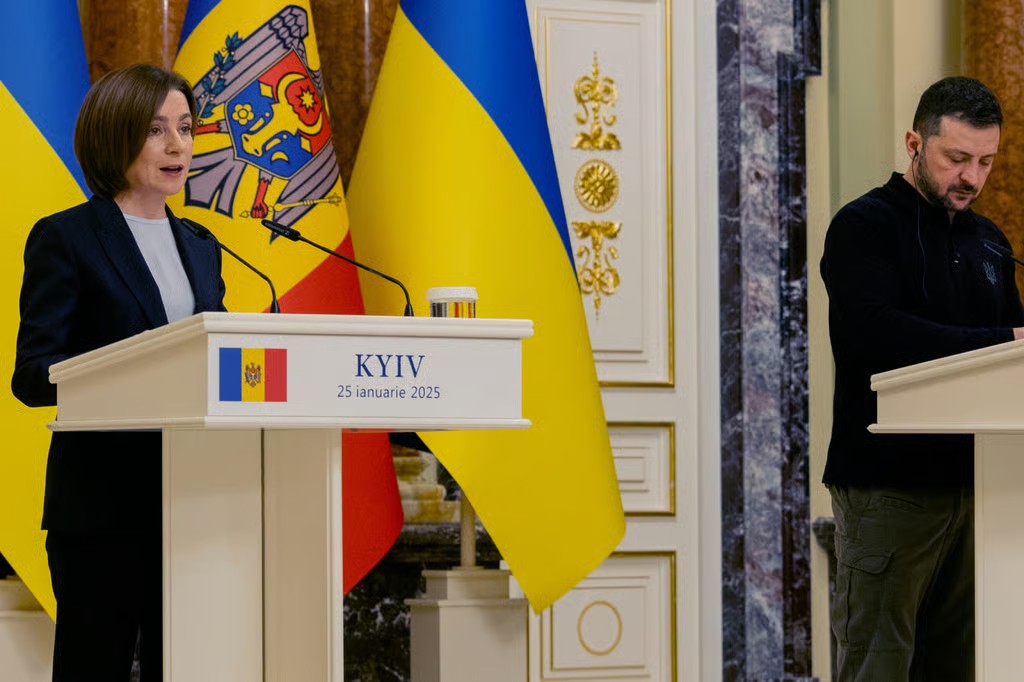
POLITICO: Moldova, Ukraine might start official EU accession talks in June
Moldova and Ukraine are close to officially launching negotiations on joining the European Union, after Hungary has reportedly indicated it was ready to drop its opposition to Ukraine’s candidacy, POLITICO reports, as cited by MOLDPRES.

According to the outlet, which cites four European diplomats, the opening of the first negotiation “cluster” – a formal stage in the EU accession process – is expected to be discussed at an intergovernmental conference scheduled for June 15  in Luxembourg.

Moldova and Ukraine submitted their applications to join the European Union simultaneously, which means that the advancement of Chișinău’s file depends on Ukraine’s progress in the negotiation process.

According to the diplomats quoted by POLITICO, the new leadership in Budapest has signaled openness to lifting its veto on Ukraine after a meeting held on June 1  between Ukrainian and Hungarian experts on the rights of the Hungarian minority in Ukraine.

However, a Hungarian official, cited on condition of anonymity, said that no final decision had yet been taken on opening negotiation clusters for Ukraine. “Negotiations are ongoing. No agreement has been reached,” the official said.

According to the same source, the Ukrainian side has reportedly provided assurances that it would address most of the concerns previously raised by Budapest in an 11‑point plan drawn up under former Hungarian Prime Minister Viktor Orbán.

The talks on Ukraine’s EU accession have intensified after the new Hungarian Prime Minister, Péter Magyar, visited Brussels for discussions with EU officials on unblocking European funds meant for Hungary.

According to European diplomats, the ambassadors of EU member states are expected to finalize by the end of this week their position on opening the first negotiation cluster for Moldova and Ukraine, after Kyiv presents its domestic reform plans.

The opening of negotiation clusters requires the unanimous approval of all 27 EU member states and any state can block the process at any stage of the negotiations.
 Facebook
 Instagram
 X/Twitter
 Telegram
Moldovan parliament votes on new structure, personnel strength of National Army
Moldovan Foreign Affairs Ministry rejects claims made by Russia’s representative to OSCE on alleged “militarization” of Moldova: “They are false and unfounded”
Moldova Security Forum 2026 // U.S. Ambassador to Chisinau says decisions taken today to define decades to come
VIDEO // New U.S. Ambassador to Moldova: trade, investments, regional security among mandate's priorities
Parliament to review structure and personnel strength of National Army in closed session
VIDEO // President at Moldova Security Forum 2026: Russia is trying to test our limits, but every time we have managed to cope. In European family, we will be even stronger
Foreign Minister at Security Forum: Moldova is stronger and more resilient than a few years ago
Moldova Security Forum 2026 // Head of NATO Liaison Office in Chișinău: Moldova on front line of protecting democracy and sovereignty
Moldova, Turkey strengthen economic cooperation; trade reaches 638.7 million dollars
United States, Moldova strengthen cooperation on cybersecurity
VIDEO // Deputy PM for reintegration says Moldova's advancement along European integration path to create sustainable, much more attractive framework for country's reintegration
Moldovan foreign affairs minister meets new Ambassador of the Netherlands; EU integration developments on agenda
VIDEO // Prime Minister: Brussels wants Moldova to move forward, and reforms linked to Growth Plan designed to bring country closer to EU
Government accepts Dumitru Pâslaru’s resignation as Secretary General of Ministry of Labor and Social Protection
Boxer Alexandru-Achile Buhaniuc wins silver medal at European U17 Boxing Championships
PHOTO GALLERY // Farmer from Briceni modernizes farm and prepares new investments in fruit growing
Government launches Moldova Prepared Program to train citizens to cope with crisis situations
PHOTO // Mural inspired by Moldovan hora tradition unveiled in Italian town
Prime Minister discussed issues with milk producers and processors in Glodeni and Rîșcani
Ministry of Education honors participants with best results at Great National Dictation
Drone detected in Anenii Noi district
 National Bank of Moldova
Prime Minister discussed issues with milk producers and processors in Glodeni and Rîșcani
Moldovan president, U.S. senator discuss Moldovan-American cooperation, Moldova’s role in regional security
Moldovan PM tells business people government willing to build Europe’s most entrepreneur-friendly country
Environmental protection experts discuss critical hydrological situation in Dniester River basin
Moldovan PM attends enlarged meeting of Administrative Council of Congress of Local Authorities of Moldova

VIDEO // Leova water intake station operating normally
Moldovan citizens to receive energy compensation this cold season as well
VIDEO // Moldova could import natural gas from Ukraine
VIDEO // Prime Minister: Moldova must invest in country’s security and strengthen capabilities of National Army, despite limited budgetary resources
Drone unauthorizedly flew over national airspace and exploded in Anenii Noi district
VIDEO // President: Priority for Moldova in defense is improving air defense
National Robotics Team wins FIRST Global Challenge 2026 in Korea
EcoVoucher Programme: More than 3,300 families replaced old appliances with energy-efficient equipment
VIDEO // President: Our domestic agenda involves preparing Moldova to sign EU accession treaty by late 2028
Athlete Maxim Caraion wins gold medal again at World Skate Games 2026
Nicu Popescu: More functional and enlarged European Union, which also includes Moldova in everyone’s interest
Speaker: Modernizing National Army and adapting defense capabilities to new security realities require updating strategic documents
Moldovan president, U.S. senator discuss Moldovan-American cooperation, Moldova’s role in regional security
Director of Konrad Adenauer Foundation Office in Moldova says dialogue within Security Forum must turn into concrete actions
Head of NATO Liaison Office in Chisinau says Security Forum generates valuable ideas, due to help Moldova become more resilient, safer
Moldovan PM tells business people government willing to build Europe’s most entrepreneur-friendly country
Receive the latest news directly to your email

Receive the latest news directly to your email