
Medicines Agency of Moldova clarifies detection of metronidazole at more farms nationwide
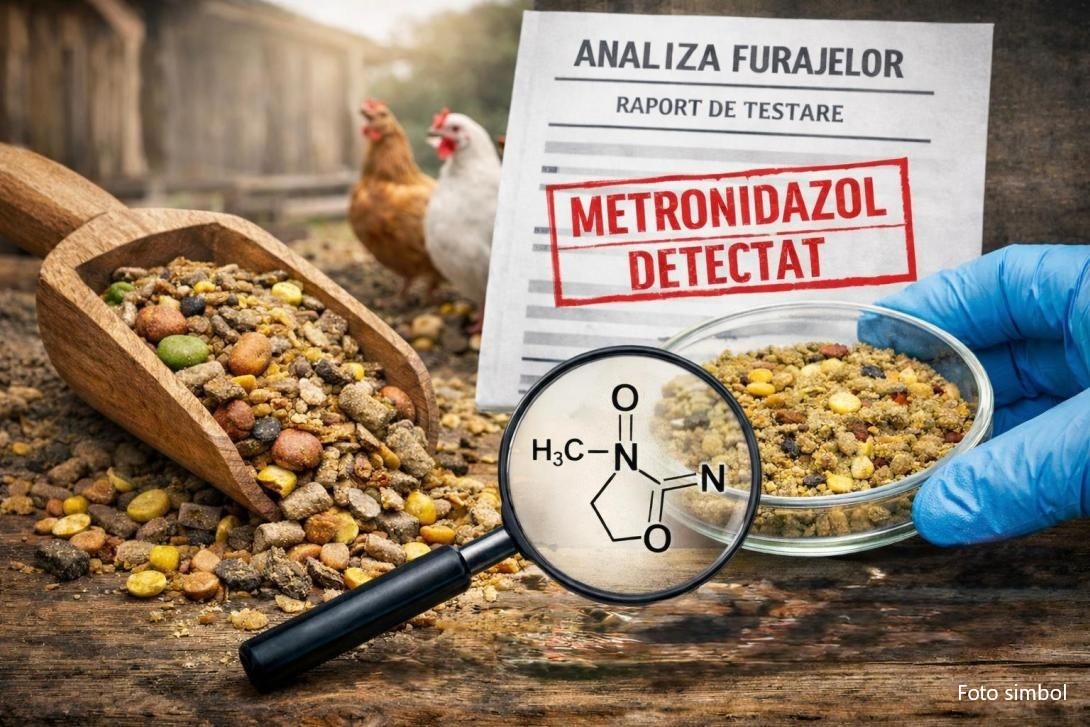
The medicine metronidazole is prohibited for use in food-producing animals, as no maximum residue limits have been established for foods of animal origin. The clarification today was made by the Medicines and Medical Devices Agency (AMDM), after the substance had been detected in the blood serum of birds from more farms of Moldova.

The institution said that metronidazole was an authorized medicine in Moldova for treating humans and is used only on the recommendation of a doctor.

“Metronidazole has been used for many years in medicine to treat certain bacterial and parasitic infections. It is internationally recognized, including by the World Health Organization, and is available in Moldova in more forms (tablets, infusion solutions, suppositories), being included in the National List of Essential Medicines,” AMDM noted.

At the beginning of January, laboratory tests detected the presence of metronidazole in feed samples and in egg samples meant for human consumption, collected from a poultry farm. Subsequently, the National Food Safety Agency (ANSA) launched a large-scale investigation into the case, which is still ongoing.

At all inspected units, the movement of birds and the eggs got from them was suspended, and actions were initiated to recall table eggs from the market. The authorities assure that food products currently placed on the market do not contain metronidazole. After the substance was detected, 110,000 birds were culled.

Based on laboratory results and information gathered during official controls, it was concluded that the source of metronidazole residues found in eggs and serum is animal feed in which metronidazole had been added by producers. In this context, ANSA suspended imports of compound feed and requested information and explanations from the competent veterinary authority of the exporting country.

Metronidazole is a chemotherapeutic agent with bacteriostatic and antiparasitic effects, the use of which in food-producing animals has been banned in the European Union since 1997 and in Moldova since 2011, because of significant risks to consumers’ health, as highlighted in international reference documents.

In this context, ANSA urges farm managers to use veterinary medicines strictly on the basis of prescriptions issued by a veterinarian and to ensure that the feed used in their farms does not contain banned substances. They are encouraged to implement internal self-control programmes to guarantee the supply of safe products to consumers.

Veterinarians are also urged to prescribe only veterinary medicinal products authorized for the animal species to be treated and sourced exclusively from veterinary medicine warehouses authorized by the veterinary sanitary authorities, as well as to responsibly complete treatment records for the animals.
 Facebook
 Instagram
 X/Twitter
 Telegram
VIDEO // Joint Moldova–Romania operation: four people detained in migrant trafficking case
PHOTO // Martisor crosses border: travelers welcomed with symbolic gesture at crossing points of Moldova
VIDEO // Modern transport network launched in Ungheni city of Moldova
Historic first: Moldova, Romania to plant forests simultaneously on both banks of Prut River on March 14
VIDEO // National tree planting campaign 2026 launched in central Moldova district
New border surveillance system presented at Tudora-1 border checkpoint of Moldova; focus on rapid response, crisis management
1992 – War that cannot be forgotten // “I Came to Defend My Village.”; story of policeman from east Moldova village
Illegal border crossing documented by police of Moldova: Ukrainian man tries to enter Moldova on foot
PHOTO // Moldova's National Employment Agency awards best employers of 2025
1992 - Războiul care nu se uită // Povestea unui polițist de pe Nistru: „Intrau cu mașina blindată în sat și împușcau”
Women researchers of Moldova awarded on International Day of Women and Girls in Science
More courts of Moldova to have new buildings; Palace of Justice planned to be built in Cahul
Former mayor of central Moldova village sentenced to seven years in prison for fatal accident, leaving scene
Thirteen judges from anti-corruption panels continue external evaluation procedure
War in Iran shakes energy markets: Will Moldovans pay more for gas and fuel?
Moldovan Food Safety Agency adjusts control regime for milk imports from Ukraine: reinforced monitoring remains in place only for bulk products
Moldovan–British cooperation discussed in parliament during official visit
Moldovan government seeks balanced solutions to fuel crisis; cabinet's solution economic stability
Moldovan–Japanese agricultural partnership continues: JICA prepares new financing line for Moldovan farmers
Moldovan Ambassador to Israel: Over 15,000 Moldovans in Israel, but only small number request consular assistance
PHOTO // Moldovan wines conquer London: prestigious tasting strengthens presence on UK market
 National Bank of Moldova
Moldovan president participates in national scientific conference on culture of memory
PM meets Head of Norwegian Embassy's Office in Chisinau
Moldovan deputy PM for reintegration participates in events of commemoration for heroes dead at Transnistria War
Moldovan PM says peace fragile, all share responsibility to protect it
President - 34 years after war on Dniester: In the name of those who fell and fought, we commit to keeping the flame of freedom alive. Every day

Conflicts in Middle East: Foreign Ministry has not received requests for assistance from citizens of the Republic of Moldova
Over 2,300 digital medical certificates issued on very first day after launch
VIDEO // Republic of Moldova marks four years since submitting application for European Union membership
Over 95% of newborns in Moldova tested free of charge for hearing loss detection
PHOTO // Stories of sacrifice: files on fallen heroes of Dniester War preserved at Ștefan cel Mare Academy of Ministry of Internal Affairs
Moldovan president participates in national scientific conference on culture of memory
VIDEO // Discover Moldova with #MOLDPRES: cultural tourism, art of eggs' decorating in authentic experience at Aievea – handicraft house in Ciniseuti
Moldovan-Romanian bilateral cooperation strengthened through new diplomatic mandate: Ambassador of Moldova presented copies of accreditation letters in Bucharest
PM meets Head of Norwegian Embassy's Office in Chisinau
Moldovan deputy PM for reintegration participates in events of commemoration for heroes dead at Transnistria War
Moldova’s agricultural sector grows: total output up by almost 14 per cent in 2025
Road, railway, logistics projects discussed with delegation of Greece in Chisinau
IMF confirms reliability of National Bank of Moldova, effectiveness of its monetary policies
PHOTO GALLERY // Day of Remembrance and Gratitude through the lens of MOLDPRES: tribute to heroes who died for Moldova's Independence
Parliament speaker warns people who defy authorities of Moldova may lose citizenship
Moldovan PM says peace fragile, all share responsibility to protect it
Receive the latest news directly to your email

Receive the latest news directly to your email