
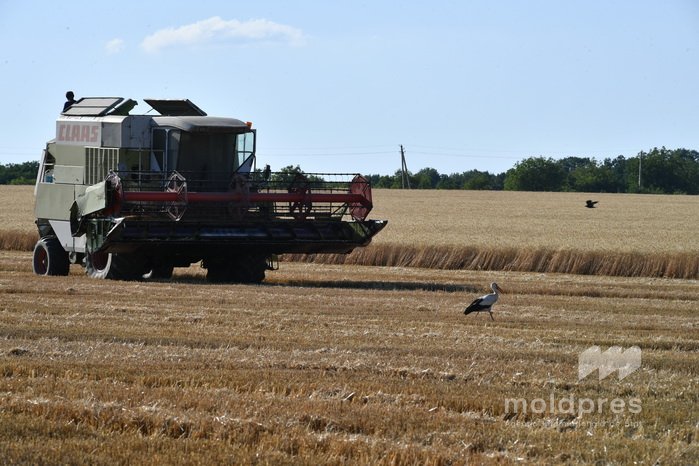
Moldova’s agricultural sector grows: total output up by almost 14 per cent in 2025
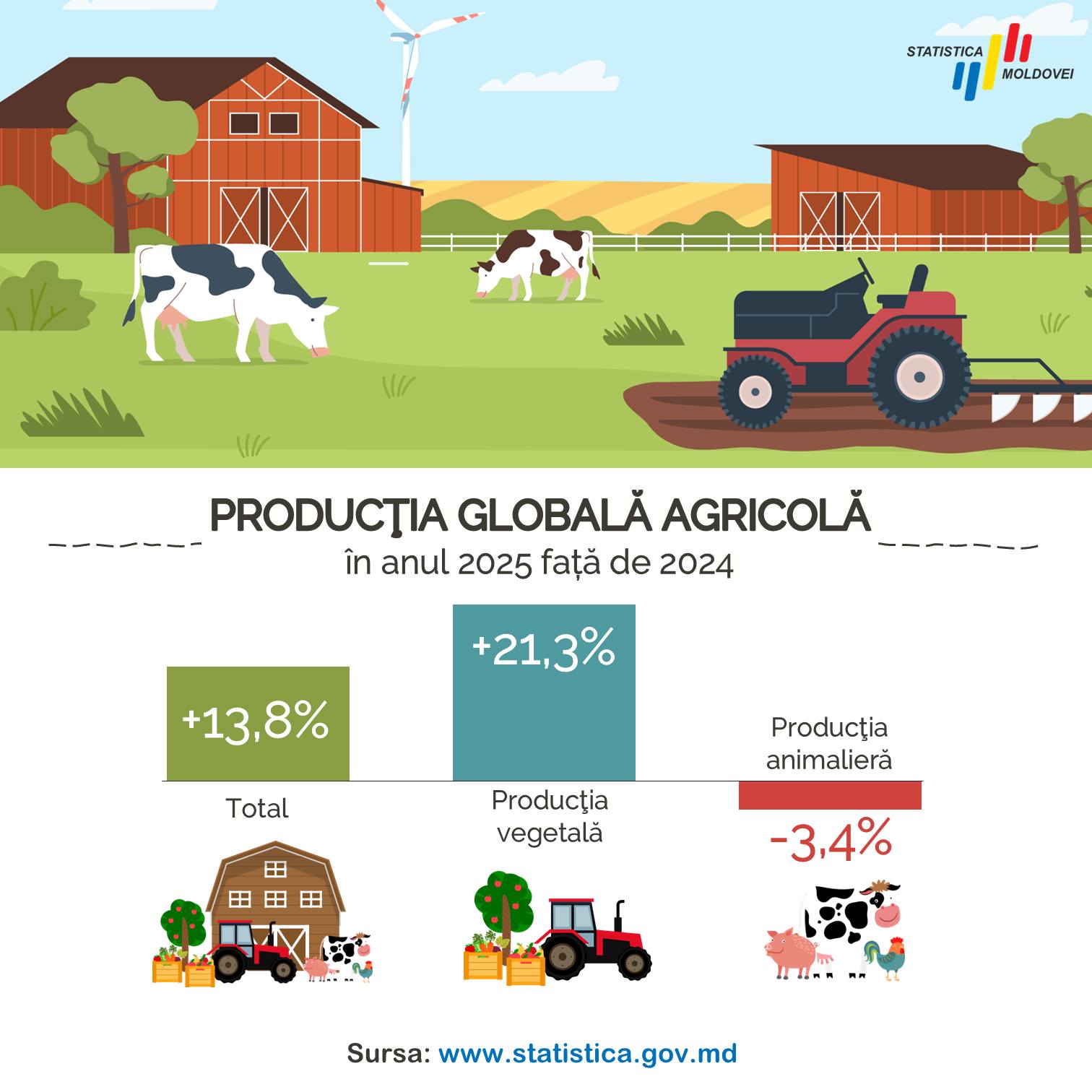
The National Statistics Bureau (BNS) has published preliminary data on the evolution of the agricultural sector for the current year, compared to the results of the previous year. According to economic indicators, total agricultural output across all categories of farms recorded a significant increase of 13.8 per cent compared to 2024, a development driven mainly by the performance of the crops sector.

Record performance in crops’ production: Rapeseed and cereals lead the growth rankings

The 2025 harvest was marked by a visible recovery in volumes for most strategic crops. Weather conditions and the optimization of technological processes made it possible to achieve remarkable results, especially in technical crops and cereals.

The main developments recorded in the crops sector are:

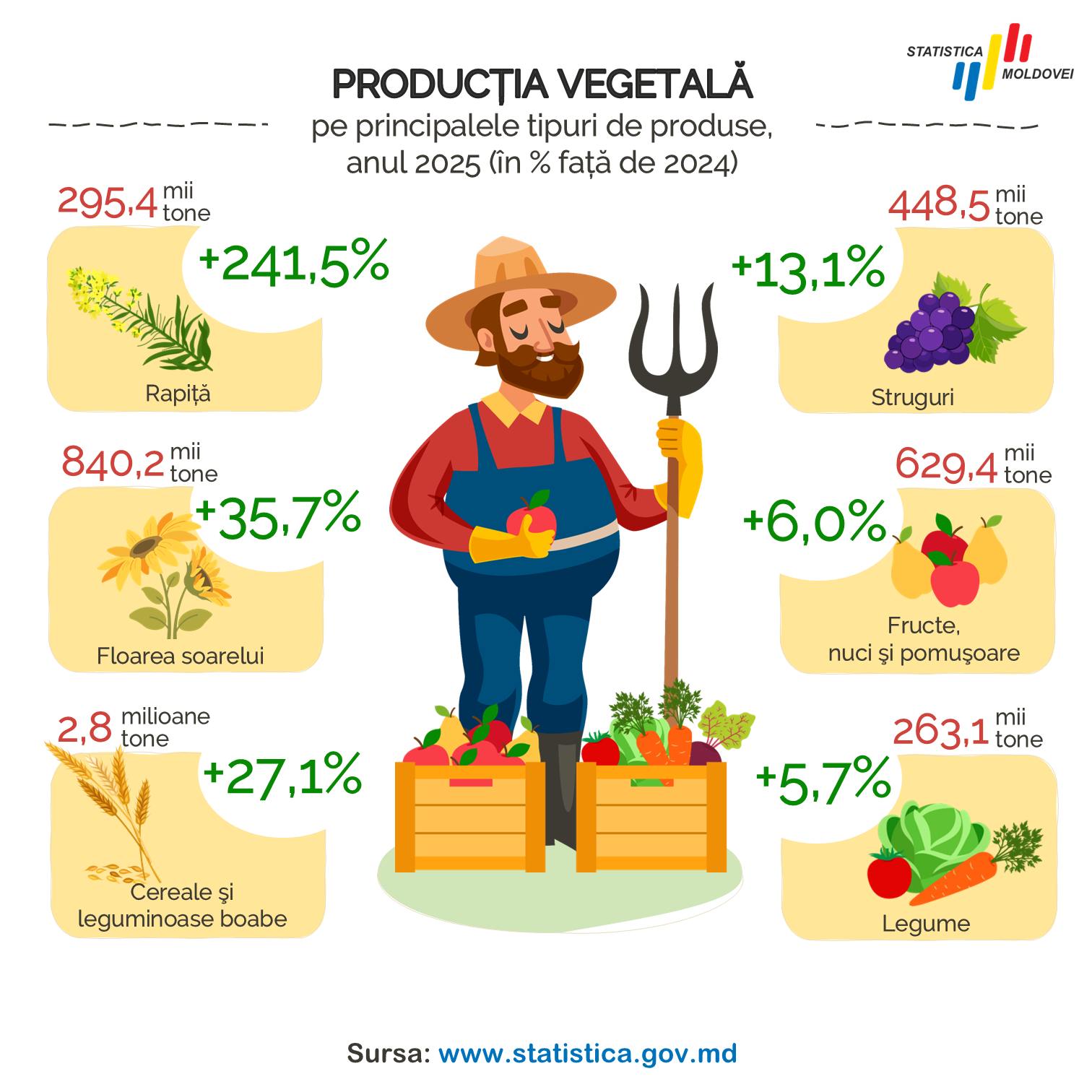
• Rapeseed: Registered the most spectacular increase, with production volume rising by approximately 3.4 times compared to the previous period.

• Sunflower: Production increased by 35.7 per cent, consolidating Moldova’s position as a regional exporter of oilseeds.

• Cereals and leguminous grains: Reported an increase of 27.1 per cent, a crucial element for ensuring the country’s food security and for the export potential of wheat and corn.

• Livestock sector: A slight contraction in production indicators.

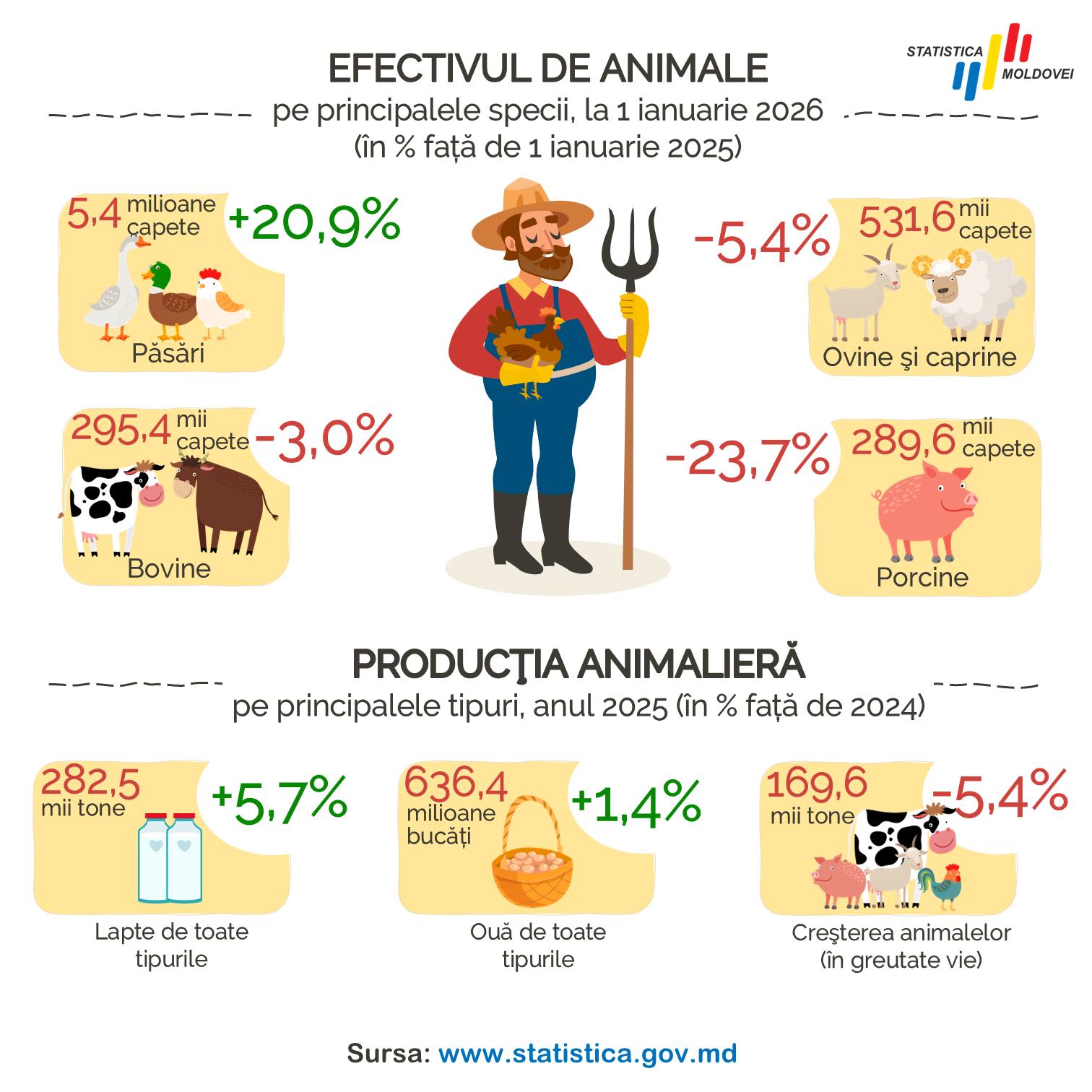
In contrast to the performance of the crops sector, the livestock branch recorded a slight downward trend. Statistics data shows a 5.4-per cent decrease in the production of animals in live weight (growth of stocks intended for slaughter).

This dynamic suggests the need for additional structural analyses regarding animals’ maintenance costs and feed prices, which directly influence the decisions of producers in this segment.

Sustainability analysis and economic impact

The 13.8-per cent increase in total production is a positive signal for the national economy, given the significant share of agriculture in Gross Domestic Product (GDP). At the same time, the disparity between the crop and livestock sectors highlights the cyclical nature of domestic agriculture and its dependence on international commodity markets.
 Facebook
 Instagram
 X/Twitter
 Telegram
Parliament encourages local production through short supply chains
First diesel price cut since Middle East ceasefire: Price drops by 0.49 lei
DOC // Published in Official Journal: Republic of Moldova adopts European standards for entire national transport network
Moldova’s wine sector records 31-per cent growth in wine production in 2025
Moldova, Argentina launch negotiations to establish first direct air services between two countries
Agriculture Minister announces preparation for accessing EU pre-accession funds for per-hectare payments
Energy Minister announces when fuel prices at pump could decrease
CNMC director about need to maintain state of emergency
ANRE explains impact of Middle East ceasefire on fuel market in Moldova
Natural gas prices recorded sharp decline in Europe on Wednesday, reaching lowest level of last five weeks
Daniel Vodă: For Moldova, ceasefire in Middle East creates useful window of opportunity
Steady increase in passenger numbers at Eugen Doga International Airport – Chișinău: most popular destinations in March
Over 1,200 tons of gasoline and diesel imported into Moldova on Monday
Moldovan energy minister pays unannounced visit to Chisinau Electrical Substation
Moldovan deputy PM for reintegration says Tiraspol must come back down to earth, reality changed dramatically
PHOTO // Taraclia-based Museum of History and Culture renovated through European Village programme with investments of over 7 million lei
Governor of National Bank of Moldova attends constituency meeting of IMF, World Bank: inflationary pressures, financial stability on agenda
New hearings in prosecutors' evaluation process in Moldova: four sessions scheduled for late April
Moldova's General Police Inspectorate launched internal investigation into police officer who drew up report in name of deceased person
Dialogue between Moldova's central and local authorities in Comrat
Number of fraud attempts rising in Moldova: over 500 attempts reported to 112 in just one week
 National Bank of Moldova
Moldovan head of state meets former president of Poland
Political representatives in process of negotiations for Transnistrian settlement convene at second working meeting of 2026
Dialogue between Moldova's central and local authorities in Comrat
Head of State at commemoration of victims of 1946–1947 famine: When truth is told, even after decades, it brings justice
President’s message at commemoration event for victims of 1946–1947 famine

Progress achieved by Moldova in implementing structural reforms discussed with World Bank Vice President for Europe and Central Asia
VIDEO // Chisinau–Tiraspol dialogue continues; deputy PM reiterates commitment to reintegration, European integration
Head of State at commemoration of victims of 1946–1947 famine: When truth is told, even after decades, it brings justice
President’s message at commemoration event for victims of 1946–1947 famine
President condemns Russian attacks and calls for additional sanctions against Russia: War will stop only when Russia stops
PHOTO // Dniester River under constant monitoring thanks to European states that provided Ministry of Environment with intervention equipment
PHOTO // Victims of 1946–1947 famine commemorated in Mingir
General Prosecutor’s Office announces legislative initiatives to strengthen preventing and combating domestic violence, developed following analysis of recent cases, including that of Ludmila Vartic
PHOTO // Moldova could become strategic hub for U.S. business
New local elections: CEC announces number of candidates and referendum participants
CSP gives green light: Acting Prosecutor General passes external evaluation
Silver and bronze medals for Moldova at World Sambo Cup
ARMENPRESS: Armenia to restrict drone, private flights during EU summit
Romanian Embassy in Moldova says creation of Relations with Romania Service strengthens bilateral cooperation
Improved access for people with disabilities in Moldova: 30 ramps to be installed in public institutions hosting polling stations
VIDEO // Moldovan government transfers land needed to continue work on bridge across Prut river at Ungheni, connecting Moldova and Romania
Receive the latest news directly to your email

Receive the latest news directly to your email