
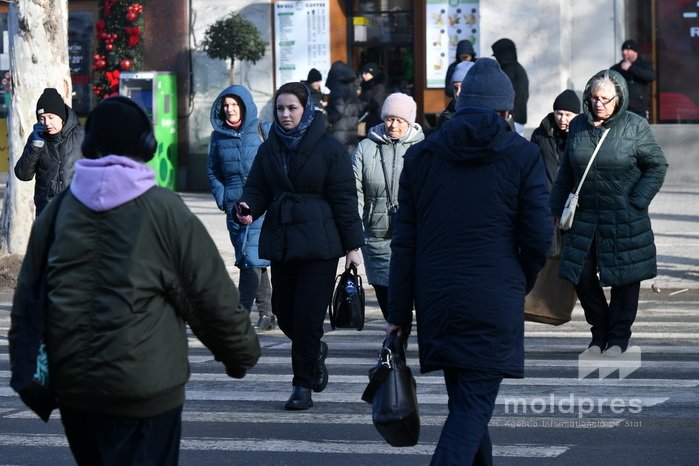
War in Iran shakes energy markets: Will Moldovans pay more for gas and fuel?
The armed conflict in Iran has a direct impact on international energy markets, influencing prices for oil and natural gas. Experts say that tariff developments largely depend on the duration of the war and the resumption of transport through the Strait of Hormuz, a strategic route for global energy deliveries.
According to estimates, about 20 per cent of global oil supplies and around 22 per cent of natural gas supplies transit the Persian Gulf, especially the Strait of Hormuz. The temporary blockade of ship traffic in the area has created a short-term shortage and led to rising quotations on international exchanges.
Asked by MOLDPRES, energy expert Sergiu Tofilat says that the link between the conflict and energy resources’ prices is a direct one.
“If the war ends quickly, we can avoid prices’ increases. The gas tariff does not take into account the effect of one day, two days or a week, but is based on average annual prices. However, if the conflict lasts for more months, we can expect increases,” Tofilat said.
As for fuel, the impact could be felt more quickly.“For fuel, price increases will be seen immediately, while for gas the effects appear gradually. Everything depends on how quickly traffic through the Strait of Hormuz is resumed and on the stabilization of the situation in the region,” the expert noted.
For his part, Romanian expert Cosmin Pacuraru believes that, for now, there are no clear reasons for raising natural gas tariffs in Moldova. He explains that oil and gas prices are influenced by the “emotional” reactions of exchanges in a geopolitical context.
“Yesterday, the price of oil was 78 dollars per barrel, while the historical maximum was 138 dollars. We are not talking about a dramatic situation,” Pacuraru said, contacted by MOLDPRES.
The expert points out that Moldova is supplied mainly from Romania, and Romanian storage facilities still hold gas stocks estimated at 25–30 per cent. In addition, the company Energocom is said to have already made the necessary purchases for the upcoming period.
“There should be no major problems with gas prices, at least in the short term,” he noted.
Specialists believe that, if hostilities end quickly, prices could return to pre-conflict levels. By contrast, a prolonged escalation could keep quotations high as long as uncertainty persists on international markets.For now, experts consider that no precise estimates can be made regarding possible price increases, but the evolution of the conflict in Iran stays the decisive factor for the stability of energy resources’ prices in the region.


 Facebook
 Instagram
 X/Twitter
 Telegram
IMF mission to visit Chisinau on October 21–28 for discussions with authorities
Moldovan Finance Ministry launches new subscription session for government securities with interest rates of up to 8.05 per cent
VIDEO // Moldova explores opportunities to import liquefied natural gas from United States
PHOTO // Railway of Moldova enterprise tests new Chisinau–Revaca–Sangera railway route
VIDEO // Shepherds' family of Moldova sets national record with 30.7-kilogram cheese
PHOTO GALLERY // 30.7-kilogram cheese set national record at Moldexpo
Government launches in-depth assessment of Yandex Go’s activities in Moldova
Approved by Moldova's government: personal allowance to rise to 46,680 lei, VAT-free electricity consumption threshold to reach 150 kWh
Moldovan energy minister speaks about new value added tax thresholds for energy, additional funding for energy efficiency
VIDEO // MOLDAGROTECH, FARMER 2026 exhibitions open at Moldexpo center
PHOTO GALLERY // MOLDAGROTECH and FARMER 2026 brought together manufacturers and suppliers of agricultural technologies at Moldexpo
VIDEO // Prime Minister announces simplifications for small food producers
PHOTO // Cosăuți temporary bridge linking Moldova and Ukraine expected to open by late 2026
VIDEO // Moldexpo Exhibition Center aims to become Moldova Expo Park, regional hub for business, leisure, accommodation
Moldovan President meets with Hungarian President and Prime Minister
President attends commemoration in Budapest marking 70th anniversary of 1956 anti-communist revolution
Violence can escalate to femicide: How to recognize warning signs and where victims can seek help
PHOTO GALLERY // Romanian Armed Forces Day celebrated in Chișinău with exhibition dedicated to international military missions during interwar period
PHOTO // President honors courage of Hungarian people, 70 years after 1956 anti-communist Revolution
Ukraine condemns violation of Moldova’s airspace
Moldovan president condemns incident in Telenesti district: “Russia’s war continues to endanger citizens’ lives”
 National Bank of Moldova
Moldovan President meets with Hungarian President and Prime Minister
President attends commemoration in Budapest marking 70th anniversary of 1956 anti-communist revolution
Moldovan PM meets young people who won three medals for Moldova at World Robotics Championship
Moldovan PM, vice-president of European Investment Bank discuss accelerating development projects in Moldova
Moldovan deputy PM for reintegration participates in marking 30 years of work of theoretical lyceum from Grigoriopol

Moldovan PM, vice-president of European Investment Bank discuss accelerating development projects in Moldova
Two cases of national airspace violations recorded in Moldova in past week; Defence Ministry reiterates need to strengthen air defense capabilities
Moldovan deputy PM for reintegration participates in marking 30 years of work of theoretical lyceum from Grigoriopol
Drone falls in central Moldova village; police secure area
First at November 1, 2026 elections in Moldova: voters to be able to vote using digital ID from EVO app
National Bank of Moldova simplifies foreign exchange rules: transfers, investments of up to 100,000 euros without authorization
PHOTO, VIDEO // Moldovan head of state president welcomed by Hungarian president at Sándor Palace in Budapest
Drone illegally entered airspace of Moldova, disappears from radar
PHOTO GALLERY // Two hospitals of Moldova start process of energy modernization
Two members of Judges' Evaluation Commission to end activities on 31 December 2026
Energy consumption in ten hospitals in Moldova expected to drop by 40%; first two hospitals begin renovation
COMMENTARY on Tiraspol event
CHINA EXPO – Christmas Sale to be held for first time at Moldexpo on December 17
State Secretary for Reintegration: Revenue from taxes imposed in Transnistrian region will return to population through Convergence Fund
MOLDPRES INTERVIEW // What should a woman in an abusive relationship know? Dominika Stojanoska, UN Women Country Representative: “The violence is not her fault and she does not have to go through this situation alone”
Joint border control, energy projects on Prime Minister’s agenda during visit to Kyiv
Receive the latest news directly to your email

Receive the latest news directly to your email