
School Barometer conducted for first time in Moldova: Most students, parents and teachers have positive perception of general education
Seven out of ten students, parents and teachers have a positive perception of education in the Republic of Moldova, and eight out of ten students and parents are satisfied with the quality of studies offered in schools. The conclusions are set out in a school survey - Barometer of the situation in secondary education, presented today in Chișinău.

The School Barometer was carried out for the first time in the Republic of Moldova, on a nationally representative sample, and included more than 2,100 students in grades 5–12, 1,570 parents, 2,463 teachers and 95 principals. The study covered 110 secondary schools in 71 localities, including 46 villages and 25 towns. The institutions were selected randomly.

The Barometer assesses perceptions regarding the quality of education, the school climate, respect for children’s rights and the level of integrity in general education institutions. The study provides an overview of the education system from the perspective of students, parents, teachers and school principals.

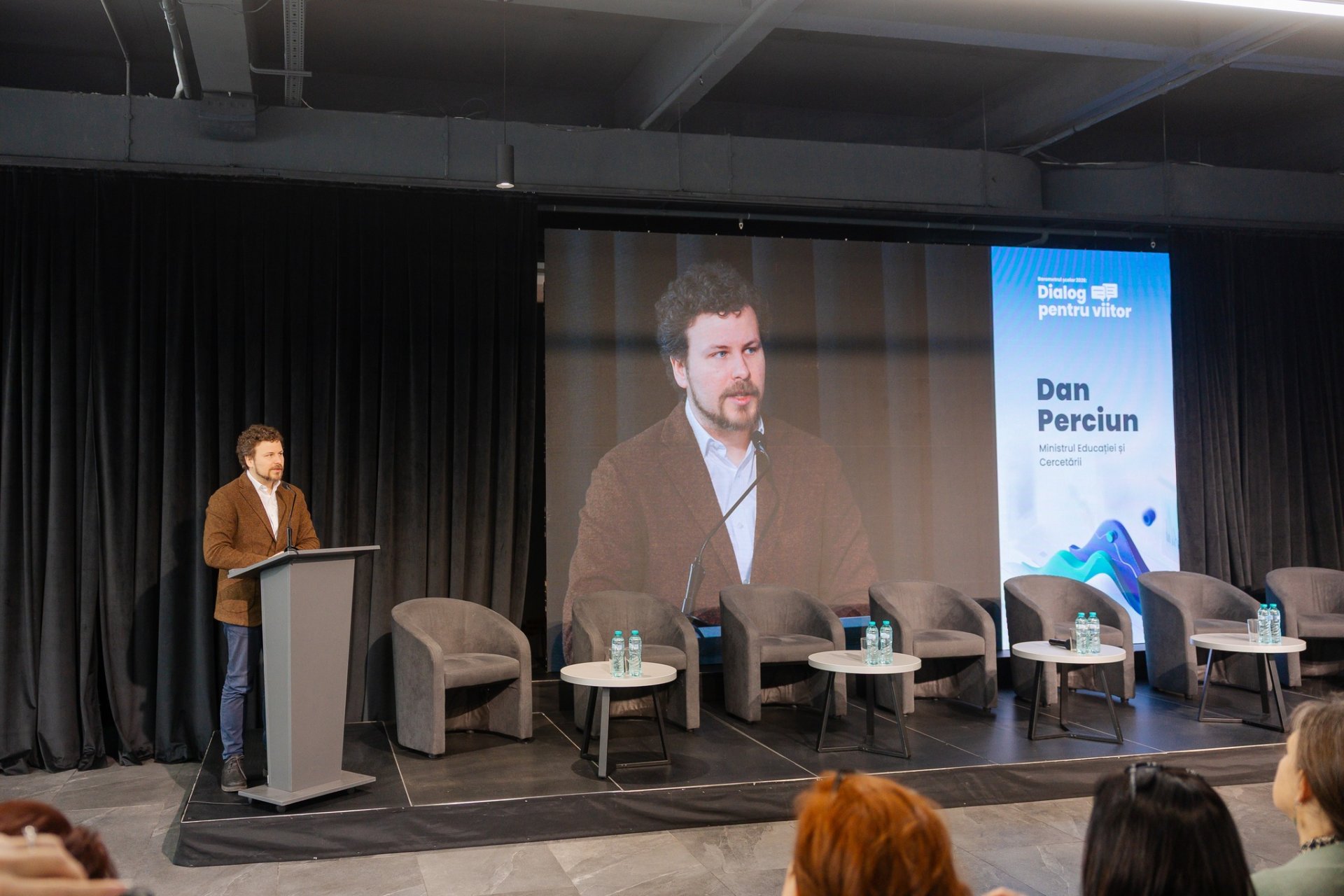
Minister of Education and Research Dan Perciun said that the survey was conducted to get a clear picture of realities in the system, to see to what extent the actions implemented actually produce results, and to propose targeted policies to improve the situation in the coming years.

“This barometer is a first and a starting point. We set out to manage to quantify the reality in our education system, for which we have not really had data so far. Although we are all making very big efforts in many areas, we do not necessarily understand whether everything we do is really producing change or not. So the objective of this barometer is quite simple: to take a snapshot of the current situation and to place a mirror in front of us, highlighting certain realities, not to criticize us, but to help us become better in the future and to understand the extent to which the range of actions we undertake produces a real result in the system,” said Dan Perciun.

The Minister of Education also referred to the importance of the study in the context of major changes planned in the system over the next few years.

“The objective is to improve things over time, treating these data as a starting point. The Barometer tells us about the quality of education, about our school textbooks, about the study conditions in our schools. And, in a way, it is wonderful that we have it today, when we are, in a sense, at the beginning of the road in a very broad process of modernizing the system, from investments in model schools, in equipment, in the digitalization of the system, to a new school curriculum and new textbooks, which await us in 2027. So we are on the verge of major and important changes in the system, and the Barometer will serve as a starting point and will help us, in two years’ time, to see to what extent those new school textbooks that we will have in 2027 will begin to change things and will be more appreciated by students, teachers and parents,” he said.

MEC aims for the Barometer to be carried out every two years, in order to analyze the situation in the system comparatively over time. “So that in two years we can understand to what extent things have changed, to what extent there is more safety in our schools, to what extent our children continue or, on the contrary, no longer reproduce certain stereotypes of society, to what extent phenomena related to informal payments are still present or not in our education institutions, and whether the participation of girls becomes more and more a reality in our schools,” the minister said.

The Barometer was carried out at the initiative of MEC, with the support of the European Union, the Government of Norway, UK Aid, UNICEF Moldova, UNFPA, UNDP, UN Women and UNHCR.

Maha Damaj, UNICEF Country Representative said that the Barometer is a complex study that offers more than data: it reveals structural patterns that will influence Moldova’s long-term development.

“If we want to anticipate the trajectory of Moldovan society in the coming decades, we must start by analyzing its platforms. The study presented today allows us to examine this system with empirical precision. It offers more than data; it reveals structural patterns that will influence Moldova’s long-term development if they are not neglected. The Barometer provides an evidence platform that goes beyond diagnosis; it clarifies where institutional alignment is needed, where capacity-building is necessary and where intersectoral cooperation is essential. It allows MEC to move from implemented initiatives to systemic coherence. If we accept that today’s classroom shapes tomorrow’s society, then education reform is not a sectoral adjustment; it is a strategic investment in Moldova’s social contract,” Maha Damaj emphasized.

According to the survey, 73% of students and parents are satisfied with the way teachers teach in school, and seven out of ten students and parents, as well as eight out of ten teachers and principals, have a positive view of the comfort in classrooms.

The Barometer also highlights the need for interventions in the school textbooks and STEM subjects, particularly physics, chemistry and mathematics, which are assessed more critically by both students and teachers. Only just over half of respondents consider the textbooks for these school subjects to be easy to understand, interesting and sufficient to cover the taught material.

At the same time, students indicate as curriculum priorities topics such as health education, career guidance, human rights and financial education.

The study’s data also show that most respondents believe that children’s rights are respected in school, but the right to non-discrimination remains the most vulnerable. In addition, not all institutions are fully adapted for children with disabilities, and sanitary infrastructure needs improvement.

With regard to the school climate and academic integrity, the data indicate the existence of cheating during assessments and differences in perception between students and teachers. Thus, the data show that 61% of students have cheated at least once during tests or examinations. To ensure fairness in the assessment process, the Ministry has introduced centralized marking of exam papers for 9th grade exams and the assignment of external assistants in institutions, alongside the implementation of sectoral anti-corruption plans.

Regarding informal payments, the study highlights differing perceptions between students and parents about the consequences of refusing to contribute financially. Thus, 85% of parents, compared with 58% of students, state that there are no consequences if they refuse to contribute. To strengthen transparency, institutions are encouraged to use the government MPay service for collecting donations, on the basis of a clear regulatory framework.

The Barometer also underlines the need to strengthen mechanisms for preventing and combating bullying. In this regard, the Ministry is updating methodological guidelines, developing a dedicated national program and implementing, together with other institutions and partners, joint actions to prevent violence and promote students’ well-being.

The survey also reveals that 28% of students feel stressed because of schoolwork in most lessons or almost every lesson, compared with 11% of parents (in relation to their children). At the same time, 68% of students feel, to a great or very great extent, anxious that they might fail tests and exams, 64% worry that they will receive low grades at school, 43% frequently worry that lessons are difficult, and every fourth student becomes very stressed when they have to do their homework.
 Facebook
 Instagram
 X/Twitter
 Telegram
Good news for elderly people of Moldova: pensions to increase in next spring
Moldovan MPs approve major changes to Education Code
Moldovan Education Ministry launches campaign inviting pupils to write messages of solidarity to children of Ukraine
Hearing of former leader of Moldovan Democratic Party in bank fraud file postponed after he claims illness
Fallen soldiers of Afghan war commemorated in Parliament
Over 500 refugee children from Ukraine learn Romanian for free in schools of Moldova
VIDEO // Fine of up to 600 lei for using phone while driving in Moldova; police step up control actions
Former leader of Moldovan Democratic Party does not come court hearing in Kuliok file; court rules to forcibly bring him
Culture minister calls for calm in conflict over church in central Moldova settlement
Reorganized schools, support classes, allowances for young teachers: what new Education Code of Moldova stipulates
Comrat State University celebrates 35 years since founding
Moldova and Ukraine update technical-military cooperation agreement
Public Institution State Protected Natural Areas to be set up in Moldova
Constantin Țuțu case reaches Court of Appeal: prosecution seeks asset seizures and lengthy prison terms
Women of Moldova earn by 16.6 per cent less than men: two extra months of work for the same income
MEC to develop digital platform with free access to teaching resources in Gagauz language
School Barometer conducted for first time in Moldova: Most students, parents and teachers have positive perception of general education
VIDEO // Work continues on Moldova's largest water main: central region’s water supply project moves forward
 National Bank of Moldova
PM has meeting with India’s Ambassador to Moldova
Moldovan president receives accreditation letters on behalf of more ambassadors
Citizen participation in decision-making discussed by mayors, national authorities and Congress of Local and Regional Authorities of Council of Europe
Launch of 6th Open Government Action Plan and selection of civil society representatives to Coordination Committee
In 2026, most nursery places in recent years to be created across country: 102 town halls applied for funding

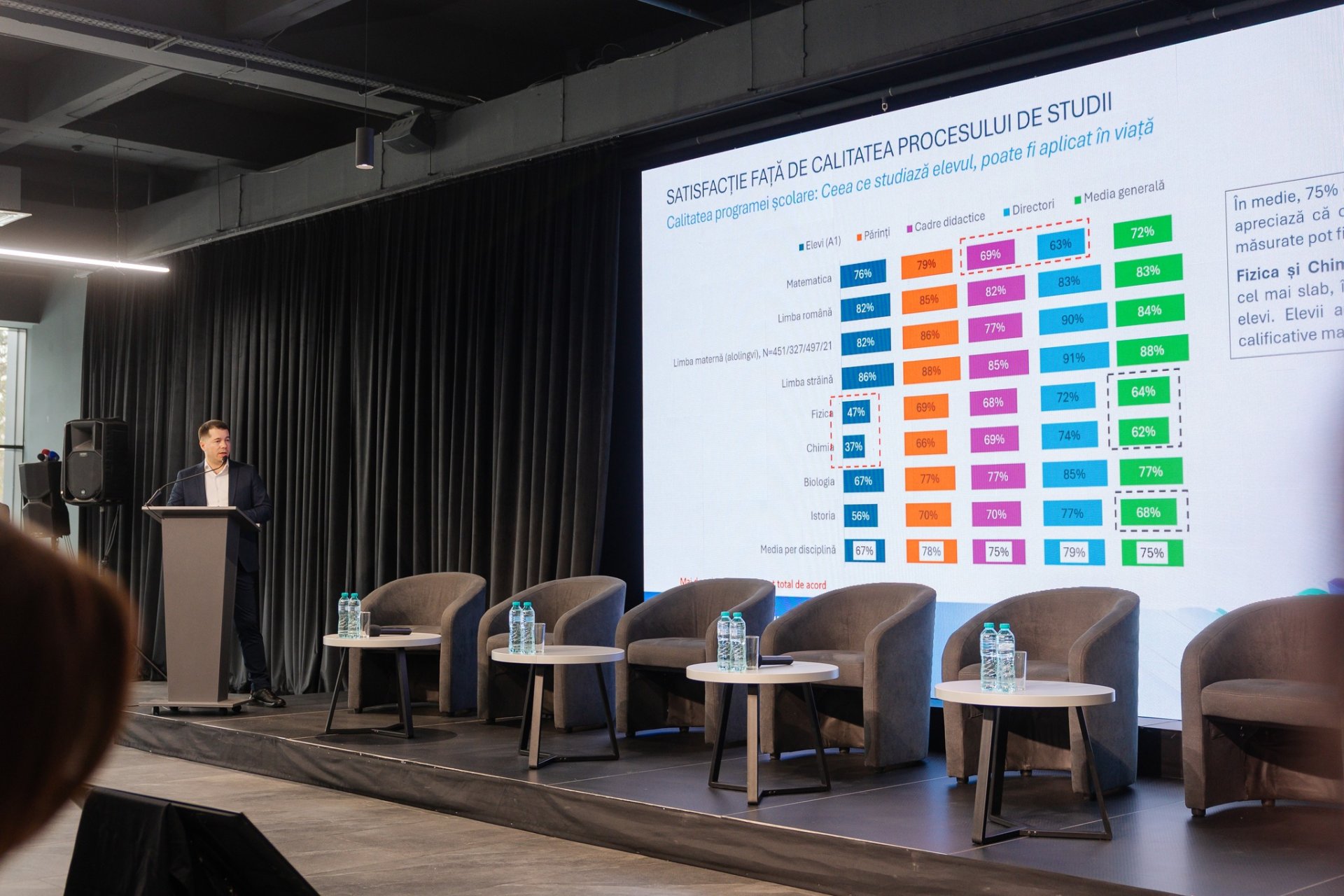
PHOTO GALLERY // Vladimir Plahotniuc escorted to court to be heard in Kuliok case
Former Democrat Leader Vladimir Plahotniuc refuses to testify in Kuliok case
All consumers affected by 15–16 February glaze ice reconnected to power grid
Books donated as part of 2025 edition of Library under Christmas Tree campaign reached libraries across country
Moldova hosts meeting of Council of Europe Congress Bureau
February 16, 1898: BTA Releases its First Bulletin
New opportunities for entrepreneurs from Moldova, Ukraine: business school to be opened in Chisinau
Discover Moldova with #MOLDPRES: Lalova plums – authentic tradition, unique taste, international recognition
MOLDPRES INTERVIEW // Director of South Regional Development Agency says Agency creating better living conditions, easier life for thousands of residents
Moldova's State Chancellery launches process of developing new open governance action plan
Possibilities for expanding Latvian investments in Moldova discussed at government
Eurasian wren named Bird of Year 2026 in Moldova
WEATHER // Orange, yellow warning for heavy snow, strong winds in Moldova
Road Fund's report examined at meeting of Road Fund Council, chaired by Moldovan PM
BTA: Bulgarian News Agency Marks Path From Telegraph to AI Era
PHOTO // CNAS director: We have proven we are strong institution, able to face challenges
Receive the latest news directly to your email

Receive the latest news directly to your email