
MIDR: Government and EBRD to ensure identification of Giurgiulești Port investor proceeds in line with legislation and national interest
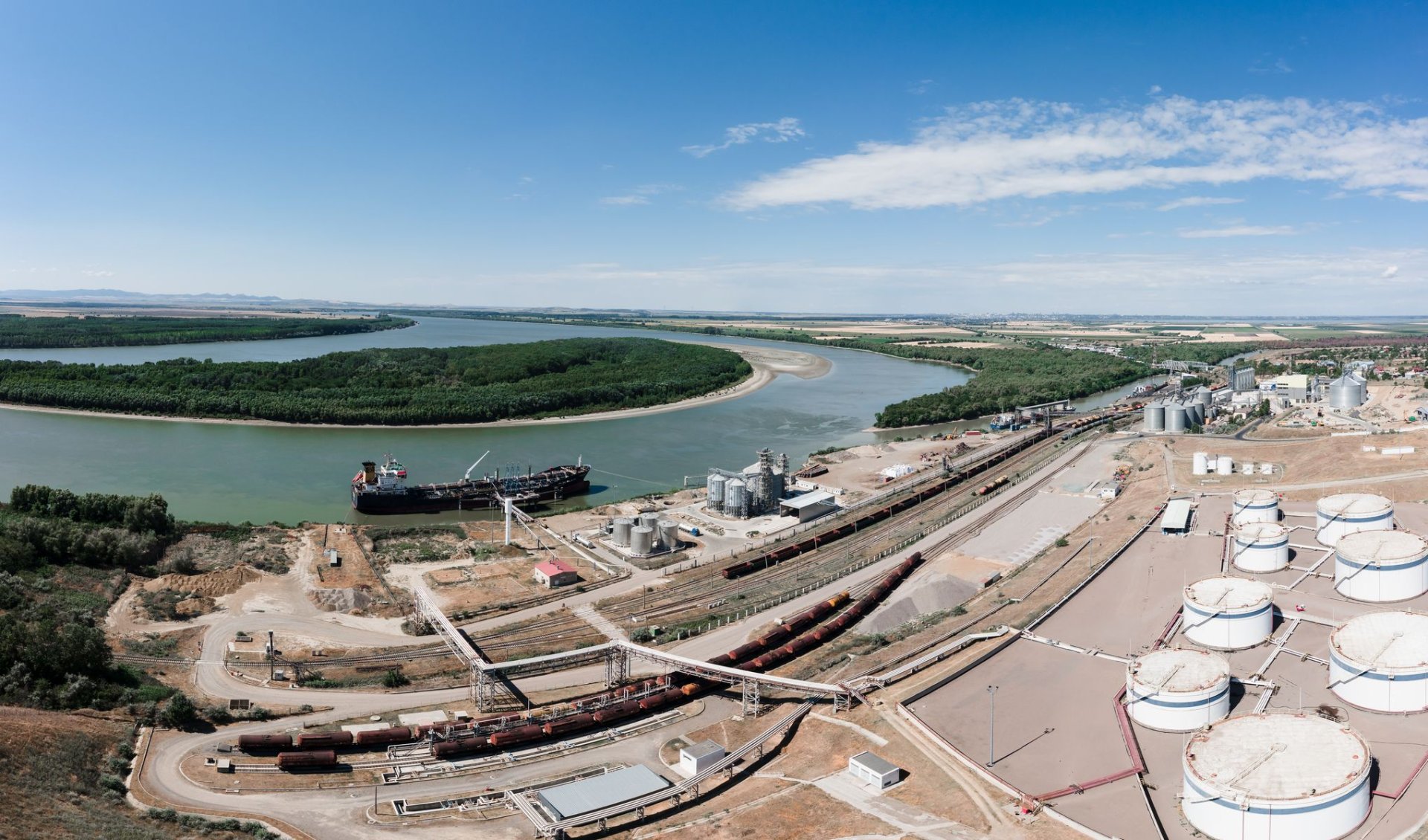
The government, together with the European Bank for Reconstruction and Development (EBRD) will ensure that the process of identifying a strategic investor for Giurgiulești International Free Port proceeds in accordance with the legislation and national interest. Ministry of Infrastructure and Regional Development (MIDR) made the statement after the EBRD launched an international bidding process to find potential investors who can further support the development of the main sea and river port in the Republic of Moldova.

MIDR noted that in December 2004, the Moldovan government signed an investment agreement on Giurgiulești International Free Port. Thus, the lands were leased to private companies for 99 years, and the International Port, which was to be built by those companies, was handed over to their management for 25 years. Currently, Danube Logistic company, the manager of Giurgiulești International Free Port (PILG), is owned by the EBRD.


'The European Bank for Reconstruction and Development announced the decision to attract a strategic investor for the management of the port, by selling the company that holds the management rights. In this regard, the Government, together with the EBRD, will ensure that the process of identifying a strategic investor takes place in accordance with the legislation and national interest,' said MIDR.


The EBRD announced early this week that it has launched the international bidding process to identify potential investors who can further support the development of the main maritime and river port of the Republic of Moldova. According to the institution, the process is conducted in full coordination with the Government of the Republic of Moldova, including regarding the future commercial and legal framework of the port, aimed at facilitating foreign investments.

Giurgiulești Port is a strategically important logistics hub that offers importers and exporters transshipment and storage services, with access to a trimodal transport infrastructure. The port is located on the maritime sector of the Danube River and allows the berthing of river and sea vessels with a draft of up to 7 meters and a capacity of up to 10,000 tons. As the country's main port, it handles over 70% of Moldova's external trade by water, ensuring supply chains for various types of goods and bringing significant benefits to the Moldovan economy.
 Facebook
 Instagram
 X/Twitter
 Telegram
IMF mission to visit Chisinau on October 21–28 for discussions with authorities
Moldovan Finance Ministry launches new subscription session for government securities with interest rates of up to 8.05 per cent
VIDEO // Moldova explores opportunities to import liquefied natural gas from United States
PHOTO // Railway of Moldova enterprise tests new Chisinau–Revaca–Sangera railway route
VIDEO // Shepherds' family of Moldova sets national record with 30.7-kilogram cheese
PHOTO GALLERY // 30.7-kilogram cheese set national record at Moldexpo
Government launches in-depth assessment of Yandex Go’s activities in Moldova
Approved by Moldova's government: personal allowance to rise to 46,680 lei, VAT-free electricity consumption threshold to reach 150 kWh
Moldovan energy minister speaks about new value added tax thresholds for energy, additional funding for energy efficiency
VIDEO // MOLDAGROTECH, FARMER 2026 exhibitions open at Moldexpo center
PHOTO GALLERY // MOLDAGROTECH and FARMER 2026 brought together manufacturers and suppliers of agricultural technologies at Moldexpo
VIDEO // Prime Minister announces simplifications for small food producers
PHOTO // Cosăuți temporary bridge linking Moldova and Ukraine expected to open by late 2026
VIDEO // Moldexpo Exhibition Center aims to become Moldova Expo Park, regional hub for business, leisure, accommodation
Staff member of Russia's Embassy in Moldova to be declared persona non grata after explosive-laden drone crashed in Telenesti district
Facilitated access to EU market: European Investment Bank provides 150 million euros to modernize agri-food sector through Moldova's Orchard II programme
Two cases of national airspace violations recorded in Moldova in past week; Defence Ministry reiterates need to strengthen air defense capabilities
Drone falls in central Moldova village; police secure area
First at November 1, 2026 elections in Moldova: voters to be able to vote using digital ID from EVO app
National Bank of Moldova simplifies foreign exchange rules: transfers, investments of up to 100,000 euros without authorization
PHOTO, VIDEO // Moldovan head of state president welcomed by Hungarian president at Sándor Palace in Budapest
 National Bank of Moldova
Moldovan PM meets young people who won three medals for Moldova at World Robotics Championship
Moldovan PM, vice-president of European Investment Bank discuss accelerating development projects in Moldova
Moldovan deputy PM for reintegration participates in marking 30 years of work of theoretical lyceum from Grigoriopol
COMMENTARY on Tiraspol event
Summary of Moldovan parliament's plenary meeting held on October 22, 2026

Drone illegally entered airspace of Moldova, disappears from radar
PHOTO GALLERY // Two hospitals of Moldova start process of energy modernization
Two members of Judges' Evaluation Commission to end activities on 31 December 2026
Energy consumption in ten hospitals in Moldova expected to drop by 40%; first two hospitals begin renovation
COMMENTARY on Tiraspol event
CHINA EXPO – Christmas Sale to be held for first time at Moldexpo on December 17
State Secretary for Reintegration: Revenue from taxes imposed in Transnistrian region will return to population through Convergence Fund
MOLDPRES INTERVIEW // What should a woman in an abusive relationship know? Dominika Stojanoska, UN Women Country Representative: “The violence is not her fault and she does not have to go through this situation alone”
Joint border control, energy projects on Prime Minister’s agenda during visit to Kyiv
Ukraine's Ambassador to Chisinau: Dniester incidents must be investigated, findings made public
PHOTOS // Story behind legend of Dracula: Irish culture, film from 1931 presented in Chisinau
Prosecutor Petru Iarmaliuc passes external integrity assessment
Summary of Moldovan parliament's plenary meeting held on October 22, 2026
Moldovan environment minister, Romanian counterpart discuss environmental cooperation
Judge Veaceslav Cernalev heard by Commission for Evaluation of Judges
Balti city mayor to be assisted by own cabinet; Moldovan parliament passes relevant draft in first reading
Receive the latest news directly to your email

Receive the latest news directly to your email