
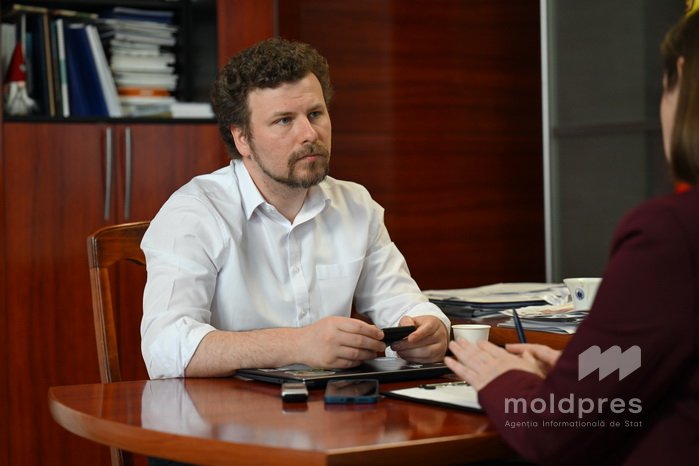
MOLDPRES INTERVIEW: Minister of Education and Research: Education system undergoing major transformation with great opportunities
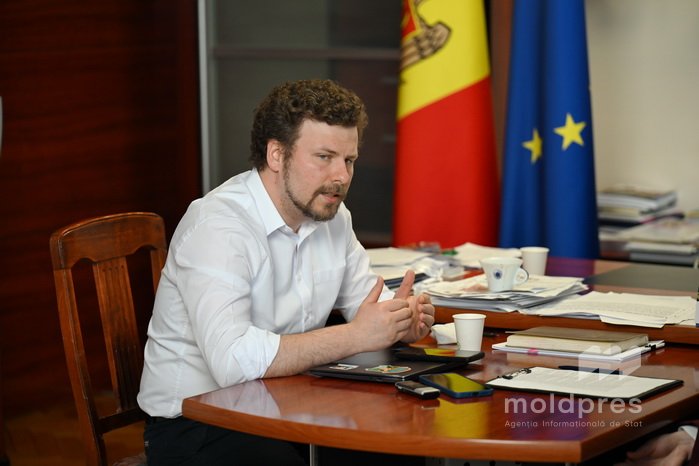
The education system in the Republic of Moldova is going through a stage of accelerated transformations, marked by curriculum reforms, consolidation of the school network and unprecedented investments in modernizing the infrastructure of educational institutions. The authorities aim to align education with European standards and increase the quality of studies, in the context of advancing the process of European Union integration. At the same time, the accelerated pace of reforms brings major challenges. In an exclusive interview with MOLDPRES State News Agency, Minister of Education and Research Dan Perciun explained the main objectives of the initiated reforms, the changes that marked the school year that is ending, and the priorities for the next period.

MOLDPRES: In recent years, the education system of the Republic of Moldova has been undergoing an extensive process of transformation and modernization. As we approach the end of school year, what do you consider to be the most important reforms implemented by the Ministry of Education and Research during this period, and what impact have they had on students, teachers and educational institutions?

Dan Perciun: I believe what most people in the system have noticed was the provision of free meals for students. Starting in September 2025, we began providing free meals to children in secondary school, grades 5–9. This is an investment of over 800 million lei that the state is making in the well-being of children. From the perspective of all actors in the system, I think this is the main achievement. Along with the free meals came the upgrading of school canteens, financed from the budget allocated for the Growth Plan. Two hundred million lei went directly to schools to modernize canteens and prepare this process. From the perspective of well-being, this is the main transformation.

Beyond that, we continued discussions on the curriculum reform. The concept papers for the new curricula for school subjects have already been published. We are at the stage where we are discussing the so‑called fixed part of the curriculum. By the end of June, they will be published for public debate, so we are moving quickly in this direction. Important changes have also been made to the way school textbooks are procured. We changed the formula by which we decide which textbooks reach schools. Ninety percent of the decision will be based on quality and only ten percent on price. This creates the conditions for the next procurements to ensure that the best possible textbooks for children win.

We have also introduced important changes to the Education Code. Minimum thresholds were introduced regarding the number of children in a certain type of school for it to be able to continue its activity in that format. In a first iteration, this targeted 73 schools that entered a reorganization process. Additional provisions have been introduced into the Education Code regarding so‑called support groups. This was an initiative to ensure additional services for children with special educational needs, especially those with severe intellectual disabilities. We are in the process of finalizing this, so that from September we can start piloting this aspect.

This school year also saw the piloting of the reintroduction of grades in 4th grade for exam subjects. We are now completing this piloting process, and starting in September this will become mandatory for all schools. This school year also introduced a new high school track, the general track, which is a track at the intersection of humanities and sciences, intended for schools with a single 10th grade class, where there are few students, but in principle the high school continues its activity because there are no opportunities nearby. It was piloted in the 2025–2026 school year, and from September we will offer this general track on a mandatory basis.

MOLDPRES: The 2026 exam session is approaching. I understand that this year the most important changes concern the secondary school leaving examinations, this being the first year in which, in some cases, exam centers will be created, following the model of the baccalaureate centers. How many centers will be created and to what extent can the changes promoted by MEC in recent years at the secondary level help improve the Republic of Moldova’s performance in PISA tests?

Dan Perciun: There are several changes. Indeed, this year for the 9th‑grade exam we will have centers. District education departments were given the possibility to organize them if they wished, and many of them opted for this. Essentially, this means transporting, on the day of the exam, students from several localities to a single center and reducing the total number of examination points from 1,000, as it was last year, to about 600.

Thus, this year the network of examination centers will be slightly more concentrated, and the number of institutions where the exam will be held has been reduced to about 600, with some of them receiving students transported from other localities.

What matters to us in the 9th‑grade exam is to have a mirror that does not reflect a distorted reality, but as accurate a mirror as possible so that we can build on real data and on reality, not on fiction. Last year, we saw a decrease in exam results. This year, in the best case, we will probably have a stabilization, but we might again have a decrease, because as the level of integrity of the exam increases, we get closer to the real situation in the system. Now the stake is for everyone to mobilize and understand that there are no more easy solutions: we can no longer copy, we can no longer come to arrangements. There is no other solution than learning. And we hope that the joint effort of everyone – from the mayor and social worker to the parent, student and teacher – will, over time, lead to improved results, including in PISA, and that we will see the same trend as in the baccalaureate, where we started from a pass rate of 40–42% and last year reached over 90%.

MOLDPRES: What important changes does this year’s admission session to higher education institutions bring, and what initiatives is the MEC planning to launch to motivate young people to choose to continue their studies in the Republic of Moldova?

Dan Perciun: Last year we had a very good admission session, the best in the last 10 years, with 11% more students than in 2024. This year we hope to beat this record and see an increasing number of young people who choose to stay and study in the Republic of Moldova. Our strategic target is for 7 out of 10 young people to stay. Last year, 6 out of 10 remained in our university system.

There are several good news items. Scholarships have been significantly increased, especially in STEM fields – from architecture to engineering, from mathematics to physics. For those in Education Sciences we have record‑high scholarships for the Republic of Moldova. For first‑year students, category I scholarships will reach 4,565 lei per month, more than in some countries in the region. We hope these increased scholarships will be an additional incentive for students to choose to stay at home. We are also bringing news in the field of pedagogy. Beyond scholarships, we are raising the minimum admission average from 6.5 to 7. We continue to use the now traditional information system e‑admitere.md for submitting documents. The list of specialties has also slightly expanded compared to the previous year. We have a growing range of specialties for all those interested.

Admission starts on July 27 and will continue until the end of August. We encourage everyone to apply and take advantage of the existing opportunities.

MOLDPRES: Will only the scholarships of pedagogy students be increased or for all specialties?

Dan Perciun: All scholarships will be increased, for all categories. In addition, the scholarships of those in technical specialties will be further increased, and even more so the scholarships of those in pedagogy. More precisely, there will be an increase for everyone, plus a larger increase for those in technical specialties and an exceptional increase for those in pedagogy. The increases will apply from September 1, 2026, so those admitted this year will already benefit from higher scholarships.

MOLDPRES: At the beginning of this year, the MEC launched, for the first time, the Barometer of the situation in lower and upper secondary education, which highlights, among other things, the need to strengthen mechanisms for preventing and combating bullying in schools. What policies is the MEC preparing in this regard?

Dan Perciun: This year we began working much more closely with civil society on this dimension. For the first time, we have a service contract with specialized NGOs, which are currently conducting training sessions in over 100 schools with students and teachers, to help teachers identify and intervene promptly in such situations. Also this year, the forum‑theatre campaign in schools continued. More than 100 schools were covered. It is a dramatization of these situations and a role‑play exercise carried out by students to raise awareness of the risks, to learn where such cases can be reported, and in general to develop empathy for their classmates.

In addition, together with colleagues from UNICEF, a series with strong educational content on this topic was launched. Moreover, the ministry is preparing a national plan for the prevention and combating of bullying, which we hope to approve by the end of July and which will provide a structured vision of the state’s intervention in this area over the next two years.

MOLDPRES: In recent years, the issue of teacher salaries has remained a priority for the education system, with the next salary increase for teachers planned for September 2026, once the new remuneration law is implemented. Do you have calculations regarding the scale of the increases and to what extent do you consider that these measures will help attract and retain specialists in the system?

Dan Perciun: Indeed, we are expecting the increases at the beginning of the school year. I hope the Ministry of Finance will present the calculations publicly in the next two to three weeks. We already have them internally. I will not give you more details. These are reasonable increases, above the inflation rate, so we will be talking about real growth in teachers’ incomes. There will always be room for improvement, but I think these increases will be an important step forward. We are leaving it to the Ministry of Finance and Prime Minister Alexandru Munteanu to present the new salary grid, which will affect not only the education sector but the entire public sector, because this is not just a sector‑specific policy: the entire architecture of the public sector remuneration system is being changed.

MOLDPRES: Will the salary increases also cover teaching staff in universities?

Dan Perciun: Yes, they will cover the entire system and not only the education system, but the entire public sector.

MOLDPRES: You recently announced the launch of a broad reform of the district education departments. What does this reform entail, what objectives is the MEC pursuing, and what concrete changes will schools and teachers feel?

Dan Perciun: Essentially, we want three major outcomes from this reform. The first is better alignment between what the ministry sets as public policy and what happens in schools. We want to ensure sound and coherent implementation of education policies. Today we have a fragmented system in which, on the one hand, the ministry sets certain policies and objectives, but their implementation is exclusively up to the education departments. As a result, not every district in our country is aligned with these objectives. In some places there is more indulgence towards certain phenomena; in others there is less involvement on certain topics.

The second key objective is to increase the capacity of the education departments. Today some of them face staff shortages of up to 75%. I think the average occupancy of positions is around 70%. Positions in the departments are not attractive. A negative selection has taken place there. Bringing the departments under the ministry’s authority will allow us to strengthen their capacities, pay higher salaries, implement management based on objectives and data, improve processes, and ensure that the departments are proportional to the territories they manage. Today we have a situation where a staff member in one district is responsible for one school and in another district for five schools. In one district, an official is responsible for 64 students, in another for 400 students, and we do not have a unified, standardized approach to the work and activities of education departments.

We also want a change in perspective on certain processes. Education departments still see themselves as control instruments over schools. We want to transform them into instruments to assist and support schools, and not just in words, but in reality.

Of course, we also aim to depoliticize certain decisions that today lie at the discretion of the departments and, primarily, of district councils. Here we are referring to the school network, the selection of school principals, the allocation of resources. All these decisions are currently at the level of district councils, which are inherently political entities and where the best interests of the child do not always prevail; sometimes local political interests do. With this change, the system will be managed by education professionals with relevant studies and experience, and decisions will no longer be made simply by local politicians.

MOLDPRES: What will change for schools?

Dan Perciun: For schools, for a school principal, this will mean greater school autonomy, because we firmly believe in that. It will mean more clarity in the relationship with the authorities. Today, some principals feel they have two or even three bosses: on one side the district education department, on another the district council, and on yet another the ministry, and people are caught between a rock and a hard place. The departments continue to serve as a political stick. I can assure principals that this will mean more autonomy, greater decision‑making freedom and more independence from political influence.

MOLDPRES: What are the results so far of the reform aimed at consolidating the school network? How many institutions are involved in this process, what actions will follow, and what will the school network look like in the next school year?

Dan Perciun: Under the legal changes and provisions of the Education Code, 73 institutions are targeted. Of these, 10 institutions are ceasing their activity because they currently have fewer than ten students. The remaining 63 institutions are being reorganized into another format. They continue to exist in the village but in a different format. If they were primary schools with fewer than 30 students, they are being transformed into primary‑school–kindergarten institutions. Essentially, the kindergarten in the village is being merged with the school – one principal, one building, everyone stays. If they were lower secondary schools with fewer than 35 students in grades 5–9, they are being transformed into primary schools. The children are transported to a nearby locality. This is what is mandatory under the law.

Beyond that, some departments have decided to look to the future, not wait for 2027, and intervene where a school was very close to the legal threshold. For example, the legal threshold states that there must be 35 students at the lower secondary level for a school to enter the reorganization process. There are schools with 38 or 39 students that are not affected by this change this year, but looking at the figures, some departments understood that they would have to act next year anyway, and therefore chose in 2026 to intervene in all problematic situations so that in the next five years they would no longer need to carry out such interventions. In total, I think we will reach about 100 schools across the country that will go through reorganization. Of these 100, 73 under the law and the rest based on proactive decisions by principals and district councils in certain districts.

MOLDPRES: What is the scale of the financial effort for this reform?

Dan Perciun: The main objective of this change, as I have said, is not to save money in the state budget, but on the contrary to increase the quality of studies, which in some cases even means higher short‑term costs for the national public budget. In the first stage, this reform is indeed more of an investment than a saving of resources. And even if there were savings, they would still be reinvested in education. For transporting students, we are in the process of purchasing 58 school buses from the state budget. The first ones are expected to arrive at the end of June. Normally, by the beginning of the school year, we hope that all of them will have arrived and been distributed to the districts. All children who will be transported will receive an allowance of 1,000 lei per month for two years. Our initial estimates spoke of 1,300 students who would be transported to another school. Now it depends on whether the departments will limit themselves to the 73 schools or more. Of course, if there are more students, costs will increase, but this is an investment we are making. There will also be some needs related to covering teachers’ transport costs. We are ready to bear them.

MOLDPRES: The years 2026 and 2027 are expected to be extremely important for the education system, in the context of curriculum reform and the process of developing and publishing new school textbooks. At what stage is this reform currently, how many textbook titles are to be published this year, and is the MEC on schedule for implementing the reform?

Dan Perciun: We hope to stay on schedule and manage to have all the textbooks ready by September 2027. We have a clear timetable. In October–November we should launch the procurements for textbooks for grades 1, 2, 5, 6 and 10, since the curriculum will be implemented gradually for two grades at the beginning of each level. In total, we plan to invest next year, when we make the payments, more than 200 million lei. It takes between 9 and 12 months from the launch of the procurement until the textbook reaches the school. We are somewhat pressed for time, but there is a good probability that we will manage to deliver on time for most subjects. The budget is larger. We very much hope that publishing houses will mobilize and submit bids for all textbooks.

In addition, we are in the process of training textbook authors. We are trying to increase the number of authors because in 2026–2027 we will have to develop over 100 titles in total. This is quite a lot. Practically, 50% of all textbooks will be published in 2026–2027 and the rest in 2027–2028.

MOLDPRES: In the context of rapid reforms and unprecedented investments in education, what are the key conditions for ensuring the efficient implementation of the new changes and for guaranteeing their long‑term continuity?

Dan Perciun: The system is in full transformation. It is a period with great opportunities for the system from an investment perspective. We have a huge investment portfolio – from university dormitories to model schools – with more than 150 million euros already contracted, for vocational schools and colleges an additional 80 million euros that the state of the Republic of Moldova will invest over the next 3–4 years. These are enormous opportunities in terms of equipment and infrastructure.

At the same time, there are reforms that are happening quite rapidly and are demanding for teachers and principals. We are in a rapid transformation process. We are preparing for the moment of accession to the European Union, and this means making changes better, faster and with higher quality. It means a larger workload and a bit of stress. But we are trying to find solutions for every person affected by these changes. We are looking for individual solutions for everyone and we understand that yes, rapid reforms generate some anxiety. This is normal. We are trying to be supportive, knowing that we have no choice but to move forward, to make difficult decisions, while staying close to the people affected by these decisions.

To succeed, dialogue is very important. I am glad that people, even if they feel some anxiety about change, understand its necessity. In some respects they understand that some decisions are late, but we manage to obtain this understanding only after many discussions. Reforms have a chance to deliver the expected results if there is alignment and a common understanding between the ministry, teachers, principals and department heads, and if everyone rows at the same speed and in the same direction, then they will produce results in the classroom, and students and parents will be able to say that indeed things have changed for the better. This is the most important condition – to have a shared understanding of the direction in which we are going and of the steps we are taking by common agreement. And secondly, of course, some stability is needed. Everything in education requires stability and continuity. If we set out on a path and change our minds halfway, we fail. We need continuity and completion of all these processes.

Thank you for the interview.

Reporter: Natalia Sandu
 Facebook
 Instagram
 X/Twitter
 Telegram
MOLDPRES INTERVIEW // Lithuanian Ambassador about prospects of Moldova’s EU accession: If you make things real, they will become achievable
MOLDPRES INTERVIEW // Moldovan finance minister says government aims to modernize financial system for benefit of businesses, citizens
MOLDPRES INTERVIEW // Ambassador of State of Qatar to Moldova: We are working to improve ways of attracting Qatari investors to Moldovan market
MOLDPRES INTERVIEW // President of Moldova's Chamber of Commerce and Industry says country must use opportunities provided by European integration to attract investments, become competitive
MOLDPRES Interview // Minister of Internal Affairs: Interior Ministry applies European security standards and is ready to advance in EU accession process
MOLDPRES INTERVIEW // Moldovan energy minister says foremost interest citizens to have secure energy at affordable prices
Moldovan justice minister says, according to European Commission’s Report, Moldova made greatest progress among EU candidate states, including in justice field
INTERVIEW MOLDPRES // Moldovan defense minister says Russia's war in Ukraine highlighted vulnerability of defense sector, need of building strong, prepared, resilient army to current challenges
INTERVIEW WITH MOLDPRES // Deputy PM says wants Moldova where a child from any village has same opportunities as a child from Chisinau
INTERVIEW MOLDPRES // Deputy Prime Minister on Ukraine Peace Agreement: No discussion about Moldova can take place without Chișinău's participation
INTERVIEW MOLDPRES // Moldovan agriculture and food industry minister says European integration fundamentally changes way leadership supports agriculture
INTERVIEW MOLDPRES // Romania's Ambassador in Chisinau says Moldova to never be alone in its efforts, Romania to stand by its side
MOLDPRES INTERVIEW // Romanian culture minister says culture adds value, rebuilds trust
MOLDPRES interview // IGP head: Russia whether through Ilan Shor or other means to constantly try to find ways to create disorder and destabilization
PHOTO // PM in New York tells Diaspora government willing to turn experience of Moldovans from United States into projects for country
Moldovan foreign affairs minister at UN says Moldova strengthening capacity to respond to health threats
Moldova under emergency state in energy, hydrological sectors as of September 26; what measures take effect
PHOTO // PM promotes Moldova's investment opportunities in New York
Balti Clinical Hospital to receive ultrasound machine through grant provided by government of Japan
Japan supports modernization of Balti Clinical Hospital with grant worth over 95,000 dollars
Moldovan parliament speaker urges students not to be afraid to express their ideas, wishes
 National Bank of Moldova
Strengthening Moldova’s cooperation with UNDP, UNOPS discussed in New York
Moldova's National Crisis Management Commission approves new measures to ensure energy security, protect water resources
Moldovan PM, U.S. investors, companies discuss potential projects in Moldova
Head of state says Moldovans must build economy where well-educated people can find opportunities at home
Moldova represented at Interparliamentary Conference on Stability, Economic Coordination and Governance in European Union

Moldova's Border Police receive six special vehicles on behalf of FRONTEX
Head of state says Moldovans must build economy where well-educated people can find opportunities at home
Moldovan president attends events dedicated to 35th anniversary of foundation of Academy of Economic Studies
New charges brought against former Moldovan president Igor Dodon in “Kuliok” case; prosecutors seek harsher sentence
Moldova represented at Interparliamentary Conference on Stability, Economic Coordination and Governance in European Union
ARMENPRESS: EU Commissioner Kos promotes Armenian products after trade measures adopted
VIDEO // Parliament speaker conveys message to coaches of Moldova
Public buildings of Moldova to undergo energy renovation with World Bank's support
Mircea Eșanu on nomination to lead Moldova Project: More information could become known in October
President’s speech at ASEM’s 35th anniversary
PHOTO GALLERY // Moldova's new passport presented by Public Service Agency
VIDEO // Moldova to introduce new passport model as of October 15; document to feature more than 100 security elements
DOC // Regulation on e-Consulat System published in Official Journal
National Award for Seniors: 15 people winners in 2026 edition
PHOTO // Moldova’s protected areas strengthened through restoration works, planting and new management tools
Moldovan, Dutch Prime Ministers discuss European path and investments
Receive the latest news directly to your email

Receive the latest news directly to your email