
VIDEO // €24 million German investment brings safe drinking water to 800,000 citizens in Central Moldova
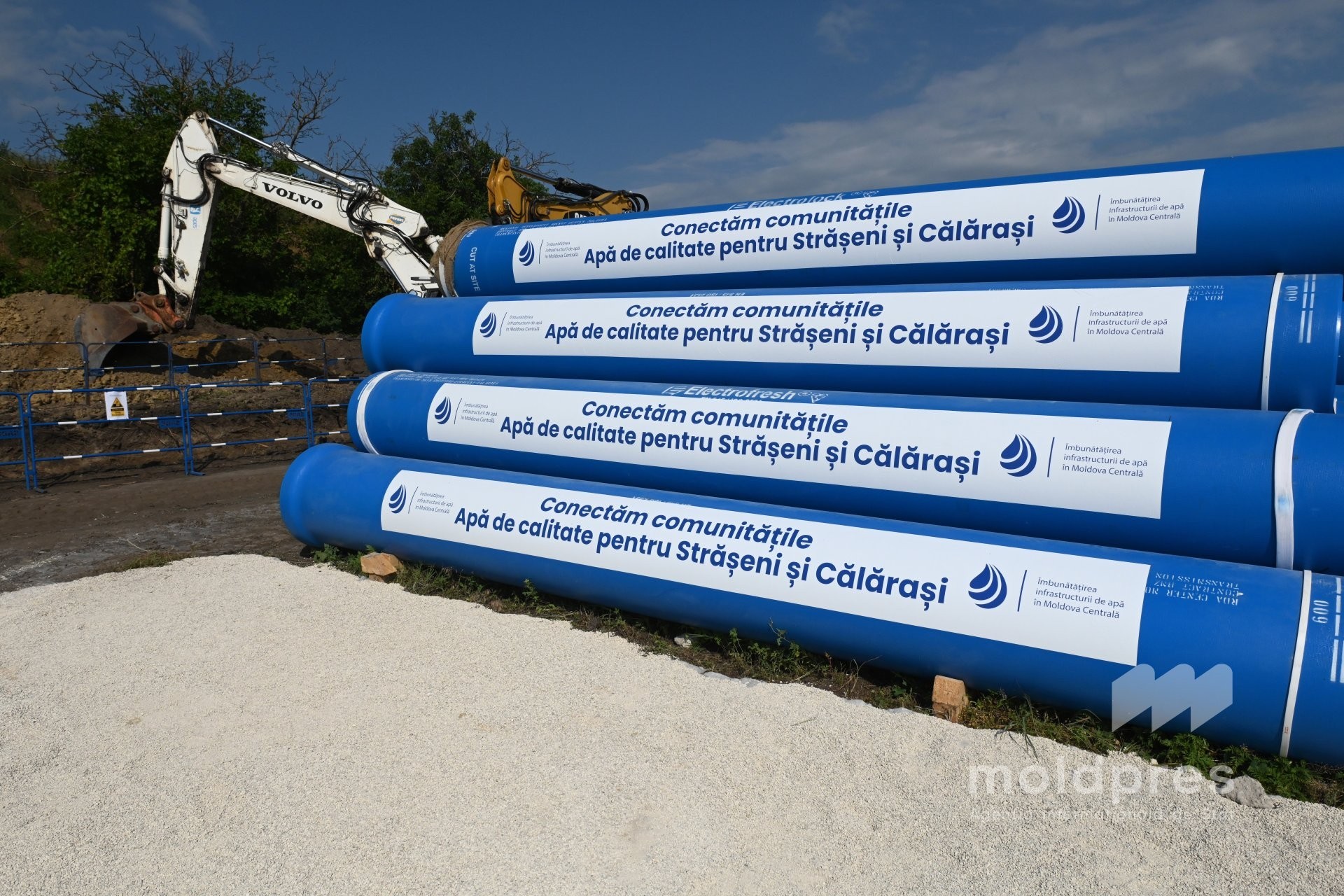
Public health security and access to vital resources in central Republic of Moldova are making a technological leap with the launch of Open Urban Development Program. Through a joint investment of 24 million euros, the water intake station on the Dniester River will be fully modernized, becoming the heart of a regional system that will supply more than 800,000 citizens in the municipality of Chișinău and the districts of Strășeni and Călărași.

The project, officially launched today is a model of international cooperation, supported by a 14‑million‑euro grant from the Government of Germany, via KfW bank. The remaining funding is provided by the Government of the Republic of Moldova (7.6 million euros) and the Chișinău City Hall (2 million euros), under the coordination of the Central Regional Development Agency (ADR Centru). The central element of the investment is the construction of a state‑of‑the‑art water intake station, capable of feeding a 52‑kilometer main pipeline that will connect the capital with towns and villages in the region by the end of 2026.

Deputy Prime Minister, Minister of Infrastructure and Regional Development Vladimir Bolea emphasized during the event that this initiative addresses a fundamental need of the population, transforming the way the state manages surface water resources.

“One of the essential problems our residents face is the quality of drinking water. For this reason, the core of our strategy is the development based on surface waters, the development of intake stations, and of main pipelines that interconnect cities and, later on, villages. This is probably the most important project we can implement together, because water is a key element for the health and safety of every resident,” said Vladimir Bolea.

The new infrastructure targets not only quantity, but also safety under extreme weather conditions. Ambassador of Germany to Chișinău Hubert Knirsch highlighted the technical superiority of the new intake station, which will be protected against floods and accidental pollution.

“I am proud that Germany can make a direct and substantial contribution to raising Moldova’s water supply system to a high European standard. The new station will benefit from double intake channels and will be resilient to floods and climate change, while also preventing sediments and pollution from entering the system,” noted the German ambassador.

Beyond building networks and rural water mains, the long‑term success of the program depends on how efficiently it is managed. Vera Vitkin, the representative of KfW bank, drew attention to the need for a balanced approach between service quality and the economic viability of the operators.

“Infrastructure must be supported by quality services, and water operations must benefit from tariffs that cover costs while remaining affordable for the population. Otherwise, in the long run, the infrastructure will not be sustainable,” explained Vera Vitkin.

The completion of the five financing agreements signed on Thursday paves the way for construction sites that will change the lives of nearly one million people. In addition to engineering works, the project allocates one million euros for the institutional modernization of Apă‑Canal Chișinău, ensuring that, along with new pipelines, citizens will also benefit from resource management that meets European standards.
 Facebook
 Instagram
 X/Twitter
 Telegram
Gasoline and diesel stocks increasing: 33 thousand tons of fuel imported in recent days
Another drop in fuel prices
Governor of National Bank of Moldova, finance minister in Washington hold talks with head of the IMF mission for Moldova
Merchandise exports up 11 percent in Moldova in first two months of 2026
PHOTO // Travelers can arrive from Chisinau Railway Station to Airport in just 15 minutes; new rail transfer successfully tested
North Bus Station of Chisinau returns 85 per cent to state ownership: decision of Council for examination of investments of strategic importance
Moldovan delegation attends World Bank and IMF spring meetings in Washington
Fuel prices drop: diesel becomes 0.85 lei cheaper
AIPA allocated over 53 million lei to farmers in first ten days of April
Local companies can participate in Moldova Presents exhibition, organized in Vaslui, Romania
Over 200 young people of Moldova launch or expand businesses through European Union-funded project
Japan reconfirms status of strategic partner for development of Moldova's agricultural sector
VIDEO // Strășeni–Gutinaș power line project moving forward: construction could start in 2027
Significant diesel price cut: cost drops by 1.17 lei
Head of Moldova's Anticorruption Prosecutor’s Office says prosecutors have 15 days available to decide whether to appeal Vladimir Plahotniuc’s sentence
VIDEO // €24 million German investment brings safe drinking water to 800,000 citizens in Central Moldova
State of emergency in energy sector could end on 25 April
Conviction of Vladimir Plahotniuc in bank fraud case
DescOperă 2026: four evenings of classical music under open sky in Butuceni
Searches in Chișinău and Orhei on electoral corruption case: 26 people suspected
Italian company to build first kilometers of highway in Moldova
 National Bank of Moldova
Deputy Secretary General of Government at completion of Land Registration and Valuation Project: It is starting point for faster cadastral services
Parliament hosted meetings of standing committees and Bureau of Euronest Parliamentary Assembly
Prime Minister meets with Ambassador of Spain to Moldova
Casual workers’ activity to be electronically monitored in Moldova, to ensure necessary social protection
Moldovan government proposes ending state of emergency, introducing state of alert in energy sector

MOLDPRES REPORT // Europe reaches Cantemir by rail: Railway of hope relaunched under banner of shared values on both banks of Prut
Consulate General of the Republic of Moldova in Sacramento launches internship program for diaspora
Deputy Prime Minister to attend Delphi Economic Forum
Parliament hosted meetings of standing committees and Bureau of Euronest Parliamentary Assembly
Embassy of the Republic of Moldova in Washington resumes activity after building renovation
Three anti-corruption prosecutors heard by evaluation commission
Zero customs duty on imports of raw materials and equipment used in production
PHOTO GALLERY // First journey on restored Cantemir–Fălciu railway line successfully tested
BTA: Borislav Sarafov Resigns as Acting Prosecutor General
PHOTO // Speaker at Euronest Assembly: EU enlargement - path to more stable, more coherent Europe, better able to protect fundamental values
GALEX National Awards handed out to most active promoters of reading and libraries
PHOTO // Romania, Moldova and Ukraine united by rail: Cantemir–Fălciu section reshapes trade routes in Eastern Europe
Partnership for safety and stability: Moldova to become associated member of international organization RACVIAC
Prime Minister meets with Ambassador of Spain to Moldova
Parliament to consider government’s proposal to lift state of emergency in energy sector on Friday
Geographical indications and designations of origin to be regulated by new law aligned with EU standards
Receive the latest news directly to your email

Receive the latest news directly to your email