
State of emergency in energy sector could end on 25 April
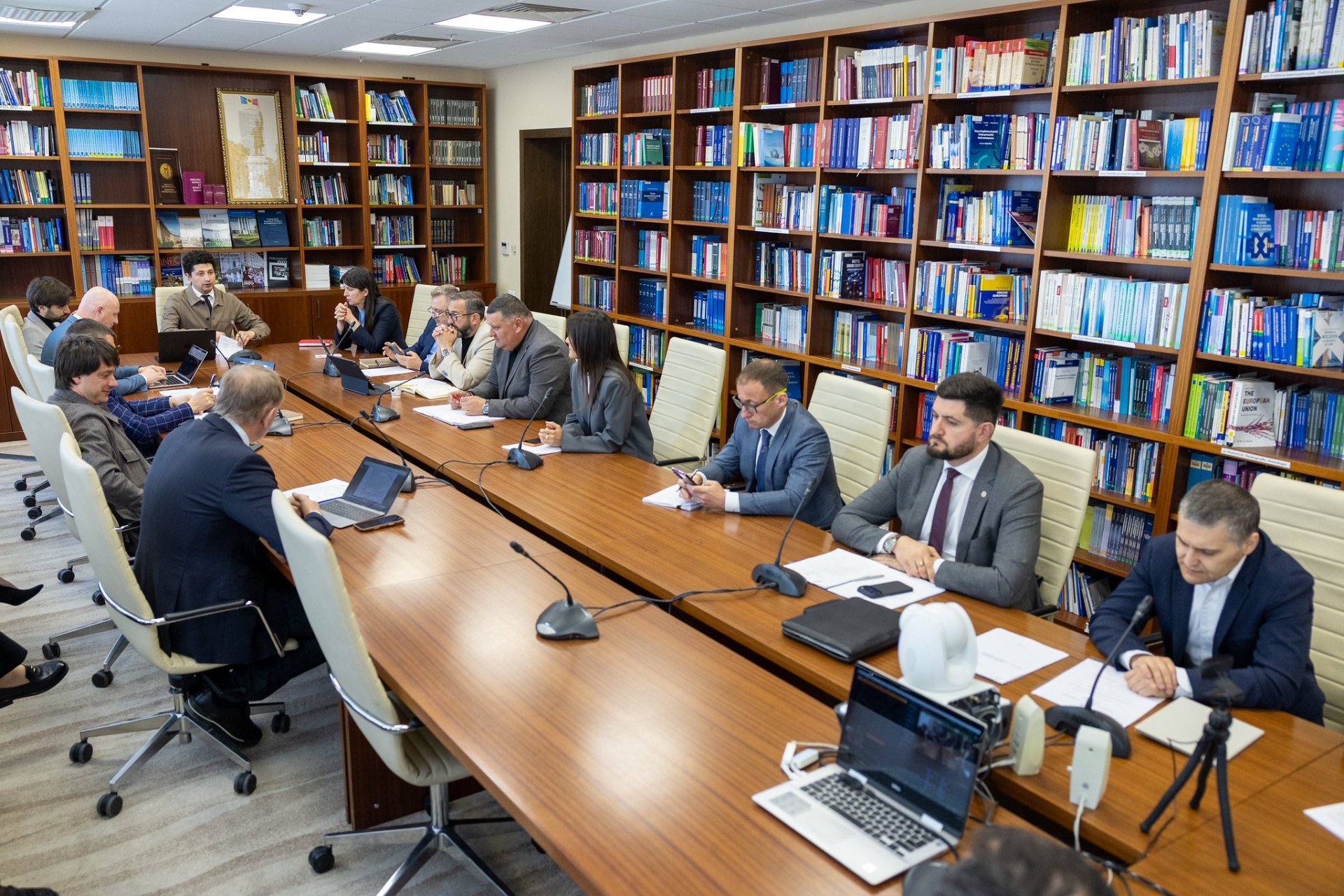
The state of emergency in the energy sector could end on 25 April at the Government’s proposal. Members of the Parliamentary Committee on Economy, Budget and Finance approved today the report on the draft decision that provides for this, and the document is to be examined on 24 April in the plenary of Parliament.

The state of emergency in the energy sector was declared on 25 March 2026 for a period of 60 days. This was necessary after the main electricity transmission line supplying the Republic of Moldova – the Vulcănești–Isaccea line – was disconnected following Russia’s attacks on Ukraine’s civilian energy infrastructure. As a result, an electricity deficit of up to 400 MW was recorded during peak hours.

In the same period, the oil products market was affected by temporary supply disruptions, especially for diesel, against the backdrop of instability in the Middle East.

During the state of emergency, the authorities took actions to rehabilitate and put back into operation the Vulcănești–Isaccea line, as well as to ensure electricity supply to all consumers. More specifically, the 330 kV Bălți–Dnestrovsk overhead power line was reconnected. The four 110 kV overhead interconnection lines with Romania were also put into operation. At the same time, priority electricity supply was established for consumers of vital importance, exports were limited during peak hours, and measures to reduce and increase the efficiency of consumption were implemented. In addition, the state enterprise Moldelectrica was given the possibility to make urgent purchases through direct negotiations.

To maintain the functioning of the oil products market under crisis conditions, the Government took measures to support economic operators. Thus, the market was stabilized, volatility was reduced, and major disruptions were prevented.

After the state of emergency is lifted, the Government will introduce a state of alert for a period of 60 days, starting from April 25 this year. This will allow continuous monitoring and rapid interventions to ensure the security of electricity and oil products supply, depending on how risks evolve.
 Facebook
 Instagram
 X/Twitter
 Telegram
Gasoline and diesel stocks increasing: 33 thousand tons of fuel imported in recent days
Another drop in fuel prices
Governor of National Bank of Moldova, finance minister in Washington hold talks with head of the IMF mission for Moldova
Merchandise exports up 11 percent in Moldova in first two months of 2026
PHOTO // Travelers can arrive from Chisinau Railway Station to Airport in just 15 minutes; new rail transfer successfully tested
North Bus Station of Chisinau returns 85 per cent to state ownership: decision of Council for examination of investments of strategic importance
Moldovan delegation attends World Bank and IMF spring meetings in Washington
Fuel prices drop: diesel becomes 0.85 lei cheaper
AIPA allocated over 53 million lei to farmers in first ten days of April
Local companies can participate in Moldova Presents exhibition, organized in Vaslui, Romania
Over 200 young people of Moldova launch or expand businesses through European Union-funded project
Japan reconfirms status of strategic partner for development of Moldova's agricultural sector
VIDEO // Strășeni–Gutinaș power line project moving forward: construction could start in 2027
Significant diesel price cut: cost drops by 1.17 lei
DescOperă 2026: four evenings of classical music under open sky in Butuceni
Searches in Chișinău and Orhei on electoral corruption case: 26 people suspected
Italian company to build first kilometers of highway in Moldova
Moldova to appoint new ambassadors to Japan and Kazakhstan
 National Bank of Moldova
Parliament hosted meetings of standing committees and Bureau of Euronest Parliamentary Assembly
Prime Minister meets with Ambassador of Spain to Moldova
Casual workers’ activity to be electronically monitored in Moldova, to ensure necessary social protection
Moldovan government proposes ending state of emergency, introducing state of alert in energy sector
Support for development of sport in Moldova: government approved Programme on Implementation of Sport 2030 Strategy for 2026–2028

Deputy Prime Minister to attend Delphi Economic Forum
Parliament hosted meetings of standing committees and Bureau of Euronest Parliamentary Assembly
Embassy of the Republic of Moldova in Washington resumes activity after building renovation
Three anti-corruption prosecutors heard by evaluation commission
Zero customs duty on imports of raw materials and equipment used in production
PHOTO GALLERY // First journey on restored Cantemir–Fălciu railway line successfully tested
BTA: Borislav Sarafov Resigns as Acting Prosecutor General
PHOTO // Speaker at Euronest Assembly: EU enlargement - path to more stable, more coherent Europe, better able to protect fundamental values
GALEX National Awards handed out to most active promoters of reading and libraries
PHOTO // Romania, Moldova and Ukraine united by rail: Cantemir–Fălciu section reshapes trade routes in Eastern Europe
Partnership for safety and stability: Moldova to become associated member of international organization RACVIAC
Prime Minister meets with Ambassador of Spain to Moldova
Parliament to consider government’s proposal to lift state of emergency in energy sector on Friday
Geographical indications and designations of origin to be regulated by new law aligned with EU standards
President about Earth Day: Each of us must contribute to protecting nature
Interior Minister about detention of six police officers in corruption case
Receive the latest news directly to your email

Receive the latest news directly to your email