
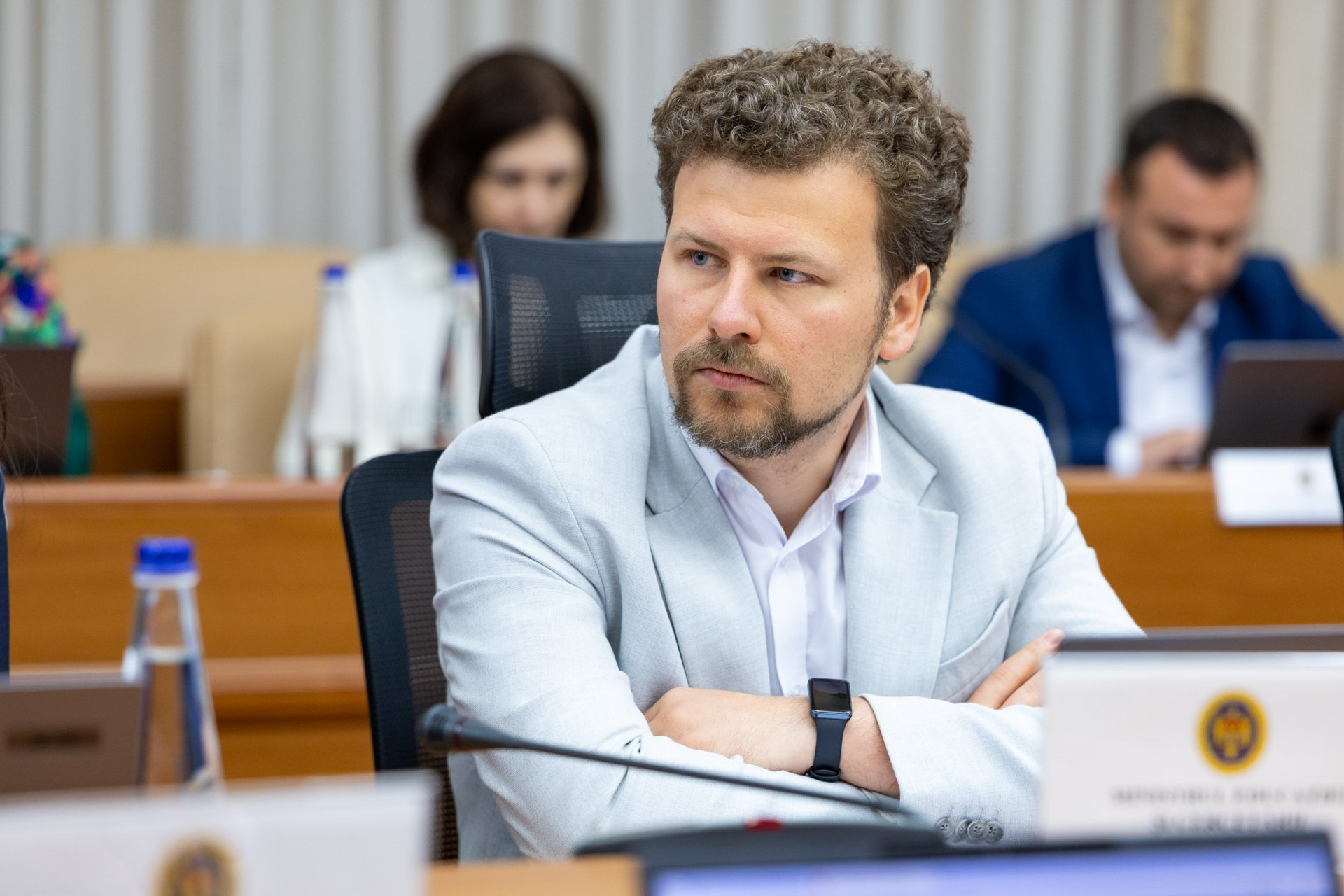
Government approves Implementation Program for Education 2030 Development Strategy
Around 13.5 billion lei will be invested in the development of the education system in the Republic of Moldova over the next five years, according to the Implementation Program of Education 2030 Strategy for 2026–2030, approved today by the Government.

The investments target all levels of education – from nurseries and kindergartens to technical vocational education and universities – as well as support for teaching staff, research, and the digitalization of the system.

“By 2030 we want to see positive changes in all educational institutions – in every kindergarten, school, college, and university. We are talking about better conditions for children and teachers, modernized schools, a more relevant curriculum, more opportunities for young people and more competitive universities. We have a clear plan for the next five years, with investments and results we are committed to,” said Minister of Education and Research Dan Perciun.

In early education and general education, the Program envisages the creation of 5,000 nursery places, equipping at least 400 schools and kindergartens, renovating sanitary blocks, and developing a network of 90 model schools.

The curriculum will also be revised, and by 2030 the goal is to increase the lower secondary (gymnasium) graduation exam pass rate to at least 90%. Another target is to improve results in the Programme for International Student Assessment (PISA), which measures the competences of 15-year-old students in reading, mathematics, and science.

In technical vocational education, at least 3,000 students will follow dual programs, involving a minimum of 300 private companies. Dual education will also be extended to the university level, with at least 1,000 students to be enrolled. At the same time, universities aim to attract at least 3,000 foreign students annually and to achieve a graduate employment rate of 50%. Another objective is for 7 out of 10 graduates to choose to remain in the Republic of Moldova.

Measures are planned to strengthen academic integrity, including the use of anti-plagiarism systems and supervised assessments, as well as investments in teaching blocks, university dormitories, laboratories, and recreational spaces for students. Efforts will also be made to support STEAM fields by increasing scholarships for students who choose these programs.

The Program also focuses on strengthening the quality of higher education and research through external evaluation of doctoral programs, in order to ensure quality standards compatible with European ones and to increase the competitiveness of research in the Republic of Moldova.

The Program further provides for the creation of Erasmus Agency, which will contribute to more efficient management of mobility, cooperation, and exchange of good practices opportunities for pupils, students, teachers, and educational institutions.

In the field of research and innovation, research infrastructure, public–private partnerships, technology transfer instruments, and the e-Research information system will be developed.

Another priority is supporting teaching staff. More than 5,000 employees in the system will benefit from “We Invest in Educators” program, and over 25,000 from “We Invest in Teachers” program. At the same time, mentoring programs and psychological counseling services will be provided for teachers.

Regarding the digitalization of education, plans include certifying teachers’ digital competences according to DigCompEdu and developing 3,000 units of digital content. By 2030, the objective is for 100% of graduates to reach level B1 in digital competences. A national program on the use of artificial intelligence in education will also be implemented.

The total estimated cost of the Program for the 2026–2030 period is around 13 billion lei, with most of the resources directed to infrastructure. Of this amount, 3.7 billion lei, or about 27%, will be provided from the state budget, while 7.9 billion lei, equivalent to about 60%, represents external assistance from development partners, international financial institutions, and the European Union. For the remaining 1.8 billion lei, or about 13% of the total cost of the Program, funding sources are yet to be identified.
 Facebook
 Instagram
 X/Twitter
 Telegram
Measures to reduce risks caused by natural disasters approved by Government
Ceiling for foreign exchange transactions without NBM authorization to be increased
Government State Secretary for Reintegration meets with delegation from Kingdom of Norway
Prime Minister discussed with Lithuanian counterpart progress of Moldova’s European path
Deputy Prime Minister meets UNDP Resident Representative in Moldova
Deputy Prime Minister for Reintegration meets Ambassador of Japan to the Republic of Moldova
Prime Minister met with DOR Program participants
Head of State condemns new airspace violation: Russia’s war affects us directly
Prime Minister in dialogue with entrepreneurs from Costești
Prime Minister attends Diaspora at Home Festival in Costești
Prime Minister at Festival in Sipoteni: Government will work so that every village, every community and all Moldovans can prosper
Prime Minister and Turkish Ambassador approach prospects for Moldovan-Turkish cooperation
Prime Minister in talks with Italy’s Ambassador
Moldovan, Belgian Prime Ministers discussed European path of country
Famine caused by Soviet totalitarian regime in 1946–1947 is to be officially recognized as crime against humanity
Government initiates negotiations with NATO on regulating exchange and protection of classified information
Clearer rules for storing petroleum products intended for emergency situations
Government increases budget for supporting investments in manufacturing industry to 4 billion lei
 National Bank of Moldova
Moldovan driving licences to be recognized in Latvia
Famine caused by Soviet totalitarian regime in 1946–1947 is to be officially recognized as crime against humanity
Clearer rules for storing petroleum products intended for emergency situations
Government increases budget for supporting investments in manufacturing industry to 4 billion lei
Over 400 mayors attend consultations on investments for amalgamated localities

Moldovan citizens residing in Latvia to be able to exchange driving licences without additional exams
Prime Minister to hold expanded meeting with farmers on transit of Ukrainian grain by rail
BTA: Smoke Reported in Eight Municipalities in Western Bulgaria, Most Likely Cause Are Fires in Serbia, Albania
Moldova and United States discuss strengthening cooperation in culture and media
ARMENPRESS: Armenia considered safe in terms of crime severity, police chief says
Over 400 mayors attend consultations on investments for amalgamated localities
Minister of Energy calls for mobilization of efforts to ensure conditions needed for start of commercial operation of Vulcănești–Chișinău Line
PHOTO GALLERY // Preparations for Military Parade on 27 August: Veterans and soldiers hold last rehearsals to mark 35 years since proclamation of Independence of the Republic of Moldova
Republic of Moldova digitalized 70 percent of public services: savings estimated at over 850 million lei in 2025
Republic of Moldova at 35 Years of Independence
Energy compensation to be available again this year
Moldovan cities benefit from European cooperation and funding through URBACT IV Programme
Government Spokesperson about request for pay raise for teachers: Government to present identified solutions as soon as possible
Government State Secretary for Reintegration meets Ambassador of Czech Republic to Moldova
Braniște commune, Râșcani district invests in clean water and waste management with residents' involvement
Parliament strengthens dialogue with civil society: Over 20 draft laws subjected to public consultations
Receive the latest news directly to your email

Receive the latest news directly to your email