
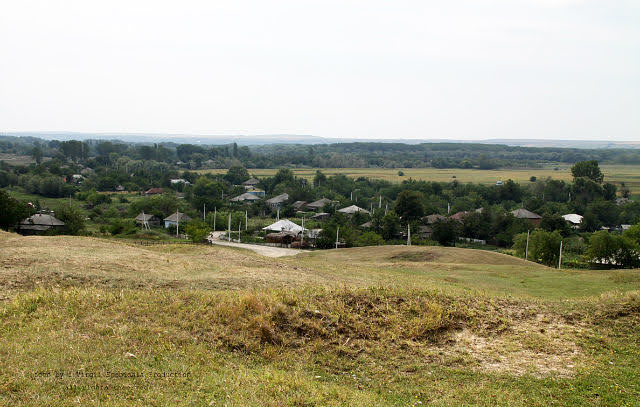
Braniște commune, Râșcani district invests in clean water and waste management with residents' involvement
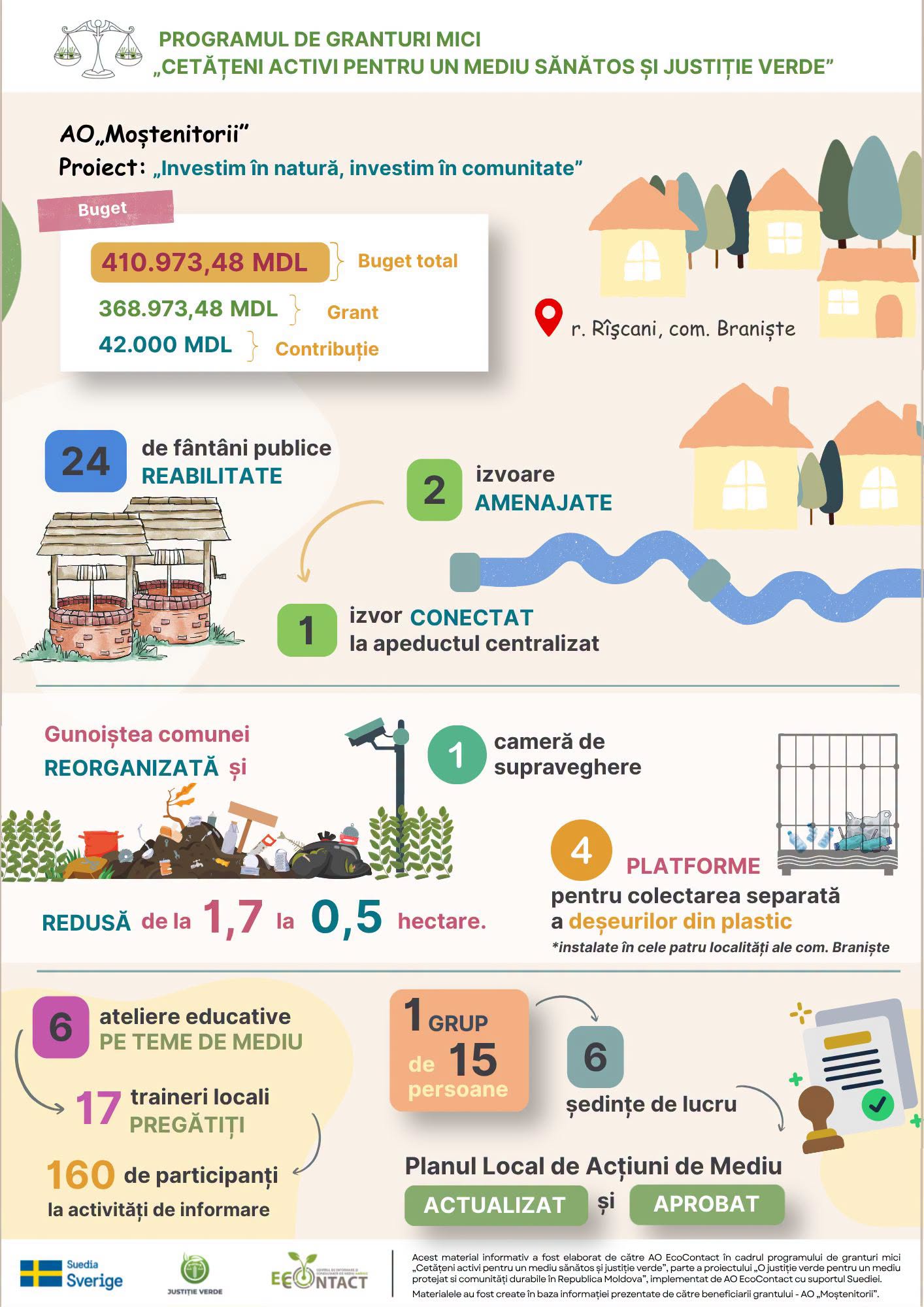
Residents of Braniște commune, Râșcani district, are benefiting from investments in environmental infrastructure and local resource management, following the implementation of a project dedicated to nature protection and community engagement. As part of the project “We invest in nature, we invest in the community,” the public association “Moștenitorii,” together with the town hall and the residents of the commune, rehabilitated 24 public wells, arranged two springs, and reorganized the local dumpsite.

At the same time, in the four localities of the commune, four platforms were installed for the separate collection of plastic waste. The project was financed through the small grants program “Active citizens for a healthy environment and green justice,” part of the project “Green Justice for a protected environment and sustainable communities in the Republic of Moldova,” implemented by NGO EcoContact with financial support from Sweden.

More water sources rehabilitated than initially planned

One of the main components of the project focused on improving access to safe water sources. Initially, work was planned for 20 wells, but in the end 24 were cleaned, disinfected, and repaired. Two springs were also insulated and arranged, one of them being connected to the centralized water supply system.

To verify water quality, samples were taken from one spring and five wells and analyzed in the laboratory. According to the final report, the test results were positive.

More than 70 community residents were directly involved in the work to arrange the water sources.

The commune’s dumpsite reduced more than threefold

“Another important component of the project was waste management. The area of the commune’s dumpsite was reduced from 1.7 hectares to 0.5 hectares, with access roads being arranged and separate zones designated for household waste, construction materials, and organic waste. The perimeter was marked off with a natural fence of black locust, and from the savings generated within the project, a surveillance camera was also installed,” EcoContact explains.

To enable separate plastic collection, four platforms were set up in the localities of the commune. Braniște’s experience has already attracted the interest of other local administrations, with two town halls requesting the installation of similar platforms.

Environmental education brought into the community

The project was not limited to infrastructure works. During six workshops, 17 local facilitators were trained, including educators, teachers, civic activists, and students.

“Subsequently, they organized information activities for approximately 160 people, from children and teenagers to the elderly. The discussions focused on protecting water resources, waste management and recycling, composting, as well as harnessing the commune’s touristic potential. Community involvement also extended to the process of updating the Local Environmental Action Plan (LEAP). A group of 15 people took part in six meetings during which environmental problems were identified, priorities were set, and actions for the community were formulated. The updated document was approved by the communal council in May 2026,” the cited source notes.

According to EcoContact, Braniște commune’s experience shows that relatively small investments, combined with resident involvement, can bring about concrete changes in the management of water, waste, and natural resources.

The implementation of the project was supported by Braniște town hall, Râșcani Environmental Protection Inspectorate and Bălți Public Health Center, Râșcani branch.

The project, carried out between 1 October 2025 and 30 April 2026, had a total value of 410,973 lei. Of this amount, 368,973 lei, or 90%, represented funding provided through the small grants program, while 42,000 lei constituted the organization’s contribution.
 Facebook
 Instagram
 X/Twitter
 Telegram
Parallel financial investigations to be conducted under common national mechanism
PHOTO // Chisinau-Straseni-Calarasi water main close to completion: over 47 kilometers of pipeline installed
DOC // Published in Official Journal. Operation of eCall system to be regulated by law
Additional 6 million lei to be provided to fund shelters for Ukrainian refugees
Defense Minister: Aircraft that caused explosion in Crocmaz is Russian propulsion drone
Approved by Government. Moldova to step up exchange of police data with European states
Dniester river water level drops
Moldovan, Romanian officials approach bilateral cooperation
DOC // Ion Ojog promoted to military rank of brigadier general
PHOTO // Training for Independence Day parade
DOC // Published in Official Journal: allowances of up to 300,000 lei for teachers deciding to work at other schools following reorganization
Aircraft unlawfully flew over airspace of Moldova
Over 15,000 people employed through ANOFM
VIDEO // Over 2,000 service members to march on Independence Day
Parliament strengthens dialogue with civil society: Over 20 draft laws subjected to public consultations
VIDEO // Defence Minister about crash of aircraft in Talmaza: Russia's hostile activities against Ukraine also endanger Moldova
Chronicle of INDEPENDENCE // We stood in front of Soviet tanks – memories of day that proved generation’s courage
PHOTO // Initial police findings: aircraft crashed in Talmaza shows characteristics similar to drone-missile
VIDEO // UPDATE // Explosion near Talmaza
President about cooperation with US: We have very good relations, important projects, including in energy sector
Moldova to be ready to join EU by 2030
 National Bank of Moldova
Government State Secretary for Reintegration meets Ambassador of Czech Republic to Moldova
Moldova and UN to continue cooperation for sustainable development and support of reforms
Mayors from Central Region of country participated in consultations on investments for amalgamated localities
Moldovan Prime Minister and Luxembourg counterpart discussed European path of country, expansion of bilateral cooperation
Information session for businesses on both banks of Dniester on application of VAT and excise duties to goods imported into Moldova

President about Russia’s “second target”: Kremlin wants to control Moldova in order to use it against Ukraine
Moldova and UN to continue cooperation for sustainable development and support of reforms
Foreign Ministry condemns violation of airspace of the Republic of Moldova: Such incidents unacceptable
President about measures to stop Russian drones and aggression: Support Ukraine
Mayors from Central Region of country participated in consultations on investments for amalgamated localities
VIDEO // Deputy Prime Minister: Moldova turning page on CIS and moving decisively toward peaceful, promising and prosperous future within great European family
Moldovan Prime Minister and Luxembourg counterpart discussed European path of country, expansion of bilateral cooperation
Electricity and gas meters could be checked less often
European gas prices reach highest level in last three weeks
Government discusses solutions to problems in grain sector with farmers
Moldova has sufficient fuel stocks and diesel shortage temporary, Ministry of Energy says
Position of Bashkan of Gagauzia declared vacant
Former President of Gagauzia People’s Assembly sentenced to eight years in prison by South Court of Appeal judges
Inflow to Novodnistrovsk reservoir dropped to alarming level
President urges children to share stories about books read this summer; most avid readers invited to Presidency
Moldovan electoral body announces start of electoral period for new local elections and referendum of 1 November
Receive the latest news directly to your email

Receive the latest news directly to your email