
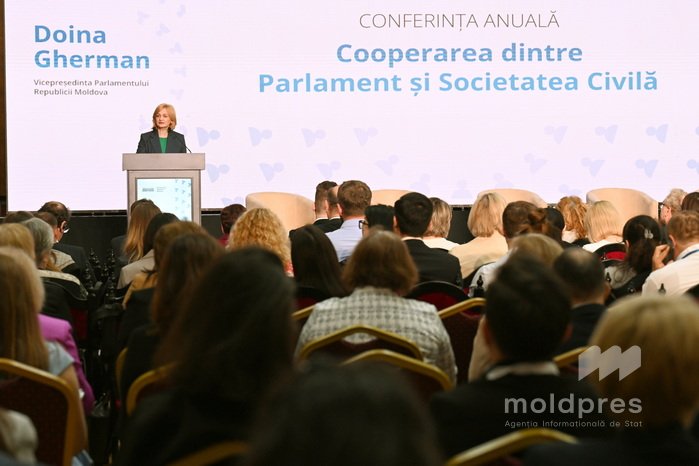
Deputy Speaker: Cooperation between Parliament and civil society important for European path of Moldova
Cooperation between Parliament and civil society must become more efficient and results-oriented in the context of the reforms required for the European path of the Republic of Moldova.

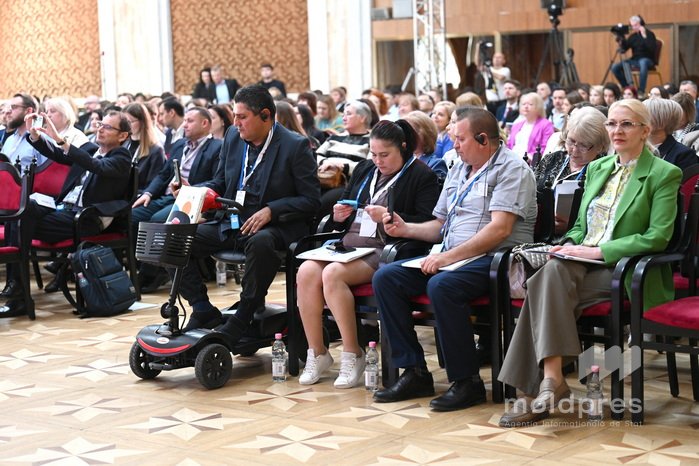
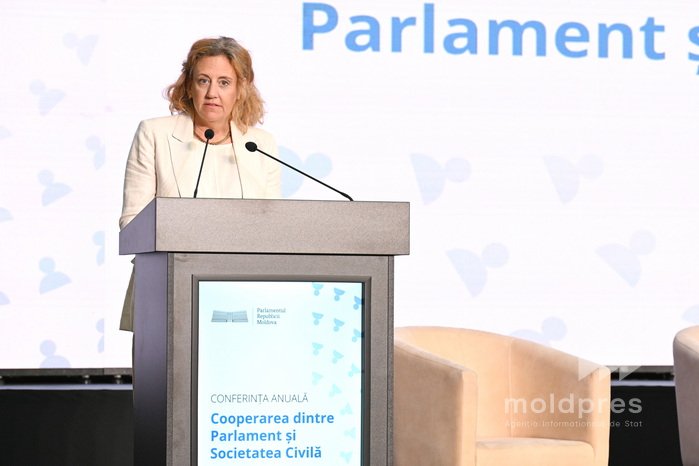
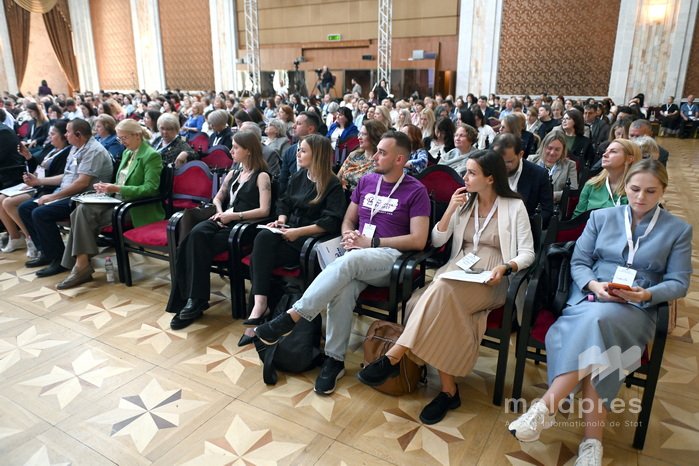
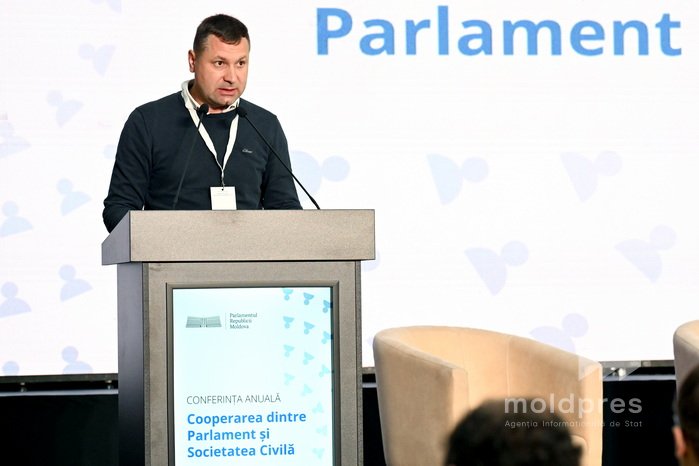
Deputy Speaker Doina Gherman made the statement at annual conference Cooperation Between Parliament and Civil Society, which started today in Chișinău. The event was attended by MPs, representatives of the diplomatic corps and members of civil society.

At the opening of the conference, the official stressed that the Republic of Moldova is at an important stage, in which a broad process of legislative harmonization and implementation of reforms is to follow, which will require consolidated efforts from all the actors involved.

She noted that the event goes beyond a simple institutional discussion and reflects the need to consolidate efforts to build a European state.

"It is a privilege for me to open this event, which has a much greater stake than simply launching yet another discussion about cooperation between Parliament and civil society. I am glad that we are shifting the focus towards joining our efforts to build a European state at this key moment for the Republic of Moldova," Gherman said.

She warned that the coming period will be a complex one, marked by multiple pressures, but also by the need to strengthen democratic institutions.

"We all realize that, in the coming years, the Parliament of the Republic of Moldova will go through the broadest and most complex legislative process since independence. We have a large volume of legislation to harmonize and we are committing to difficult but absolutely necessary reforms," the official underlined.

At the same time, Doina Gherman highlighted the role of civil society in the reform process and in bringing decisions closer to the realities in communities.

"Civil society organizations are those that understand community problems best, before they appear in official reports. They generate expertise, exert pressure for reforms, but also offer concrete solutions," she noted.

The official called for a new stage of collaboration between Parliament and civil society, based on less formalism and more involvement in the decision-making process.

"The relationship between Parliament and civil society must enter a new stage, which should mean less formalism, less bureaucracy and more participation in the decision-making process. The speed of reforms will matter enormously, but just as important is our ability to maintain public trust," Gherman said.

She added that the process of European integration entails both institutional responsibility and social cohesion.

"The European Union will assess not only our capacity to adopt legislation, but also the maturity of our democratic institutions, the Parliament’s ability to function transparently and society’s capacity to remain united around the European course,"she said.

In conclusion, Doina Gherman emphasized the importance of cooperation among all categories of actors involved in the state modernization process.

"Political parties provide representativeness, civil society provides expertise and a connection to community realities, and international partners provide support for reforms. Together we form the necessary architecture for transforming the Republic of Moldova into a European state," the official concluded.

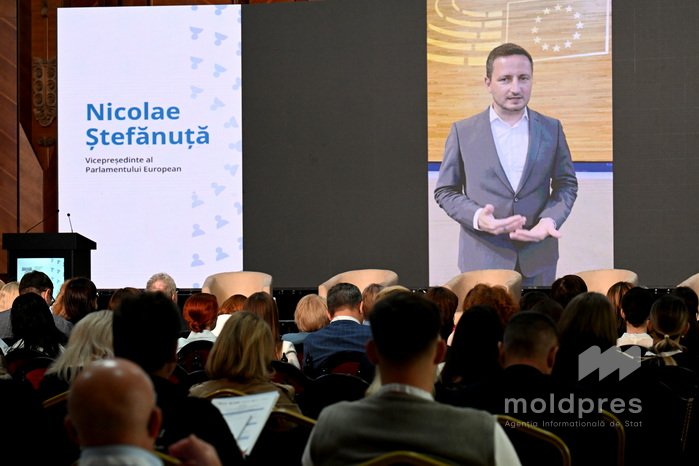
Also at the conference, the Vice President of the European Parliament, Nicolae Ștefănuță, delivered a speech. He reiterated that civil society plays an important role in the European path and highlighted the need for continuous support for the Republic of Moldova in its European integration process.

"Moldova needs real support to advance in the accession process. I call on all decision-makers to support this path. European integration is not an easy process, but it is an irreversible one," Ștefănuță said.

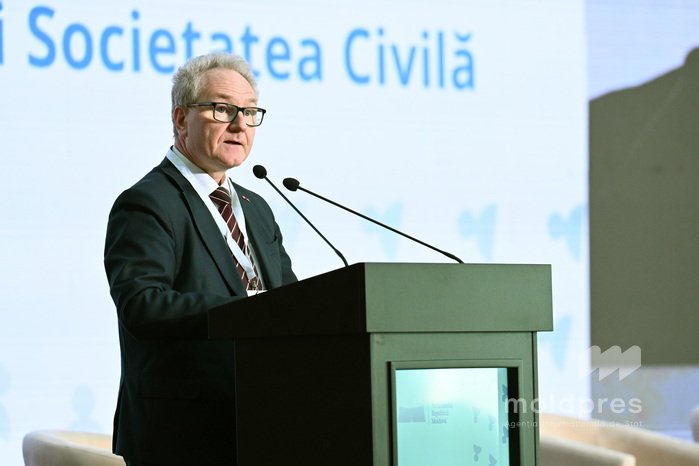
The Director of the Swiss Cooperation Office in the Republic of Moldova, Guido Beltrani, also delivered a speech in Romanian.

"Parliament represents the voice of the people through elected representatives, while civil society reflects the pulse of society, the aspirations, concerns and lived realities of citizens. When these two forces engage in genuine dialogue, democracy is strengthened. First of all, this collaboration makes it possible to harness a wide range of expertise in the process of drafting legislation. Through the early and consistent involvement of civil society, Parliament can benefit from relevant expertise, innovative ideas and diverse perspectives. Secondly, dialogue with civil society ensures that laws are grounded in the realities of those directly affected. This provides a valuable analysis of the situation before normative acts are adopted. The diversity of experiences within civil society makes its contribution all the more important. In fact, civil society organizations serve as essential bridges between citizens and institutions. Through open dialogue, MPs can better understand society’s problems, ensuring that laws are well anchored in reality and inclusive. In times of uncertainty or division, open communication between institutions and citizens helps strengthen trust. Dialogue, therefore, is not just a technical tool, but a fundamental condition for a functioning democracy," the official said.

In the opening of the conference, a speech was also delivered by the representative of the National Platform of the Civil Society Forum for the Eastern Partnership, Sergiu Gurău.

"We are in the year 2026, a year in which the Republic of Moldova is at one of the most important crossroads of its recent history. That is precisely why, before talking about perspectives, we must highlight a few realities that civil society faces every day. First of all, civil society in the Republic of Moldova operates in an increasingly complex environment in terms of financial sustainability. Dependence on external funding reveals a structural vulnerability. Although there are internal public funding mechanisms, such as percentage designation or grant programs of public authorities, these remain insufficiently consolidated and unevenly distributed at the territorial level. There is a need for a legislative and fiscal framework that stimulates local philanthropy and reduces organizations’ dependence on cycles of international projects. Secondly, pressures on civic space remain real. Disinformation, attacks on activists and organizations in the online environment, as well as attempts to delegitimize civil society as ‘external agents’, have not disappeared but have become more sophisticated. The democratic resilience of the Republic of Moldova depends directly on the capacity of the state and Parliament to actively protect civic space, not to restrict it. Thirdly, there remains a deficit of inclusion in the decision-making process at the local level. The decentralization of civic participation is an essential condition for a functioning democracy. We have the shared responsibility to turn these into concrete responses, into public policies, into laws and into sustainable institutional practices," the cited source concluded.

The annual conference "Cooperation Between Parliament and Civil Society" aims to assess progress in cooperation between Parliament and civil society, facilitate constructive dialogue and identify concrete commitments to strengthen the partnership. During the general session, the topic "Parliament’s Cooperation with Civil Society: Progress, Challenges and Perspectives" will be addressed. Discussions will focus on strengthening dialogue between Parliament and civil society organizations, promoting decision-making transparency and involving citizens in the legislative process.

The session will be attended by Marcel Spatari, Chair of the Committee for European Integration, Victor Agrici, Secretary General of Parliament, Tamara Gheorghița, Deputy Secretary General of Parliament, Ion Manole, Executive Director of the Promo-LEX Association, and Vlada Ciobanu, Program Director at the Center for Policies and Reforms.

The event agenda also includes five thematic discussion sessions dedicated to the Open Government Action Plan and the commitments of the Parliament of the Republic of Moldova, the sustainability of civil society, the role of civil society at local level in the decision-making process, civil society’s contribution to the European integration process, as well as its involvement in solving social problems in the community.

The annual conference "Cooperation Between Parliament and Civil Society" is organized by the Parliament of the Republic of Moldova in partnership with the project "Strengthening Parliamentary Democracy in Moldova" (PADEM), Promo-LEX, the European Parliament Liaison Office for the Eastern Partnership and the SALAR International program.

The platform for dialogue and civic participation in the Parliament’s decision-making process, created in 2023, establishes the instruments for cooperation between the legislature and civil society.
 Facebook
 Instagram
 X/Twitter
 Telegram
President begins visit to Strasbourg
Deputy Prime Minister pays visit to Germany
Russia’s accredited ambassador summoned to Foreign Ministry
Preliminary results of 17 May local elections // First-round victories in six localities and tight race in Orhei municipality
Polling stations have closed. Over 24,600 citizens took part in new local elections and local referendums
New local elections: Around 30% of voters turned out by 6:00 p.m.
New local elections. Over 10,400 citizens voted by 12:00
Citizens expected at polls to participate in new local elections and local referendums
President of Estonia after meeting with Moldovan President: Moldova belongs to Europe. We greatly appreciate your progress on this path
DOC // Russia intends to grant citizenship to residents of Transnistrian region
PHOTO, VIDEO // Head of State welcomed by Estonian President in Tallinn
VIDEO // Citizens’ Assembly on local public administration reform held in Chișinău
PHOTO GALLERY // Chisinau, capital of European diplomacy: images from Council of Europe's meeting
LIVE VIDEO, TEXT // Ministerial Session of Committee of Ministers of Council of Europe opened in Chișinău
President awarded at GLOBSEC Forum in Prague
GLOBSEC // President rejects pessimistic scenarios on Moldova’s EU accession: Decision must be taken in Brussels, not in Moscow
Deputy Speaker: Cooperation between Parliament and civil society important for European path of Moldova
President shared Moldova’s experience in countering hybrid warfare at GLOBSEC Forum
European Night of Museums 2026
Republic of Moldova could be included in list of tourist destinations for Chinese citizens
Over one thousand more families in Moldova to receive vouchers for energy-efficient home appliances
 National Bank of Moldova
President participated in GLOBSEC Forum in Prague
Moldovan PM attends event dedicated to International Day of Ukrainian Shirt “Vyshyvanka”
Participation of Deputy Prime Minister for Reintegration in OSCE Permanent Council Meeting
Prime Minister at anniversary of National Confederation of Employers
Moldova, IMF reach agreement on new three-year cooperation programme

Minister explains upcoming education reform: It will bring very clear salary increases
President participated in GLOBSEC Forum in Prague
PHOTO // Ukrainian Embroidery Shirt Day in Chisinau; Ambassador of Ukraine to Moldova: “A symbol of our identity that not even Russian aggression can destroy”
China to support implementation of renewable energy, energy storage projects in Moldova
Moldovan deputy PM has discussions with high EU official in Brussels
Moldovan PM attends event dedicated to International Day of Ukrainian Shirt “Vyshyvanka”
China open to increasing imports of wines, agri-food products from Moldova; discussions held by Moldovan foreign affairs minister in Beijing
VIDEO // Access to Culture returns: funding for development of cultural life in Moldova
Moldovan foreign affairs minister has meeting with Chinese counterpart; facilitating access of domestic products to Chinese market on agenda
EU accession negotiations could be opened in next June; parliament speaker says Moldova, Ukraine deserve this step
Moldovan parliament speaker, after Putin’s decree, says Russia wants to make up for losses on front
VIDEO // Opposition walks out session hall at today's parliament meeting; Moldovan parliament speaker says not to tolerate insults, degrading behavior
Moldovan parliament speaker rejects accusations by Tiraspol separatist regime on alleged interference with “so-called presidential elections”
Moldovan parliament speaker says agreement with IMF important indicator for international partners
Meteorologists issue Yellow Code warning for atmospheric instability in Moldova
Participation of Deputy Prime Minister for Reintegration in OSCE Permanent Council Meeting
Receive the latest news directly to your email

Receive the latest news directly to your email