
Justice reform, anti-corruption efforts in Moldova, essential conditions for concluding EU accession negotiations
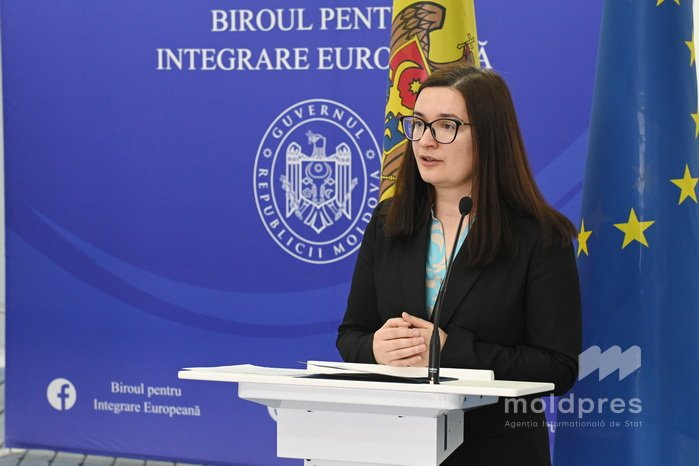
Moldova will not be able to move toward the final stages of negotiations on accession to the European Union without concrete progress in justice reform and the fight against corruption. Deputy Prime Minister for European Integration, Cristina Gherasimov has made statements to this effect.

The official emphasized that, despite the progress made in recent years, more key areas remained decisive for the country’s European path.

“These priority reforms concern more key sectors, namely we must prove significant progress in justice reform, in strengthening anti-corruption institutions, in combating organized crime, drug trafficking and everything related to the European Union’s asylum and migration policy,” said Cristina Gherasimov at the programme, At 360 Degrees, on Radio Moldova.

According to the deputy PM, these criteria, including the observance of fundamental rights, represent the essence of the accession process.

“Without showing real progress in these areas, we will not be able to start discussing the closure of negotiations with the European Union,” the official stressed.

At the same time, the Moldovan authorities intend to accelerate reforms and align legislation with European standards in the coming years.

“We have a great deal to do, because we started from far behind. We must make a monumental effort, work on each negotiation chapter, advance in alignment with European standards, modernize our country and prepare it for accession,” Gherasimov said.

The deputy PM specified that, in practical terms, this process involved modernizing state institutions and adopting European legislation within a period of two to three years.

The statements come in the context in which Moldova launched, on March 17, technical negotiations for the last three clusters of EU accession chapters: competitiveness and inclusive growth, the green agenda and connectivity, as well as resources, agriculture and cohesion.

The authorities consider that these stages mark an acceleration of the European integration process, but progress in areas such as justice and the fight against corruption stays decisive for advancing the negotiations.
 Facebook
 Instagram
 X/Twitter
 Telegram
Moldovan president conveys message at Romania Government Roundtable conference
Moldovan expert says Moldova becomes strategic constant in Romania
Romania supports Moldova's economic integration; Romanian president says Romania to continue to support Moldova's integration into European Union, integration of two economies
Prime Minister at The Economist conference on accelerating EU accession process: Moldova moves forward despite challenges
PAS to have new MP in Parliament
Ben Gurion Airport in Tel Aviv remains closed until 16 April
National airspace overflown by Shahed drone
Perspectives on Moldova's European integration: experts says joint declaration announced today by officials from seven states good political signal
European Union member states' MPs call for speeding up EU accession talks with Moldova; declaration to this effect signed in Chisinau
Moldovan president to meet Moldovans living in Ireland
PHOTO // Republic of Moldova opened Honorary Consulate in Almaty, Kazakhstan
President on 108 years since Union of Bessarabia with Romania
Prime Minister conveys message on anniversary of Bessarabia's Union with Romania
Speaker - 108 years after Union of Bessarabia with Romania
Changeable weather, wind gusts forecast in Moldova for April 7: air temperatures up to 15 degrees
Justice reform, anti-corruption efforts in Moldova, essential conditions for concluding EU accession negotiations
Moldovan president to deliver speech in Dublin on reforms, European path of Moldova
Moldovan energy minister pays unannounced visit to Chisinau Electrical Substation
Moldova to benefit from Greece’s support in leveraging external assistance, advancing its European path
Moody’s Agency upgrades Moldova’s rating to B2, highest level in last 25 years
Over 800 teams registered for EuroQuiz 2026: final to take place in Chisinau on 8 May
 National Bank of Moldova
Moody’s Agency upgrades Moldova’s rating to B2, highest level in last 25 years
Moldovan authorities step up prevention, response measures on Dniester, amid anticipated new pollution wave
Moldovan PM participates in awards ceremony recognizing rescuers' achievements
Environmental protection experts from two banks of Dniester hold new working meeting
Moldovan deputy PM has meeting with Ambassador of Germany

PM says Moldova receives clear signal of confidence from abroad
Moody’s Agency upgrades Moldova’s rating; Economy Ministry says country becomes more attractive for investors
Parliament to analyze fuel prices at public hearings
Operations at Leova–Bumbăta customs post to be temporarily suspended
DescOperă Festival to take place on third weekend of June in Orheiul Vechi
Over 7,300 tons of fuel imported into Moldova in recent days
Activities focused on healthcare workers’ health to be held in several districts
Discover Moldova with #MOLDPRES: Easter in Moldova – between spirituality, nature and authentic rural life
VIDEO // EU Ambassador to Moldova met with survivors of repressive regimes at Memoria Center
VIDEO // Over 100 localities in Moldova benefited from modernized street lighting with EU support
BTA: Between AI and Regulation: Will Autonomous Vehicles Soon Appear On Bulgarian Streets?
President conveys congratulatory message to believers celebrating Resurrection of Lord today
Operations at Eugen Doga International Airport resumed following false security alert
VIDEO // Environment Minister announces decrease of pollutant on Dniester, upstream from dams installed in Dondușeni district
Chisinau Airport operations temporarily suspended following security alert
PHOTO // Moldova expands presence in China through future local administration cooperation agreements
Receive the latest news directly to your email

Receive the latest news directly to your email