
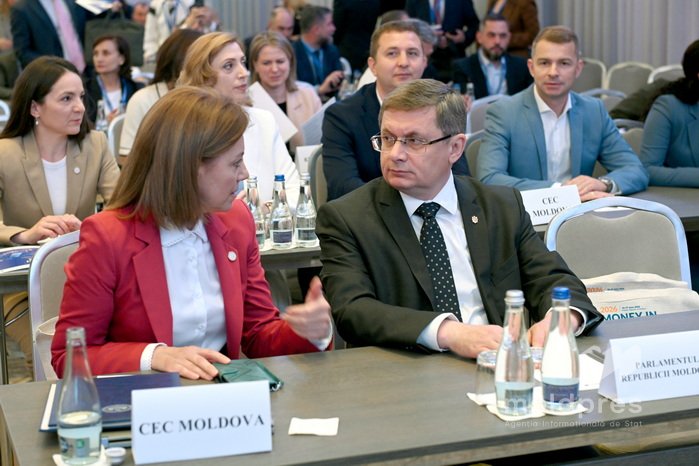
International experts discuss risks of political financing in Chișinău
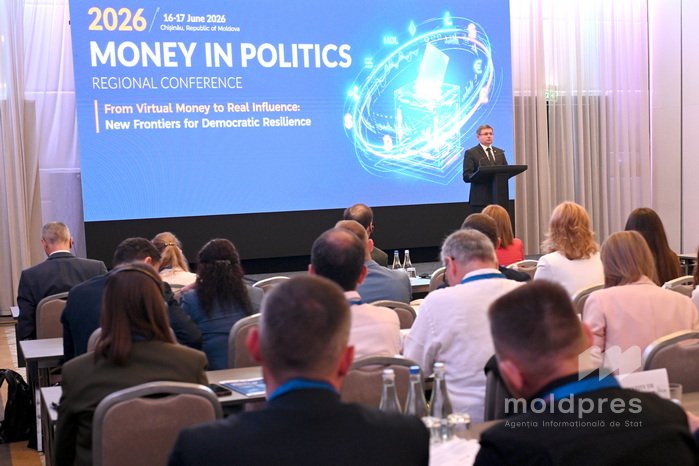
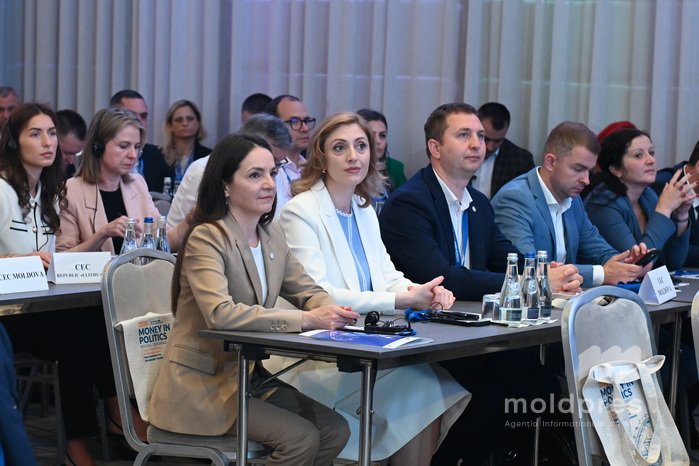
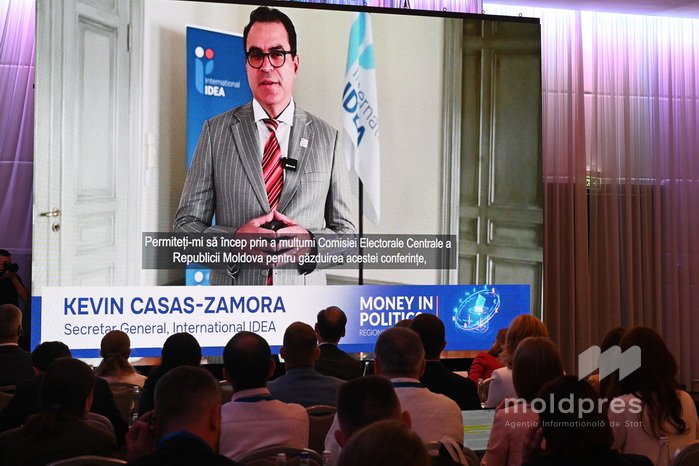
International experts, representatives of electoral authorities, European institutions, international organizations, and civil society from approximately 20 countries are participating in the Regional Conference Money in Politics 2026, held in Chișinău. Speaker Igor Grosu was also present at the event and announced that the legislature will come forward with a package to strengthen electoral legislation.

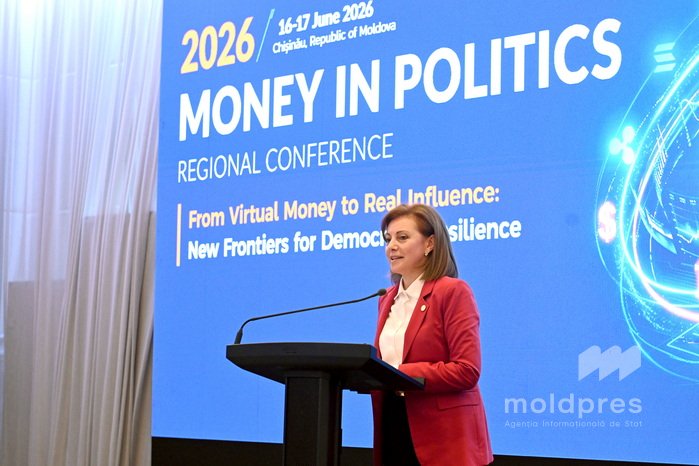
At the opening of the conference, the Chair of the Central Electoral Commission, Angelica Caraman, spoke about transformations in the electoral field and about new risks generated by digitalization, stressing the need to strengthen international cooperation and mechanisms to protect electoral integrity.

Caraman highlighted the changes in the modern electoral space:

“The theme of this year’s conference, ‘From virtual money to real influence: the new frontiers of democratic resilience’, reflects one of the most important challenges of our time. The way financial resources influence political and electoral processes has changed profoundly. If in the past discussions focused on traditional sources of funding and classic control mechanisms, today we are facing a much more complex reality. Financial flows move at unprecedented speed, and digital platforms allow political messages to reach millions of citizens in just a few seconds. Emerging technologies create opportunities for democratic participation, but also new risks for the integrity of electoral processes.”

The CEC head also emphasized the paradigm shift in addressing electoral risks:

“We have learned that democratic resilience cannot be built solely through legal norms. Institutional cooperation, transparency, and investments in administrative capacities are needed.”

She stressed that no institution can manage the new risks alone:

“Technology can be both an ally of democracy and a tool to undermine it. And we have learned that no institution can respond to these challenges alone.”

Finally, Caraman drew attention to the importance of public trust in democratic processes, noting that electoral integrity does not begin on election day, but with transparency, accountability, and the citizen’s confidence that their choice remains free.

“This trust is one of the most important resources of any democracy, because democracy is not an inheritance we have received, but a responsibility we pass on.”

Grosu underlined the importance of the event and its connection to the European path of the Republic of Moldova:

“It so happens that this conference coincides with the official opening of negotiations on the first cluster, ‘Fundamental Values’, which also includes free elections. This once again shows how much the organization and assurance of the integrity of the electoral process matter for the Republic of Moldova. Elections are nothing other than the essence of democracy.”

Referring to the recent experience of the Republic of Moldova and other states, Grosu highlighted the importance of international cooperation:

“It is good that there is this format in which we learn from one another. Recently, the Republic of Moldova has completed a substantial electoral cycle. We have closely followed events in Hungary and Armenia, where there are similar challenges. Especially in terms of financing electoral campaigns, each country can bring its own experience.”

The head of the legislature insisted on the need for prevention in the electoral process: “I agree with what the Chair said: prevention is crucial. Because when we intervene post‑election, the consequences have already occurred. Citizens’ trust in the electoral process is greatly affected and it is much harder afterwards to explain or demonstrate what happened. That is why we must do everything possible to strengthen institutions and improve legislation, in order to prevent and anticipate these risks. We must learn on the go, because funding methods are evolving rapidly, especially in the context of information technologies and artificial intelligence.”

Referring to the legislative agenda, he stated that a package of legislative amendments has been presented in Parliament:

“We will invite the Central Electoral Commission and civil society to discuss them together, including on the parliamentary platform, so that we are prepared for what lies ahead. It is important to continue investments in institutions, in the professionalization of electoral officials, and in strengthening the capacities of the authorities involved in the electoral process.”

The Regional Conference Money in Politics 2026, held under the theme “From virtual money to real influence: new frontiers for democratic resilience”, is at its seventh edition.

The event has become one of the most important regional platforms for dialogue on electoral integrity, transparency of political financing, and the protection of democratic processes in Eastern Europe and the Western Balkans. At the same time, during the conference, a Memorandum of Cooperation on strengthening electoral integrity, democratic resilience, and cooperation between the electoral authorities of EU candidate states will be signed. The document will be signed by the Central Electoral Commission of the Republic of Moldova, the Central Election Commission of Ukraine, the Central Election Commission of the Republic of Albania, and the State Election Commission of the Republic of North Macedonia, during the closing session of the conference.

The regional conference Money in Politics 2026 is organized by the Central Electoral Commission of the Republic of Moldova, in partnership with International IDEA, the Council of Europe, EUPM Moldova, the National Democratic Institute, the International Organization of La Francophonie, and the United Nations Development Programme (UNDP), with financial support from the European Union and the governments of Norway, Sweden, Denmark, and Canada.
 Facebook
 Instagram
 X/Twitter
 Telegram
MOLDOVA IS ME // Story of Moldovan woman who survived deportation
PHOTO GALLERY // Documents and testimonies about deportations and famine presented at exhibition “State Terror in Soviet Moldova: Scale, Victims and Perpetrators
Exhibition “State Terror in Soviet Moldova: Scale, Victims and Perpetrators” inaugurated in Great National Assembly Square
DOC // Official public competition opened for position of TRM director general
Victims of Stalinist deportations commemorated in Chișinău
Moldova becomes member of WorldSkills Europe: European vocational training standards, experience exchange
Heavy showers forecast all over Moldova; National Crisis Management Center orders measures to prevent flooding
Moldova to have additional tools to combat cybercrime
Moldovan citizens residing in Canadian province of Quebec to be able to receive pensions, other social benefits
Moldovan PM says first Stalinist deportations from Bessarabia painful history that citizens must know
Moldovan parliament passes new mass media law; MP says new law to strengthen editorial independence, transparency
Diaspora at Home Succeeds DAR 1+3 Programme: Moldovan government allocates 10 million lei for 33 local development projects
Corruption, financial fraud investigated under new rules in Moldova; powers of three corruption-fighting institutions redefined
Moldovan Prosecutors' Evaluation Commission resumes hearings; Victor Cazacu, first prosecutor heard in June
Deputy Premier after official opening of first EU negotiation cluster: More work lies ahead, but we are determined to maintain pace, deliver results, and achieve national objective
Cyprus welcomes opening of negotiations with Moldova
Republic of Moldova opens negotiations on Fundamental Values Cluster
EU accession becomes reality
 National Bank of Moldova
Republic of Moldova opens negotiations on Fundamental Values Cluster
President welcomed opening of EU accession negotiations on Fundamental Values
Moldovan, Luxembourg PMs hold dialogue on bilateral cooperation, support for European path of Moldova
Prime Minister leads Moldovan delegation to Luxembourg for second Moldova – EU intergovernmental conference
Moldovan president has phone conversation with European Council President

President welcomed opening of EU accession negotiations on Fundamental Values
VIDEO // Marta Kos at opening of accession negotiations: It is time for whole society to unite for European reforms
VIDEO // Opening of accession negotiations on Cluster 1 – Fundamental Values: Moldova honoring commitments
Head of EU Delegation to Chisinau says opening of negotiations for ‘Fundamental Values’ cluster recognition of Moldova’s progress
More mayoralties from north Moldova district involved in voluntary amalgamation
BTA: LIK Issue on Christo and Jeanne-Claude Goes on Show in Paris
Moldovan PM has meeting with counterpart of Luxembourg
Moldovan, Luxembourg PMs hold dialogue on bilateral cooperation, support for European path of Moldova
Phone scams worth over 4 million lei recorded in Moldova in just a few days
Moldova's Foreign Affairs Ministry: Moldovan citizens dead in accident in Hungary to be repatriated
PHOTO GALLERY// World Blood Donor Day marked through vast event held in Chisinau
Lawmakers from four EU states support opening of accession negotiations with Moldova; declaration to this effect signed in Chisinau
ARMENPRESS: EU ministers discuss support for Armenia at Foreign Affairs Council-format meeting
VIDEO // Deputy Prime Minister for European Integration presented programme of Intergovernmental Conference Moldova–EU
VIDEO // European Commissioner: This is extremely important day for EU enlargement
Prime Minister after last night’s attack on Kyiv: Republic of Moldova firmly stands with Ukraine
Receive the latest news directly to your email

Receive the latest news directly to your email