
Moldovan parliament passes new mass media law; MP says new law to strengthen editorial independence, transparency
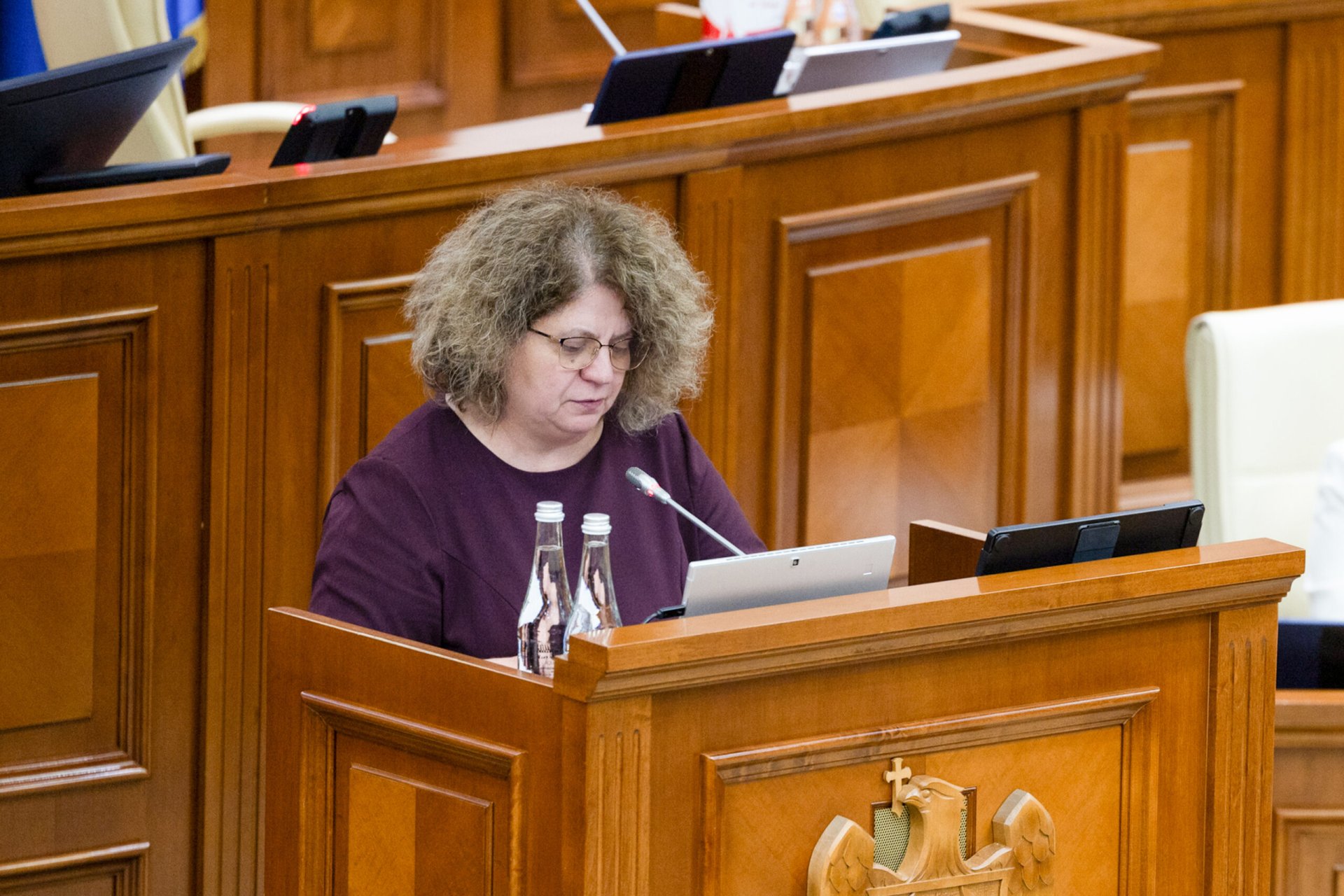
The parliament today adopted, in the first reading, the draft of the new Mass Media Law, which aims to modernize the regulatory framework of the sector and align it with European standards. The legislative initiative was supported by 53 MPs and was presented in plenum by the head parliamentary commission for culture, education, research, youth, sports and mass media, Liliana Nicolaescu-Onofrei.

According to the authors, the draft aims to create a unified legal framework that ensures a balance between freedom of expression, editorial responsibility and the protection of media pluralism, in the context of digital transformations and the commitments assumed by Moldova in the European integration process.

While presenting the draft, Liliana Nicolaescu-Onofrei said that the current legislation applicable to the written press was outdated and no longer corresponds to the current realities of the media market.

“We have an old press law, dating back to 1994, drafted at a time when various digital forms of information distribution did not exist. Accordingly, the draft addresses the need for a unified regulation of the media sector and its alignment with the realities of the digital environment,” the MP said.

According to her, the new law also contributes to fulfilling the commitments undertaken by Moldova in the process of accession to the European Union, including in the area of media freedom and pluralism.

The document defines key notions, such as media pluralism, editorial responsibility, media service provider and media market concentration. At the same time, it sets out the general legal framework applicable to all media service providers, regardless of whether they operate in print media, audiovisual media or in the digital environment.

“The central objective is to establish a clear legal framework to strengthen freedom of expression, the editorial independence of the media, editorial responsibility, the protection of media pluralism and the transparency of ownership and funding of media institutions,” underlined Liliana Nicolaescu-Onofrei.

One of the main novelties of the draft is the establishment of the Register of Media Service Providers, which will be managed by the Culture Ministry. Registration will be voluntary and will not condition the activity of media institutions.

According to the authors, the register will facilitate public access to information on the owners of media institutions and their main sources of funding.

“It is proposed to establish the Register of Media Service Providers, meant for the administrative record of providers and for facilitating public access to information regarding the ownership structure and the main sources of funding of media institutions,” noted the head of the commission.

The draft also contains provisions on strengthening the protection of journalistic activity, safeguarding journalistic sources and guaranteeing editorial independence. The authors propose measures to prevent pressure on newsrooms and unjustified interference in the professional activity of journalists.

Among the guarantees provided, there is the journalist’s right to refuse to produce material that contravenes professional and ethical standards, without the risk of sanctions or dismissal.

Another element of the draft concerns the assessment of concentrations on the media market from the perspective of their impact on media pluralism and editorial independence. In this regard, powers are established for the Competition Council, in accordance with the relevant legislation.

At the same time, the law proposes the official recognition of self-regulation mechanisms in the sector and the enshrining of the Press Council of Moldova as the national self-regulation mechanism, based on compliance with the ethical norms of the journalistic profession.

In the context of public debates around the draft, Liliana Nicolaescu-Onofrei rejected accusations that the document could create censorship mechanisms.

“Under no circumstances does this draft create contexts for censorship, it does not address censorship, it does not create mechanisms to control editorial content, it does not condition the working of media institutions and does not grant public authorities competences that would allow them to influence editorial policies,” the MP said.

According to the explanatory note, the new law seeks to bring national legislation closer to the provisions of the European Media Freedom Act and aims to ensure a transparent, fair and democratic working of the media market of Moldova.

The draft was drawn up by a group of MPs on the platform of the relevant parliamentary commission, with the participation of civil society experts, representatives of the Culture Ministry and of the Audiovisual Council. Before examination in the second reading, the authors intend to include the recommendations made by the government, the parliament’s General Legal Directorate, the National Anticorruption Center and the Independent Journalism Center.
 Facebook
 Instagram
 X/Twitter
 Telegram
Sergiu Caraman remains head of Superior Council of Magistracy
VIDEO // Alexei Buzu: Government allocates 145 million lei for development of amalgamated localities in Călărași
EUROPEAN VILLAGE // Over 27 million lei invested in modernizing infrastructure in central Moldova settlement
Environmental NGOs' representatives trained in alternative methods for resolving environmental conflicts in Moldova
MOLDPRES REPORT // Smart technology for old apartment blocks: Chinese solutions that might fix parking, waste problems in Moldova’s cities
Romanian language teachers of Moldova to benefit from intensive training courses organized in Romania
Moldovan Foreign Affairs Ministry issues travel alert for State of Israel
Nicolae Testemitanu Medical University of Moldova hosts first edition of conference on management of antimicrobials' use in tuberculosis
Moldova and Switzerland to cooperate in labour and employment
Over half a million passengers at Eugen Doga International Airport – Chisinau in last May: most popular destinations
€40 million investments in school modernization: 20 institutions to be renovated
Ministry of Defense: Fragments of aircraft found in Orhei examined by responsible institutions
Five recycling companies to receive up to 425,000 euros to develop circular economy in Moldova
Breaking news
Unknown flying device exploded in Orhei district
Moldovan government approves launch of negotiations with Tunisia on abolishing visa regime for holders of diplomatic, service, special passports
Moldovan PM speaks on results of first Moldova – EU Investment Conference: benefits for citizens and business environment
Moldova's fiscal policy for 2027 – submitted for public consultation: simpler, more competitive, easier-to-administer tax system
Fifty million euros investments in modernization of 20 model schools of Moldova
 National Bank of Moldova
Construction works at Vulcanesti Electrical Substation completed – substation ready for energization
DAR 1+3 Programme: 33 localities of Moldova to receive funding for development, infrastructure projects
Moldova's fiscal policy for 2027 – submitted for public consultation: simpler, more competitive, easier-to-administer tax system
Fifty million euros investments in modernization of 20 model schools of Moldova
Moldovan government strengthens natural gas stocks for consumers on both banks of Dniester

Moldovan government strengthens natural gas stocks for consumers on both banks of Dniester
Moldovan PM says first Stalinist deportations from Bessarabia painful history that citizens must know
VIDEO // Moldova's draft fiscal policy for 2027 submitted for public consultation
Moldovan parliament passes new mass media law; MP says new law to strengthen editorial independence, transparency
Moldova strengthens energy security: government approves increase of natural gas security stocks
Diaspora at Home Succeeds DAR 1+3 Programme: Moldovan government allocates 10 million lei for 33 local development projects
Corruption, financial fraud investigated under new rules in Moldova; powers of three corruption-fighting institutions redefined
Nearly 1,900 hectares of land in north Moldova district to be connected to modernized irrigation system
Joint Control Commission holds meeting in Bender
Moldovan parliament speaker urges local authorities to take urgent measures against floods
Parliament speaker says drone crash near Lopatna represents consequences of war launched by Russia, Moldova must invest in defense
Moldovan Prosecutors' Evaluation Commission resumes hearings; Victor Cazacu, first prosecutor heard in June
Moldovan parliament speaker accuses Gagauzia's leaders of delaying elections: “This is obstructionist behavior. The law is not negotiable”
Another prosecutor passed external evaluation
Global football show kicks off on June 11
Construction works at Vulcănești Electrical Substation completed
Receive the latest news directly to your email

Receive the latest news directly to your email