
New Q fever cases detected in Chisinau, three districts of Moldova; health authorities step up surveillance
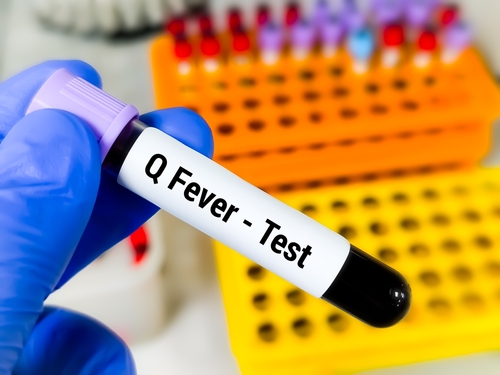
The National Public Health Agency (ANSP) has reported another four cases of Q fever in Moldova. The diagnosis was established by the National Reference Laboratory for high‑risk infections of the institution.

According to ANSP, the cases were identified in the Chisinau municipality and the districts of Criuleni, Calarasi and Causeni, in people aged between 24 and 57.

The patients developed moderate forms of the disease, manifested by fever, chills, general weakness and respiratory symptoms. At present, all patients are receiving treatment and medical supervision and their health condition is evolving favorably.

Since the beginning of 2026, 12 cases of Q fever have been confirmed in Moldova.

In the context of the new cases, ANSP has boosted epidemiological surveillance measures and informed medical and sanitary institutions, in order to enhance vigilance for the early detection of suspected infections. At the same time, the National Food Safety Agency has been notified, given the zoonotic nature of the disease, in order to initiate control and prevention measures.

Q fever is an infectious disease caused by the bacterium Coxiella burnetii, transmitted mainly by domestic animals, such as sheep, goats and cattle. Transmission occurs through inhalation of contaminated particles, direct contact with infected animals or consumption of raw milk and unpasteurized dairy products.

Specialists recommend proper hand hygiene after contact with animals, consuming only pasteurized or boiled milk and avoiding dairy products from unauthorized sources.

People who experience symptoms, such as fever, weakness, muscle pain or headache, are urged to seek medical assistance and inform their doctor about any contact with animals or consumption of unpasteurized dairy products.
 Facebook
 Instagram
 X/Twitter
 Telegram
USMF "Nicolae Testemițanu" among 25 brands honored under Top Exporters from Moldova program
NAC officers raid ANSA unit at Giurgiulesti customs post
PHOTO GALLERY // Chisinau City Day: capital celebrating, captured through lens of MOLDPRES
VIDEO // Schools, hospitals, roads of Chisinau modernized with government's support
PHOTO // Old Chisinau: lesser-known stories, traditions of Moldova's capital
Moldovan parliament speaker calls for strengthening local administrations
PM, on capital's City Day, says almost five billion lei allocated to Chisinau in 2026
Moldovan president conveys message on Chisinau’s City Day
PHOTO // General Carabineer Inspectorate provided with 16 vehicles and modern equipment with EU support
STISC warns of spear-phishing campaign targeting Government institutions
PHOTO // First monument commemorating Roma victims of Holocaust to be erected in Cosăuți, Soroca
Seven hospitals to receive new equipment for storing blood products
One in four pupils involved in bullying or physical aggression situations; Moldovan authorities develop action plan to prevent, manage violence cases in schools
Moldovan parliament speaker says young people must study in modern conditions, be able to build future at home
Moldovan president attends National Forum of Ethnic Minorities
New details emerge about crashed, exploded drone in field in north Moldova district
Spain’s National Day celebrated in Chisinau: “Moldova is a future partner with whom we wish to share the European project”
PHOTO // Metropolitan of Bessarabia reaffirms support for Moldova’s European integration at meeting with EU ambassador
 National Bank of Moldova
PM visits factories in two settlements of Moldova
Moldovan president attends National Forum of Ethnic Minorities
Moldovan PM visits Chisinau Electrical Substation, in final preparation stage
Moldovan PM, Ambassador of State of Qatar discuss investments, expanding bilateral economic cooperation
Moldovan parliament speaker in Rome has meetings with counterparts from Norway, Lithuania, Armenia

Police forces of Moldova, Romania strengthen cooperation: Moldovan General Police Inspectorate, Vaslui County Police Inspectorate sign bilateral agreement
Moldovan PM visits Chisinau Electrical Substation, in final preparation stage
Moldovan Foreign Affairs Ministry condemns repeated violation of national airspace
Moldovan PM, Ambassador of State of Qatar discuss investments, expanding bilateral economic cooperation
Moldovan Central Electoral Commission approves ballot paper designs for regional elections due on November 15
Moldova to include analysis of gender gaps in access to agricultural resources in report to United Nations for the first time
UPDATE // Unmanned aircraft crashes, explodes in field in northern district of Moldova
ARMENPRESS: Armenia demonstrates its potential by hosting COP17, says FAO official
PHOTO // Third contingent of Moldova's National Army deployed to peacekeeping operation in Bosnia & Herzegovina
PHOTO // Students participating in Moldova Model United Nations project visit Foreign Affairs Ministry
VIDEO // Moldova explores opportunities to import liquefied natural gas from United States
Moldovan government denies “manipulations” regarding plans to establish drone factory in Chisinau
PHOTO // Railway of Moldova enterprise tests new Chisinau–Revaca–Sangera railway route
Moldovan parliament speaker in Rome has meetings with counterparts from Norway, Lithuania, Armenia
Moldova, Armenia to strengthen parliamentary cooperation
Air Operations Center of National Army: number of airspace violations reaches 100 in Moldova
Receive the latest news directly to your email

Receive the latest news directly to your email