
Severe hydrological conditions also affect Prut river
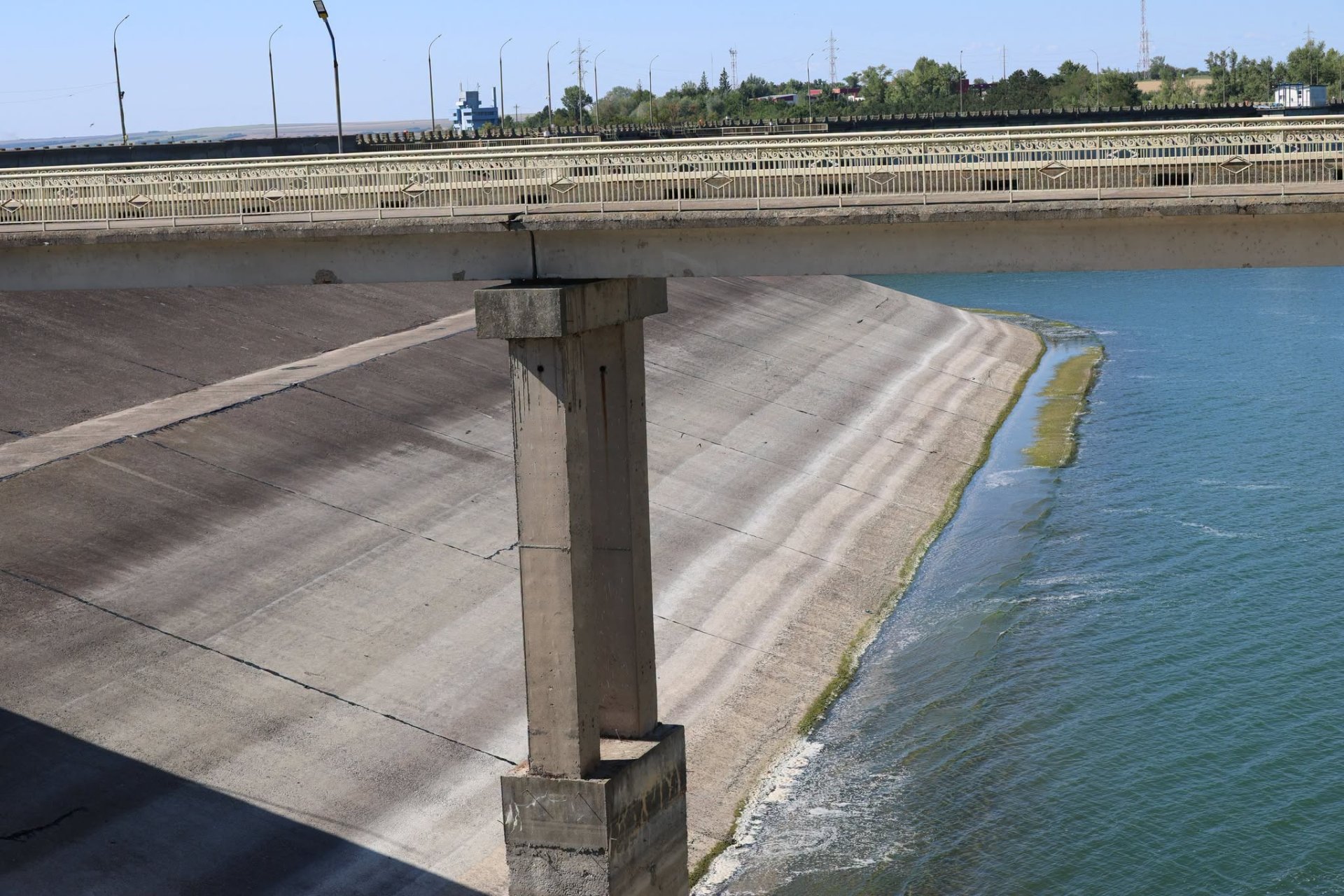
Environment Minister Gheorghe Hajder announced that the water discharge released from Costești–Stânca Reservoir into the Prut River has been reduced to 14 cubic metres per second amid severe hydrological conditions and falling water levels in the reservoir.

According to the minister, since the beginning of September, an average of 14 cubic metres of water per second has flowed into the reservoir, while the average discharge released has been approximately 26 cubic metres per second. During this period, approximately 32.23 million cubic metres of water entered the reservoir, while 58.83 million cubic metres were released.

The decision to reduce the released discharge was taken to preserve the reservoir’s water reserves. According to Gheorghe Hajder, only 72 centimetres remain until the water reaches the level at which it can no longer be released through the hydrotechnical system.

On 1 September, the water level in Costești–Stânca Reservoir was 83.5 metres. By 28 September, it had fallen to 82.22 metres, representing a decrease of 1.28 metres in one month.

The Environment Minister said that the measure aims to ensure the reserves needed to supply the population with water. The Prut River is the main water source for several localities in the Glodeni, Fălești, Leova, Ungheni, Cahul and Cantemir districts.


At the same time, Gheorghe Hajder announced on Saturday that the water level in the Novodnistrovsk Reservoir had fallen from its normal elevation of 121.5 metres to a critical level below 111 metres—a decrease of more than 10 metres. Under these conditions, the balancing regime was introduced: the dam is no longer retaining any water, and all the water coming from the Carpathians flows directly toward the Republic of Moldova.

The Republic of Moldova has been under a state of hydrological emergency since 26 September.
 Facebook
 Instagram
 X/Twitter
 Telegram
PHOTO GALLERY // Innovative medical equipment, technologies showcased at MoldMedizin & MoldDent 2026 exhibition
PHOTO // International specialized exhibition MoldMedizin & MoldDent 2026 inaugurated at Moldexpo
Moldova records 44 airspace violation incidents in 2026
PHOTO GALLERY // 80 years since founding of USM and century of Romanian education in Bessarabia
Moldova State University marks 80 years since foundation, one century of Romanian education in Bessarabia
Moldova discusses strengthening airspace protection capabilities with Romania and Ukraine, Speaker says
DOC // Moldova's public-sector employees to receive one-off allowances of up to four thousand lei: law published in Official Journal, enters into force
Drone found in Florești had onboard camera, features specific to Gerbera type
Emotional moment in Parliament: six children opened plenary session with special sign language performance
Draft decisions with environmental impact compiled in new section on EcoContact
Researchers from four countries gathered in Chișinău to discuss medicinal plant biotechnology
DOC // Moldova has new media law
PHOTO GALLERY // Journey through Northern Moldova through MOLDPRES lens
New director at Teleradio-Moldova Company: Ecaterina Cheptanaru wins competition
PHOTO // Moldovan PM, ambassadors of EU member states discuss priorities, reforms for advancing European path
USM students to benefit from internships at Krakow University of Economics
Speaker on opposition’s initiative to suspend head of state: Maia Sandu was elected President by nearly 1 million citizens, who called for and expect us to become EU member state
Prime Minister urges Moldovan companies to prepare for and harness economic opportunities generated by Ukraine’s reconstruction
Presidency, following opposition initiative to suspend head of state: Maia Sandu won trust of more than 930,000 citizens to preserve peace and European path
Prime Minister and Norway’s Ambassador approach strengthening Moldovan-Norwegian relations, continuing joint projects
President about hydrological crisis: We now all have one responsibility: to ensure that people have tap water
 National Bank of Moldova
Prime Minister urges Moldovan companies to prepare for and harness economic opportunities generated by Ukraine’s reconstruction
Prime Minister and Norway’s Ambassador approach strengthening Moldovan-Norwegian relations, continuing joint projects
Deputy Premier: Reintegration must be based on gradual rapprochement of two banks of Dniester
European expertise for modernizing professional training in public administration
Solutions to maintain water supply discussed at Prime Minister’s meeting with relevant authorities

Solutions to maintain water supply discussed at Prime Minister’s meeting with relevant authorities
More than 1,000 people participated in activities dedicated to parliamentary openness in September
Moldova supports international efforts to return Ukrainian children
VIDEO // Cultural voucher for young people to increase to 2,000 lei and be usable for sports
Former MP to stand trial for illegal financing of Victory/Pobeda Bloc and money laundering
Moldova, Canada to strengthen cooperation in security and trade
Moldovan PM has dialogue with Romanian investors
Moldovan president condemns Russia’s latest attacks on Ukraine: “Russia must answer for its crimes”
Moldovan PM, SITA company's representatives discuss investment opportunities in Moldova
Moldovan PM has phone conversation with Austrian chancellor
New U.S. Ambassador to Moldova Joseph Mark Burkhalter presents copies of credentials
Deputy PM for reintegration has meeting with Ambassador of Kingdom of Netherlands to Moldova
PHOTO GALLERY // Romanian football legend Adrian Mutu has emotional meeting with young footballers in Chisinau
Pupil of Moldova wins silver medal at Balkan Olympiad in Informatics for Juniors
PHOTO // Moldova requests EU's support for Ungheni–Chisinau railway, Iasi–Ungheni–Chisinau highway
“Parliament through children’s eyes”: pupils of Moldova express vision of democracy through art
Receive the latest news directly to your email

Receive the latest news directly to your email