
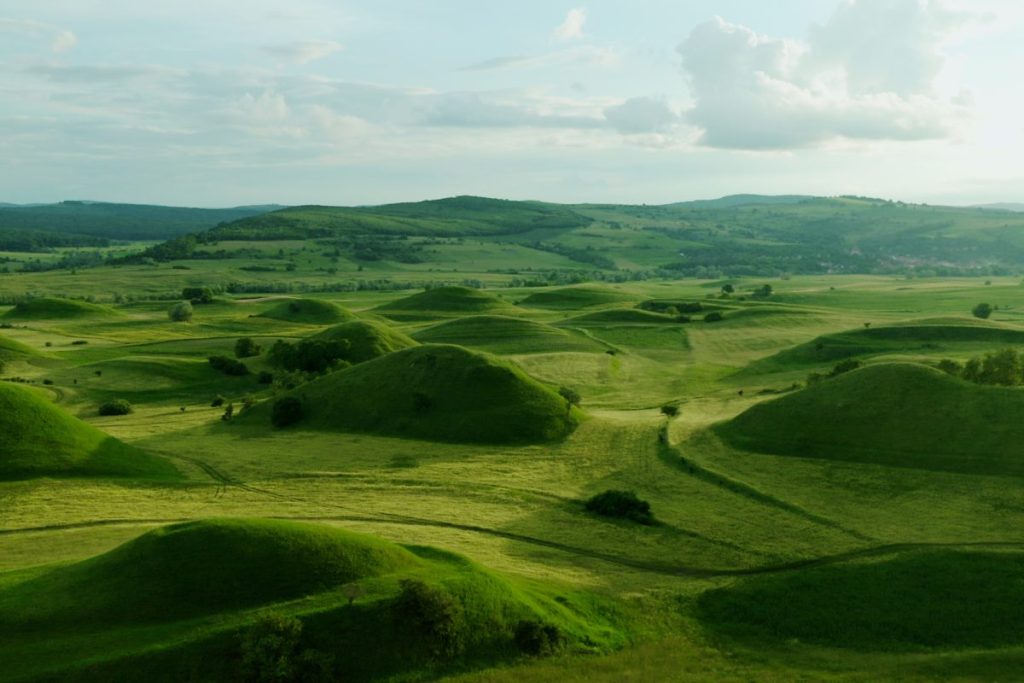
Discover Moldova with #MOLDPRES: The “Hundred Mounds” as symphony of silent hills, geological monument of European importance
The emerald maze on the banks of the Prut: Where the “Hundred Mounds” actually means thousands of secrets

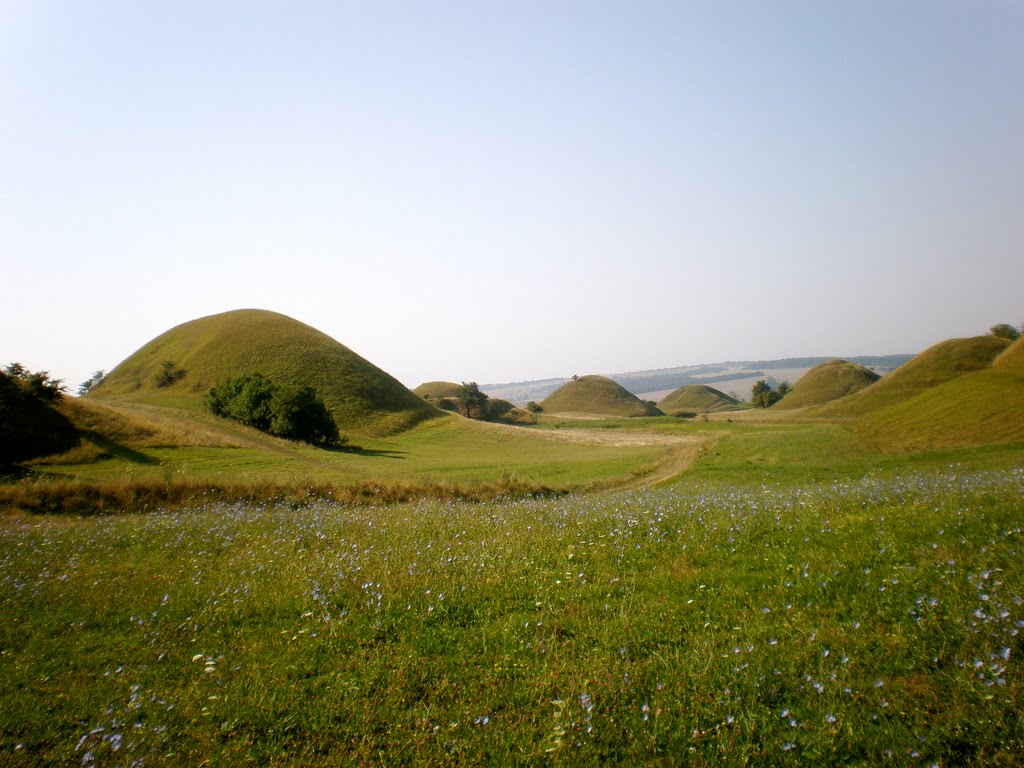
There are places where the map lies, not out of error, but out of modesty. In the north of Moldova, a mathematical toponym hides a visual spectacle that defies numbers: the “Hundred Mounds”. A symbolic name for a phenomenon that, when rigorously counted, bursts into over 3,500 hills that ripple across the landscape like waves of earth frozen in time.

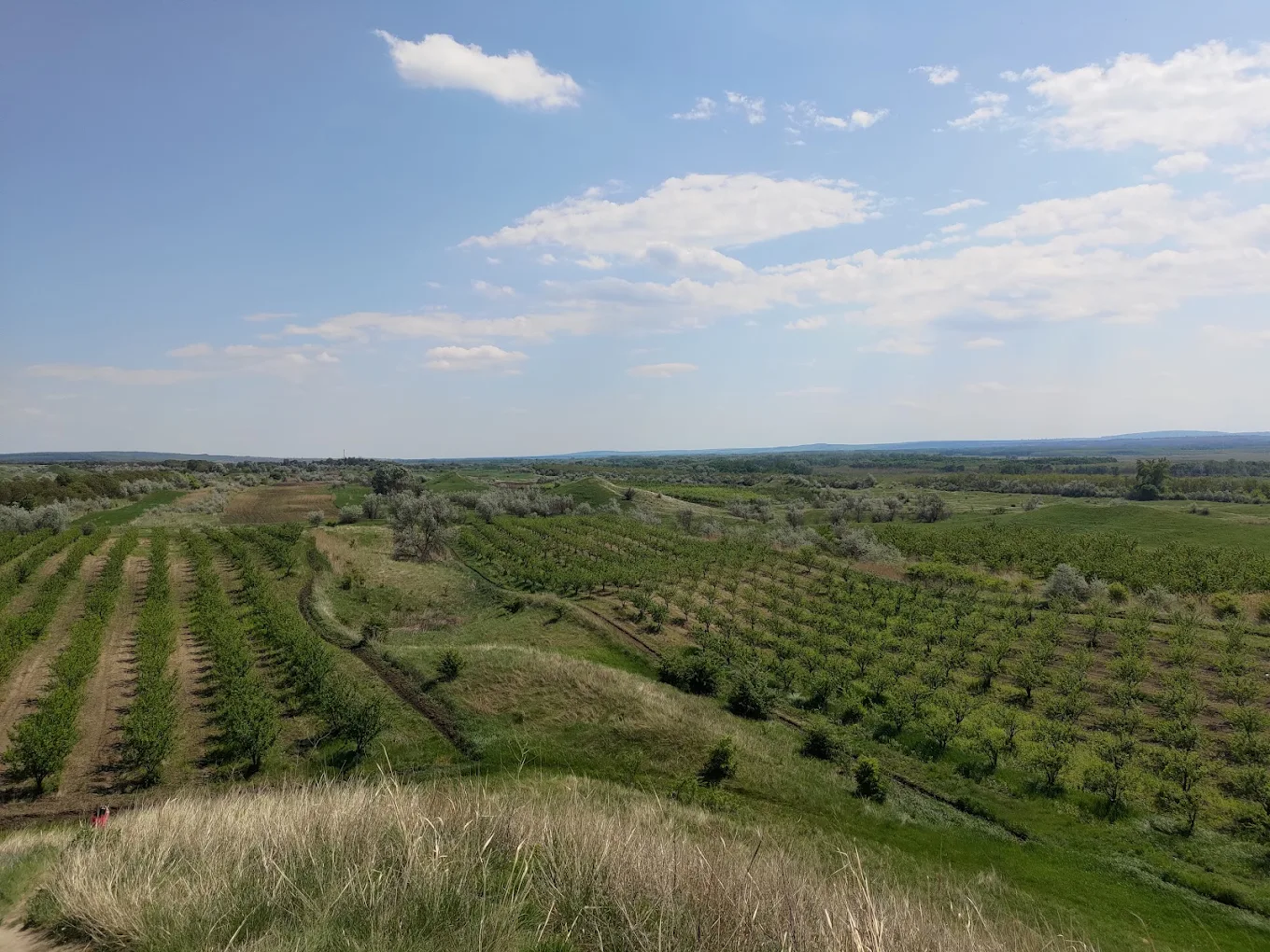
Between the Prut River valley and the villages of Braniste and Cobani (Glodeni and Rascani districts), nature ruled to play with geometric shapes over an impressive area of approximately 1,600 hectares. What locals and early historical descriptions simply called the “Hundred” is, in reality, a colossal geological complex, unique in Europe, stretching over eight kilometers in length and a width varying between 1.7 and 2.3 kilometers.

A spectacle of sacred geometry: From ancient seas to a “lunar” relief

Beyond its aesthetic appeal, the area represents a geological phenomenon without equal on the continent. It is the only place in Europe where such a large number of submarine reefs from ancient seas—the Tortonian Sea and the Sarmatian Sea—are concentrated. This Tertiary water basin covered today’s territory of Moldova approximately 10–20 million years ago.

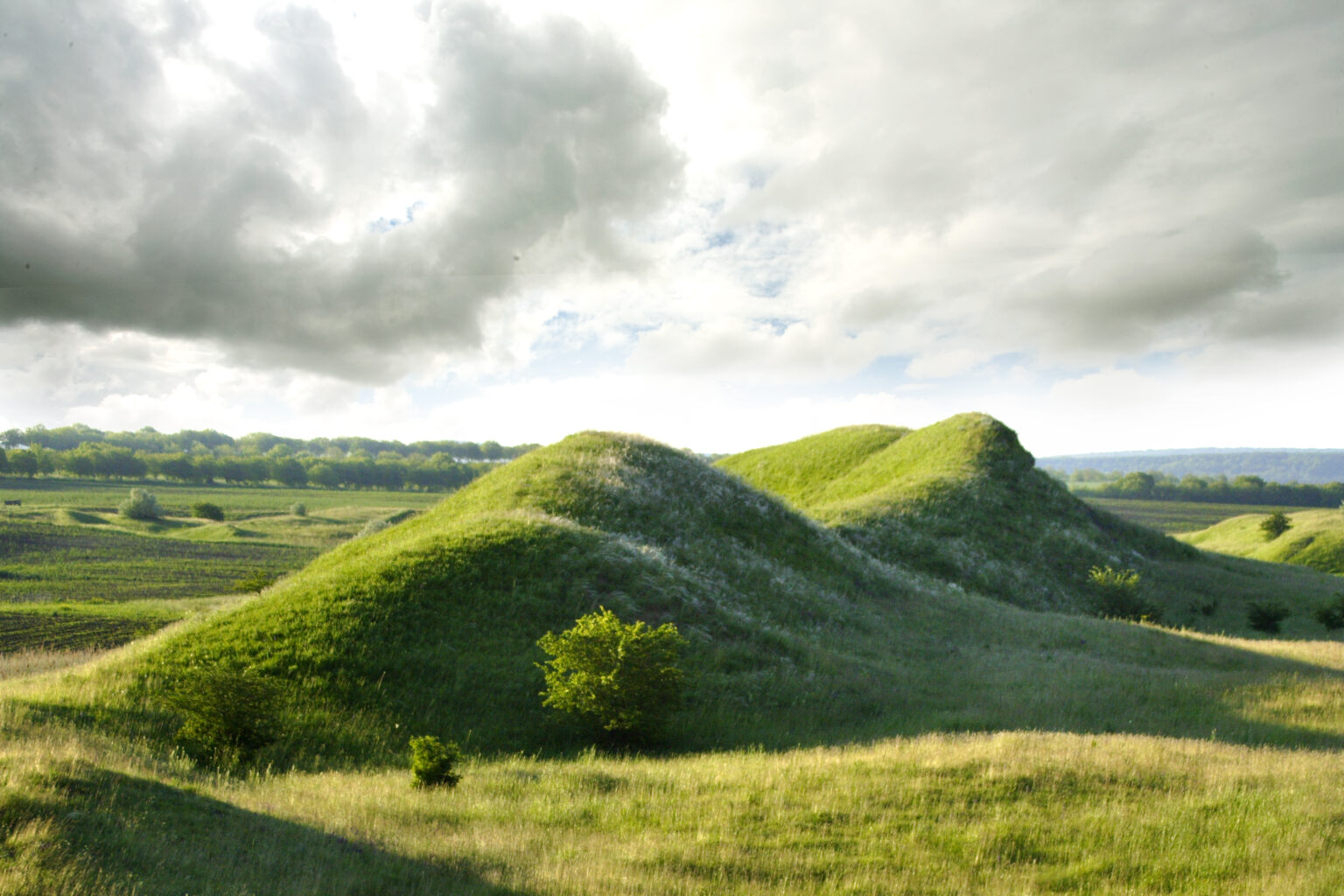
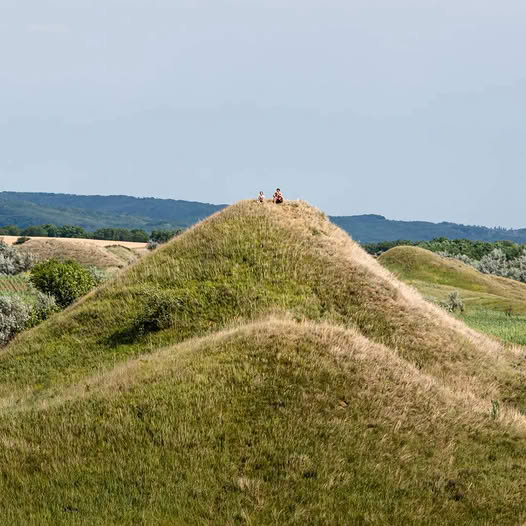
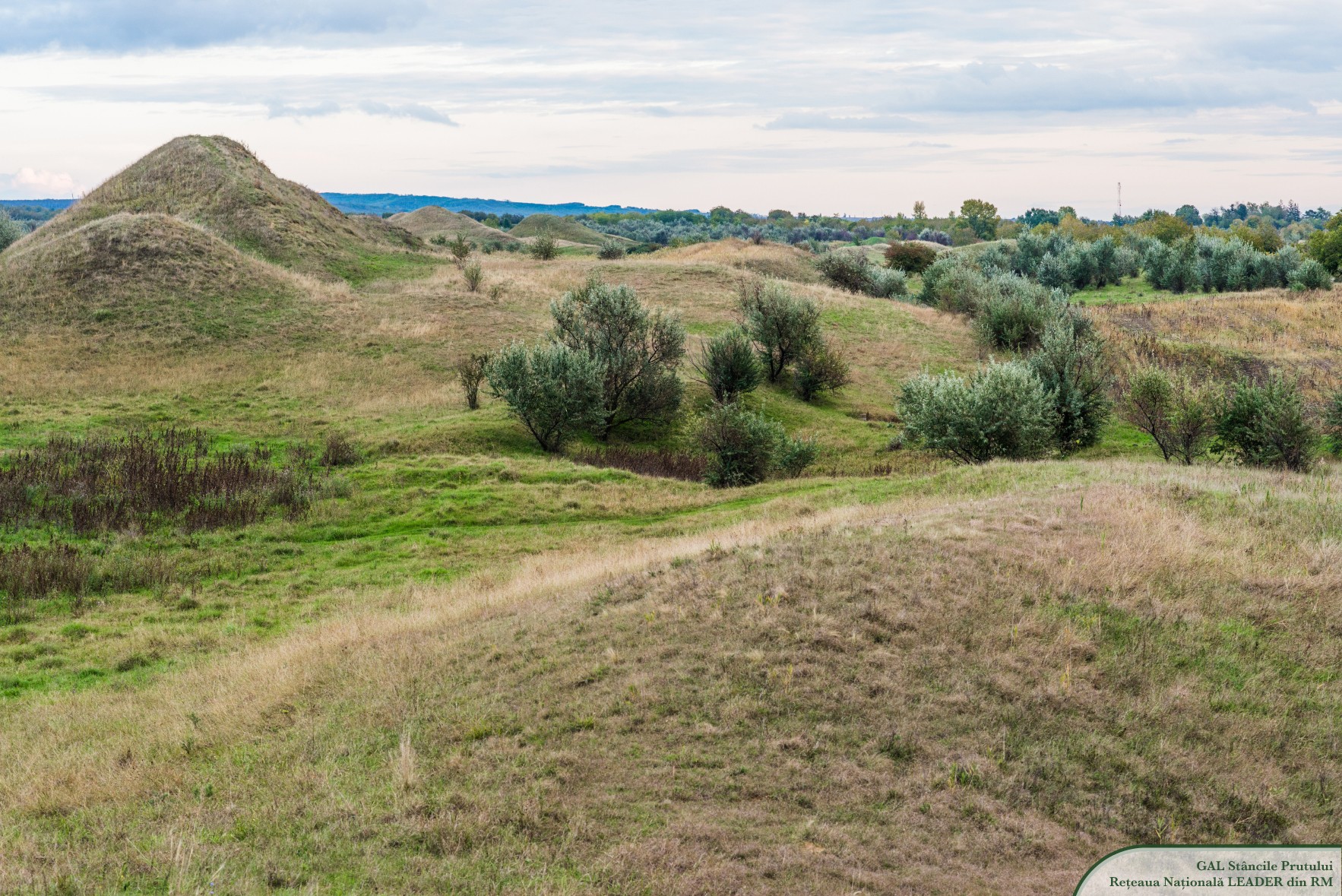
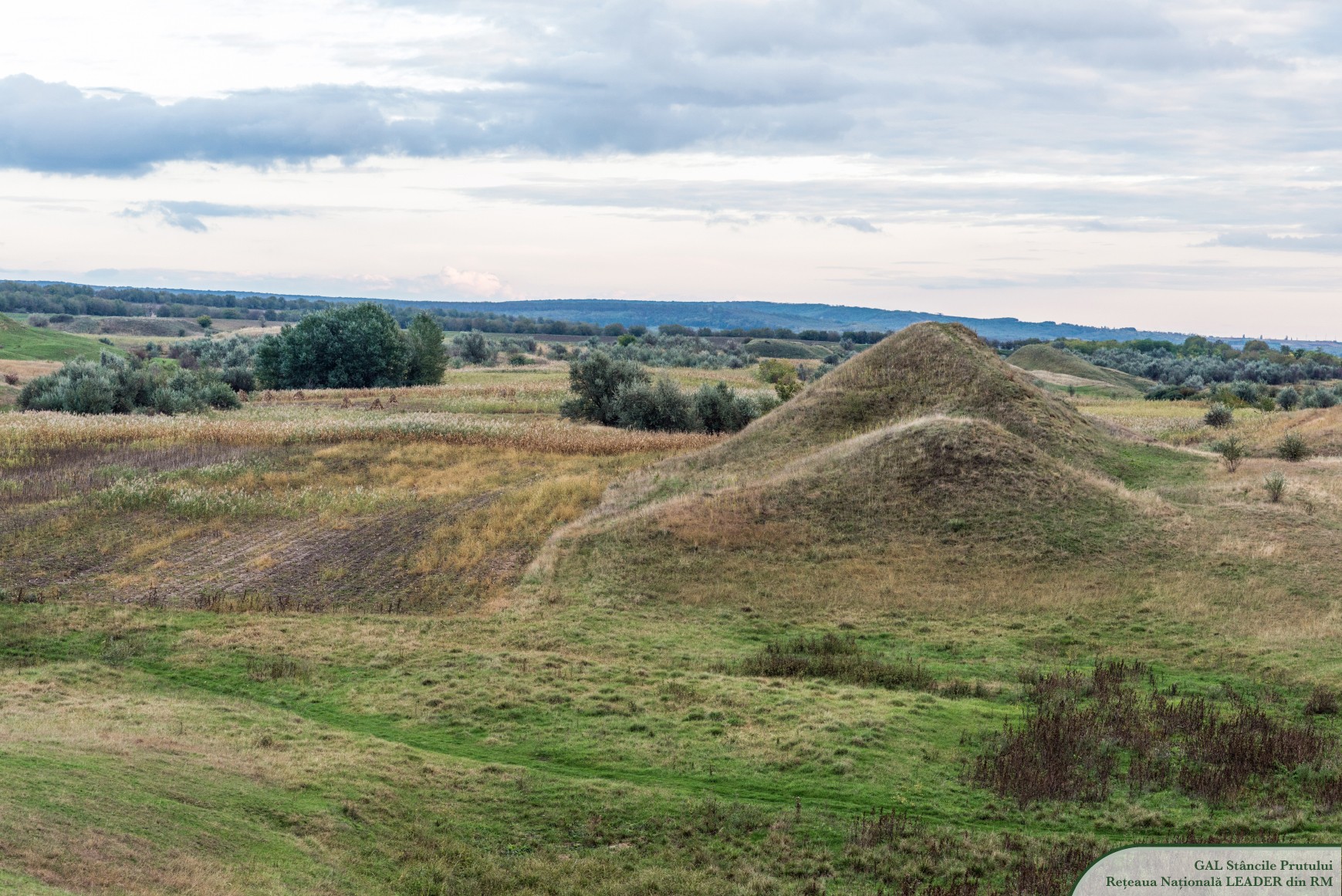
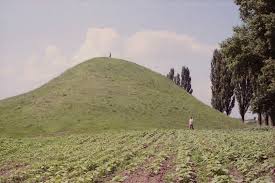
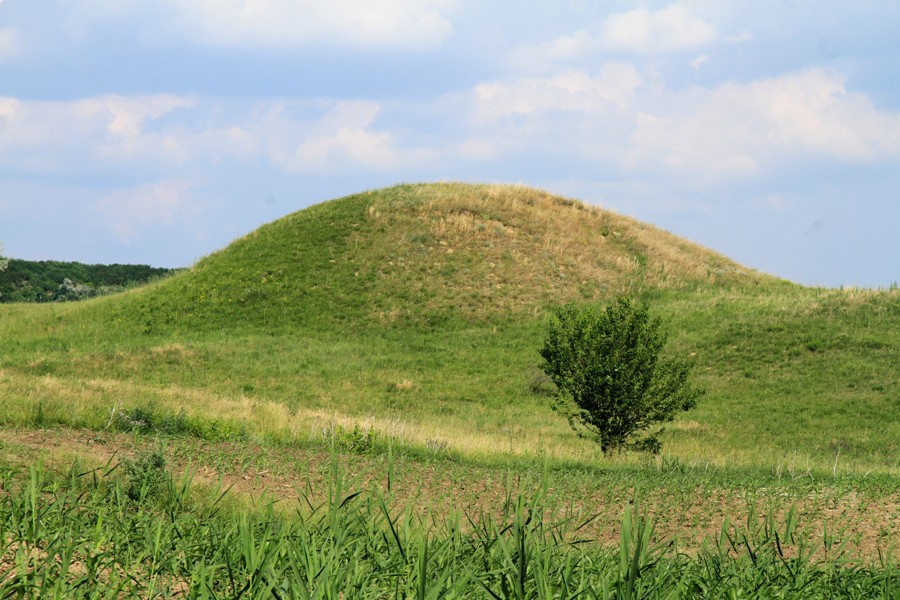
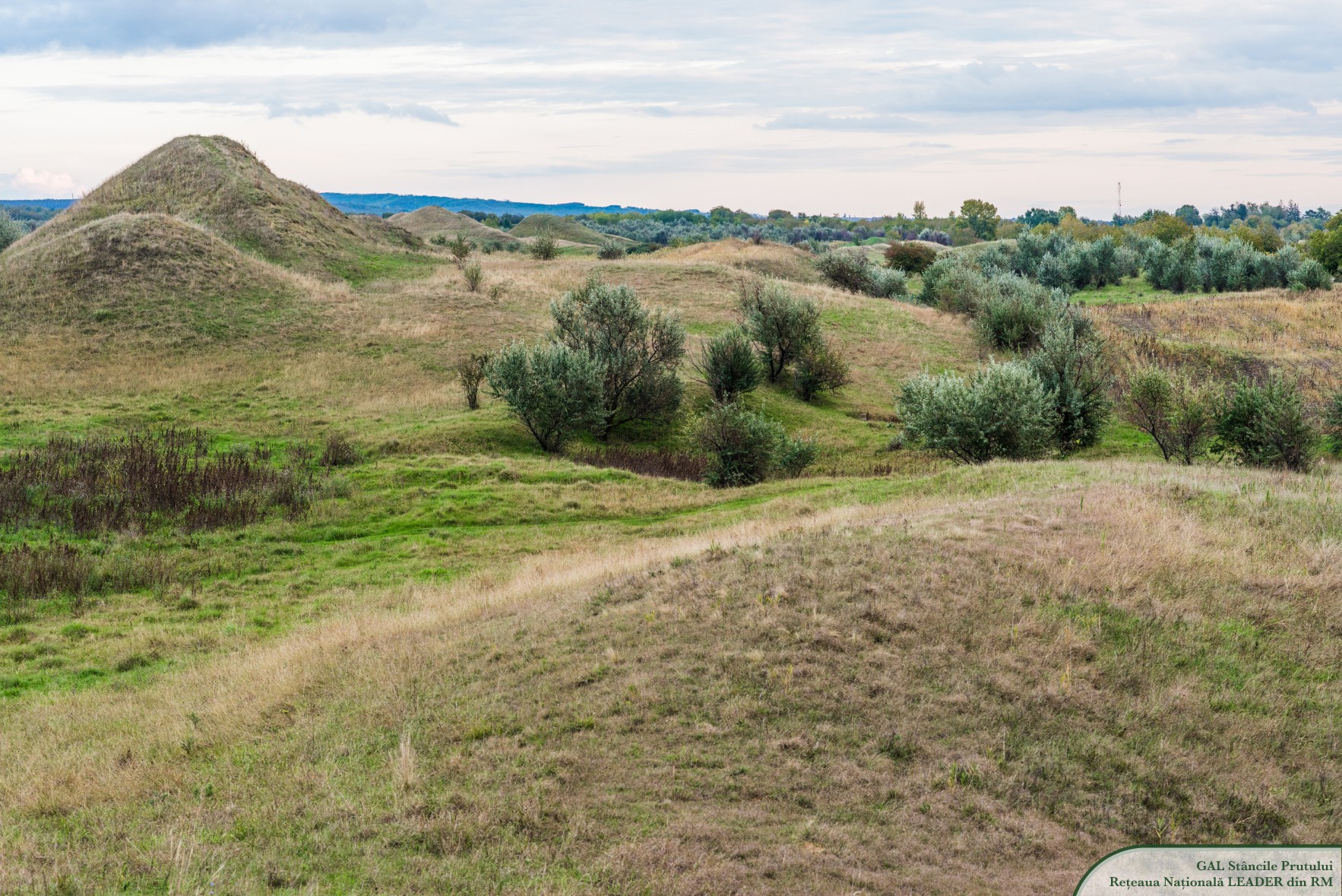
Viewed from above, the relief appears as a rhythmic succession of green domes, yet its configuration is unusual, almost bizarre, often compared to a lunar landscape. The diversity of landforms gathered in this relatively small area is overwhelming:

Varying heights: The mounds range from simple one-meter rises to dizzying peaks. The “giant” of the reserve is the Gypsy’s Mound (Movila Țiganului), which reaches an impressive height of over 30 meters (some measurements even indicate 60 meters compared to the lower terrace levels).

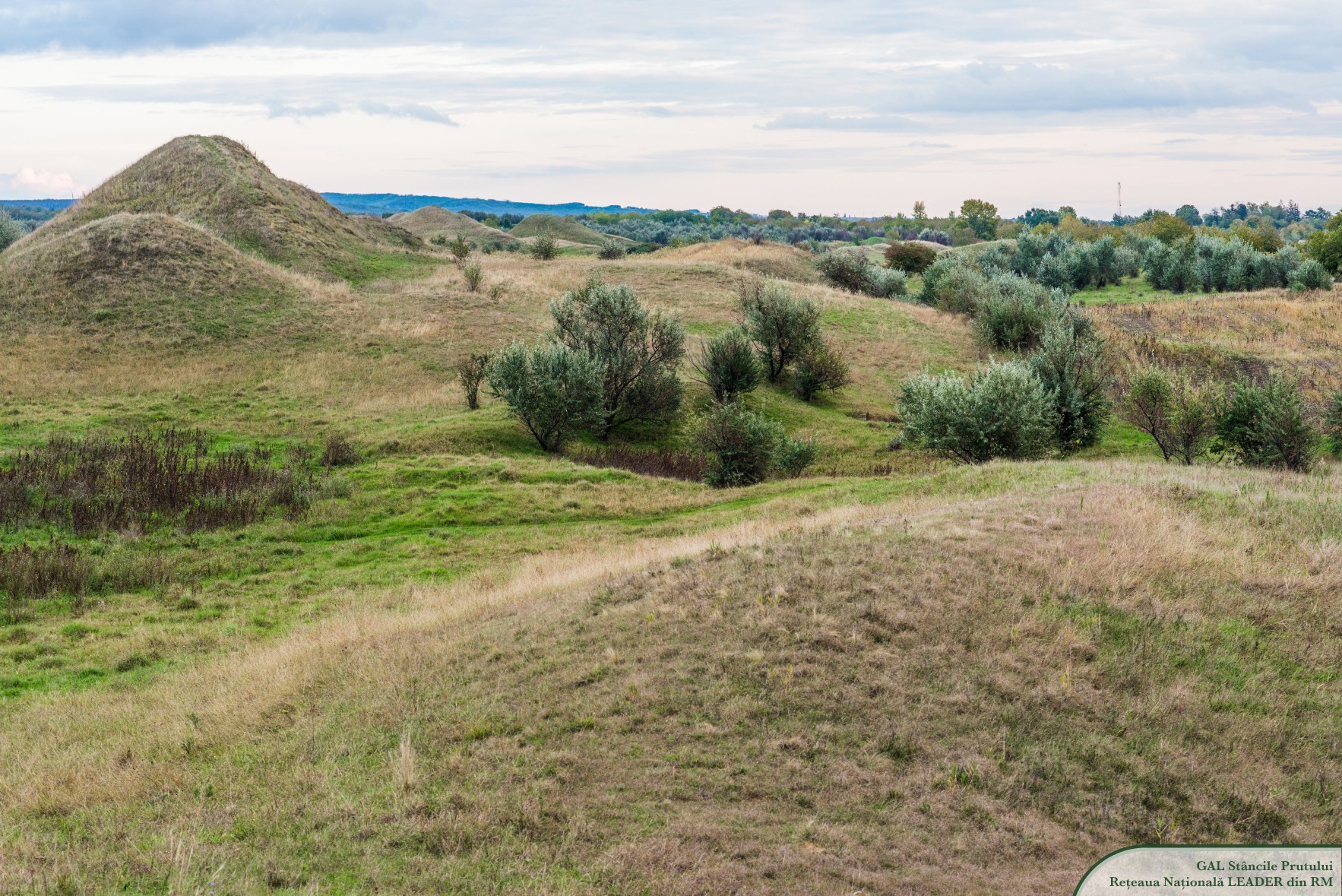
Complex micro-relief: Visitors encounter not only hills, but a mosaic of cornices, scarps, depressions, tumuli, terraces, funnels, steps and ravines. These heaps of earth are arranged in a strange order that seems to defy the usual randomness of nature.

Between science and legend: The enigma of “Centum Monticulii”

The first documentary attestation of this fascinating landscape dates back to 1716, in the famous work “The Description of Moldova,” where scholar Dimitrie Cantemir aptly calls it “Centum monticulii.” From then until today, their origin has remained an enigma that divides the scientific community.

While one theory claims that the mounds are fossilized submarine reefs, another point of view argues that the relief was formed by the washing away of soft sedimentary rocks and by massive landslide processes. Although numerous excavations have been carried out, there is no generally accepted theory, which further fuels the imagination of the locals.

In collective memory, the “Hundred Mounds” lives on through legends of long-vanished civilizations. Oral tradition speaks of fierce battles, claiming that victorious soldiers raised these mounds (barrows) after burying their fallen comrades. Although archaeology has not confirmed such collective burials, the spiritual charge of the place is palpable.

A destination for the modern explorer

Today, the area is protected as a landscape reserve. It is not a classic tourist destination with rigid trails, but a space of freedom where the traveler’s steps are guided by curiosity. The steppe-like landscape is complemented by dozens of picturesque lakes and springs of crystal-clear water that gush from among the mounds.

Why should one visit the Hundred Mounds?

Panoramic perspective: From the top of the Gypsy’s Mound, the horizon opens wide over the entire Prut valley, offering an unrivaled vantage point.

European uniqueness: You are visiting a prehistoric seabed, shaped over millennia into forms that can be found nowhere else.

Play of light: As the light changes throughout the day, it constantly alters the perception of the relief, enhancing the impression of movement in an apparently static landscape.

The “Hundred Mounds” remains a place where numbers become a mere convention and reality surpasses the name. Instead of a hundred, there are thousands; instead of a single hill, there is a marine history of 20 million years. It is probably the most spectacular invitation to discover an authentic, mysterious and unwritten Moldova, where nature and history have merged into an emerald labyrinth.
 Facebook
 Instagram
 X/Twitter
 Telegram
Discover Moldova with #MOLDPRES: Men’s caroling groups, tradition, spirituality at Palanca, Calarasi district
Discover Moldova with #MOLDPRES: Old Style Christmas, between traditions, customs and meanings
Discover Moldova with #MOLDPRES: Take Home from Moldova – authentic presents, memories from Moldova
VIDEO // Roman, early medieval archaeological artifacts to be exhibited at museum in southern Moldova
PHOTO // Tourist destinations from northern Moldova highlighted through Heart of Moldova tour
PHOTO, VIDEO // Discover Moldova with #MOLDPRES: Wine Vernissage 2025 - where tradition, excellence, tourism meet under sign of Moldovan wine
Moldova promoted in Vogue Polska: spectacular appearance putting country on map of inspiring destinations
PHOTO, VIDEO // Discover Moldova with #MOLDPRES: 'Wheel of Time' – a cultural and tasty journey, part of cross-border gastronomic route
PHOTO, VIDEO // Discover Moldova with #MOLDPRES: Gate of the Nation, where traditions come to life
PHOTO, VIDEO // Discover Moldova with #MOLDPRES: Mircești winery – 'Little Tuscany' of Ungheni, bridge between tradition, wine, tourism like in Europe
Discover Moldova with #MOLDPRES: Casa din Luncă - a haven of peace and tradition in heart of Old Orhei
Discover Moldova with #MOLDPRES: “At Tanti Masha's”: tradition, family recipes, tourist experiences and community on Romania-Moldova Gastronomic Route
PHOTO // Moldovan Wines conquer Switzerland at EXPOVINA 2025 in Zürich
Discover Moldova with #MOLDPRES: from vineyards to hospitality. how authentic wine, tourism experiences were promoted at World Wine Tourism Day 2025
Judicial reform, rule of law in focus of discussions between Moldovan president, new Head of Council of Europe Office
Moldovan parliament's standing bureau approves agenda for September 24 plenary meeting
Energocom company of Moldova requests gas prices' adjustment after 42-per cent rise in European quotations
Moldova, Mongolia abolish visa requirements for holders of diplomatic, service passports
Vulcănești–Chișinău Power Line: defective equipment at Chișinău substation repaired
DOC // Moldova has new media law
DOC // Decision on declaring state of emergency in energy and hydrological sectors published in Official Journal
 National Bank of Moldova
Judicial reform, rule of law in focus of discussions between Moldovan president, new Head of Council of Europe Office
Moldovan parliament's standing bureau approves agenda for September 24 plenary meeting
Topics considered at meetings of Moldovan parliament's standing commissions on September 23, 2026
New opportunities for professional development, salary supplements for employees in Moldova's social assistance system
Parliament to ratify new agreement between Moldova and Romania on strategic transport infrastructure

Civil protection and fire protection to be regulated by rules aligned with European standards
Clearer, more visible health warnings on tobacco products' packaging in Moldova
Vulcănești–Chișinău Power Line: defective equipment at Chișinău substation repaired
DOC // Moldova has new media law
DOC // Decision on declaring state of emergency in energy and hydrological sectors published in Official Journal
Legal framework for integration of foreigners in Moldova to be strengthened
National legislation on electronic evidence to be aligned with international standards
Energy communities: clearer rules for establishment and registration
VIDEO // Officials and international experts present opportunities for Moldova’s organic agriculture in Chisinau at Southeast European Conference
Modernization works for district heating systems in Chișinău and Bălți to be declared matter of national public utility
Obtaining permits and approvals for renewable energy production to be simplified
StratCom analyzes main vulnerabilities of regional information environment ahead of elections in Gagauzia
Parliament to examine legislative measures to strengthen NBM independence in line with European standards
PHOTO GALLERY // Journey through Northern Moldova through MOLDPRES lens
Prime Minister visits New York: bilateral meetings and address to plenary of UN General Assembly
Moldova and Kazakhstan strengthen cooperation
Receive the latest news directly to your email

Receive the latest news directly to your email