
Natural gas prices on European exchange continue to rise; energy minister says international energy crises directly affect Moldova
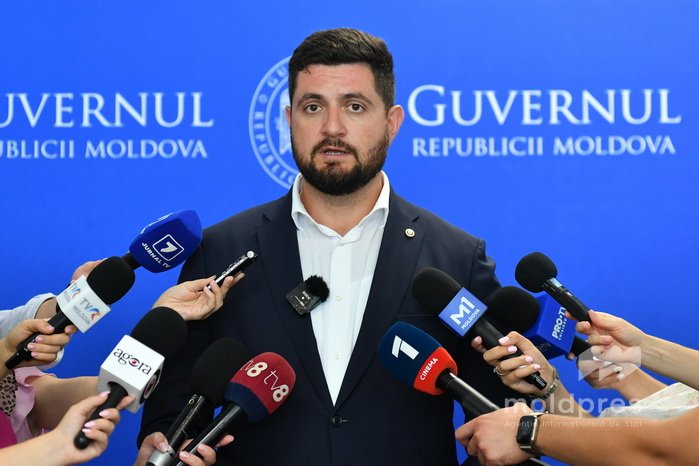
Natural gas prices on the European exchange continue to rise under the influence of the regional situation, and this has a direct impact on Moldova, which is entirely dependent on imports. Energy Minister Dorin Junghietu today made statements to this effect.

According to the official, the reference price on the European exchange has exceeded 83 euros per megawatt-hour, which is approximately 1,000 dollars per thousand cubic meters.

The increase in prices is prompted by more factors, including the prolonged closure of the Strait of Hormuz, competition for liquefied natural gas between the European and Asian markets and the still-low level of underground storage facilities in Europe.

“The prolonged blockage of the Strait of Hormuz means that LNG vessels from Qatar cannot reach the European market. At the same time, competition for liquefied natural gas between the European and Asian markets is keeping prices high, along with the still-low level of underground storage facilities in Europe. This morning, the average filling level of storage facilities across Europe was 68.3 per cent. At the same time, Norway, one of the largest gas suppliers to Europe, is carrying out maintenance work at some production facilities ahead of the winter season,” Dorin Junghietu said after a today’s cabinet meeting.

The minister emphasized that all these factors are contributing to keeping natural gas prices high.

“Accordingly, the continuation of this market volatility makes the need for a tariff adjustment increasingly obvious. There is a methodology. The National Energy Regulatory Agency (ANRE) and the supplier will provide the data at the appropriate time,” the official said.

According to him, Moldova imports natural gas and all international energy crises directly affect the country.

Under these conditions, in early next October, Energocom will present the calculations regarding the cost of gas purchased in September. Based on these calculations, it will be estimated whether tariff deviations have accumulated.

“For the August–October period, ANRE approved approximately 54 euros per megawatt-hour in the current tariff. At the beginning of September, Energocom made public the average purchase price of gas for August, and at the beginning of October it will also present the average purchase price for September. It will then become clearer what the potential tariff adjustment might be. In October, once we have the price, it will also be possible to see what tariff deviations accumulated during the August–September period. It will then be obvious. Therefore, at the moment, we cannot say how large this adjustment will be. Yes, it is highly likely, given global and European gas prices, but it will be certain once the average purchase price for September is known. If prices remain at their current levels of more than 80 euros per megawatt-hour, negative tariff deviations will, of course, accumulate,” the energy minister emphasized.

Energocom has earlier said that it had contracted approximately 75 per cent of the total natural gas volume needed to cover consumption during the 2026–2027 gas year (October 1, 2026–September 30, 2027).
 Facebook
 Instagram
 X/Twitter
 Telegram
Tender on Chisinau Airport's expansion to be reevaluated following decision by National Agency for Settlement of Complaints
VIDEO // Prime Minister about new tax policy, which will bring 5.1 billion lei to budget
Fiscal policy for 2027 approved by Government
DOC // New regime for grain and oilseed imports. Law published in Official Journal and enters into force
National Wine Day 2026 announces itself with dress code in colors of Moldovan wine
Public sector employees of Moldova to receive one-time allowances of up to 4,000 lei; parliament approves budget's revision in first reading
PHOTO GALLERY // Customs Service - 35 years at Moldova’s economic border
Provisional licensing of grain and oilseed imports
Convergence Fund aimed at bringing two banks of Dniester closer
Customs Service marks 35th anniversary of establishment
Deputy Prime Minister: Reintegration is no longer goal for future. It is goal being achieved today
Term of inquiry commission investigating state-owned enterprises extended
Moldovan parliament proposes new regime for strategic investments
Import of cereal, oilseed crops to be temporarily licensed in Moldova
Moldovan parliament speaker in Budapest says Moldova, Hungary can open new chapter in relations between parliaments of two countries
Environment minister says Moldova to reduce Dniester’s flow, to conserve water reserves
Moldova's National Anticorruption Center, Italy’s Financial Guard to exchange information to combat economic, financial crime
Natural gas prices on European exchange continue to rise; energy minister says international energy crises directly affect Moldova
EU Ambassador: EU remains firmly committed to supporting justice reform in Moldova
President at Forum on justice reform and fighting corruption: Building rule of law most complicated commitment in EU accession program
Government approves ratification of agreement on construction of bridge over Prut River and first highway section in Moldova
 National Bank of Moldova
Investments in energy efficiency of public buildings exceeded €348 million in 2019–2025
Agreement between Moldova and Romania to continue construction of Ungheni–Ungheni bridge and modernize road infrastructure
Republic of Moldova to receive €4.3 million grant to strengthen capabilities of National Army
Energy communities – new legal form of organization for everyone who produces, consumes, stores energy together
President at Justice Reform and Combating Corruption Forum: Judicial independence requires integrity and accountability

Energy communities – new legal form of organization for everyone who produces, consumes, stores energy together
President at Justice Reform and Combating Corruption Forum: Judicial independence requires integrity and accountability
Republic of Moldova among countries in EU enlargement perspective
Special access measures at Chișinău Airport remain in effect by 17 September
VIDEO // Justice reform and fight against corruption - focus of discussions at international forum in Chișinău
Moldovan Railways state enterprise to be reorganized by late 2026
Investments of 326 million lei to modernize heating systems in Chișinău and 17 million euros for those in Bălți
Modernization works for district heating systems of Chisinau, Balti cities to be declared projects of national public utility
Ministry of Economic Development and Digitalization has new state secretary
Government appoints new directors at SFS, CNAM, APP, AIPA
Government announces new appointments to State Tax Service, APP, CNAM, AIPA
European Parliament approves temporary trade liberalization measures for Armenian products
Open Government Action Plan 2026–2028: Parliament Secretariat and civil society discussed future commitments
Companies from both banks of Dniester explore Romanian market to identify new opportunities for business expansion
ARMENPRESS // EUSR Grono: I do not contest past Armenian presence, rich cultural footprint in Karabakh
Moldovan parliament speaker meets Slovenian president, other high-ranking officials in Ljubljana
Receive the latest news directly to your email

Receive the latest news directly to your email