
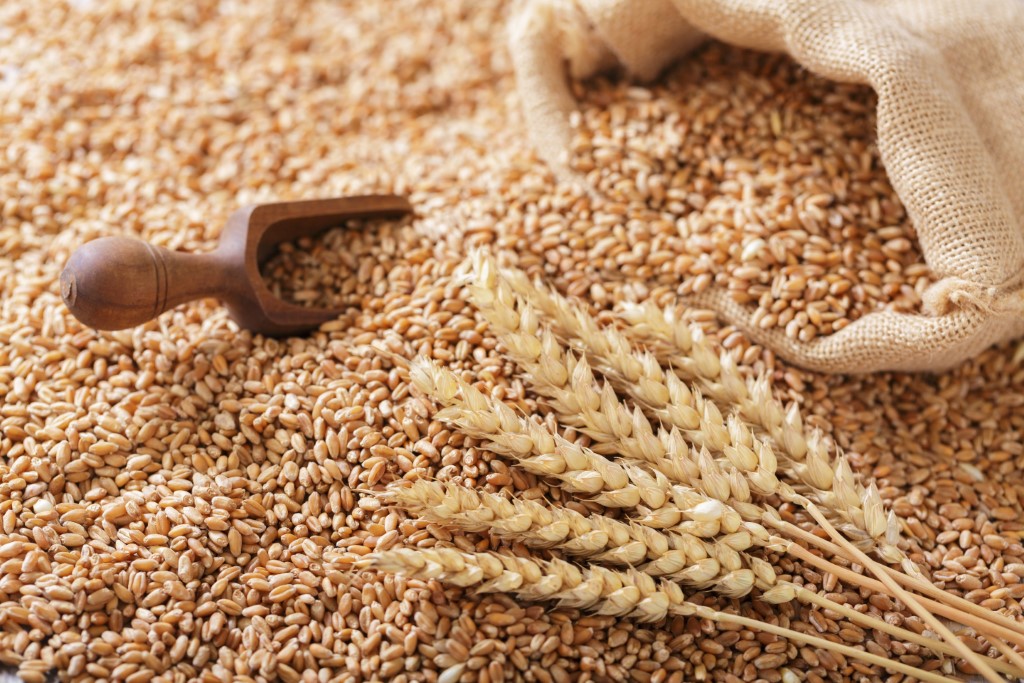
Import of cereal, oilseed crops to be temporarily licensed in Moldova
The import of cereal and oilseed crops might be temporarily licensed until October 31, 2026. The initiative aims to protect domestic producers amid imports of cereals and oilseeds from neighboring countries.

The draft law was presented today at the parliament’s plenary meeting by Serghei Ivanov, head of the chair of the commission for agriculture and food industry.

According to the document, applications for import licenses submitted by individuals and legal entities will be examined by a commission consisting of representatives of the Agriculture and Food Industry Ministry, the Economic Development and Digitalization Ministry, the National Food Safety Agency and relevant industry associations. The import license will be issued free of charge.

At the plenary meeting, Serghei Ivanov said that the proposed mechanism was not meant to block imports, but to ensure that they are carried out under conditions that do not harm domestic producers.

“The law is not extensive and it is not a new law; it is the same law transposed from 2024, which operated successfully and created no impediments. On the contrary, according to statistics and data collected from both farmers and other sources, it has indeed brought benefits, as farmers were able to sell at reasonable prices,” the lawmaker said.

According to Ivanov, licensing will make it possible to verify the destination of imported products and limit situations in which cereals are brought into the country under the pretext of processing, only to be subsequently sold or exported.

“For any processor to make an import, they need to do nothing more than submit an application stating their intention to import. It will be reviewed by a licensing commission, and if that commission analyzes and verifies that the processor genuinely has good intentions, rather than intending to sell the goods, and that what they want to import is not available in Moldova, a positive decision will be issued and the import will proceed without any problems,” Serghei Ivanov noted.

The lawmaker argued that the measure was also necessary in the context of the war in Ukraine and changes in regional trade flows.

“This law is actually meant to somewhat reduce the appetite of those with malicious intentions who, under the pretext of importing goods for processing, do nothing more than import and then re-export them, goods which, unfortunately, are not of Moldovan origin. These exports take place to the detriment of domestic goods,” the author of the draft said.

Serghei Ivanov said that, given Ukraine’s more attractive prices for buyers, Moldovan producers risk facing difficulties in selling their own harvests.

Under the draft law, individuals and entities granted an import license will not be allowed to sell or export the imported goods.

Serghei Ivanov specified that licensing would apply to cereal and oilseed products, including wheat and sunflower, and will not cover finished products.

“I repeat once again: licensing applies only to cereal products. It does not apply in any way to finished products, flour, concentrates, and so on,” the parliamentarian said.

The initiative’s author also referred to Romania’s experience, where, according to him, a similar licensing mechanism is currently in place.

“I would like to inform you that such a law is continuously in force in Romania. Although I was asked whether it complies with European standards, this licensing system is currently active in Romania and operates continuously,” Ivanov said.

Asked by the opposition about the risks if the law is not adopted, the lawmaker said there was a risk that warehouses would remain full. He said that wheat is already being sold at a lower price than the market price.

The government proposes that the licensing regime for imports of cereal and oilseed crops apply until October 31, 2026, without the possibility of extending the deadline. A similar mechanism was applied in 2024–2025.

After adoption, the draft law on the temporary licensing of imports of cereal and oilseed crops will enter into force on the date of its publication in the Official Journal.
 Facebook
 Instagram
 X/Twitter
 Telegram
Currency liberalization: 250,000-euros ceiling without authorization of National Bank of Moldova, foreign currency payments in certain commercial units
New subscription round via the eVMS.md platform in Moldova; citizens can invest online in government bonds with interest rates up to 7.85 per cent
National Wine Day returns to Chișinău with anniversary edition on October 3–4
European gas prices remain high as TTF benchmark reaches 68.19 EUR/MWh
Chisinau – Cainari railway section of Moldova to be rehabilitated with support of top European bank
Harvest of grapes for wine might increase by up to 15 per cent in Moldova in 2026; reference price between 6.8 and 8.2 lei per kilogram
Roads' safety to be assessed at least once every five years in Moldova; drivers to be able to report dangerous areas online
Energocom company of Moldova announces price of natural gas delivered in last July
Financial instruments market of Moldova to be aligned with EU standards
Prime Minister invites Turkish companies to invest in Moldova
PHOTO // 11th edition of National Grape Festival held in Cimișlia
PHOTO // Moldovan PM promotes Moldova as investment destination in Istanbul
PHOTO // From grafted watermelon to smart agriculture: how Moldova's Technical University trains specialists for agriculture of future
Moldova's government to recommend introducing licensing regime for imports of cereals; PM says cabinet tries to protect Moldovan producers, exporters
Head of state, at 35th anniversary of National Army's establishment, says peaceful Moldova needs Moldova capable of defending its peace
Moldova's foreign affairs minister to visit Lithuania: meetings' agenda
Import of cereal, oilseed crops to be temporarily licensed in Moldova
Moldovan president, at international online safety conference, says each child must grow up healthy, free, safe in world where physical, digital realities intersect
Searches conducted in more settlements of Moldova in case concerning illegal financing of parties through cryptocurrencies
Electronic monitoring of domestic abusers to be strengthened: Moldova's National Probation Inspectorate to receive 200 new bracelets, 2027 budget to be doubled
Moldovan parliament speaker, on National Army Day, says National Army symbol of defending peace
 National Bank of Moldova
Head of state, at 35th anniversary of National Army's establishment, says peaceful Moldova needs Moldova capable of defending its peace
Moldovan president’s speech at event on online safety, digital determinants of children’s, adolescents’ mental health, emotional well-being
Deputy PM for reintegration has meeting with new Head of OSCE Mission to Moldova
As many as 561 mayor's offices adopt final decisions on voluntary amalgamation; government's secretary-general says real stake of reform to provide citizens with decent living conditions
Government approves amendment to state social insurance budget for 2026

PHOTO // Well-known Romanian actor, three memorable roles to be screened at Romanian Film Days
VIDEO // PM announces urgent measures following tragic case in central Moldova village
Moldova's Doctoral School in Medical Sciences holds admission competition for doctoral studies; applications may be submitted till September 4
Moldovan Central Electoral Commission says electoral period for elections of Gagauzia's governor starts in Moldova
VIDEO // Moldova's National Army marks 35 years since establishment; Defence minister: “Our mission stays the same – to protect peace”
How can we protect children in digital environment? Moldovan president, Romania’s First Lady attend international conference in Chisinau
Moldovan foreign affairs minister has meeting with regional director of United Nations Population Fund
Moldovan deputy PM for reintegration says harmonization of tax regime to continue, despite Tiraspol's reaction
BTA: Bulgarian Funding to Improve Kindergarten Yard in Moldova's Cairaclia
Moldovan Central Electoral Commission approves electoral calendar for organizing elections for office of Gagauzia's governor
Deputy PM for reintegration has meeting with new Head of OSCE Mission to Moldova
Railway of Moldova state enterprise transports over 46,000 tons of export, transit goods in last August
Moldovan foreign affairs minister rejects claims by Russia’s Ambassador-Designate
Energocom company of Moldova says natural gas price continue to rise on European exchange
ARMENPRESS: EU Council backs temporary trade-liberalization measures for Armenian products
Moldova to send Russia protest note over unauthorized opening of polling stations for elections; Moldovan foreign affairs minister says it represents unfriendly act
Receive the latest news directly to your email

Receive the latest news directly to your email