
Environment minister says Moldova to reduce Dniester’s flow, to conserve water reserves
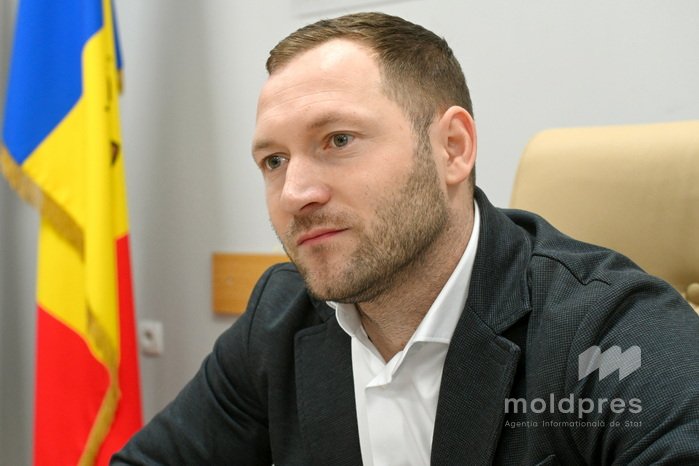
Moldova will reduce the water flow of the Dniester River, based on a decision adopted through the Dniester Commission, in order to ensure the necessary supply of drinking water and maintain ecosystems, as well as to conserve water reserves until they are replenished during the autumn rains. Environment Minister Gheorghe Hajder today made statements to this effect after the government meeting.

According to the minister, the measure aims to manage water reserves under conditions in which they are expected to be replenished during the high-water period brought by the autumn rains.

“Until the high-water period, meaning the autumn rains, and until the reserves are replenished, a decision was made through the Dniester Commission to reduce the flow so that, on the one hand, we can ensure the necessary supply of drinking water and water for the ecosystems along the Dniester, while, on the other hand, conserving as much of that water reserve as possible,” Gheorghe Hajder said.

Referring to long-term solutions for preventing similar situations, the environment minister emphasized the need to use water resources more rationally and to adapt consumption to new realities.

“First of all, the solution is a general one, which has been discussed more times, including on the government’s platform. We need to be much more rational in our water consumption and adapt our consumption to new realities. We are talking about industrial consumption and irrigation, where we need to shift to much more efficient ways. Accordingly, this is the solution until conditions are restored,” the minister said.

Gheorghe Hajder said that, in the long term, reforestation measures and water conservation in reservoirs and on public land of Moldova are necessary.

“Clearly, when we talk about the long term, we are talking about reforestation and water conservation, both in reservoirs and on public land in Moldova, so that we can collect water when it is available and use it later,” the official explained.

During discussions following the government meeting, the environment minister was also asked about the possibility of creating an independent authority responsible for investigating cases of cruelty and protecting animals.

Gheorghe Hajder said there is an intention to identify an authority responsible for animals’ protection, but the solution will be established through consultations among the ministries and institutions involved.

“An authority responsible for animals’ protection is something I believe is good and will certainly be established, but the best solution needs to be identified, because more ministries and authorities are involved. We need a solution that has been consulted on and addresses all requests,” the minister said.

Referring to the need for measures to prevent animals’ abuse and for clearer regulations in the field, Hajder emphasized that the issue must be analyzed in detail and that interventions should not be limited solely to imposing penalties.

“This matter needs to be consulted on, the specific problem needs to be identified, and action certainly needs to be taken—not only through penalties, but also through regulations that clearly establish how animals’ rights must be respected and what happens when those rights are not respected,” Gheorghe Hajder stated.

The minister added that developing and improving public policies was a natural process, and that solutions to the identified problems would be found according to the needs.
 Facebook
 Instagram
 X/Twitter
 Telegram
Border control at three Moldovan-Ukrainian crossing points to be temporarily organized solely on territory of Moldova
Moldova stands in solidarity with United States; victims of September 11, 2001 terrorist attacks commemorated in Chisinau
Cyberattack takes place on government resources of Moldova; authorities working to restore access
PHOTO // European Commissioner visited Moldova’s Urban Search and Rescue Team: practical demonstration using EU-provided equipment
Social worker from Chișinău involved in influence-peddling case
New measures for child-friendly justice
Romania’s Ambassador visits Giurgiulesti International Free Port: Important component of Moldova’s European integration
U.S. Embassy in Chișinău commemorates 11 September 2001 terrorist attacks' victims
Government Secretary-General provides details on second stage of administrative reform
Gender equality and women’s rights discussed at Ministry of Foreign Affairs with UN Women Representative
Moldovan troops participate in Strong Griffin 2026 exercise in Lithuania
Warning for Moldovans seeking work in Greece: some offers may conceal illegal activities
Moldova to extradite person to India for first time; man accused of murder and drug trafficking
DOC // Law on Road Safety Assessment published in Official Journal
Moldovan parliament speaker in Budapest says Moldova, Hungary can open new chapter in relations between parliaments of two countries
Environment minister says Moldova to reduce Dniester’s flow, to conserve water reserves
Moldova's National Anticorruption Center, Italy’s Financial Guard to exchange information to combat economic, financial crime
Natural gas prices on European exchange continue to rise; energy minister says international energy crises directly affect Moldova
EU Ambassador: EU remains firmly committed to supporting justice reform in Moldova
President at Forum on justice reform and fighting corruption: Building rule of law most complicated commitment in EU accession program
Government approves ratification of agreement on construction of bridge over Prut River and first highway section in Moldova
 National Bank of Moldova
Topics examined at meetings of Moldovan parliament's standing commissions on September 15–16, 2026
Investments in energy efficiency of public buildings exceeded €348 million in 2019–2025
Agreement between Moldova and Romania to continue construction of Ungheni–Ungheni bridge and modernize road infrastructure
Republic of Moldova to receive €4.3 million grant to strengthen capabilities of National Army
Energy communities – new legal form of organization for everyone who produces, consumes, stores energy together

Republic of Moldova to receive €4.3 million grant to strengthen capabilities of National Army
Energy communities – new legal form of organization for everyone who produces, consumes, stores energy together
President at Justice Reform and Combating Corruption Forum: Judicial independence requires integrity and accountability
Republic of Moldova among countries in EU enlargement perspective
Moldova to launch e-Consulate system, to modernize delivery of consular services for Diaspora citizens
Special access measures at Chișinău Airport remain in effect by 17 September
VIDEO // Justice reform and fight against corruption - focus of discussions at international forum in Chișinău
Moldovan Railways state enterprise to be reorganized by late 2026
Investments of 326 million lei to modernize heating systems in Chișinău and 17 million euros for those in Bălți
Modernization works for district heating systems of Chisinau, Balti cities to be declared projects of national public utility
Ministry of Economic Development and Digitalization has new state secretary
Government appoints new directors at SFS, CNAM, APP, AIPA
Government announces new appointments to State Tax Service, APP, CNAM, AIPA
European Parliament approves temporary trade liberalization measures for Armenian products
Open Government Action Plan 2026–2028: Parliament Secretariat and civil society discussed future commitments
Companies from both banks of Dniester explore Romanian market to identify new opportunities for business expansion
Receive the latest news directly to your email

Receive the latest news directly to your email