
Government to support social inclusion of people with disabilities under National Program 2026–2030
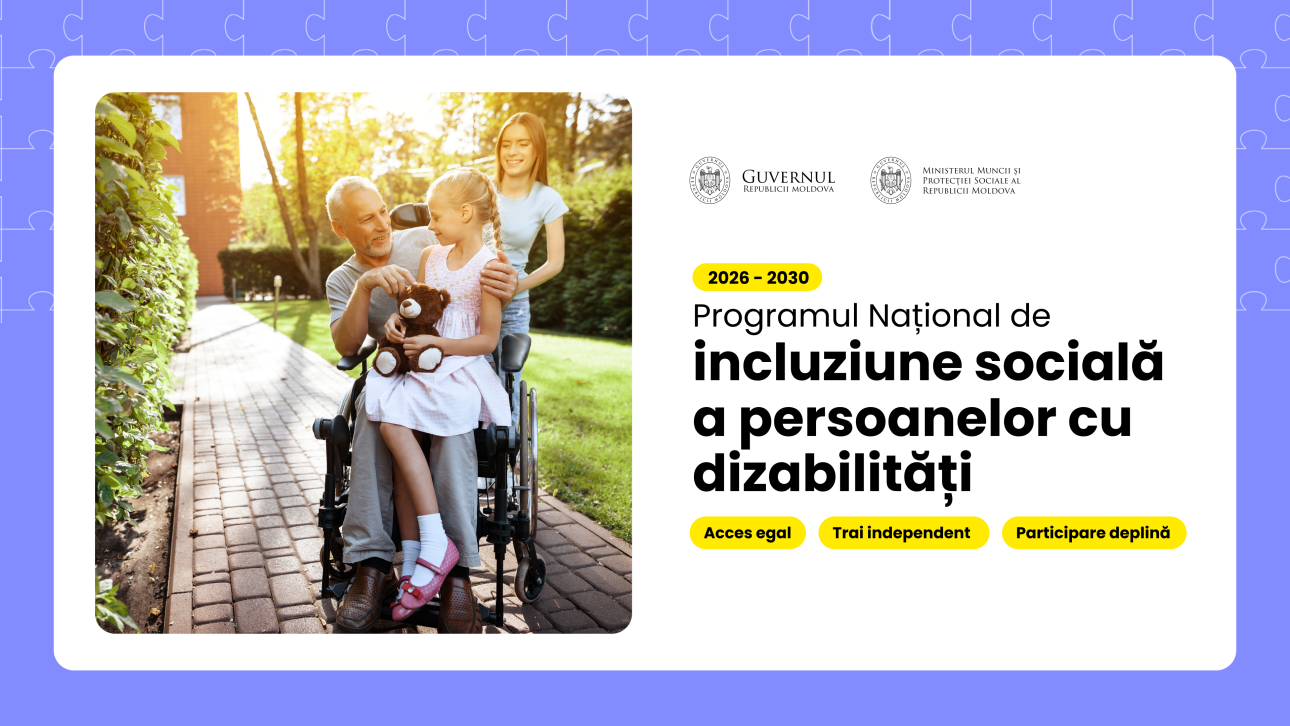
Government has approved the National Program for the Social Inclusion of People with Disabilities 2026–2030, which sets out priority measures to ensure equal access to services, support for independent living, and the full participation of people with disabilities in community life.

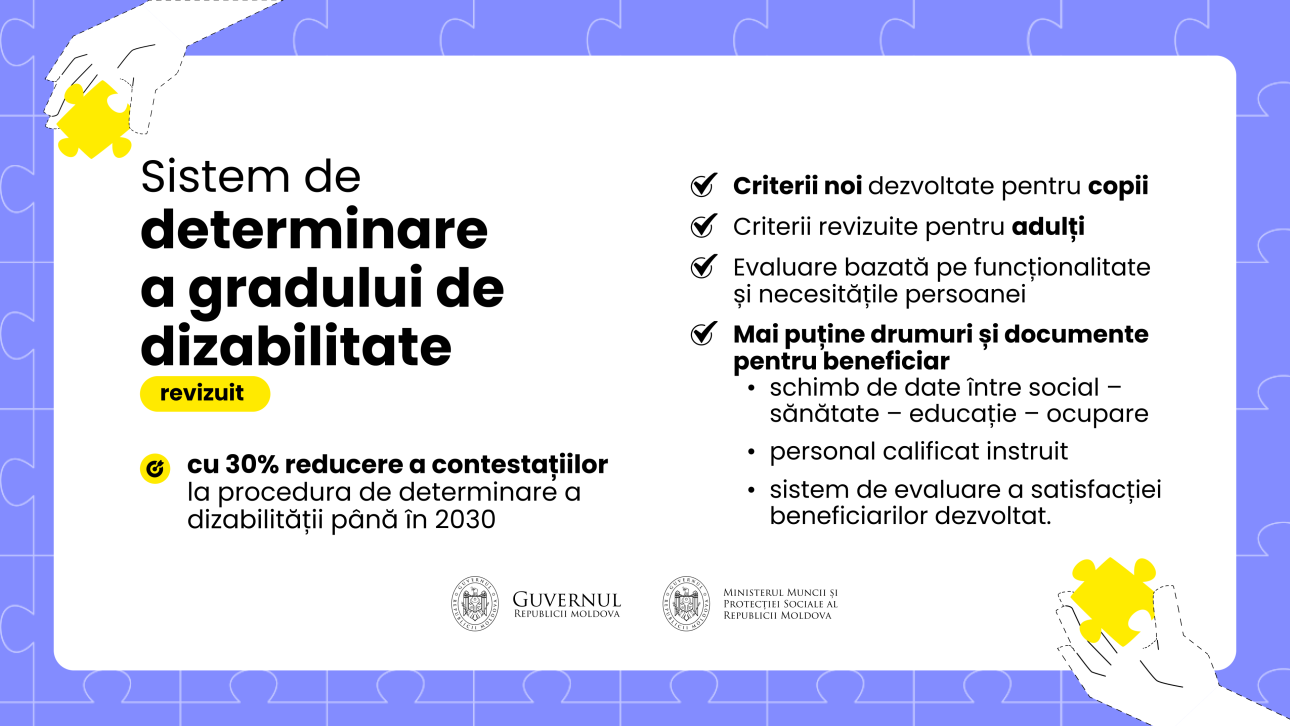
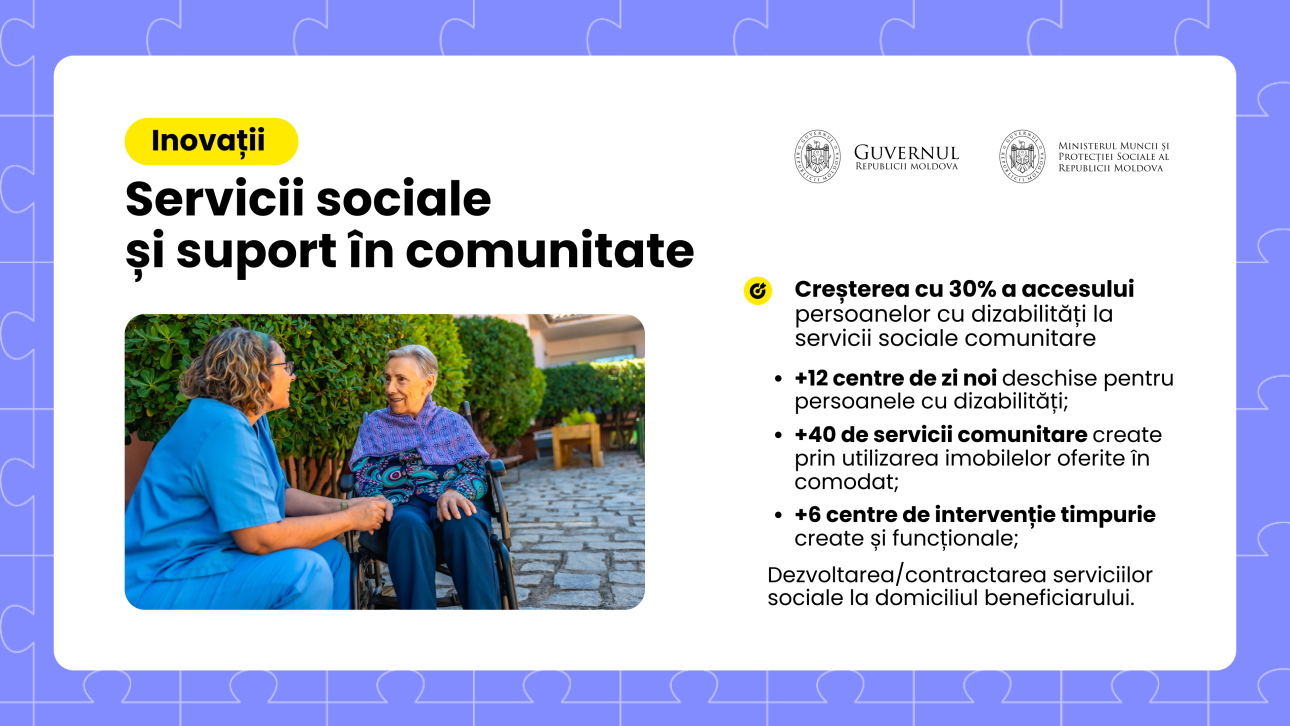
Among the main measures envisaged are the revision of the disability assessment system, with a focus on the person’s functionality and needs, as well as the simplification of procedures for beneficiaries. At the same time, access to social services aimed at preventing institutionalization and providing community-based support is to increase by 30%, including through the opening of 12 day centres, the creation of 40 community-based services and 6 early intervention centres.

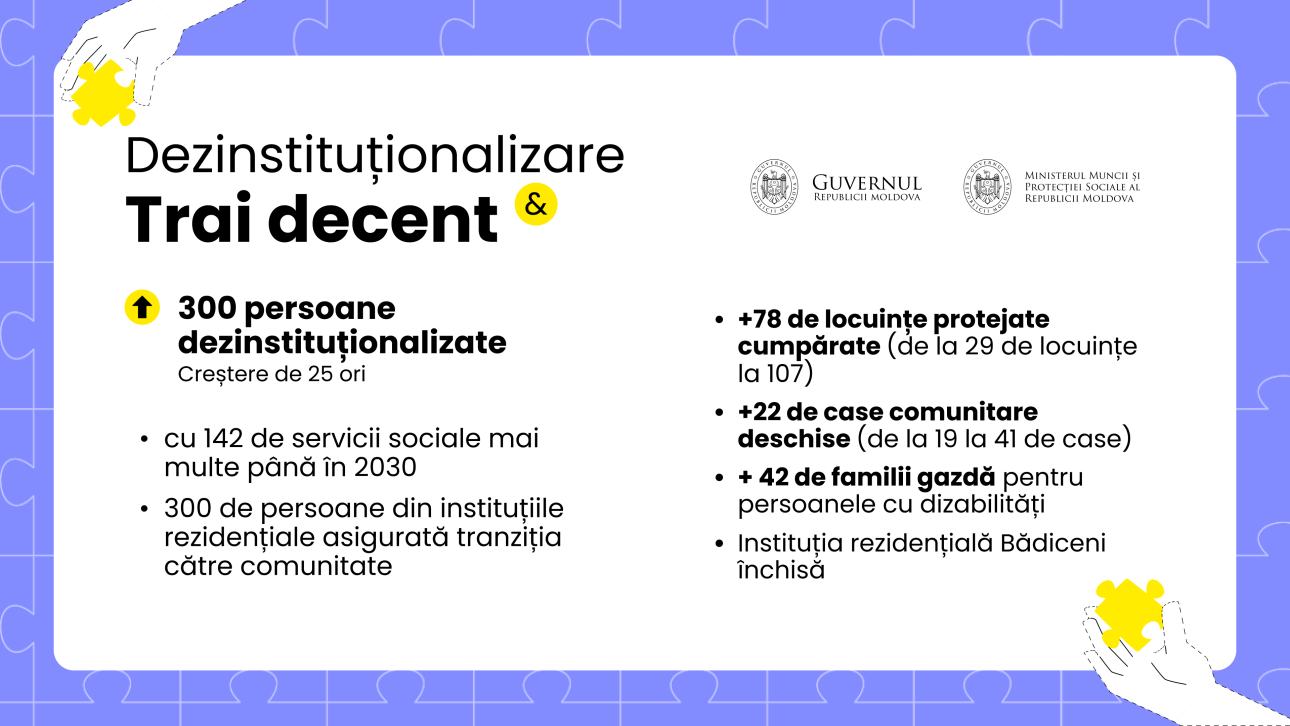
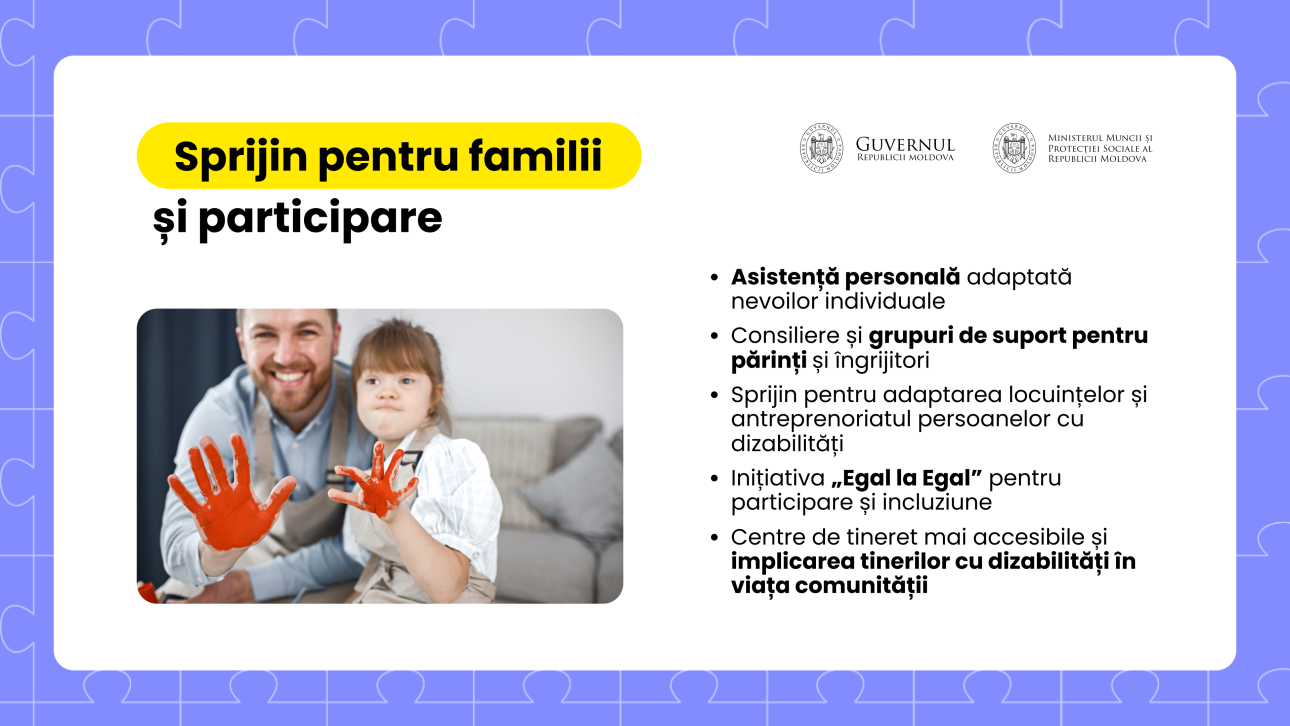
A separate priority is deinstitutionalization and support for independent living. The Program provides for the transition into the community of 300 persons currently living in residential institutions and the development of 142 additional social services, including 78 supported housing units, 22 community homes and 42 host families. The network of supported housing units will increase from 29 to 107, and community homes from 19 to 41, while the number of host families will grow by 30. The reorganization of five temporary placement centres is also planned, according to the beneficiaries’ care and support needs.

“Disability reforms place the person with a disability and their right to a dignified and independent life at the centre. Through the National Program 2026–2030 we will expand community services, accelerate deinstitutionalization and provide stronger support for families. We want a system that offers persons with disabilities equal opportunities and the possibility to participate actively in community life, fully realizing their potential and aspirations,” Minister of Labour and Social Protection Natalia Plugaru said.

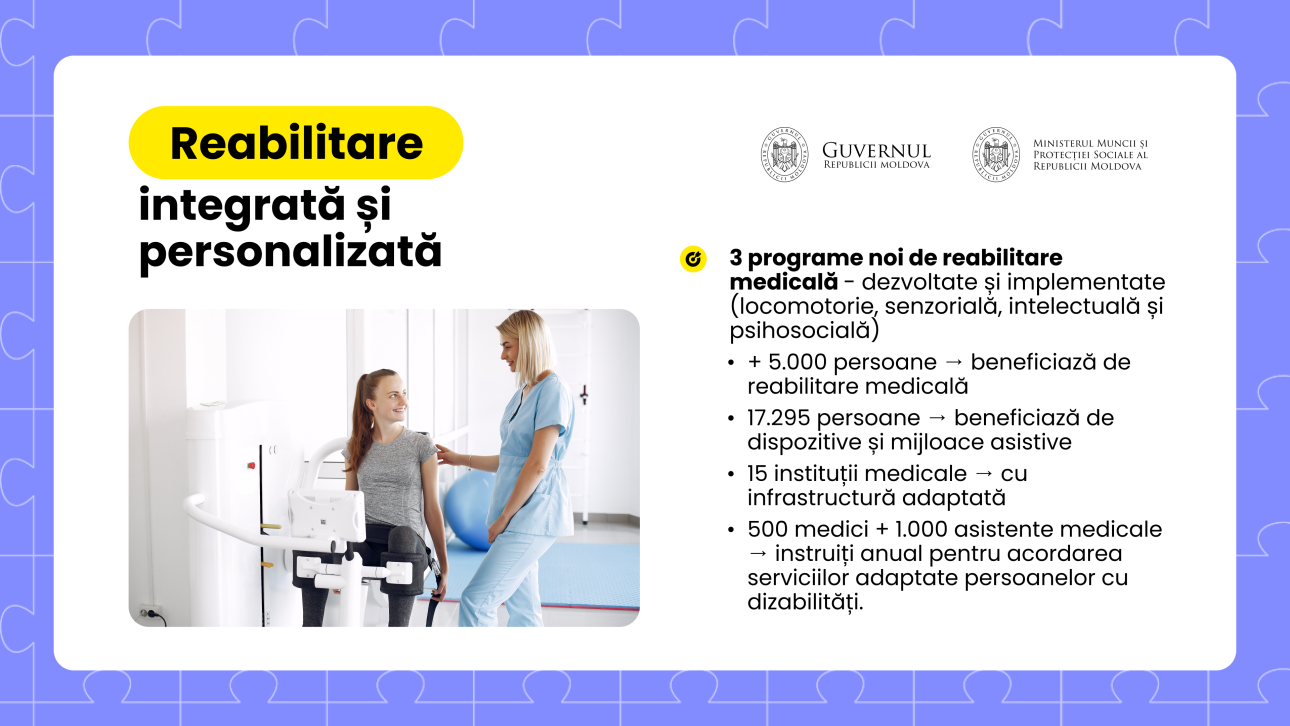
In the field of health, the Program focuses on integrated and personalized rehabilitation and on adapting medical services to the needs of persons with disabilities. By 2030, three medical rehabilitation programs are to be developed and implemented, benefiting around 5,000 people, while more than 17,000 people will gain access to assistive devices and technologies. In addition, the infrastructure of 15 medical institutions will be adapted to ensure better access for persons with disabilities. Significant emphasis will also be placed on training medical staff: each year, 500 doctors and 1,000 nurses will be trained to provide services tailored to the needs of people with disabilities.

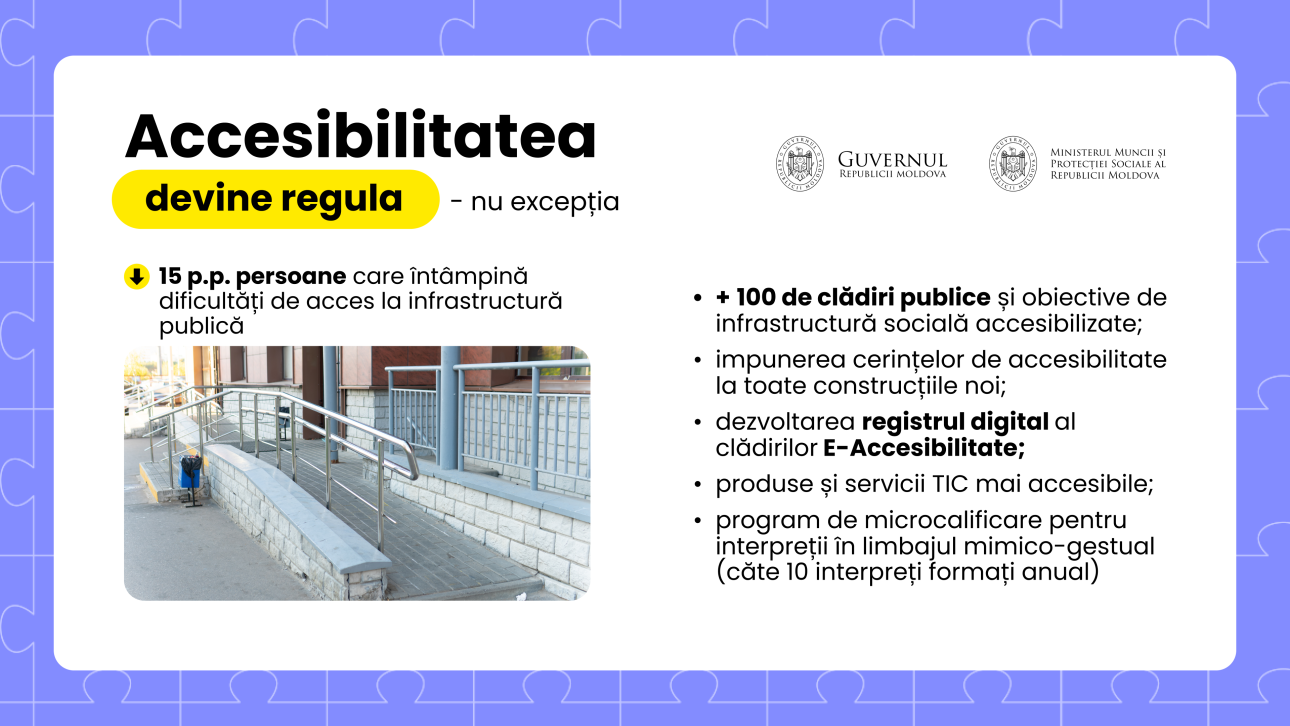
The Program also emphasizes the accessibility of infrastructure and public services. Around 100 public buildings and social infrastructure facilities are to become more accessible, with accessibility requirements applied to new constructions and the development of the digital register E-Accessibility.

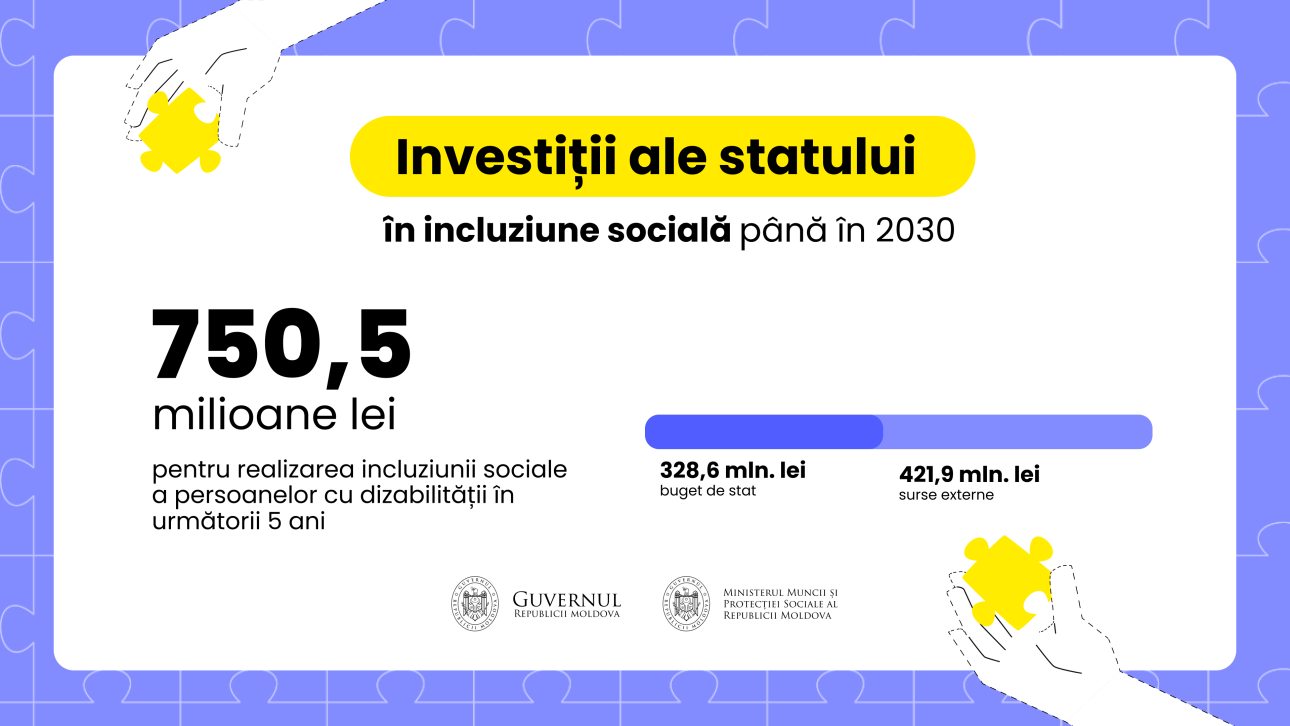
To implement social inclusion measures over the next five years, an estimated 750.5 million lei will be required, of which 328.6 million lei will come from the state budget and 421.9 million lei from external sources. The partners supporting the implementation of the Program are OHCHR, UN Women, Soros, WHO, UNFPA, UNICEF and UNDP.

Also at today’s meeting, the Government approved the reorganization of the Public Institution Vocational School No. 11 in Chișinău into the Multifunctional Social Services Centre for People with Disabilities. The new institution will contribute to the development and diversification of specialized and integrated social services for persons with disabilities.

“The day centre will host about 70 beneficiaries. We will have a solution for families who have children in need of socialization and care services after completing the 9th grade. Thus, their parents will be able to continue their professional activity,” said Minister Dan Perciun. Students of the current vocational school will be able to complete their studies in the institution in which they were enrolled, by late June 2027.

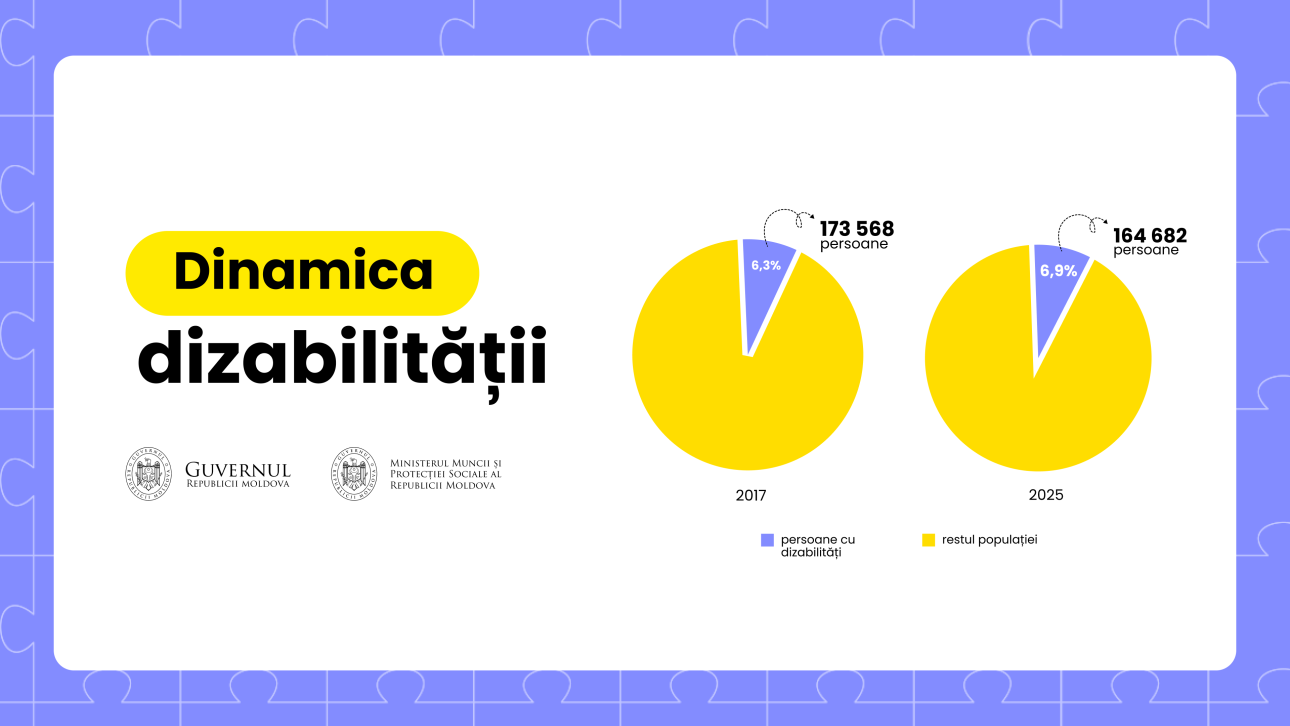
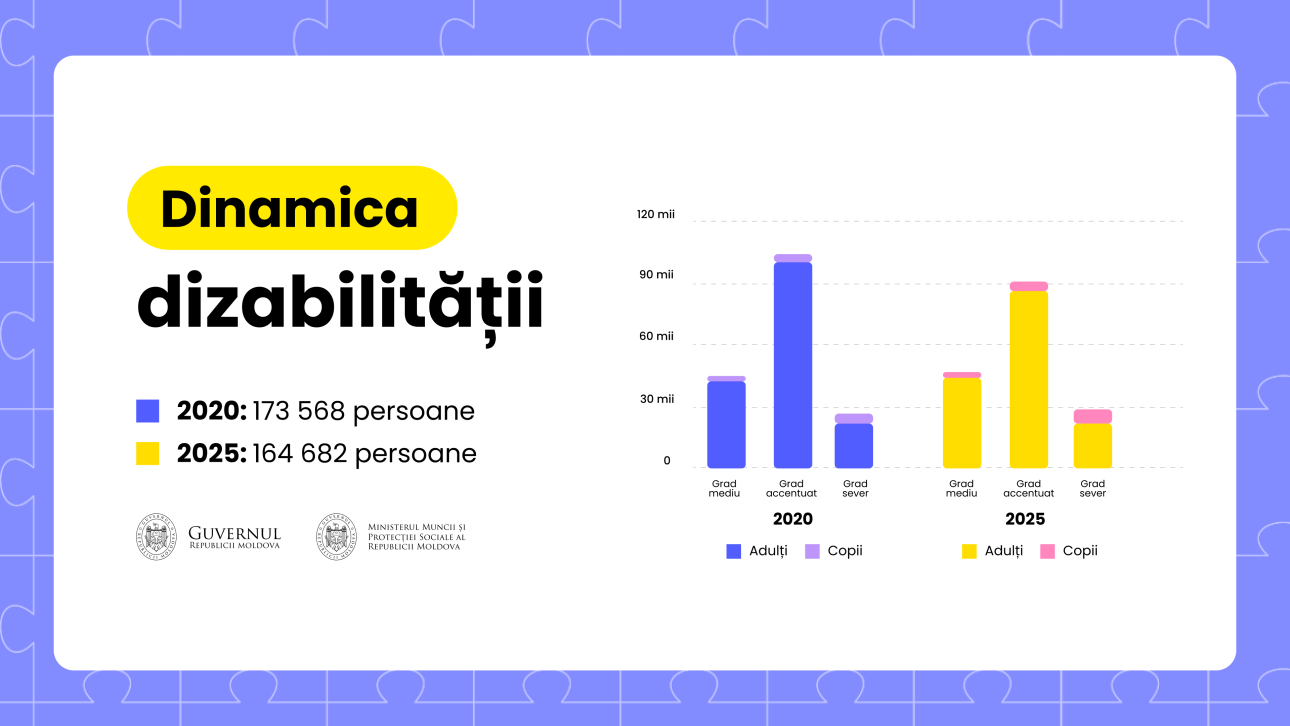
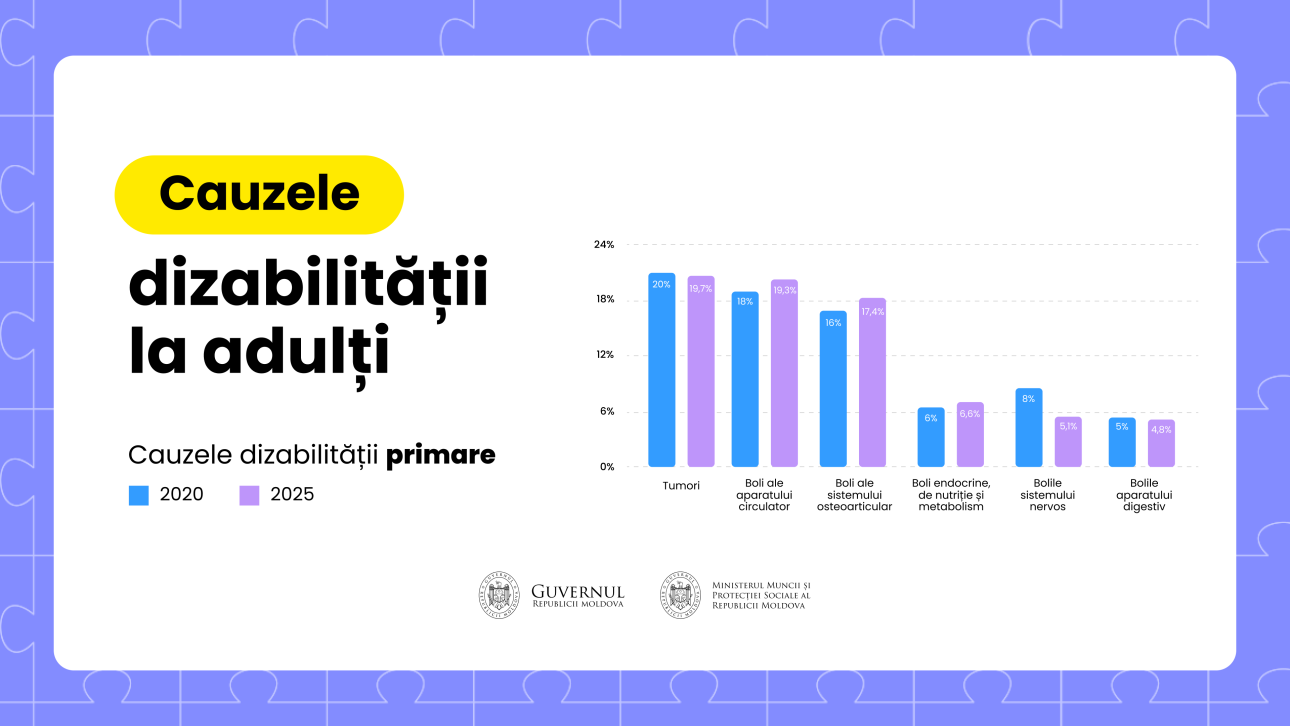
There are 164,682 people with disabilities in the Republic of Moldova, of whom 28,278 have severe disabilities, 90,171 have pronounced disabilities and 46,233 have moderate disabilities. The share of persons with disabilities in the country’s population has increased from 6.3% in 2017 to 6.9% in 2025, and in the case of children from 1.71% to 2.7%, developments that highlight the need to strengthen support services and inclusion measures.
 Facebook
 Instagram
 X/Twitter
 Telegram
Speaker spoke with Turkish Parliament member about development of Gagauzia and strengthening partnership with Turkey
Moldova and Turkey to strengthen economic and investment partnership
Prime Minister held talks with Latvian counterpart
Wage Law: Government announces one-off compensation payments from October and public sector salary increases starting 1 January 2027
President received bipartisan delegation of U.S. House Appropriations Committee
President meets with Turkish MP, Vice President of ruling AK Party
Government approves Implementation Program for Education 2030 Development Strategy
Moldovan driving licences to be recognized in Latvia
Famine caused by Soviet totalitarian regime in 1946–1947 is to be officially recognized as crime against humanity
Clearer rules for storing petroleum products intended for emergency situations
Government increases budget for supporting investments in manufacturing industry to 4 billion lei
Over 400 mayors attend consultations on investments for amalgamated localities
Moldovan cities benefit from European cooperation and funding through URBACT IV Programme
Government State Secretary for Reintegration meets Ambassador of Czech Republic to Moldova
Government gradually standardizing tax regime applied to goods imported by economic operators from Transnistrian region
Energy Ministry to have new deputy secretary general
Designated Ministers of Economy and Agriculture to be sworn in on Friday
Restricted access to Eugen Doga International Airport on August 27-31
 National Bank of Moldova
29 new regional development projects included in 2025-2027 Single Programming Document
Government gradually standardizing tax regime applied to goods imported by economic operators from Transnistrian region
Head of the Reintegration Policy Bureau has meeting with Ambassador of Belgium to Moldova
Lack of own premises remains main obstacle to development of Romanian-language educational institutions in Transnistrian region
Deputy Prime Minister for Reintegration and Ambassador of Ukraine to Moldova approach current issues on Transnistrian case

Moldovan PM says appointment of Eugeniu Osmochescu to Agriculture to allow government to bring more economic logic to such an important field
Moldovan PM explains why he chose Claudiu Nasui for economy portfolio: “We need brave people, who do not shy away even from difficult problems”
Voted by parliament: Moldova to be able to automatically exchange police data with EU member states
Evaluation Commission challenges decision of Superior Council of Magistracy on judge at Supreme Court of Justice of Moldova
PHOTO // Environment Ministry of Moldova warns water reserves in Novodnistrovsk lake dropping alarmingly
ARMENPRESS: Armenia grants over 10,500 residence statuses to foreigners in first half of 2026
Head of the Reintegration Policy Bureau has meeting with Ambassador of Belgium to Moldova
Moldova to be able to exchange DNA data with other states for investigation of serious crimes
Voted in final reading: Moldova's Electoral Code supplemented with provisions on postal voting, organization of elections in Gagauz autonomy
Yellow Code for heavy rain in Moldova, in force for most of country on August 26
PHOTO // Exhibition dedicated to country's foreign path inaugurated at National Museum of History of Moldova
Currency liberalization: 250,000-euros ceiling without authorization of National Bank of Moldova, foreign currency payments in certain commercial units
Lack of own premises remains main obstacle to development of Romanian-language educational institutions in Transnistrian region
Romanian-language TV programmes, domestic content to have a greater share in audiovisual space of Moldova; legislative initiative supported by parliament
Eugeniu Osmochescu accepts position of Minister of Agriculture and Food Industry
Deputy Prime Minister for Reintegration and Ambassador of Ukraine to Moldova approach current issues on Transnistrian case
Receive the latest news directly to your email

Receive the latest news directly to your email