
Currency liberalization: 250,000-euros ceiling without authorization of National Bank of Moldova, foreign currency payments in certain commercial units
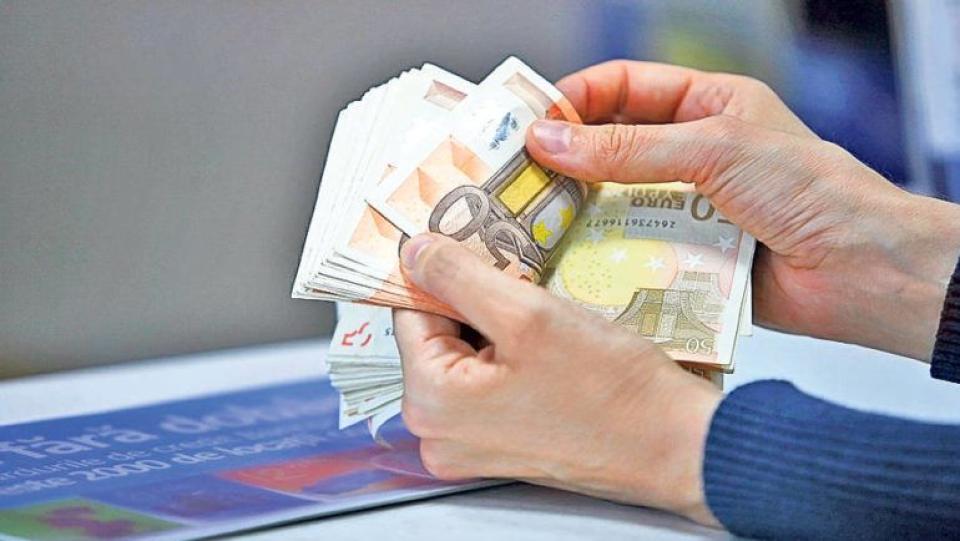
The ceiling for conducting certain capital foreign exchange operations without authorization from the National Bank of Moldova (BNM) will be increased to 250,000 euros and payments in foreign currency will be allowed in specific commercial units in international airports and on board of aircrafts operating international flights. At the same time, non-resident individuals will be able to pay in foreign currency for hotel services provided in Moldova. The parliament today approved, in the first reading, a draft law that provides for a new stage in the liberalization of capital foreign exchange operations, as part of the process of aligning national legislation with European Union rules.

State Secretary of the Ministry of Finance Elena Grumeza said that the draft represented the second stage of liberalizing capital foreign exchange operations, the first having been approved in 2025.

According to the state secretary, the Treaty on the Functioning of the European Union enshrines the free movement of capital and payments as one of the four fundamental freedoms of the EU and eliminates restrictions on the movement of capital between member states, as well as between member states and third countries. Currently, national legislation provides for certain capital foreign exchange operations that require prior authorization on behalf of the BNM. The liberalization schedule assumed by Moldova entails the gradual elimination of these restrictions in three stages, with the goal of full liberalization by the time of EU accession, Grumeza noted.

“In the first place, the authorization threshold applied by the BNM to certain operations, such as the purchase of foreign financial instruments, granting of loans, financial credits and guarantees to non-residents, is being increased. It is to be set at 100,000 euros, entering into force one month after the date of publication, but as of January 1, 2028, the ceiling will be further raised to €250,000.

Another amendment introduced at this stage concerns giving foreign exchange offices the right to provide payment services in order to increase the financial inclusion of the population. At the moment, they only provide foreign exchange services, but under the new provisions, they will be able to act as payment service providers.

The third change is the removal of the authorization regime for opening accounts with foreign banks by residents of Moldova during the period in which they establish their residence abroad or during their stay there,” noted the state secretary of the Finance Ministry.

The head commission for economy, budget and finance, Dorian Istratii, specified in the commission’s report, that the new ceilings would also apply to certain personal operations, such as donations and loans between individuals, the opening of certain accounts abroad, foreign exchange operations abroad, as well as other capital operations.

“The rules concerning operations of a personal nature have been clarified, namely, the new provisions stipulate that persons who emigrate may transfer the assets they hold at the time of establishing their residence abroad or during their stay abroad (Art. 15); the right has been established for resident individuals who emigrate (at the time of establishing their residence abroad or during their stay abroad) to open accounts with non-resident banks without BNM’s authorization (Art. 13); the right has been established for resident non-bank payment service providers (PSPNR) to open accounts with non-resident banks without BNM’s authorization, as necessary for carrying out the activities under the license issued by the BNM (Art. 13),” the commission’s report reads.

The draft also restores the right of resident individuals to make payments in foreign currency, including cash, in commercial units located in international airports beyond customs and border control areas, at international border crossing points, or on board of aircrafts performing international flights.

At the same time, the prohibition on non-resident individuals paying in foreign currency for hotel services provided in Moldova is removed.

During the debates, the lawmakers asked whether the liberalization of foreign exchange operations and the increase in ceilings does not create risks related to capital outflows from Moldova.

Elena Grumeza stressed that the measures do not remove the BNM’s control and supervision mechanisms.

“We cannot restrict citizens from doing what they want with their money. When the amount exceeds the ceiling, they need BNM’s authorization, but such restrictions do not exist at the European level,” said the state secretary.

According to the state secretary, the liberalization schedule was drawn up by the BNM with the support of an IMF technical assistance mission in 2024 and is based on an analysis of the European framework and the steps needed to align Moldova with it.

The commission for economy, budget and finance found that the draft was in line with IMF recommendations and with the recommendation of the European Commission in the 2025 Enlargement Report on Moldova, which calls for the continued gradual liberalization of capital movements.

At the same time, the measures fall within the strategic objectives of the BNM regarding the promotion of the liberalization of capital foreign exchange operations.

The report of the Commission for European Integration underlines that, from the perspective of EU law, the project falls within Cluster II – “Internal Market”, Chapter 4 – “Free movement of capital”.

“The Commission notes that the legislative initiative aims to remove certain administrative barriers and simplify the regime applicable to foreign exchange operations, including by increasing value thresholds and gradually liberalizing certain capital operations carried out by residents and non-residents. At the same time, the draft maintains the supervisory and reporting mechanisms necessary to monitor foreign exchange operations. These interventions are part of the process of progressive liberalization of foreign exchange operations, which is to be carried out in successive stages within the process of accession to the European Union,” said the head of the Commission for European Integration, Marcel Spatari.

The Commission for European Integration will monitor the implementation of subsequent stages provided for under Chapter 4 “Free movement of capital”, including the regulatory measures needed to continue the liberalization of foreign exchange operations and to adjust the subsequent regulatory framework of the BNM.

The parliament is to consider the draft in the second reading.
 Facebook
 Instagram
 X/Twitter
 Telegram
PHOTO GALLERY // National Wine Day 2026 - ''The Wine that United Us''
VIDEO // National Wine Day reaches its 25th edition in Moldova; The Wine that Unites brings together producers, tourists, international guests
National Wine Day 2026 in Moldova: 25 years of tradition, award-winning wines, industry conquering international markets
PHOTO GALLERY // National Wine Day during 25 years: celebration of Moldovan wine in photographs from MOLDPRES Archive
Moldovans save almost 15 million euros in one year through SEPA transfers; Governor of National Bank of Moldova: “Trust is built on a strong banking sector”
PHOTO // Energy Minister presents investors with objectives of Energy Strategy 2050: Energy directly influences companies’ competitiveness
MOLDPRES INTERVIEW // Moldexpo Exhibition Centre on threshold of major transformation; director Zinaida Popa: “Business must meet and create connections”
Moldova seeks to attract more freight to TRACECA corridor and proposes facilities for carriers
Energy Minister: Gas prices in Moldova not highest in Europe
Energocom company of Moldova estimates gas price for October at 76.35 euros/MWh
PHOTO GALLERY // Moldova Innovation Fund, officially launched with European Union's support
Revenues of 63.3 billion lei collected in Moldova's national public budget in first half of 2026
Government seeks solutions to increase budget for energy compensation during cold season
VIDEO // Country's energy resource supply amid state of emergency: Energy Minister presents updated information
Speaker: Modernizing National Army and adapting defense capabilities to new security realities require updating strategic documents
Moldovan president, U.S. senator discuss Moldovan-American cooperation, Moldova’s role in regional security
Director of Konrad Adenauer Foundation Office in Moldova says dialogue within Security Forum must turn into concrete actions
Head of NATO Liaison Office in Chisinau says Security Forum generates valuable ideas, due to help Moldova become more resilient, safer
Moldovan PM tells business people government willing to build Europe’s most entrepreneur-friendly country
Foreign Affairs Ministry's state secretary says Moldova firmly committed to path toward EU, determined to be part of safer Europe
Railway of Moldova enterprise to increase freight transport tariffs by 15 per cent as of November 1
 National Bank of Moldova

Moldovan president, U.S. senator discuss Moldovan-American cooperation, Moldova’s role in regional security
Moldovan PM tells business people government willing to build Europe’s most entrepreneur-friendly country
Environmental protection experts discuss critical hydrological situation in Dniester River basin
Moldovan PM attends enlarged meeting of Administrative Council of Congress of Local Authorities of Moldova
Moldovan deputy PM for reintegration has meeting with Lithuanian officials

Moldova's Diaspora children can enroll in free Romanian language courses
Eight violations of Moldova’s Airspace recorded in recent days; five cause explosions on ground
Moldova Security Forum 2026 // Moldovan president's adviser on national defence and security says Russia’s strategy not aimed only at winning elections, but at undermining trust in democracy
Moldovan deputy PM for reintegration has meeting with Lithuanian officials
Foreign affairs minister says Moldova ready to open next four EU negotiation clusters
VIDEO // Intelligence and Security Service chief, at Moldova Security Forum 2026, says money replaced ideology in attempts to destabilize Moldova
Moldovan president has meeting with NATO Deputy Secretary General
Moldova Security Forum 2026 // NATO Deputy Secretary General says strong, stable, resilient Moldova contributes to stability, resilience on NATO’s border
Elections in Gagauzia: 83 candidates registered for Popular Assembly
European Commissioner for Defence and Space says Moldova can count on EU's support in security, defence
Moldova Security Forum 2026 // Moldovan official says resilience not defined only by preventing Shocks, but also by systemic capacity to maintain core functions
Moldovan president says local power must be in mayor’s office
Moldova must accelerate investments under Growth Plan; EU Ambassador explains conditions for funding
DOC // New general structure, staffing of Moldova's National Army enter into force
EU Ambassador to Moldova says elections in Gagauzia must be free, democratic, without foreign interference
EU seeks solutions to support Moldova in energy crisis, to mobilize other donors
Receive the latest news directly to your email

Receive the latest news directly to your email