
Cyprus' Presidency of EU Council under sign of support for Ukraine; Moldovan president says looks forward to upcoming months with hope
Support for Ukraine and promoting reforms to enhance the competitiveness of the European economy are on the priority agenda of the Cyprus’ Presidency of the EU Council, taken over on the first day of 2026. The authorities of Moldova have high hopes for support on the European path and welcome Nicosia's assumption of the rotating presidency.
President Maia Sandu: "We Look Forward to the Upcoming Months with Hope and Confidence"
President Maia Sandu welcomes Cyprus' assumption of the EU Council presidency and sent a congratulatory message to the Cypriot president. At the same time, Maia Sandu thanked the Danish authorities, who held the presidency in the second half of 2025.
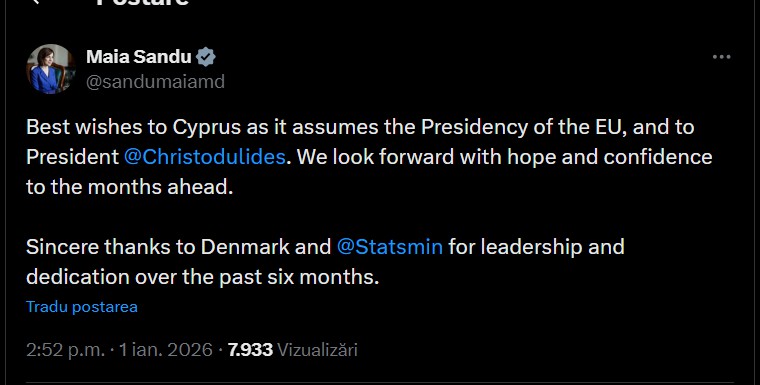
"Best wishes to Cyprus, which takes over the Presidency of the European Union, and to President Christodoulides. We look forward to the upcoming months with hope and confidence. Sincere thanks to Denmark and the prime minister for the leadership and dedication proved over the past six months," reads Maia Sandu's message posted on platform X.
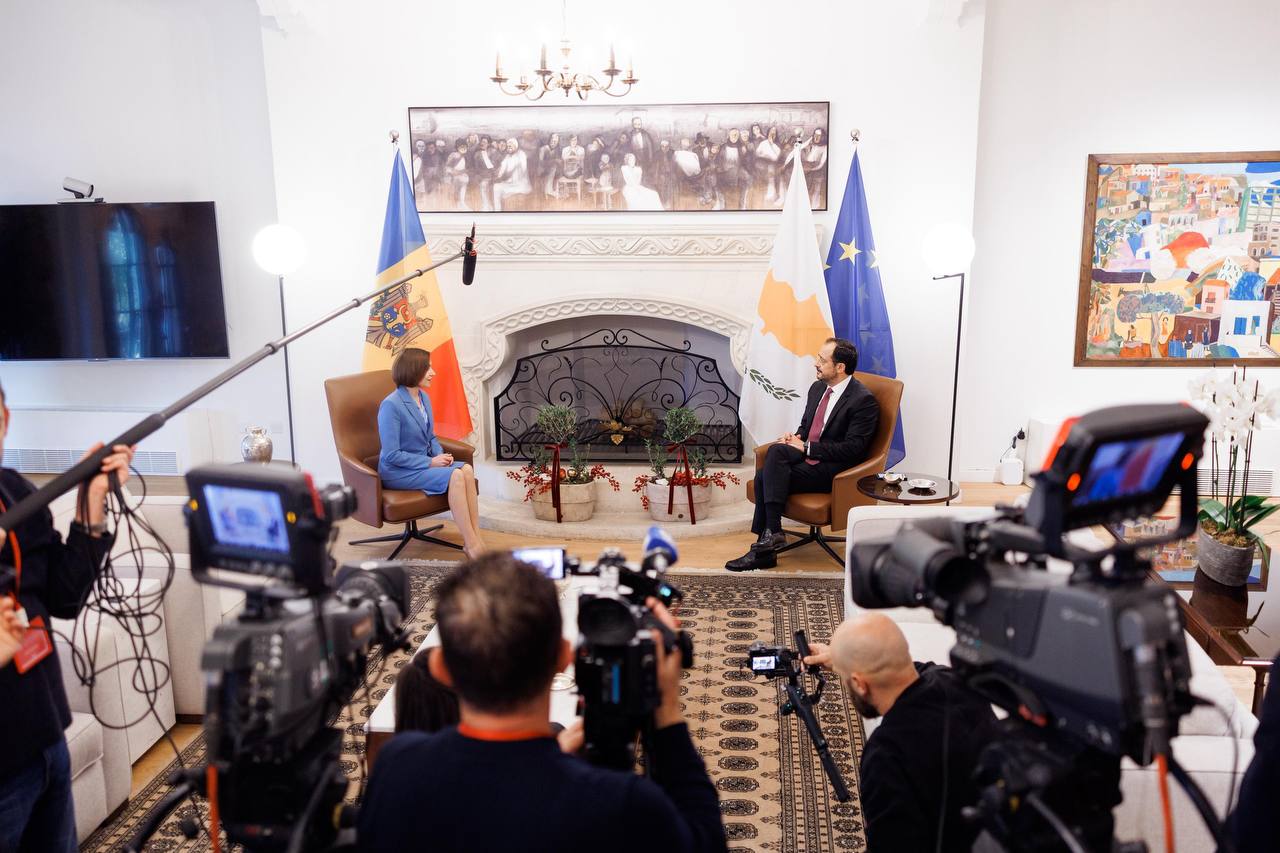
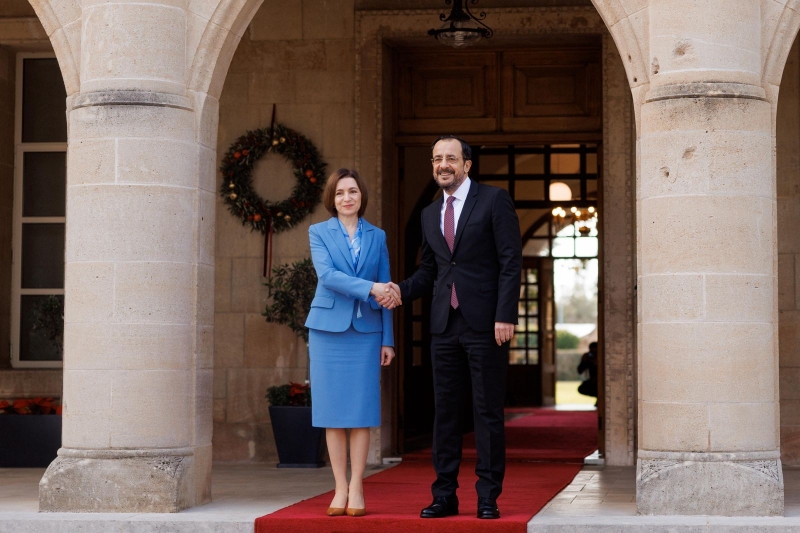
President Maia Sandu highlighted the importance of the support of EU member states at this crucial stage, emphasizing the role Cyprus can play during its EU Council presidency, at her first visit to Cyprus on December 12, 2025.
The discussions with the President of Cyprus focused on the European path of Moldova, the security situation in Europe, joint support for Ukraine and efforts needed to restore peace on the continent, as well as the prospects for deepening the Moldovan-Cypriot relations. The head of state reiterated the country's firm commitment to advance in the process of joining the European Union and to consistently implement the necessary reforms for alignment with community standards.The mandate of Cyprus, which will last until June 30, 2026, involves coordinating EU Council’s meetings at the ministerial level and facilitating negotiations between the 27 member states.
Cyprus to Exercise Presidency Under the Motto "An Autonomous Union. Open to the World"
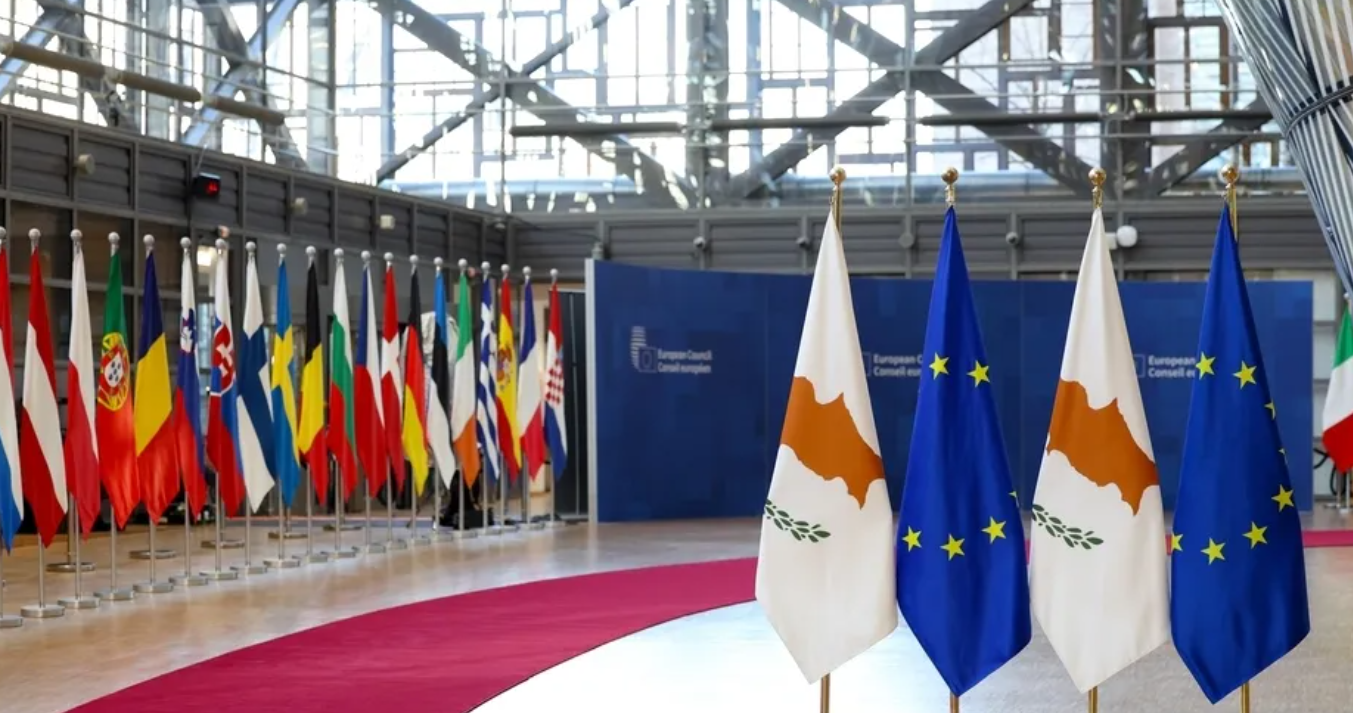
Starting January 1, Cyprus assumed the presidency of the EU Council, a role exercised in rotation by member states for six-month terms. The Cypriot mandate runs from January to June 2026, following the one held by Denmark. On this period, authorities of Nicosia will coordinate EU Council’s meetings at the ministerial level and act as mediators in negotiations among the 27 member states.
The EU Council Presidency is responsible for coordinating the legislative agenda, facilitating dialogue between member states, and representing the Council in relations with other European institutions. The state holding the mandate does not unilaterally set the Union's policies, but plays a central role in advancing ongoing files and managing political compromises.
The European agenda for the first half of 2026 will include more sensitive files. Among them, there are reforms aimed at increasing the competitiveness of the European economy, continued support for Ukraine in the context of the war triggered by Russia and the adoption of new measures regarding irregular migration. Migration stays a subject with divergent positions among member states, and Council debates are expected to be complex, particularly concerning the allocation of responsibilities and control of the Union's external borders.
Negotiating the Future Multiannual Budget of the EU
One of the most challenging files to be managed by the Cypriot presidency is negotiating the EU's future long-term budget. The discussions on the Multiannual Financial Framework are scheduled in a context marked by increased budgetary pressures, the need to fund security priorities and the costs of economic and energy transition. These negotiations involve significant position differences between net-contributing and net-beneficiary states, as well as among various public policy priorities promoted at the European level.
During the Cypriot mandate, more legislative projects already in procedure will require continued negotiations between the Council, the European Parliament, and the European Commission. The role of the Council’s presidency will be to maintain a balance between the interests of member states and the positions of other European institutions, in order to advance or finalize the files.
Internal Combustion Engines Back on the EU Agenda
An issue with significant economic and industrial impact that will reach the Council's agenda is the new proposals from the European Commission regarding relaxing the goal of completely phasing out internal combustion engines by 2035. The topic has direct implications for the European automotive industry, climate policies and consumers, and the positions of member states are different. Council debates are expected to be intense, given the pressures exerted by manufacturers and the environmental policy goals assumed by the Union.
Cyprus has been an EU member state for 21 years, with a population of approximately one million inhabitants and has a particular geopolitical context. The island is divided between the southern part, under the control of Greek Cypriot authorities, and the northern part, administered by Turkish Cypriots.
On January 1, 2026, Cyprus took over the rotating presidency of the EU Council from Denmark. The major priority of the Danish presidency was creating a strong Europe, taking responsibility for its own security, fortifying its competitiveness, while ensuring the green transition.


 Facebook
 Instagram
 X/Twitter
 Telegram
Government makes personnel changes at Ministry of Health, Environment Agency and State Chancellery
Speaker congratulates Romania’s new Government, led by Luca Niculescu
Moldovan PM congratulates Romanian counterpart on assuming office as Romania’s prime minister
Moldovan president tells new Romanian government: “Romania can always count on us”
Moldovan Central Electoral Commission accredits 16 international observers for elections of Gagauzia's bashkan
Designated Romanian PM: “Romania must be Moldova’s main support in joining EU”
Republic of Moldova has four new ambassadors. Appointment decrees published in Official Journal
Prime Minister explains why Transnistrian region was not included in administrative-territorial reform
Moldovan MP says Foreign Affairs Ministry sends protest note to Ukraine, after Ukrainian border guards illegally crossed Dniester River
Moldova's foreign affairs minister, Ambassador of Slovakia discuss bilateral cooperation
Deputy Prime Minister meets ambassadors of countries in Weimar format
Irina Gutnic arrived at Chisinau city hall to resume duties as deputy mayor
DOC // Olga Roșca and Stanislav Secrieru appointed as advisers to President Maia Sandu
Spain willing to share experience with Moldova in training magistrates, combating corruption
President attends commemoration in Budapest marking 70th anniversary of 1956 anti-communist revolution
Violence can escalate to femicide: How to recognize warning signs and where victims can seek help
PHOTO GALLERY // Romanian Armed Forces Day celebrated in Chișinău with exhibition dedicated to international military missions during interwar period
PHOTO // President honors courage of Hungarian people, 70 years after 1956 anti-communist Revolution
Ukraine condemns violation of Moldova’s airspace
Moldovan president condemns incident in Telenesti district: “Russia’s war continues to endanger citizens’ lives”
Staff member of Russia's Embassy in Moldova to be declared persona non grata after explosive-laden drone crashed in Telenesti district
 National Bank of Moldova

Moldovan President meets with Hungarian President and Prime Minister
President attends commemoration in Budapest marking 70th anniversary of 1956 anti-communist revolution
Moldovan PM meets young people who won three medals for Moldova at World Robotics Championship
Moldovan PM, vice-president of European Investment Bank discuss accelerating development projects in Moldova
Moldovan deputy PM for reintegration participates in marking 30 years of work of theoretical lyceum from Grigoriopol

Moldovan PM, vice-president of European Investment Bank discuss accelerating development projects in Moldova
Two cases of national airspace violations recorded in Moldova in past week; Defence Ministry reiterates need to strengthen air defense capabilities
Moldovan deputy PM for reintegration participates in marking 30 years of work of theoretical lyceum from Grigoriopol
Drone falls in central Moldova village; police secure area
First at November 1, 2026 elections in Moldova: voters to be able to vote using digital ID from EVO app
National Bank of Moldova simplifies foreign exchange rules: transfers, investments of up to 100,000 euros without authorization
PHOTO, VIDEO // Moldovan head of state president welcomed by Hungarian president at Sándor Palace in Budapest
Drone illegally entered airspace of Moldova, disappears from radar
PHOTO GALLERY // Two hospitals of Moldova start process of energy modernization
Two members of Judges' Evaluation Commission to end activities on 31 December 2026
Energy consumption in ten hospitals in Moldova expected to drop by 40%; first two hospitals begin renovation
COMMENTARY on Tiraspol event
CHINA EXPO – Christmas Sale to be held for first time at Moldexpo on December 17
State Secretary for Reintegration: Revenue from taxes imposed in Transnistrian region will return to population through Convergence Fund
MOLDPRES INTERVIEW // What should a woman in an abusive relationship know? Dominika Stojanoska, UN Women Country Representative: “The violence is not her fault and she does not have to go through this situation alone”
Joint border control, energy projects on Prime Minister’s agenda during visit to Kyiv
Receive the latest news directly to your email

Receive the latest news directly to your email