
Government declares energy sector alert in connection with Middle East war
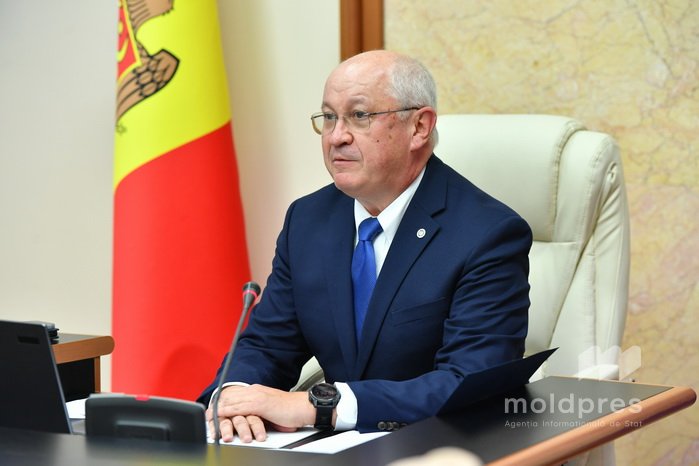
A state of alert has been declared in the energy sector at the national level in the Republic of Moldova for a period of 60 days, starting on March 4. The decision was approved today by the Government. Prime Minister Alexandru Munteanu said that it is a preventive measure aimed at protecting the country’s energy security.

The state of alert was introduced in order to prevent disruptions in the functioning of the energy sector, to protect the vital functions of the state and to ensure the security of the energy supply.

The decision was taken based on an integrated risk indicator analysis carried out by the National Crisis Management Center, taking into account the assessment of risks related to the security of supply with petroleum products and electricity.

“Today’s meeting is a bit different. I would like to propose that we supplement today’s agenda with an item on declaring a state of alert in the energy sector. Certainly, since Saturday, from the early hours of the morning, we have been closely monitoring what is happening in the Persian Gulf. We understood that this is a major crisis, a war whose duration we do not know, and we took the first actions as early as Saturday. The first measure was to think about the security of the state and the security of our citizens abroad; all embassies issued communications and we prepared plans. Then we started to analyze energy security and consider supply routes. Obviously, taking into account the war in the Persian Gulf, some supply routes have shifted and prices have already gone up today. It is a global crisis, affecting the whole world, and it affects us as well. We immediately activated our security protocols, the National Crisis Management Center, and we worked with all the relevant ministries and agencies on a plan, taking into account the scenarios going forward. The uncertainty is very high; we must consider a possible further escalation,” stated Prime Minister Alexandru Munteanu at the beginning of the Government meeting.

The Prime Minister stressed the need to address this situation professionally and to avoid speculation.

“This is not the first crisis we have gone through as a country, and I have the feeling it will not be the last. Any crisis must be approached with professionalism, seriousness, lucidity, with clear and cool heads. We must not panic; we need to react professionally, which is what we are trying to do and are already doing. I want to assure citizens that professionals are working, together with our partners. We are trying to take decisions proportional to the situation, to avoid escalating it, to avoid disproportionate situations and all kinds of speculation. This is an opportunity for consolidation; we must help one another. This is not the time to use this crisis for all sorts of declarative and speculative purposes. It is a global crisis from which we must emerge well prepared, lucid, and able to mitigate the shocks that already exist and those that could potentially appear,” the Prime Minister added.

The state of alert is a less strict regime than the state of emergency and is activated to prevent any risk of disruption in the supply of petroleum products and electricity, explained Prime Minister Munteanu. He assured that the supply of petroleum products and electricity is not and will not be interrupted, and that stocks for the next 30 days are guaranteed for consumption.

Main measures provided for under the state of alert

The Prime Minister outlined the main measures provided for under the state of alert. These include the temporary conditioning of petroleum product exports, which will be applied if stocks fall below safety thresholds. A priority will be domestic electricity consumption during peak hours, to protect the stability of the energy system. State reserves will also be replenished.

At the same time, the Prime Minister listed the reasons behind the decision to introduce the state of alert in the energy sector. It comes in the context of external developments that are influencing the regional energy market, Munteanu noted:

- increased volatility on oil markets amid the situation in the Middle East;

- destruction of Ukraine’s energy infrastructure as a result of repeated attacks by the Russian Federation, with effects on the stability and regional energy transport capacity;

- shutdowns or maintenance work at refineries in the region;

- regional competitive pressure on volumes available for export.


Director of the National Crisis Management Center, Serghei Diaconu: “The goal is to maintain sufficient stocks of petroleum products for domestic consumption”

Director of the National Crisis Management Center (CNMC) Serghei Diaconu stated that the purpose of declaring the state of alert is to maintain sufficient stocks of petroleum products for domestic consumption, to ensure continuity of electricity supply, especially during peak consumption hours, and to protect household consumers and critical infrastructure.

“The decision is based on the integrated analysis of risk indicators carried out at CNMC level, correlated with the assessment of the Ministry of Energy and ANRE. We are observing an accumulation of external factors: increased volatility on oil markets in the context of the situation in the Middle East; degradation of Ukraine’s energy infrastructure as a result of repeated attacks by the Russian Federation, with effects on the stability and regional capacity for energy transport; shutdowns or maintenance work at some refineries in the region. These elements reduce the safety margin of the energy system. Our responsibility is to intervene before these risks materialize,” he said.

Diaconu pointed out that the introduction of the state of alert is a legal instrument that allows for the rapid implementation of well-coordinated actions. The armed conflict in Iran has a direct impact on international energy markets, influencing oil and natural gas prices. According to estimates, around 20% of global oil deliveries and about 22% of global natural gas deliveries transit the Persian Gulf, especially the Strait of Hormuz. The temporary blocking of ship traffic in the area has generated a short-term supply deficit and led to rising prices on international exchanges. According to international experts, the situation in the Middle East could have a significant impact on global economic prospects.

The Crisis Cell of the Ministry of Foreign Affairs of the Republic of Moldova is operating on a permanent basis and continues to closely monitor security developments in the Middle East. So far, there are no casualties or injured persons among Moldovan citizens in the monitored states.
 Facebook
 Instagram
 X/Twitter
 Telegram
Adrian Băluțel appointed co-chair of Moldova–EU Parliamentary Association Committee
How future Constitutional Court judges will be selected. Parliament changes rules
Speaker: Elections in Gagauzia must be fair
Moldovan lawmakers held minute of silence in memory of victims of 11 September 2001 attacks
Moldovan Speaker to visit Budapest to persuade Hungarian authorities to support opening of EU negotiation clusters
Speaker on Local Public Administration Reform: Moldova’s new administrative map to have fewer than 10 regions
Deputy Prime Minister in Sofia: Bulgaria - reliable partner of Moldova and supporter of European path
Speaker on PAS participation in Gagauzia elections: For now, we have no decision
Speaker on Russia’s attack on Starokazacie, near Moldova’s border: It was deliberate. Civilian location was attacked
Moldovan foreign affairs minister has meeting with President of Bulgaria
VIDEO // Changes made to leadership of parliamentary commissions of Moldova
Moldovan PM announces simplified procedures for entrepreneurs, reform of inspections; about 80 permits might be eliminated or simplified
Moldovan MPs to convene at plenary meeting on September 10; agenda includes budget, energy security, EU legislation
Moldova, Israel strengthen cooperation in tourism
Moldovan parliament speaker in Budapest says Moldova, Hungary can open new chapter in relations between parliaments of two countries
Environment minister says Moldova to reduce Dniester’s flow, to conserve water reserves
Moldova's National Anticorruption Center, Italy’s Financial Guard to exchange information to combat economic, financial crime
Natural gas prices on European exchange continue to rise; energy minister says international energy crises directly affect Moldova
EU Ambassador: EU remains firmly committed to supporting justice reform in Moldova
President at Forum on justice reform and fighting corruption: Building rule of law most complicated commitment in EU accession program
Government approves ratification of agreement on construction of bridge over Prut River and first highway section in Moldova
 National Bank of Moldova
Topics examined at meetings of Moldovan parliament's standing commissions on September 15–16, 2026
Investments in energy efficiency of public buildings exceeded €348 million in 2019–2025
Agreement between Moldova and Romania to continue construction of Ungheni–Ungheni bridge and modernize road infrastructure
Republic of Moldova to receive €4.3 million grant to strengthen capabilities of National Army
Energy communities – new legal form of organization for everyone who produces, consumes, stores energy together

Republic of Moldova to receive €4.3 million grant to strengthen capabilities of National Army
Energy communities – new legal form of organization for everyone who produces, consumes, stores energy together
President at Justice Reform and Combating Corruption Forum: Judicial independence requires integrity and accountability
Republic of Moldova among countries in EU enlargement perspective
Moldova to launch e-Consulate system, to modernize delivery of consular services for Diaspora citizens
Special access measures at Chișinău Airport remain in effect by 17 September
VIDEO // Justice reform and fight against corruption - focus of discussions at international forum in Chișinău
Moldovan Railways state enterprise to be reorganized by late 2026
Investments of 326 million lei to modernize heating systems in Chișinău and 17 million euros for those in Bălți
Modernization works for district heating systems of Chisinau, Balti cities to be declared projects of national public utility
Ministry of Economic Development and Digitalization has new state secretary
Government appoints new directors at SFS, CNAM, APP, AIPA
Government announces new appointments to State Tax Service, APP, CNAM, AIPA
European Parliament approves temporary trade liberalization measures for Armenian products
Open Government Action Plan 2026–2028: Parliament Secretariat and civil society discussed future commitments
Companies from both banks of Dniester explore Romanian market to identify new opportunities for business expansion
Receive the latest news directly to your email

Receive the latest news directly to your email