
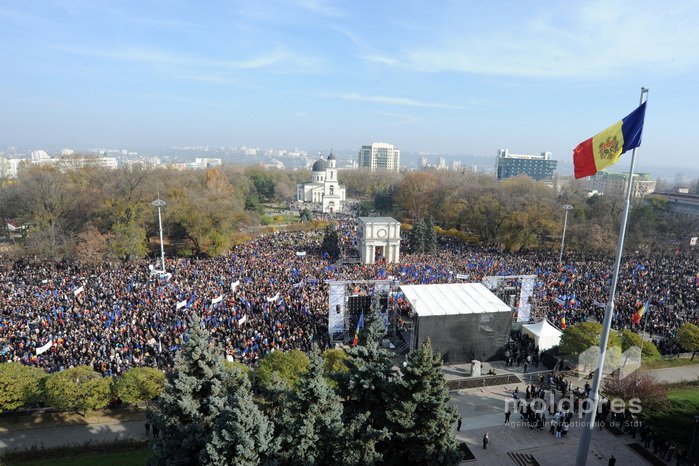
Moldova celebrates 35 years since adoption of Declaration of Sovereignty
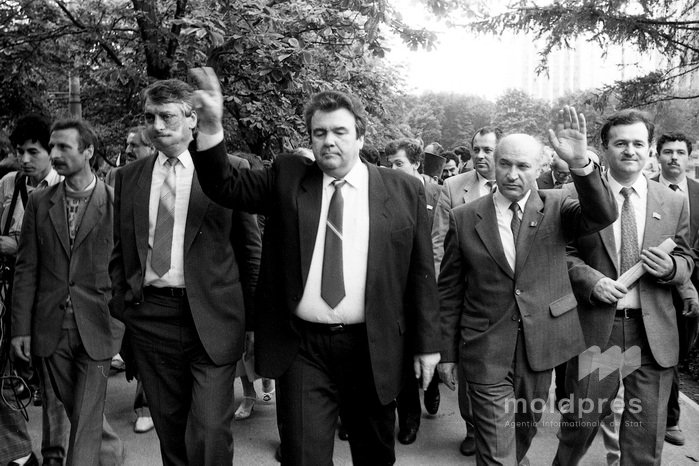
Today Moldova marks 35 years since the adoption of the Declaration of Sovereignty, a fundamental document that paved the way for the country's independence. The act was voted on June 23, 1990, by the deputies of the Supreme Soviet of the Moldavian SSR. On the anniversary, the country's leadership urges citizens to participate in the Sovereignty March, organized in the capital.

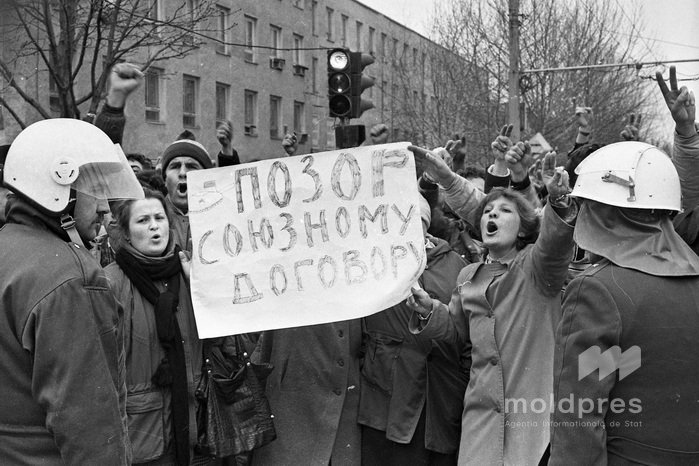
According to historians, the adoption of the Declaration of Sovereignty took place in a tense context, marked by the imminent dissolution of the Soviet Union and a wave of similar proclamations across the region. The Republic of Moldova followed the examples of Estonia, Lithuania, Latvia, Georgia and Russia, marking a clear break from the union center in Moscow.

The Declaration stipulated the supremacy of Moldovan SSR laws over union laws, the establishment of Moldovan citizenship, and the affirmation of the unitary, indivisible, and demilitarized character of the state. Additionally, all natural resources and assets on the territory of the republic were declared the exclusive property of Moldova.

June 1990 was a defining month for shaping Moldovan statehood: the national radio and television were created, Moldova-Press news agency and the newspaper "Sfatul Țării" were established, and the Parliament officially condemned Ribbentrop-Molotov pact. These measures clearly demonstrated Chisinau's political will to detach from Moscow's influence.

The Declaration's text was meticulously developed, taking into account all the implications of de facto breaking away from the Soviet Union. Despite opposition from pro-Soviet deputies, the document was adopted by a large majority, representing a decisive victory for democratic forces.

Its provisions formed the basis of the process of drafting a new Constitution and concluding the Union Treaty in a framework of sovereign states. The Declaration gave the Moldovan Parliament the exclusive right to validate or reject any decision coming from outside the borders of the republic.

Externally, the document undermined Moscow's exclusive authority over international policy, granting Moldova the status of a future subject of international law. At the same time, it established the principles of separation of powers in the state and the protection of citizens in accordance with European liberal-democratic values.

A crucial point of the Declaration was the establishment of unique Moldovan citizenship. Despite pressures to maintain dual citizenship, both Moldovan and Soviet, the firm stance of the document's authors led to the adoption of a single citizenship: that of the Republic of Moldova.

Former president Mircea Snegur later wrote in his memoirs that this document was a true strategic map for the development of the Moldovan state, the consolidation of sovereignty, and international affirmation.

After the adoption of the Declaration, Moldova went through difficult months, facing separatist movements supported by Moscow, but the document laid the foundation for a new type of relationship with the union center. The failure of the coup in Moscow in August 1991 accelerated the process of collapse of the USSR, and on August 27, 1991, the Republic of Moldova officially declared independence, on the solid foundation of the Declaration of Sovereignty.

Exactly one year after its adoption, on June 23, 1991, the first postal stamps of the Republic of Moldova were put into circulation, bearing the Coat of Arms and the National Flag — symbols of the new sovereign state.

The Declaration of Sovereignty remains an essential pillar of the modern history of the Republic of Moldova and a symbol of the unwavering will of the people to shape their own destiny.

Iuliana Gorea Costin emphasizes that "Declaration of Sovereignty was not just a political document — it was an act of courage, vision, and dignity."

Liliana Nicolaescu-Onofrei, chairwoman of the Committee for Culture, Education, Research, Youth, Sports and Media, recalls the atmosphere after the adoption of the Declaration of Sovereignty.

Authorities Encourage Citizens to Participate in Sovereignty March

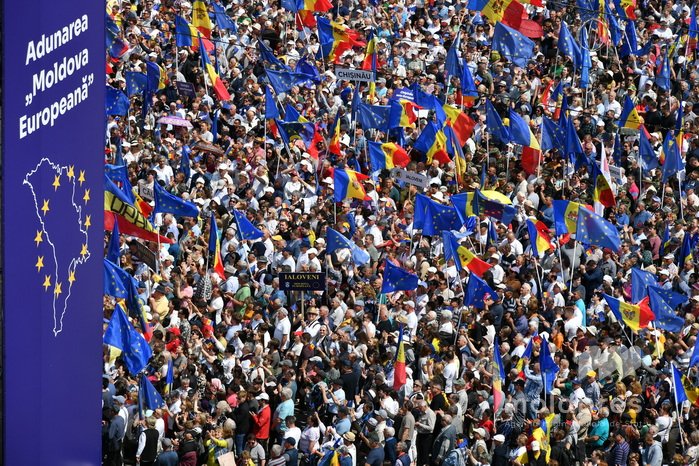
Authorities urge citizens to participate this evening in the Sovereignty March, an event organized at the initiative of President Maia Sandu to mark 35 years since the adoption of the Declaration of Sovereignty of the Republic of Moldova.

The march will begin at 7:00 PM from the monument to Ion and Doina Aldea-Teodorovici on Alexei Mateevici Street and will continue to the front of the Presidency building — the symbolic place where, in 1990, the country's sovereignty was proclaimed. The event is considered a tribute to the fight for national rebirth and liberation from Soviet domination.

In front of the Presidency, speeches will be delivered by Maia Sandu and Ion Hadârcă, president of the '90 Parliament Association and former vice-president of the first democratically elected Parliament.

Organizers encourage participants to wear traditional shirts as a sign of respect for cultural identity.
 Facebook
 Instagram
 X/Twitter
 Telegram
Moldovan foreign affairs minister has meeting with regional director of United Nations Population Fund
Moldovan deputy PM for reintegration says harmonization of tax regime to continue, despite Tiraspol's reaction
Moldovan Central Electoral Commission approves electoral calendar for organizing elections for office of Gagauzia's governor
Moldovan foreign affairs minister rejects claims by Russia’s Ambassador-Designate
Moldova to send Russia protest note over unauthorized opening of polling stations for elections; Moldovan foreign affairs minister says it represents unfriendly act
PHOTO GALLERY // 2 September cabinet meeting: decisions to harmonize legislation with EU rules and support citizens
LIVE // Government Secretary-General: In 2027, there will be 292 city halls remaining after merging process
Moldovan deputy premier meets Ukrainian counterpart in Chisinau
President expresses solidarity with Germany following drone attack in Leipzig
Moldovan Central Electoral Commission sets date for elections of governor of Gagauzia; ballot to take place on November 15, on same day as elections for People’s Assembly
Residents of Gagauzia autonomy to go to polls on November 15 to elect deputies to People’s Assembly; Moldovan Central Electoral Commission establishes allocation of 35 seats
Transnistrian settlement on agenda of foreign affairs minister’s meeting with new Head of OSCE Mission to Moldova
Romanian president: Relations with Moldova remain extremely important for Romania’s foreign policy
Speaker’s Romanian Language Day message: We Have Managed to Do It Justice – Romanian language enshrined in Constitution
Moldovan finance minister explains key fiscal policy provisions: increased personal allowance, reduced value added tax on basic products, higher excise duties, vice tax
Moldovan government proposes for public consultation rules allowing amalgamated localities to use infrastructure projects' incentives
Moldovan PM, Ambassador of France discuss strengthening economic cooperation, attracting investments
VIDEO // 49-year-old man detained in Moldova for allegedly collecting information for Russian intelligence services
Moldovan authorities to launch audit into delays to Vulcanesti–Chisinau power line project
PM has meeting with new Head of OSCE Mission to Moldova
Tour of Romania 2026 starts in Chisinau for first time; opening stage takes place entirely in Moldova
 National Bank of Moldova
Moldovan PM, Ambassador of France discuss strengthening economic cooperation, attracting investments
PM has meeting with new Head of OSCE Mission to Moldova
Fiscal and Customs Policy for 2027 approved by Government
Moldovan PM, Slovakian counterpart have phone conversation
New ambassadors, including from EU member states, present letters of accreditation to Moldovan President


Novodnestrovsk Reservoir level falls to 111.5 meters
Fiscal and Customs Policy for 2027 approved by Government
VIDEO // PISA 2025 results show progress in science, stagnation in mathematics and reading, with wide gaps between urban and rural schools
VIDEO // Prime Minister about new tax policy, which will bring 5.1 billion lei to budget
Packages ordered from abroad to be subject to 12-lei fee
Fiscal policy for 2027 approved by Government
Deputy Prime Minister to pay official visit to Bulgaria
DOC // New regime for grain and oilseed imports. Law published in Official Journal and enters into force
DOC // Moldova bringing drone regulations into line with European standards
Over 90,000 citizens participate in voluntary amalgamation process; Moldovan government's deputy secretary general explains what comes next
Moldovan PM, Slovakian counterpart have phone conversation
New ambassadors, including from EU member states, present letters of accreditation to Moldovan President
Parliament speaker meets new Head of OSCE Mission to Moldova
Moldovan parliament speaker meets new director of Swiss Cooperation Office
Reality concerns you │ While Tiraspol declares loyalty to Russia, Transnistrian region’s economy depends heavily on access to European market
National Wine Day 2026 announces itself with dress code in colors of Moldovan wine
Receive the latest news directly to your email

Receive the latest news directly to your email