
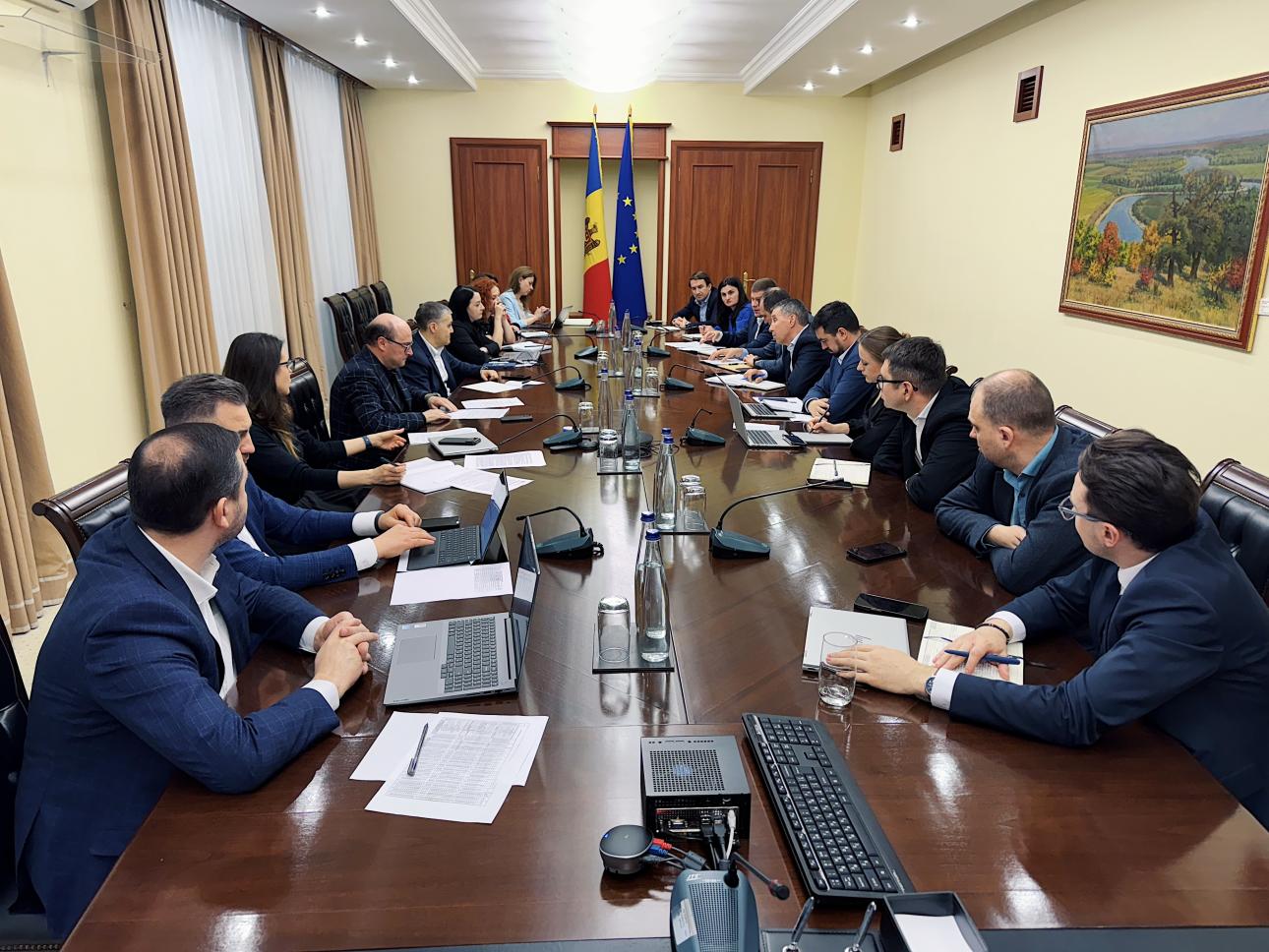
National Crisis Management Center presented integrated report on actions taken during state of emergency
The National Crisis Management Center (CNMC) today published the interim integrated report on actions taken during the state of emergency in the energy sector. The document provides an overview of the context that led to the declaration of the state of emergency, the measures adopted by the authorities, as well as their impact on the stability of the power system and the petroleum products market.

The document was drafted and presented to citizens following the request of Prime Minister Alexandru Munteanu. It has also been sent to Parliament.

The report reflects the coordinated efforts of the authorities to manage the crisis efficiently and ensure the continuity of essential services.

According to the report, the measures ordered during the state of emergency were driven by the need to manage an acute crisis situation, characterized by a significant drop in electricity import capacity and the emergence of disruptions on the petroleum products market, especially in the diesel segment.

In the power sector, the measures taken aimed to maintain the balance of the system under conditions of an estimated deficit of 350–400 MW, after the Isaccea–Vulcănești power line was affected by Russian bombardments on Ukraine. The measures implemented by the authorities made it possible to avoid uncontrolled outages and to maintain the stability of the power system under emergency conditions.

In the petroleum products sector, the interventions were aimed at preventing a shortage on the domestic market, especially in the diesel segment, given total dependence on imports and significant regional constraints. Accordingly, specific actions were taken to manage petroleum resources and strengthen state reserves. These included restricting the export of petroleum products under certain conditions, limiting their sale in mobile containers, and replenishing strategic stocks. At the same time, priority customs procedures were implemented to facilitate imports and reduce processing times.

“The measures implemented during the state of emergency made it possible to mitigate the effects of the imminent crisis, maintain the functionality of the power system and avoid major disruptions in the supply of energy resources,” the report reads.

At the same time, the authorities said “despite the relative stabilization of the functioning of the energy system, the factors that led to the introduction of the state of emergency have not been eliminated, but only managed through the measures applied, which maintains a high level of uncertainty regarding the evolution of the situation in the immediate future.”

Thus, according to the CNMC, maintaining the state of emergency in the energy sector during the Easter holidays is necessary in the context of a significant increase in transport flows and intensified population mobility.

“During this period, there is traditionally an increase in fuel consumption, driven by higher domestic and cross-border travel, which requires ensuring the availability of sufficient quantities of petroleum products on the market. Therefore, maintaining the special regime allows the authorities to monitor market developments more effectively, react promptly in the event of possible disruptions in supply and guarantee continuity of deliveries to consumers and economic operators,” the report indicates.

In the middle of this week, Munteanu requested that the CNMC present the report on the actions taken during the state of emergency.
 Facebook
 Instagram
 X/Twitter
 Telegram
State starts paying heating compensation for March
PHOTO GALLERY // Voices of Romani women resonate in Chișinău in march of solidarity and equal rights
President on International Romani Day: Only through appreciation and mutual support we can build more inclusive and stronger country
Giurgiulești–Reni customs post temporarily suspends operations
PHOTO // International platform on preventing, combating violence against women held in Moldovan capital: decisive actions, joint efforts
Leova–Bumbata border customs post of Moldova resumes normal operations
Meteorologists issue yellow frost warning in Moldova
Model Bulgarian language classroom opened at lyceum in Gagauz autonomy
Israeli visas expiring between April 1 and May 31 to be automatically extended
Judge Ana Cucerescu passed external evaluation
Orthodox Christians celebrate Annunciation
PHOTO // 17 years since 7 April 2009: Protests that changed country’s development path, still shrouded in uncertainty
Changeable weather, wind gusts forecast in Moldova for April 7: air temperatures up to 15 degrees
Over 800 teams registered for EuroQuiz 2026: final to take place in Chisinau on 8 May
Japan reconfirms status of strategic partner for development of Moldova's agricultural sector
National Crisis Management Center presented integrated report on actions taken during state of emergency
VIDEO // Strășeni–Gutinaș power line project moving forward: construction could start in 2027
Significant diesel price cut: cost drops by 1.17 lei
Eugen Doga Chisinau International Airport ensures stable flights on easter, despite heavy passenger traffic
Ministry of Culture considers holding of three events with foreign artists inopportune
New EU entry rules: Entry/Exit System becomes fully operational as of today
 National Bank of Moldova
Moldovan parliament votes: voluntary amalgamation becomes simpler, better funded for development
Deputy Prime Minister meets UNFPA Country Representative and UNDP Resident Representative to Moldova
Moldovan president, on visit to Dublin, says Ireland’s transformation after EU accession model for Moldova’s European future
President Maia Sandu’s speech at the joint press conference with the Prime Minister of Ireland, Micheál Martin
Moldovan government launches concept of local public administration reform

DOC // SIS updates list of persons involved in terrorist activities
Emergency Service 112 strengthens teams for Easter period
Discover Moldova with #MOLDPRES: Story of Dniester banks written with taste becomes new compass for travelers seeking authenticity, unique culinary experiences in Eastern Europe
Moldovan parliament votes: voluntary amalgamation becomes simpler, better funded for development
VIDEO // EcoContact public association of Moldova launches environmental conflict mediation guide after series of practical sessions in Chisinau, Cahul
PHOTO // Rehabilitation of the Cantemir–Falciu railway between Moldova and Romania nearing completion after successful infrastructure testing
Concept of local public administration reform presented in Moldova's parliament
Moldovan parliament tightens anti-drug legislation: criminal penalties for online promotion too
Moldovan president gives interview with Irish newspaper
VIDEO // Moldovan parliament speaker comments on opposition's criticism of new Parliament Code
MIA system surpasses 900,000 users: 13.2 billion lei in payments processed in 2025
Deputy Prime Minister meets UNFPA Country Representative and UNDP Resident Representative to Moldova
Alina Cebotariov takes over leadership of Competition Council
Parliament encourages local production through short supply chains
Parliament adopts comprehensive reform of environmental institutions
First diesel price cut since Middle East ceasefire: Price drops by 0.49 lei
Receive the latest news directly to your email

Receive the latest news directly to your email