
Moldovan government launches concept of local public administration reform
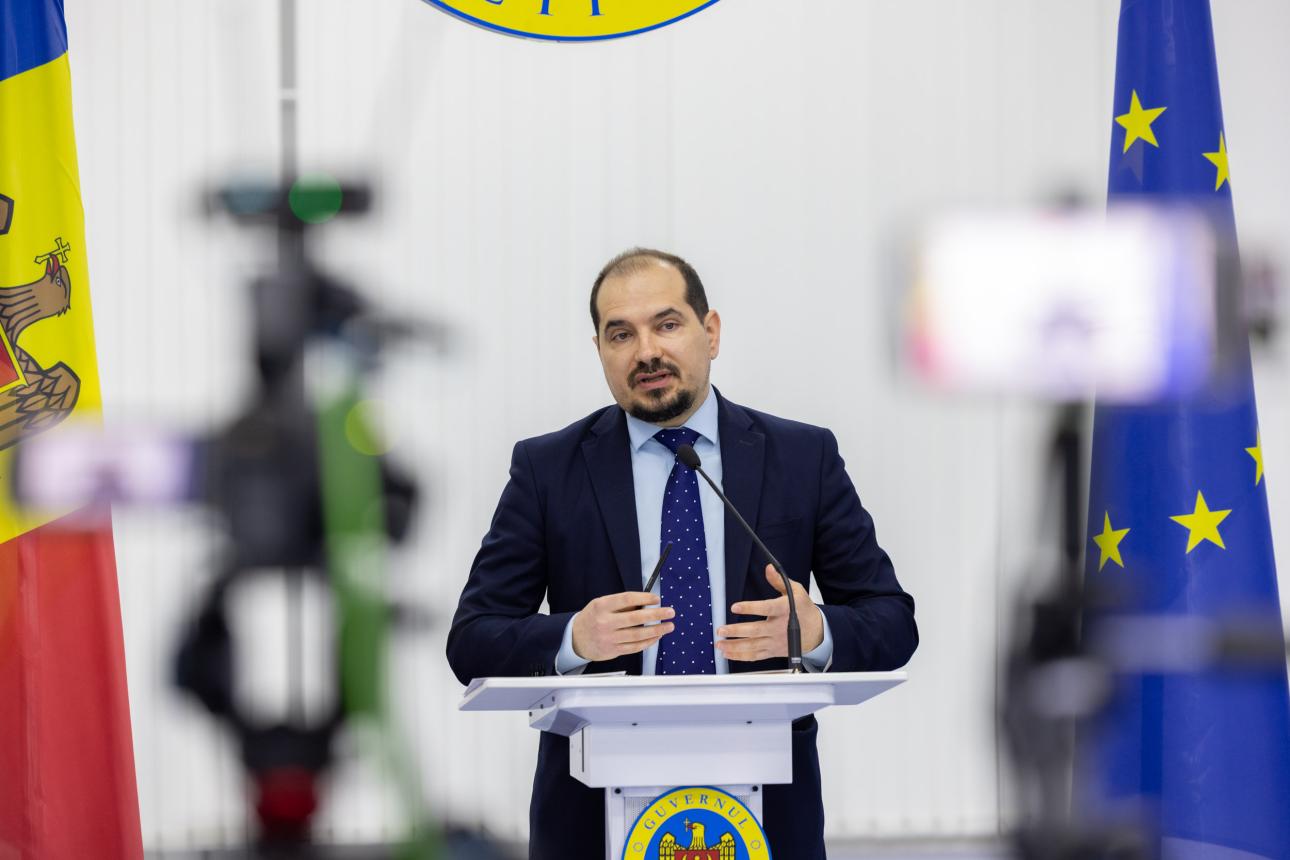
The government proposes tripling the incentive for localities that choose to amalgamate and setting a minimum threshold of 3,000 inhabitants for mayoralties, in order to consolidate local administrations and accelerate investments in infrastructure. After more months of discussions and consultations, during which the opinions of local elected officials and citizens were heard, Secretary General of the Government Alexei Buzu today presented the Concept of Local Public Administration Reform.

The reform is proposed in a context in which the current administrative fragmentation no longer allows many localities to develop at the level expected by citizens. At present, over 87 per cent of Moldova’s mayoralties have fewer than 3,000 inhabitants. Only 53 mayoralties have more than 5,000 inhabitants, 63 have between 3,000 and 5,000 inhabitants and 776 have fewer than 3,000 inhabitants.

Excessive fragmentation of local public administration does not bring modernization and produces increasingly large differences between communities. Stronger mayoralties manage to modernize localities more quickly, while many small mayoralties lag behind in basic infrastructure and essential public services.

The data show that 34 per cent of Moldova’s households do not have access to water and sewerage, and among them, 8 out of 10 households without running water and 77 per cent of households without sewerage are located in localities with small mayoralties. At the same time, small mayoralties have low own revenues, about 11 per cent of the budget, while 50–60 per cent of resources come from the state budget.

Another effect of fragmentation is the more pronounced depopulation of small localities. In the last 10 years, these settlements have recorded a population decrease of 32.7 per cent, twice the national average. At the same time, 80.5 per cent of small mayoralties do not have staff specialized in projects’ management, which reduces their capacity to attract external funds and implement major investments.

Administrative fragmentation also generates high operating costs. A small mayoralty spends, on average, about 30 per cent of its budget on administrative costs, while larger mayoralties have better financial capacity and can direct more resources toward development projects. In addition, only 9.1 per cent of small mayoralties provide most services in digital format.

The reform concept proposes a clear set of solutions to address these problems. First, the government will continue to support voluntary amalgamation and will triple the investment incentive in infrastructure granted to localities that choose to unite. Thus, the amount of support will increase from 1,000 to 3,000 lei per inhabitant. The total estimated cost of the incentive package for the period 2026–2030 is 6.491 billion lei.

At the same time, the reform is based on a clear principle: the village remains and local identity is preserved. The names of localities, communities and traditions do not disappear. Residents will continue to have a direct link with the administration through the mayor’s representative in the locality, so that the needs of each community are heard and taken into account.

A minimum threshold of 3,000 inhabitants for mayoralties is also proposed. By creating larger local public administrations, communities will be able to provide better services, will have the capacity and specialists to access external funds and implement major projects, and will have more financial resources to meet local needs.

To improve citizens’ access to services, CUPS (Public Service Provision Centers) may be opened in the buildings of former mayoralties, and through a one-stop shop, more than 600 public services, including in digital format, will be available. The reform thus aims to reduce bureaucracy, unnecessary travel and time costs for citizens.

The concept also provides for strengthening regional cooperation for joint administration. The transition from 32 districts (raioane) to 10 has the goal of accelerating regional development, with a focus on major projects and inter-communal development. The new structures will be able to manage projects of major interest, such as regional roads, hospitals and waste management.

For Taraclia district, a solution adapted to the specifics of the region is proposed, given that approximately 65.6 per cent of the population is of Bulgarian ethnicity. The concept provides for transforming Taraclia into a level II municipality, so that local identity is preserved and, at the same time, a more efficient and stronger administration is ensured.

For informing citizens and local authorities, the platform www.primariiputernice.gov.md has also been launched, which brings together useful information about the local public administration reform and practical tools for communities. In addition, two interactive tools can be accessed here – the amalgamation simulator and the mayoralties’ budget.

The reform concept does not represent a final decision, but the basis for a new stage of public consultations. In recent months, the government has held discussions with more than 4,500 local elected officials and citizens, and the proposals formulated during these consultations formed the basis of the document presented.
 Facebook
 Instagram
 X/Twitter
 Telegram
Moldovan PM visits settlement in northern district, where 260 households benefit from access to water with government's support
PM pays a working visit to north Moldova district
Moldovan government's secretary general says reform of local public administration one of most important reforms for Moldova
Moldovan president in Riga says Latvia knows what it means to regain your freedom, that is why its voice matters
President Maia Sandu’s speech in the Parliament of Latvia
Deputy PM for reintegration has meeting with Ambassador of Sweden to Moldova
Moldovan President’s speech at joint press conference with President of the Republic of Latvia
New rules to protect health of workers exposed to occupational risks
Cases of violence to be monitored uniformly at national level for early prevention and more effective intervention
Government tightens penalties for drug-related offences
Moldovan driving licences to be recognized in Ireland
Moldovan PM has meeting with Romanian counterpart
Moldovan government's secretary general in Strasbourg says good reforms achieved through strong partnerships, dialogue, solutions for people’s well-being
Moldovan PM has discussions with Romania's president
Moldova, Argentina launch negotiations to establish first direct air services between two countries
PHOTO, VIDEO // Moldovan president welcomed by Irish counterpart in Dublin
Agriculture Minister announces preparation for accessing EU pre-accession funds for per-hectare payments
Government maintains state of emergency in energy sector
Energy Minister announces when fuel prices at pump could decrease
Environment Minister about mandate priorities and response to mayor: Chișinău residents need solutions, not political circus
CNMC director about need to maintain state of emergency
 National Bank of Moldova
Government maintains state of emergency in energy sector
New rules for egg marketing: More precise packaging information and stricter product traceability
Government simplifies reporting of workplace accidents and improves data collection
Better access to treatments: Government modernizing medicine authorization system
Involvement of Moldova's authorities in Interreg programming process, in context of new EU multiannual financial framework 2028–2034

New rules for egg marketing: More precise packaging information and stricter product traceability
Natural gas prices recorded sharp decline in Europe on Wednesday, reaching lowest level of last five weeks
Government simplifies reporting of workplace accidents and improves data collection
Better access to treatments: Government modernizing medicine authorization system
Ministry of Justice without state secretary
Moldovan experts learn about European experience on biodiversity conservation during study visit to Greece
Prime Minister: Risks still high. Repealing state of emergency would be irresponsible decision
PHOTO GALLERY // Voices of Romani women resonate in Chișinău in march of solidarity and equal rights
PHOTO // Ambassador of the Republic of Moldova to Ukraine presented letters of credence to President Volodymyr Zelenskyy
President on International Romani Day: Only through appreciation and mutual support we can build more inclusive and stronger country
VIDEO // Strong Town Halls Reform in Moldova: minimum threshold of 3,000 inhabitants per town hall and decrease in districts from 32 to 10
Moldova to have three new ambassadors
Daniel Vodă: For Moldova, ceasefire in Middle East creates useful window of opportunity
President pays official visit to Ireland
Giurgiulești–Reni customs post temporarily suspends operations
PHOTO // International platform on preventing, combating violence against women held in Moldovan capital: decisive actions, joint efforts
Receive the latest news directly to your email

Receive the latest news directly to your email