
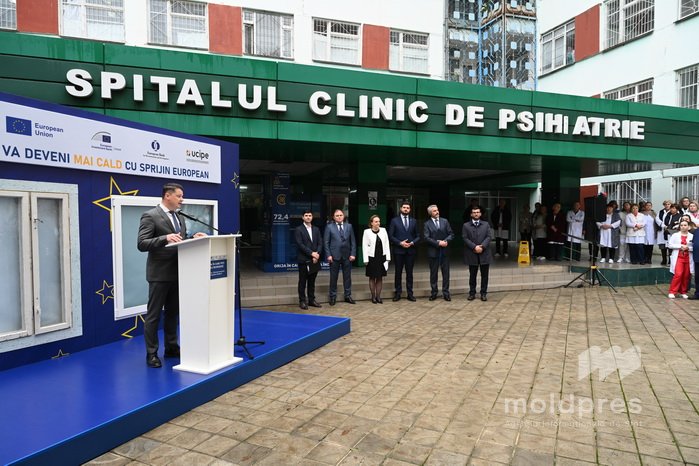
Energy consumption in ten hospitals in Moldova expected to drop by 40%; first two hospitals begin renovation
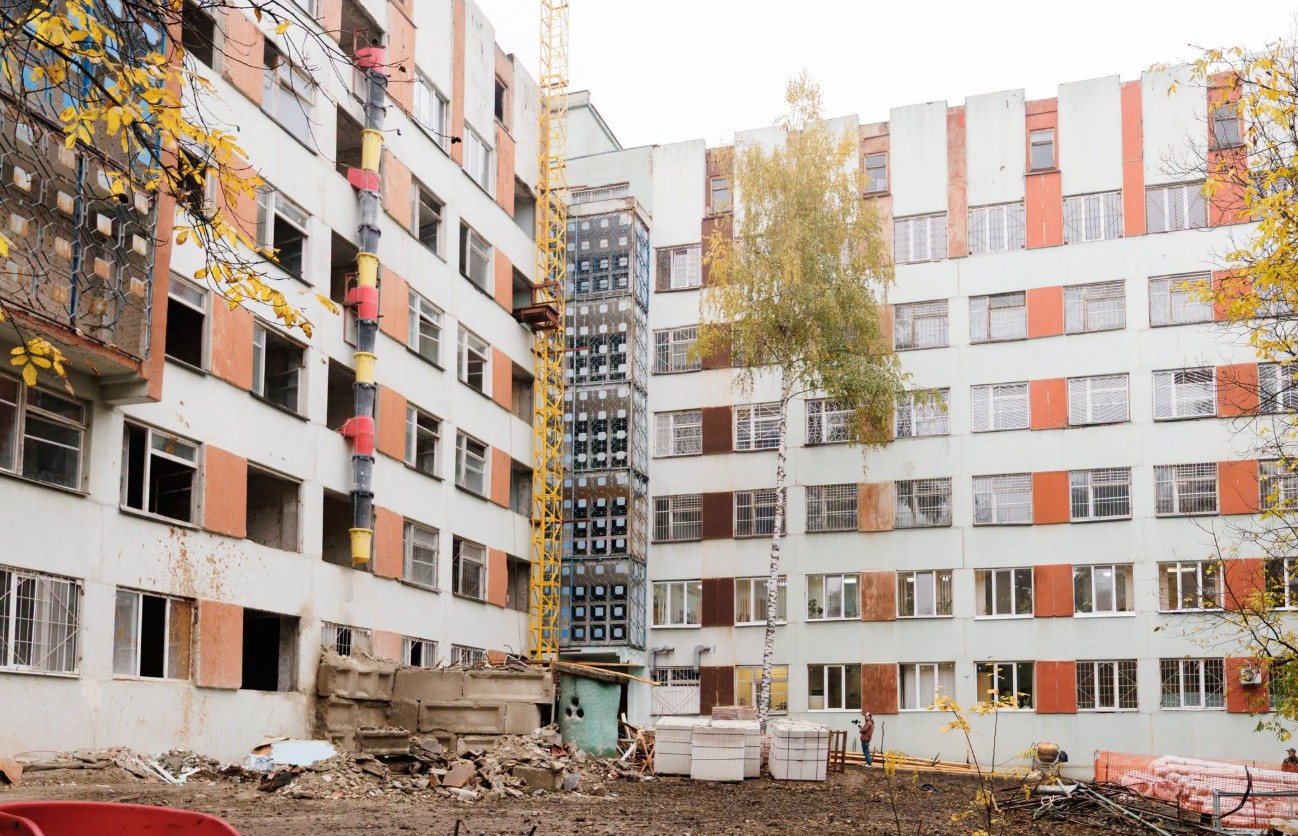
Energy consumption in ten nationally important hospitals in the Republic of Moldova is expected to decrease by approximately 40% following a 72.4-million-euro energy modernization program. The first two medical institutions to enter the renovation process are the Clinical Psychiatric Hospital and Diomid Gherman Institute of Neurology and Neurosurgery.
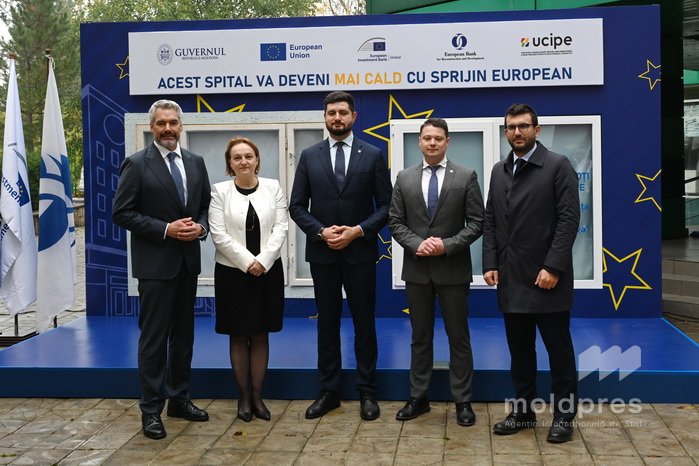
The program is being implemented with the support of the European Union, the European Investment Bank (EIB), the European Bank for Reconstruction and Development (EBRD), and the Government of the Republic of Moldova. The investments aim to improve treatment conditions for more than one million patients and create a better working environment for approximately 10,000 medical professionals.
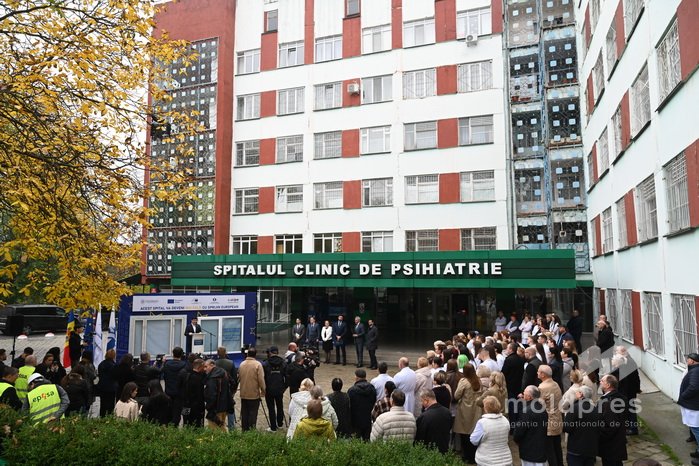
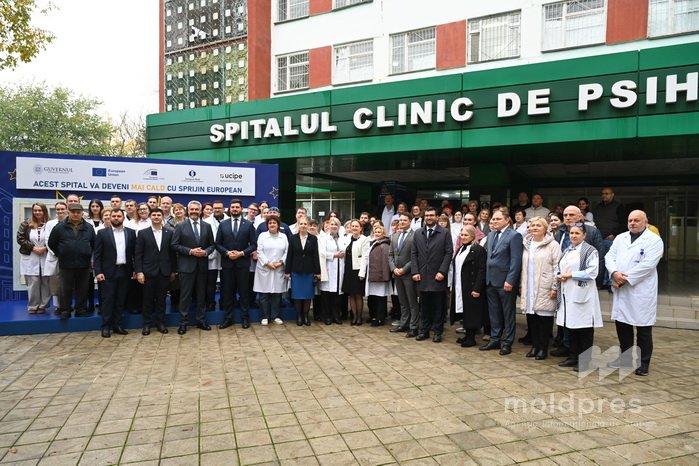
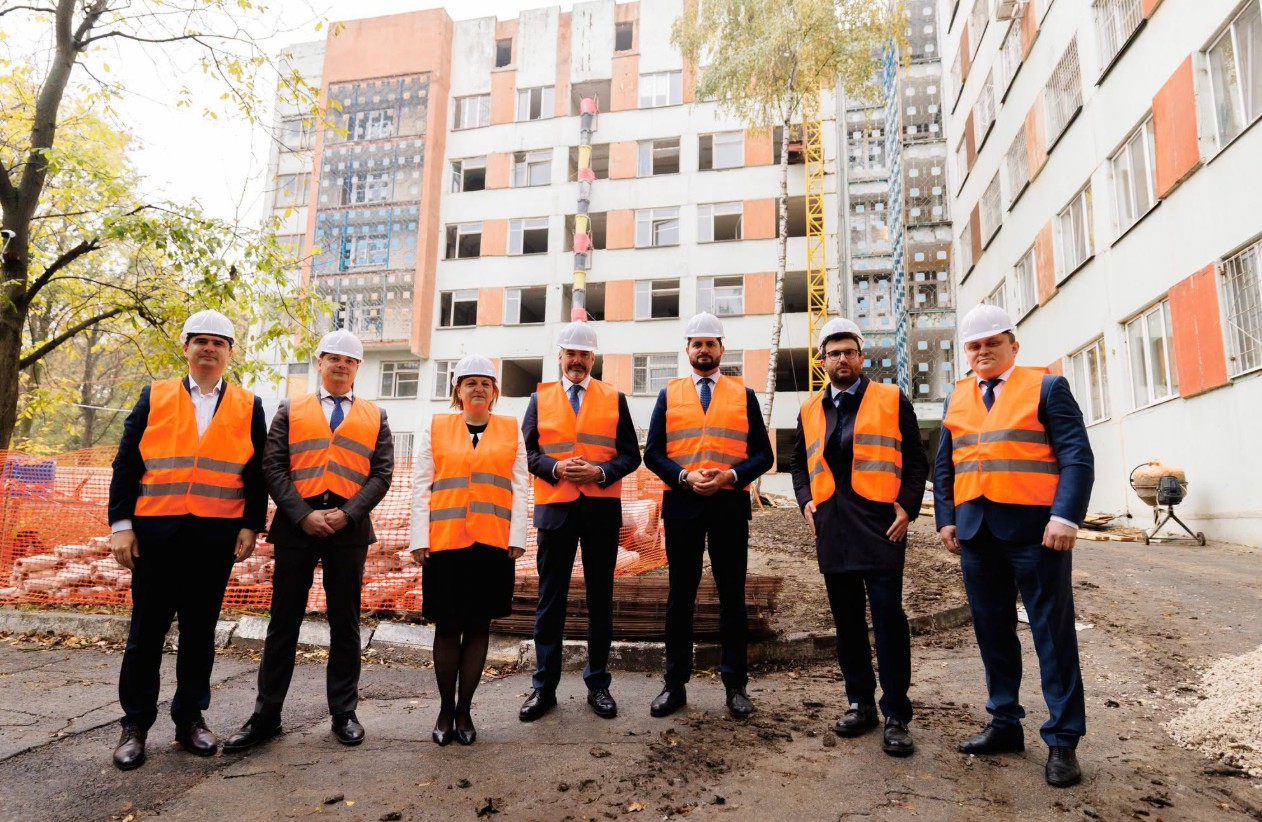
Work was officially launched at the Clinical Psychiatric Hospital in Chișinău. During the first stage, the institution’s main building and children’s department, as well as Building No. 2 of Diomid Gherman Institute of Neurology and Neurosurgery will be renovated.
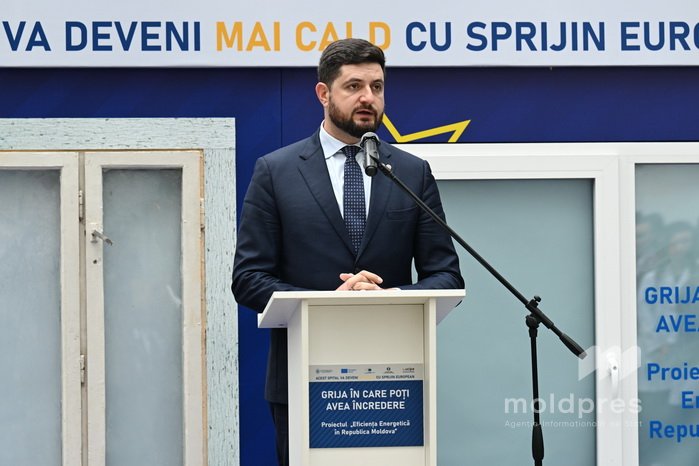
Attending the launch event for the renovation works, Energy Minister Dorin Junghietu said that the program represents one of the country’s most ambitious energy-efficiency initiatives.“Today we are marking an important moment in the implementation of the energy-efficiency project in the Republic of Moldova: the start of energy rehabilitation works at the Clinical Psychiatric Hospital and the ‘Diomid Gherman’ Institute of Neurology and Neurosurgery. These are the first two medical institutions to enter the implementation stage of energy-efficiency works. As part of the project, all 10 nationally important hospitals will benefit from renovation works and energy-efficiency measures. The objective is to reduce energy consumption by around 40% and improve conditions for approximately one million patients from across the country and for 10,000 medical professionals. These investments will contribute both to increased comfort and safety in medical institutions and to more responsible use of public resources. Many public buildings were constructed decades ago, at a time when energy efficiency was not a priority. Today, a considerable share of the energy consumed is lost because of outdated infrastructure, while the costs are covered with public funds. In the case of hospitals, these expenses reduce the financial resources that could be allocated to better equipment and medical services. Through the National Integrated Energy and Climate Plan, the Republic of Moldova has committed to achieving new annual energy savings equivalent to 0.8% of average annual final consumption. To understand the scale of this commitment, we are talking about savings amounting to hundreds of millions of kilowatt-hours per year. Compared with consumption in 2025, this would represent approximately 250 million kilowatt-hours, enough energy to heat around 25,000 energy-efficient homes in our country. Before investing in new generation capacity or purchasing more energy from abroad, we must see how we can reduce consumption and eliminate waste. And the state must set the first example. We have committed to the annual energy renovation of at least 3% of the surface area of public buildings covered by this commitment. The modernization of the 10 hospitals is a first step in this direction. The kilowatt-hours saved through the energy modernization of hospitals mean lower consumption, reduced bills, and less dependence on imported energy. For medical institutions, this also means buildings where heat is no longer lost through walls and windows, stable temperatures in wards, and less money spent on energy. Through such investments, we demonstrate that energy efficiency simultaneously means quality public services, responsible use of public funds, and an energy system that meets people’s needs,” the minister said.
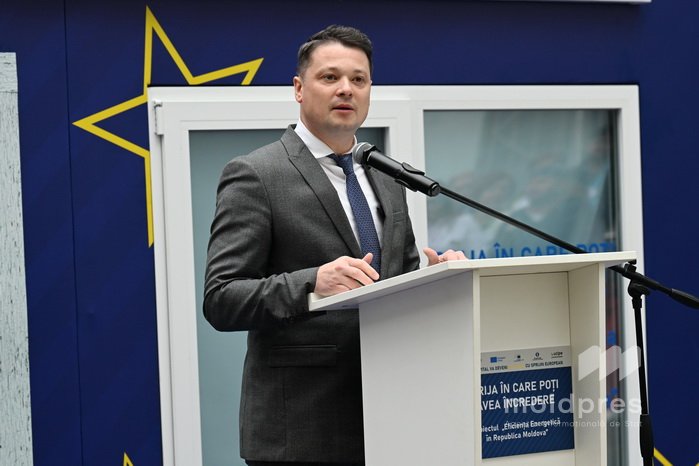
In the same context, Health Minister Alexandru Gasnaș stressed that the investments will help improve conditions for patients and medical staff, while also reducing the expenses of medical institutions.“For patients and medical staff, these investments mean better conditions and hospitals that are better prepared to meet current care and treatment requirements. Lower energy costs will also ease the pressure on the budgets of medical institutions, allowing more resources to be directed toward the areas where they are most needed. The works have been carefully planned so that hospitals can continue operating normally and medical services can be provided without interruptions,” Alexandru Gasnaș said.
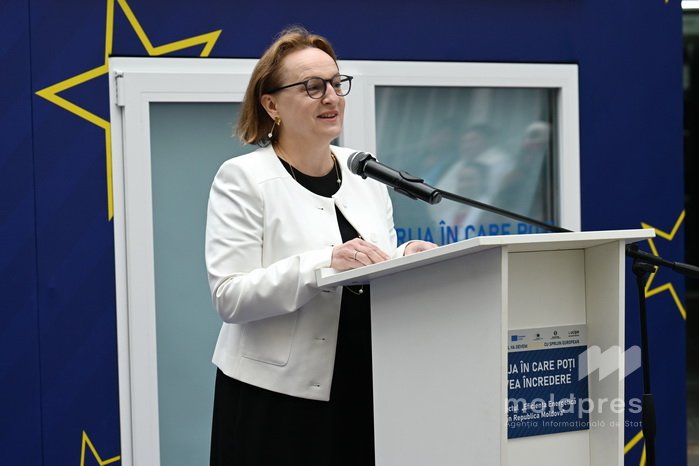
European Union Ambassador to the Republic of Moldova Iwona Piórko said that the modernization of the hospitals would contribute to improving public services and developing more resilient medical infrastructure.“The benefits of European integration must be reflected in citizens’ everyday lives, including in the quality of public services. The modernization of these hospitals will provide better conditions for patients and medical staff, while also contributing to the development of more efficient and resilient medical infrastructure. Through the European Union’s Growth Plan for the Republic of Moldova, we can see how the European path is bringing changes that improve citizens’ lives,” the diplomat said.
For his part, European Investment Bank Vice-President responsible for the institution’s operations in the Republic of Moldova, Karl Nehammer, highlighted the importance of energy efficiency for hospital operations.
“A hospital is one of the places where activity never stops. That is precisely why efficiency and reliability are particularly important. Modernizing these medical institutions and aligning them with European standards means using energy more efficiently, but also having higher-performing hospitals that are safer to operate and better prepared for the challenges of the future. We are proud to contribute to this transformation and to support the Republic of Moldova in developing modern medical infrastructure that future generations can also rely on,” Karl Nehammer said.
The head of the EBRD Representation in the Republic of Moldova, Giuseppe Grimaldi, noted that modernizing public infrastructure through environmentally friendly solutions is important for the transition to a sustainable economy.
“Modernizing public infrastructure by adopting environmentally friendly solutions is an important component of the Republic of Moldova’s transition toward a more sustainable economy. Hospitals are a suitable starting point, as their modernization can demonstrate that such changes can be implemented on a larger scale throughout the public sector. By reducing energy consumption and polluting emissions, these investments show that adopting sustainable solutions can deliver significant results with a direct impact on the quality of public services,” Giuseppe Grimaldi said.
According to the project, the modernization of the medical institutions will include thermal insulation of buildings, replacement of windows and doors, upgrades to heating substations, and the installation of photovoltaic panels. Measures are also planned to improve fire safety and accessibility for people with reduced mobility.
The renovation contract for the Clinical Psychiatric Hospital is worth approximately 10 million euros, while the contract for Diomid Gherman Institute of Neurology and Neurosurgery is worth around 2 million euros. A separate contract worth 573,000 euros covers the technical supervision of the works at both institutions. The works at the Clinical Psychiatric Hospital are expected to be completed in February 2028, while those at the Institute of Neurology and Neurosurgery are scheduled for completion in March 2028.According to the relevant authorities, preparations for renovating the other eight hospitals included in the program are continuing in parallel, while the next stages of the procurement procedures are expected to be launched toward the end of 2026 and throughout 2027. Energy Efficiency in the Republic of Moldova project will run until June 2029 and also includes an additional 10-million-euro grant from the European Union aimed at improving the energy efficiency of residential buildings.
 Facebook
 Instagram
 X/Twitter
 Telegram
PHOTO // Moldovan carabineers awarded NATO medal for participation in KFOR mission in Kosovo
PHOTO // Moldovan NGOs implement 28 environmental protection projects
Yellow fog warning issued in Moldova; visibility to drop below 200 meters
Moldovan students to participate in 24 national olympiads and competitions in 2027
Energy compensation could reach 670,000 families this winter
StratCom: False claim about drone factory coordinated and amplified on Telegram, feeding Russian narrative about “militarization of country”
National Army reservists strengthen military skills during training exercise
Two Ukrainian border guards detained after illegally crossing Moldova’s border near Vasilcău
Moldova's National Police to benefit from new cooperation project with Germany; initiative aims to strengthen operational, investigative capacities
Moldova's General Police Inspectorate, Czech Republic sign agreement to strengthen digital expertise; project provides modern equipment, training for police officers
Moldovan interior minister meets new U.S. Ambassador to Moldova
PHOTO // Chisinau-based Nicolae Testemitanu State University of Medicine and Pharmacy hosts exhibition – project offering glimpse into world of people with down syndrome
About 50 schools from Moldovan capital benefit from investments worth over 1.1 billion lei for modernization
4.8-magnitude earthquake strikes Vrancea seismic zone
Two members of Judges' Evaluation Commission to end activities on 31 December 2026
Energy consumption in ten hospitals in Moldova expected to drop by 40%; first two hospitals begin renovation
CHINA EXPO – Christmas Sale to be held for first time at Moldexpo on December 17
State Secretary for Reintegration: Revenue from taxes imposed in Transnistrian region will return to population through Convergence Fund
Joint border control, energy projects on Prime Minister’s agenda during visit to Kyiv
Ukraine's Ambassador to Chisinau: Dniester incidents must be investigated, findings made public
PHOTOS // Story behind legend of Dracula: Irish culture, film from 1931 presented in Chisinau
 National Bank of Moldova

COMMENTARY on Tiraspol event
Summary of Moldovan parliament's plenary meeting held on October 22, 2026
Balti city mayor to be assisted by own cabinet; Moldovan parliament passes relevant draft in first reading
Moldovan MPs vote on draft on tax, customs facilities for import of 24 musical instruments meant for national collection of musical instruments
Moldovan parliament votes in first reading: construction of Straseni–Gutinas power line, modernization of Straseni substation to be declared of national public utility

Summary of Moldovan parliament's plenary meeting held on October 22, 2026
Moldovan environment minister, Romanian counterpart discuss environmental cooperation
Judge Veaceslav Cernalev heard by Commission for Evaluation of Judges
Balti city mayor to be assisted by own cabinet; Moldovan parliament passes relevant draft in first reading
Moldovan MPs vote on draft on tax, customs facilities for import of 24 musical instruments meant for national collection of musical instruments
OSCE Permanent Council: Moldova rejects Russia’s claims concerning Transnistria, calls for withdrawal of military forces from its territory
Moldovan parliament votes in first reading: construction of Straseni–Gutinas power line, modernization of Straseni substation to be declared of national public utility
PHOTO // Three Moldovan carabineers return from Kosovo after six-month peacekeeping mission
Access to education, quality public services in focus during visits by secretary general for reintegration to Tiraspol, Bender, Varnita
Romania's new PM to pay first visit to Chisinau on October 27
Moldovan parliament adopts fiscal, customs policy package for 2027
Moldovan government's deputy secretary general says Moldova’s European path runs through country's villages, benefits of reforms must be felt locally
Cooperation between Moldova, International IDEA discussed in Chisinau
Moldovan president to visit Hungary
Adopted by parliament: taxi platforms to be required to process payments through financial institutions licenced in Moldova
Access to cadastral information extended to more categories of individuals, institutions in Moldova
Receive the latest news directly to your email

Receive the latest news directly to your email