
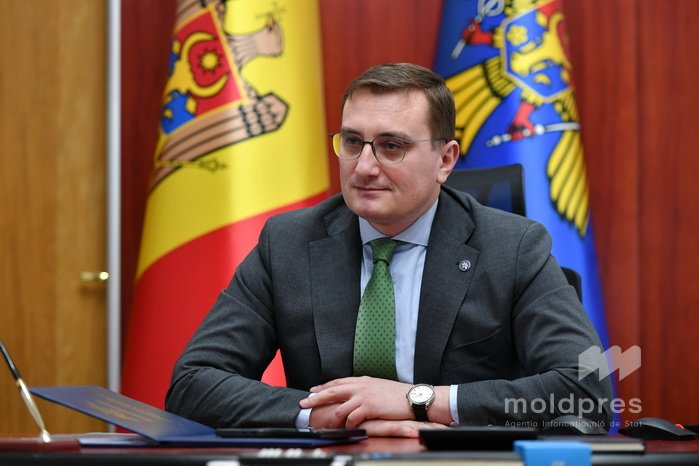
Increased flow of passengers in Moldova on eve of Easter holidays; Customs Service head announces measures to streamline traffic
The Customs Service will implement a string of measures, in order to streamline cross-border traffic during the Easter holidays, when more citizens from abroad return home and others leave on vacation. The increase in traffic flow is forecast for the beginning of April, with higher volumes on the days preceding the holiday. Head of the Customs Service Radu Vrabie has made statements to this effect in an interview given with MOLDPRES, due to be published on March 30.

According to the leadership of the Customs Service, at the end of March, working meetings will be organized with the customs authorities of Romania and Ukraine, in order to coordinate the measures applied during this period.

“Usually, two weeks before Easter, the increase in travelers’ flow starts, with maximum values on the days preceding the holiday. During the school vacation period, the flow is directed from the country towards Europe. Increased traffic at the border is also recorded on the eve of Memorial Easter (Paștele Blajinilor), and then when Diaspora citizens leave. Thus, on this period, we will provide additional control staff. At the same time, infrastructure is being optimized, with additional control lanes being opened and, where necessary, the Reverse procedure is applied – redirecting traffic directions. Likewise, transport flows are separated – with distinct routing of trucks, cars and coaches, which helps organize traffic more efficiently,” stated Radu Vrabie.

Additionally, in order to ensure efficient and comfortable crossing of the state border, the Customs Service is issuing a string of recommendations for travelers.

“To minimize border crossing time, we recommend using all existing crossing points, so as not to overload just some of them and to avoid the formation of queues. It is necessary to check the validity and status of the travel document used for crossing the state border. At the same time, you can consult the Online traffic at border customs posts application on the official website of the Customs Service, in order to know, in real time, the situation at the border crossing points,” said Radu Vrabie.

A 24/7 Single Call Center of the Customs Service is also operational at: +373 22 78-88-88, as well as the Border Police Call Center at: +373 22 259 717, where each citizen can receive advice on the situation at the border, crossing rules and other public information.
 Facebook
 Instagram
 X/Twitter
 Telegram
VIDEO // Moldovan environment minister inspects Novodnestrovsk Power Plant, confirms pollution source on Dniester River stopped
Attention, drivers! Traffic fines issued abroad might be recognized, enforced in Moldova
PHOTO // USMF "Nicolae Testemițanu" to receive medical equipment and supplies for Traditional Chinese Medicine Centre
European Union expands assistance for pollution management on Dniester River by mobilizing new resources
Daily allowances for children in placement services to be indexed from 1 April
Bank Fraud case: Vladimir Plahotniuc to deliver speech at judicial debate
Approved by Government: pensions to be indexed by 6.8 percent and increased by fixed amount of over 50 lei as of 1 April
DOC // State of emergency in Moldova
Moldova's Judges Evaluation Commission to hold new public hearings
Moldova launches 112MD app for faster, safer emergency services
PHOTO // Moldovan–Italian cooperation to adapt agriculture to climate change through water recovery technologies
Director of National Crisis Management center says proposal on declaring emergency state measure to protect national security of Moldova
Crashed drones found near Isaccea–Vulcănești power line, prompting access restrictions for technical teams
REPORT: School network in Moldova partially adapted to current realities, while urban–rural disparities remain significant
Moldova switches to daylight saving time: clock hands to be moved forward by one hour
Moldovan PM has discussions with European Commissioner for Democracy, Justice and the Rule of Law
VIDEO // Energy minister says solidarity of European partners helps country overcome energy crises
Moldovan PM has meeting with Romania’s economy minister
 National Bank of Moldova
Moldovan government joins Earth Hour international initiative
Moldovan president, EU Commissioner for Justice discuss accelerating justice reforms
Moldovan PM has discussions with European Commissioner for Democracy, Justice and the Rule of Law
Moldovan PM has meeting with Romania’s economy minister
Moldovan President attends General Assembly of Judges

PHOTO // Moldovan defense minister meets Slovak counterpart; regional security, strengthening national resilience on agenda
Moldovan PM has meeting with Romania’s economy minister
EU provides additional support for justice reform in Moldova
Moldova again avoids power cuts through emergency measures, regional cooperation
President conveys message at Assembly of Judges
CSM held 50 meetings last year and adopted over 700 decisions
Moldovan President attends General Assembly of Judges
President’s address to General Assembly of Judges
PHOTO // Republic of Moldova opened Honorary Consulate in Almaty, Kazakhstan
President on 108 years since Union of Bessarabia with Romania
TeConsult strengthens role in open government: second edition of training program completed
Farmers from 14 districts to receive irrigation grants
Over 2,200 tons of gasoline and diesel imported into Moldova on Thursday
Prime Minister conveys message on anniversary of Bessarabia's Union with Romania
Around 300 magistrates attend General Assembly of Judges
DOC // Official Journal publishes amendment to fuel price-setting mechanism during state of emergency
Receive the latest news directly to your email

Receive the latest news directly to your email