
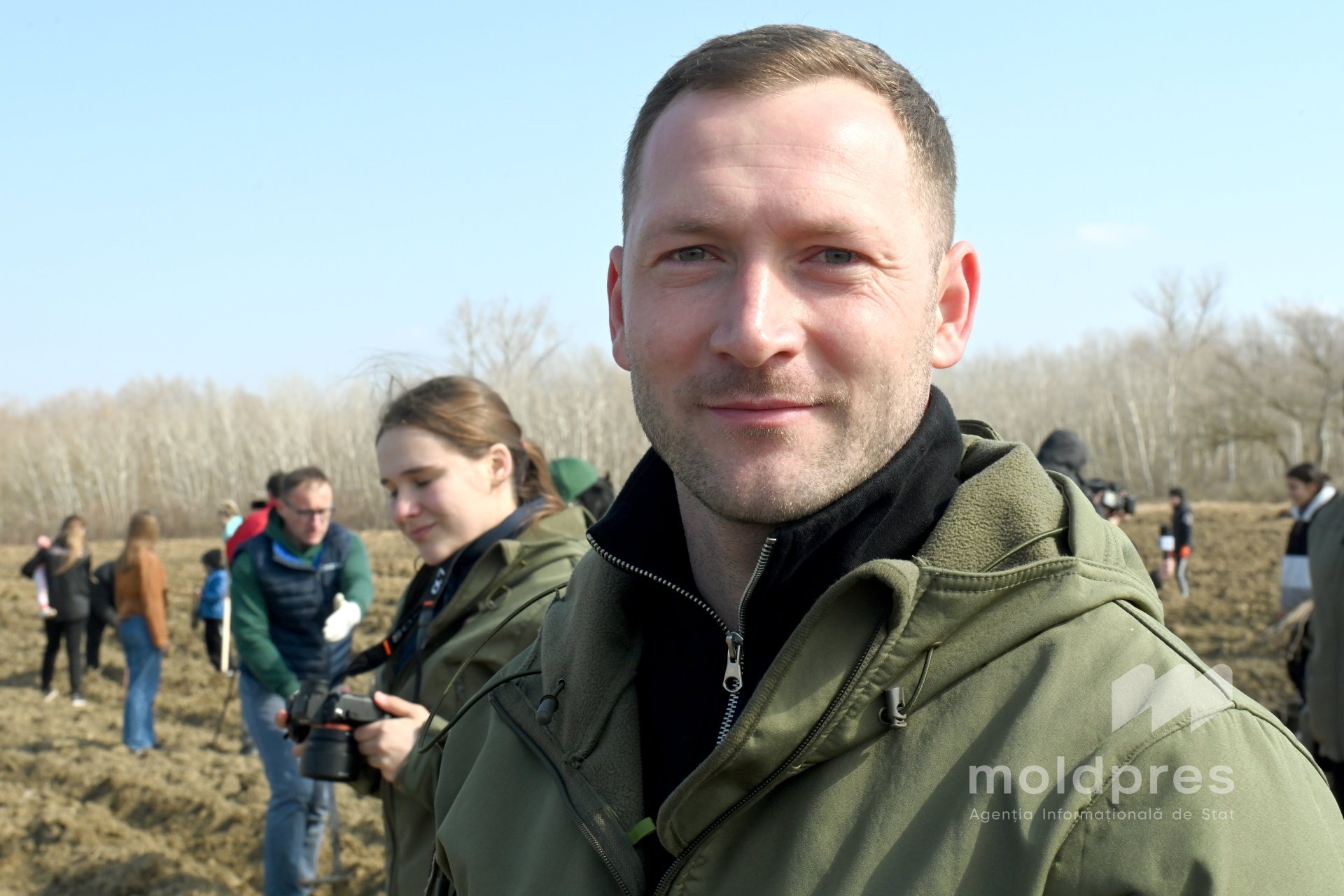
Moldovan environment minister confirms Dniester River's pollution source stopped, authorities ready to intercept potential upstream leaks
The pollution source identified on Dniester River has been stopped, and the authorities continue to monitor the situation, including any potential leaks that could reach the territory of Moldova. Environment Minister Gheorghe Hajder made statements to this effect, after a today’s government meeting.

According to the official, inspections carried out on Ukrainian territory confirmed that discharges at the source have ceased.

“I went to Novodnestrovsk to make sure personally that the pollution source had been shut down. This has been confirmed,” said Gheorghe Hajder.

The minister specified that inspections had been also carried out upstream from  Moldova, where traces of pollution were observed.

“We also carried out an inspection of the Dniester River upstream, and there are still small oil patches that will most likely reach Moldova, but we are already prepared for them to be captured and removed from Dniester,” the official said.

Referring to the origin of the pollution, Gheorghe Hajder noted that it had been caused by actions targeting Ukraine’s energy infrastructure.

“There was an attack on Ukraine’s civilian energy infrastructure, which caused leaks from equipment at hydropower plants. The substances entered the Dniester River and we have captured them and continue this process,” said the environment minister.

In the context of the crisis, the official also spoke about measures being considered to ensure the water supply in the Balti municipality.

“In the municipality of Balti, there are a number of underground wells that could have been used in this crisis, and some of them were used,” he said.

The minister stressed the need for a clear mechanism to manage these alternative sources.

“We need a very clear mechanism, both for water operators and for local public authorities, so that these wells are maintained and serviced on time, so that in similar situations, they can be used as alternative sources for consumers,” Gheorghe Hajder concluded.

The Dniester River’s pollution occurred following the attack on the Novodnestrovsk Hydropower Complex in Ukraine, on the night of March 6–7, when explosions caused discharges of technical oils and oil products into the water. A few days later, on March 10, contamination was confirmed on the territory of  Moldova too, including through laboratory tests that indicated exceedances of the allowable limits.

As a result, more localities in the north of the country, including the municipality of Balti and the districts of Soroca, Sangerei and Floresti, were left without drinking water for several days, as the authorities were forced to suspend the supply, in order to protect the population.

After technical interventions and water quality monitoring, the authorities announced the resumption of drinking water supply, once it was confirmed that safety indicators had returned to normal levels.
 Facebook
 Instagram
 X/Twitter
 Telegram
PHOTO // Moldovan–Italian cooperation to adapt agriculture to climate change through water recovery technologies
Director of National Crisis Management center says proposal on declaring emergency state measure to protect national security of Moldova
Crashed drones found near Isaccea–Vulcănești power line, prompting access restrictions for technical teams
REPORT: School network in Moldova partially adapted to current realities, while urban–rural disparities remain significant
CNMC: Declaring state of emergency would allow rapid interventions to ensure energy supply and mobilize resources to repair damaged infrastructure
Attacks in Ukraine felt in Moldova: authorities announce airspace not violated
VIDEO // Moldovan environment minister says new oil slicks currently visible on Dniester River, continuing to come from upstream
PHOTO // Moldovan Environment Ministry takes additional protection measures on Dniester River at Arionesti, Cosauti
Moldovan president calls on people who hold real information about case of woman dead of suicide to cooperate with investigation
Moldovan head of state calls for strengthening border security system, scanning of all postal parcels
VIDEO // Automated weather station installed in Old Orhei Reserve of Moldova
VIDEO // Protective device of 20 dams installed to limit pollution on Dniester River
Bank Fraud case: Prosecutors request maximum 25-year sentence for Vlad Plahotniuc
Funding of up to 350,000 lei for student projects
Moldovan president on first official visit of a Moldovan head of state to Slovakia: deepened bilateral partnership, joint commitment to Moldova’s EU accession
PHOTO // Five settlements of Moldova become Smart Villages with European Union's support
Disinformation about reservists' training: Moldovan Defense Ministry provides clarifications
Moldovan environment minister confirms Dniester River's pollution source stopped, authorities ready to intercept potential upstream leaks
VIDEO // Moldovan deputy PM says more than half of regular passenger routes not being operated at present
Equal taxes on both banks of Dniester: Moldovan parliament passes first measures
Mechanism of setting prices for fuels to be changed in Moldova during emergency state period
 National Bank of Moldova
Moldovan president on first official visit of a Moldovan head of state to Slovakia: deepened bilateral partnership, joint commitment to Moldova’s EU accession
Weekly meeting of Joint Control Commission held in Bender today
President Maia Sandu’s speech at joint press conference with President of the Slovak Republic Peter Pellegrini
Moldovan deputy PM for reintegration has meeting with high official of United Kingdom
Veterinary, phytosanitary experts from both banks of Dniester hold working meeting

VIDEO // Road transport fares temporarily adjusted by government decision in Moldova
Moldovan president in Bratislava says country chooses path to peace, freedom, prosperity in European family, not to abandon it
Energocom company says electricity demand fully covered in Moldova for March 26
Slovakian president says Moldova proved it is ready to accelerate process of accession to European Union
President Maia Sandu’s speech at joint press conference with President of the Slovak Republic Peter Pellegrini
Romania’s support for Moldova highlighted in Parliament
Giurgiulești Free Port becomes strategic objective and receives new facilities for investors
Parliament of the Republic of Moldova joins Earth Hour
Applause in Parliament for Nicolae Botgros as he leaves office
Over 2,200 tons of fuel imported in Moldova on Wednesday
PHOTO, VIDEO // President welcomed in Bratislava by Slovak counterpart
PHOTO // Minister of Finance spotted riding a scooter to work
Record tax revenue to state budget in a single day
Vignette payment now available online via EVO government platform
DOC // Published in Official Journal: Higher pensions for seniors from 1 April 2026
DOC // Paliament’s statement condemning Russia for polluting Dniester river published in Official Journal
Receive the latest news directly to your email

Receive the latest news directly to your email