
Moldovan Interior Ministry, Education Ministry launch joint action plan to prevent drug use, trafficking among pupils, young people
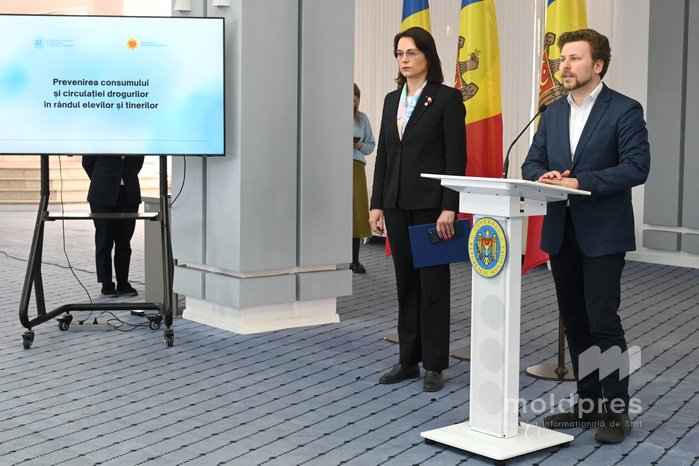
The Education and Research Ministry (MEC) and the Interior Ministry (MAI) have launched a joint action plan for 2026–2027, in order to prevent drug use and trafficking among pupils and young people. The plan includes communication and awareness activities, measures to strengthen safety around educational institutions, and enhanced patrolling, as part of a joint effort by state institutions, schools, parents and the community to combat this phenomenon.

At a today’s news conference, Education and Research Minister Dan Perciun, said that, through this joint action plan, the authorities aimed to strengthen prevention measures in schools, develop teachers’ competencies and expand support services for children at risk.

“Drug use among adolescents is a complex problem, and our response must be based, first and foremost, on prevention and education. School must be a safe space where students not only learn, but also develop the ability to make responsible decisions and to cope with pressures from their social and online environment,” said Dan Perciun.

The actions will focus on informing students, training teachers, school psychologists and medical staff and strengthening communication with parents.

“We aim, in the coming period, to reach at least 60 per cent of all pupils in grades 6–12. This means roughly 100,000 students. We will distribute information materials and organize lessons on this topic. Awareness activities will also be carried out in vocational schools and colleges,” added Dan Perciun.

At the same time, the authorities will conduct a national survey on the perception and incidence of drug use among pupils.

“The last survey of this kind was carried out in 2019. To have up-to-date data and to be able to rely on real evidence when we talk about the scale of the phenomenon, we will repeat this survey in 2026 together with our colleagues from the United Nations Children’s Fund (UNICEF). We will also have very clear procedures for educational institutions on how to prevent and how to manage cases, especially when they suspect or detect drug use,” Perciun noted.

The minister emphasized that, in addition to informing pupils, the actions would also include discussions with teaching staff.

“About 60 per cent of teachers will take part in training courses. All school psychologists and around 2,000 homeroom teachers from technical vocational education will receive additional guidance, so they can recognize signs of drug use and know what to do when they suspect or detect such situations. And, last but not least, school medical assistants will benefit from targeted training based on the same model during the next year and a half,” added the education minister.

In addition, a campaign focused on parental education will be carried out, with more than one thousand parents expected to take part in the activities.

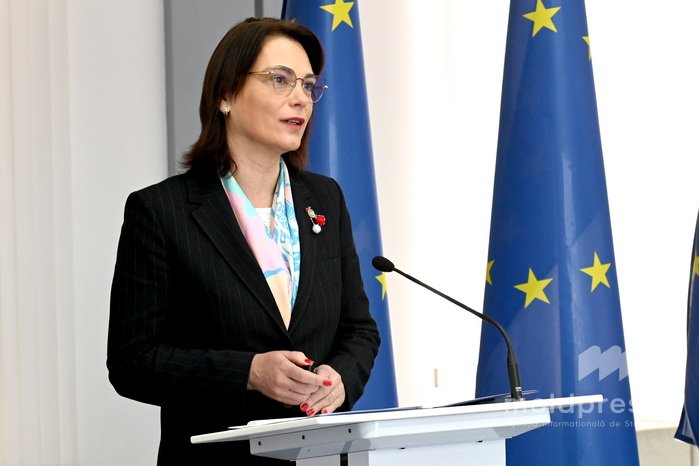
For her part, Interior Minister Daniella Misail-Nichitin said that the joint action plan aimed to protect every pupil and each young person of Moldova. More than 400 police officers with psycho-pedagogical training will be involved in the activities included in the plan.

“This plan, in fact, sends a very clear message: protecting children and preventing drug use in the educational environment is a national priority. The MAI, through the General Police Inspectorate (IGP) and its territorial subdivisions, will directly involve more than 400 police officers with psycho-pedagogical training in the implementation of this plan. Through their expertise, police officers will actively contribute to prevention measures, early intervention and enhancing safety in the educational environment,” the minister said.

Through their actions, MAI officers aim to contribute to increasing safety in and around educational institutions.

“It is the responsibility of the Interior Ministry to strengthen the police presence around schools and increase the number of patrols in these areas. In fact, starting this week, the Police and Carabineers are already carrying out such actions, precisely to discourage possible activities related to the circulation of these substances near educational institutions,” the interior minister noted.

In parallel, periodic inspections will be organized in commercial units near schools, in order to prevent the sale of tobacco products or electronic cigarettes to minors.

At the same time, investigative measures will be intensified, in order to identify and dismantle drug distribution networks, including in the school environment.

Daniella Misail-Nichitin also announced that an online platform would be made operational in the near future, through which possible cases of drug use or illegal trafficking can be reported anonymously, so that the Police can intervene immediately.

The Minister of Internal Affairs also said that the authorities were working on a draft law introducing much harsher measures for those who use children in the sale or distribution of drugs and psychotropic substances. The draft also includes provisions that would no longer allow the exemption from criminal liability of those who use minors for such purposes. The draft is already on the government’s platform and is expected to be submitted to parliament for examination by the end of this month, Misail-Nichitin said.

She added that, starting this weekend, measures to check green areas would also be intensified, in order to discourage the use and distribution of illegal substances.
 Facebook
 Instagram
 X/Twitter
 Telegram
Medical first in Moldova: living donor liver transplant performed using laparoscopic technique
VIDEO // Environment Minister: We installing capture filters to prevent pollution of Dniester
Crisis Cell - 40 citizens returned to country on Dubai–Chișinău flight
Drivers of vehicles registered in other states to be sanctioned for traffic violations on roads in Moldova
Environmental authorities of Moldova monitor oily patches noticed on Dniester River upstream from Naslavcea
Moldovan prosecutors' evaluation commission summons more prosecutors for hearings in March
Crisis Cell: 30 Moldovan citizens evacuated from United Arab Emirates
Citizens can collect February heating compensation
Over 200 million lei invested in local development: dozens of projects funded in February through European Village and Europe is Near programs
PHOTO // Moldova's General Police Inspectorate equipped with 17 mobile sectors for field interventions
Moldova's General Police Inspectorate initiates two criminal proceedings on death of woman
Director of Ruse University's branch from Taraclia, ARBOM head meets President of Bulgaria
VIDEO // Government of Japan provides grant for renovation of social center in south Moldova through Kusanone programme
Attention, travelers! Work of Moldovan-Ukrainian border crossing points temporarily suspended over technical deficiencies
Moldovan PM announces requesting of activation of EU Civil Protection Mechanism, in context of situation on Dniester
Romanian Language Day to be marked in Ukraine; Moldovan president says Romanian language unites people on both banks of Prut, all the way to Chernivtsi
Moldovan Interior Ministry, Education Ministry launch joint action plan to prevent drug use, trafficking among pupils, young people
CNMC decided to create joint crisis cell with specialists from national institutions and experts from neighboring countries in context of water pollution in Dniester
VIDEO // Authorities raise alert level after Dniester River water pollution: laboratory tests show exceeding of permitted limits
Parliament backs Moldova’s withdrawal from Treaty protecting fossil fuel investments
Foreign Ministry: 28 Moldovan citizens requested consular assistance in Middle East
 National Bank of Moldova
Speaker attends reception dedicated to Japan’s National Day
Moldovan government's secretary general country needs stronger mayoralties for communities' development
Moldovan PM meets two entrepreneurs developing successful businesses in Causeni
Moldovan PM visits two major projects completed in Causeni with government's support
Moldovan deputy PM for reintegration has meeting with European Commissioner for Enlargement

Speaker attends reception dedicated to Japan’s National Day
Deputy Prime Minister attends Moldova–Switzerland Business Forum
European Integration Office marks two years since creation
Wrestler Mihaela Samoil wins bronze medal at European Championship
Moldovan environment minister says authorities setting filters to contain oil substances in Dniester River; Moldova asks for Romania’s support
Moldovan government's secretary general country needs stronger mayoralties for communities' development
Critical alert on Dniester: Pollution intensifies at border; Moldovan environment minister recommends halting water supply in Naslavcea area
Moldovan PM meets two entrepreneurs developing successful businesses in Causeni
Romanian Language Day to be marked in Ukraine on August 31; Decree signed by Ukrainian President
Moldovan PM visits two major projects completed in Causeni with government's support
Simple motion on Moldovan Defence Ministry’s policies fails
Moldovan deputy PM for reintegration has meeting with European Commissioner for Enlargement
Joint Control Commission holds meeting in Bender
VIDEO // Financial support for farmers of Moldova: over 400 million lei in payments through AIPA, compensation for diesel fuel used in spring agricultural work
PHOTO // Government investments in Căușeni and better conditions for citizens
Prime Minister in talks with mayors from Căușeni district
Receive the latest news directly to your email

Receive the latest news directly to your email