
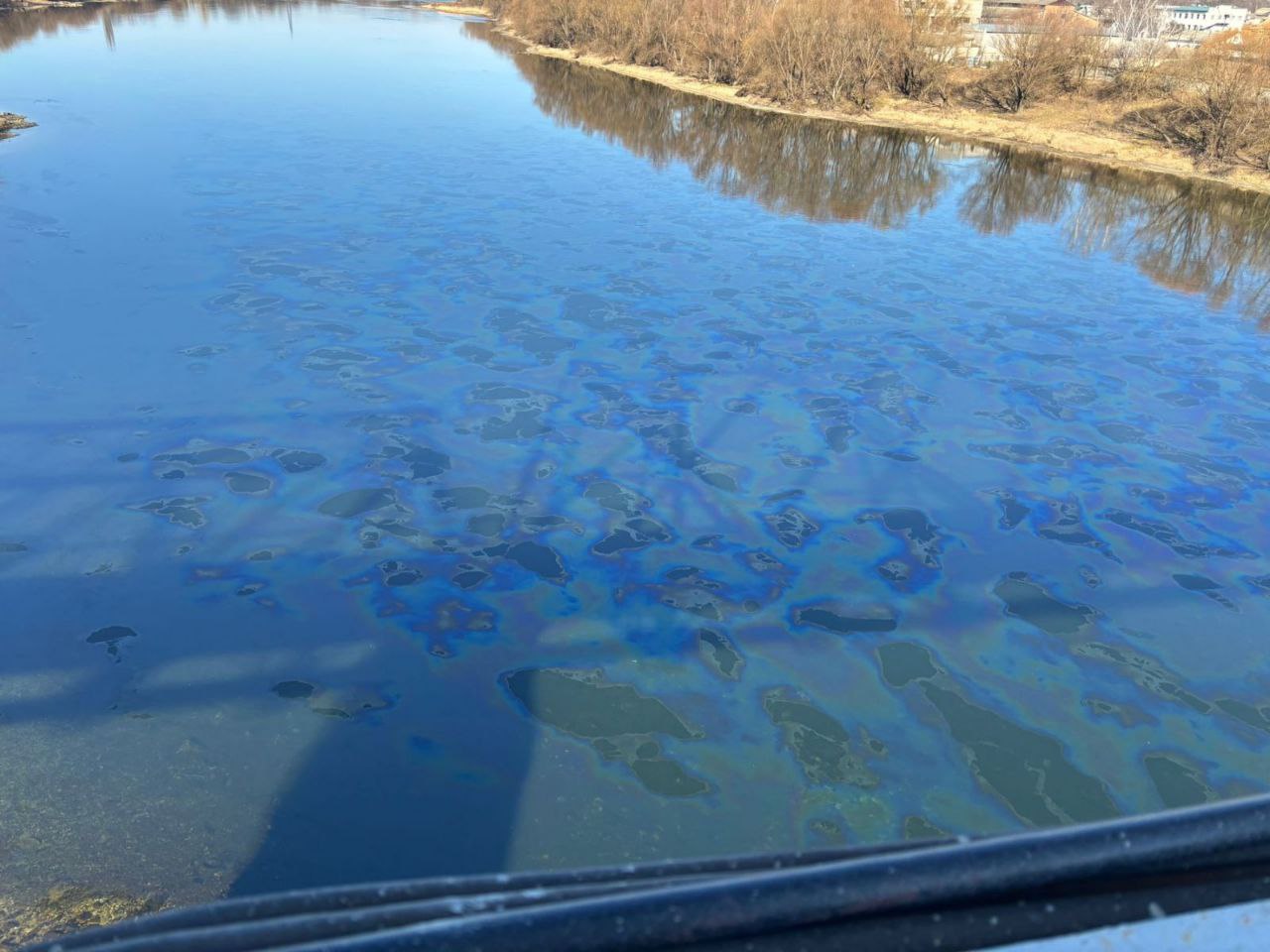
VIDEO // Authorities raise alert level after Dniester River water pollution: laboratory tests show exceeding of permitted limits
The authorities of the Republic of Moldova have raised the alert level in the northern area of the country, after laboratory analyses indicated that permissible limits of certain pollutants in the water of the Dniester River have been exceeded. Environment Minister Gheorghe Hajder made the statement today. He said that the situation is being constantly monitored and additional measures are being implemented to protect the population.

According to the official, the problem arose after a petroleum substance coming from Ukraine, following a Russian attack on a hydropower plant, reached the waters of the Dniester and continues to move downstream. Under these conditions, the authorities decided to increase the alert level for localities in the Naslavcea area, where analyses indicated values above the permitted limits.

"Because this fuel continues to reach the Dniester River, we were forced to raise the alert level for residents in the Naslavcea region. Laboratory data show that the permitted limits have been exceeded, and consequently we have raised the risk level to yellow code. If the situation requires it, we will temporarily stop the water supply for localities in the north of the Republic of Moldova," said the Minister of Environment.

Interventions on both banks of the Dniester

The minister noted that, from the early hours of the morning, intervention teams from Ukraine have been working on the Ukrainian bank of the river to limit the spread of the pollution. At the same time, the authorities of the Republic of Moldova have benefited from support from Romania, which sent equipment and specialists for installing additional filters designed to reduce the impact of the pollutants.

In parallel, the responsible institutions in the Republic of Moldova continue to constantly monitor water quality to prevent any risk to the population.

According to Gheorghe Hajder, specialists are carrying out laboratory analyses at regular intervals to track how the situation evolves.

"We collect water samples with mobile laboratories directly in the field every six hours, to make sure that the water does not pose dangers to citizens. Depending on the results, we will decide on the necessary measures to protect the population," the minister explained.

Additional filters and straw barriers

Among the measures implemented to limit the effects of the pollution are the installation of additional filters and the use of straw bales, which serve to absorb and retain petroleum substances from the water surface.

The Minister of Environment mentioned that this method is effective and frequently used in such situations, even though there have been public debates regarding the efficiency of this solution.

"I have seen that there are discussions in society about the use of these straw bales. I want to point out that this is one of the most effective methods for capturing and removing petroleum substances from water," the official said.

Authorities continue field interventions

The Minister of Environment also stated that intervention teams are moving to other areas of the river to monitor the situation and to check how protection measures are being implemented.

In this context, the official announced that he will travel today to Soroca as well, to ensure that the field teams are acting effectively and to assess the evolution of the situation.

The authorities assure that they will continue to constantly monitor water quality and will inform the population about any change in the situation, so that any potential risks to citizens’ health are prevented.
 Facebook
 Instagram
 X/Twitter
 Telegram
DOC // Mechanism for voluntary amalgamation of administrative-territorial units improved
Environment chapter - among most expensive in EU accession negotiations
Alexandru Machidon officially takes over as Prosecutor General
Defence Ministry says object found in central district drone which illegally flew over Moldova on March 30
Doctoral studies system to be modernized, aligned with European standards in Moldova
PHOTO // Drone-like object discovered on field in central Moldova district: identified parts pose no danger
Mechanism for establishing state of emergency to be amended in Moldova according to European model
Moldovan government approves draft decision: new Moldova-Romania border crossing point to be created
Moldova to introduce new models of passports, travel documents
Moldova modernizes Register of road accidents, aligns it with EU standards
Moldovan Interior Ministry has new secretary general
PHOTO // Denim Day international campaign campaign; Moldovan Labour Ministry's employees stand in solidarity with violence victims
PHOTO // Promotion of Gagauz language supported through new educational measures
PHOTO GALLERY // Event dedicated to Gagauz language held in Chișinău
Discover Moldova with #MOLDPRES // Turbulent history of Pripiceni-Curchi Monastery: more than two-century-old icon, one of its most precious treasures
Moldovan finance minister participates in EU Economic and Financial Dialogue in Brussels
Moldovan energy minister in Brussels says energy security no longer political promise, but system under construction
Moldova represented at annual high-level meeting of Economic and Financial Dialogue between EU and countries candidates for accession
Mihai Isac: Moldova participated in ECP Summit in Yerevan as state at heart of EU enlargement talks
Meeting of Cooperation Committee between Moldova and North Carolina held in Chișinău: progress in implementing joint projects and new priority areas
European Commission Vice-President to pay official visit to Chișinău
 National Bank of Moldova
Moldovan president participates in meeting of European Coalition Against Drugs at European Political Community's Summit in Yerevan
Moldova's European future at center of high-level meeting in Yerevan
Voluntary amalgamation in north Moldova district: nine mayoralties merge, to receive 85 million lei in incentives
Moldovan PM says national resilience built through shared responsibility, coordination, preparedness
President received Japanese delegation led by Minister for Internal Affairs and Communications

PHOTO // Energy Minister approached regional energy security strengthening in Brussels
MOLDPRES INTERVIEW // Falk Lange, Head of the Council of Europe Office: “The Presidency of the Committee of Ministers is both a responsibility and an opportunity for the Republic of Moldova to demonstrate its commitment to European values.”
Amendments to vetting laws analyzed by Superior Council of Prosecutors and Council of Europe experts
USMF "Nicolae Testemițanu" to organize SimOlympic simulation Olympiad
Moldova strengthens European image: high standard at Council of Europe
European MP says elections in EU can influence Moldova’s path, European support stays strong
Moldovan president participates in meeting of European Coalition Against Drugs at European Political Community's Summit in Yerevan
MEP says Moldova resisted Russian pressure, gaining increasing support in European Union
Moldova adopts North Carolina’s agricultural extension model to support local farmers
First in EU accession process: European Parliament, parliament of Moldova launch joint working groups on negotiation chapters
Moldova’s EU accession process on agenda of EPC Summit's discussions; Romanian president: “We will have an answer by end of June”
Opportunities of strategic investments presented at Moldova – EU Conference, held in Chisinau on June 4
Moldova's European future at center of high-level meeting in Yerevan
Voluntary amalgamation in north Moldova district: nine mayoralties merge, to receive 85 million lei in incentives
European Parliament member says Moldova continues to take concrete steps towards EU accession, political support for this goal stays strong
Moldovan PM says national resilience built through shared responsibility, coordination, preparedness
Receive the latest news directly to your email

Receive the latest news directly to your email