
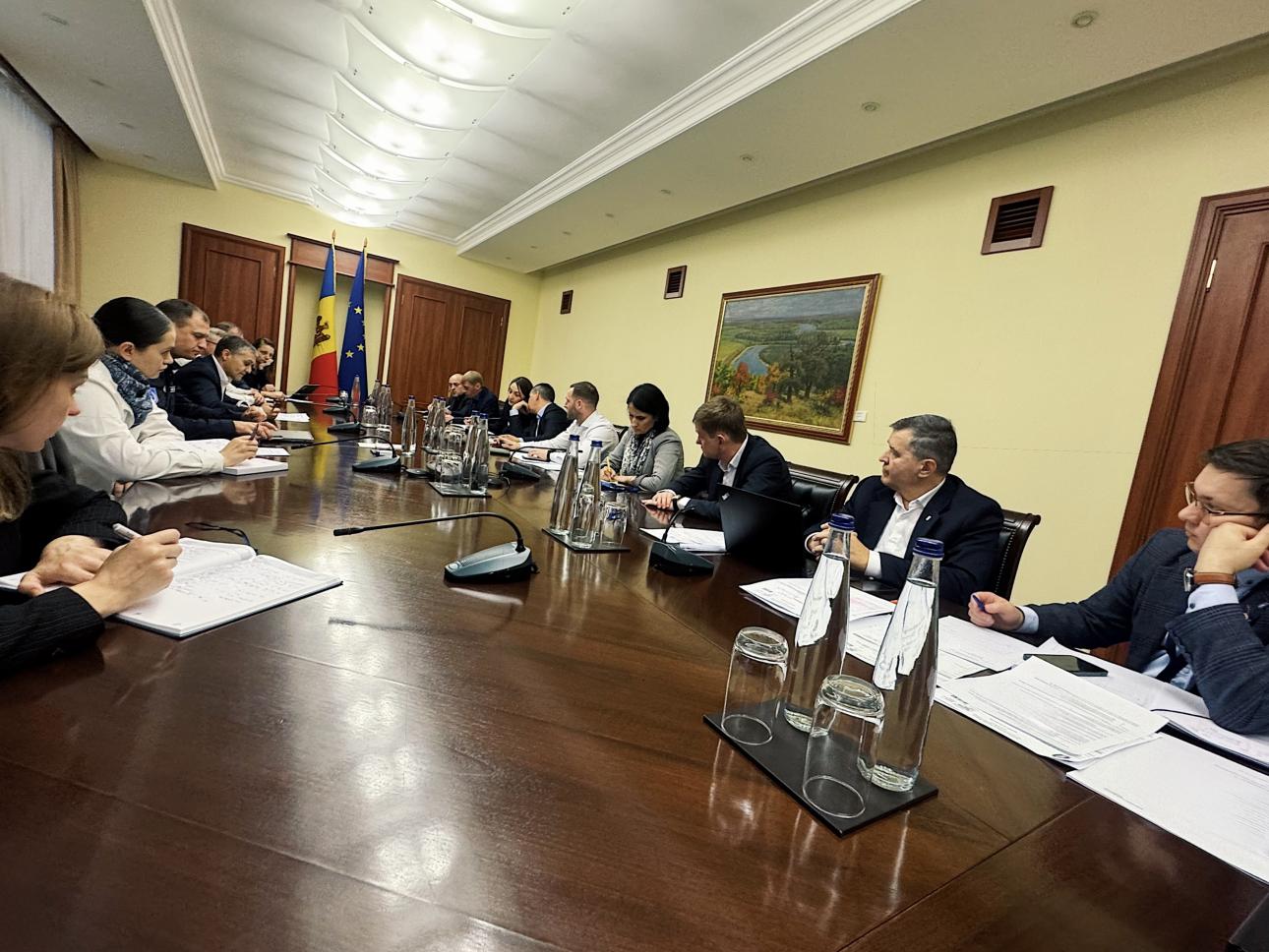
CNMC decided to create joint crisis cell with specialists from national institutions and experts from neighboring countries in context of water pollution in Dniester
A joint crisis cell, made up of specialists from national institutions and experts from neighboring countries will be created to ensure a rapid and coordinated response in the event of discharges of petroleum products into the waters of the Dniester River. The decision was taken today by the National Crisis Management Center (CNMC).

At today’s CNMC meeting, extended measures were also established to assess and improve the technical measures for collecting pollutants, as well as for the continuous monitoring of water quality and pollutant levels.

At the same time, additional resources from state reserves will be prepared and used, when necessary, including intervention equipment and emergency stocks.

Another measure concerns the temporary adjustment of the water flow in the northern sectors to facilitate the capture of pollutants and, if necessary, the temporary suspension of water supply in certain areas.

CNMC continues to ensure close cooperation between institutions, permanent monitoring of the situation and rapid adjustment of interventions, so that the measures taken are effective and protect people and the environment, the institution announced.

“All decisions taken aim to protect the environment and ensure the safety of citizens. The activities of the institutions involved are carried out constantly and in a coordinated manner, with the Ministry of Environment as the main sectoral institution,” CNMC states.

The authorities of the Republic of Moldova announced today that they have raised the alert level in the northern part of the country, after laboratory tests indicated that the permissible limits of certain pollutants in the water of the Dniester River had been exceeded. The announcement was made by the Minister of Environment, Gheorghe Hajder, who stated that the situation is being continuously monitored, and additional measures are being implemented to protect the population. The problem arose after a petroleum substance coming from Ukraine, following a Russian attack on a hydropower plant, reached the waters of the Dniester and continues to move along the course of the river.
 Facebook
 Instagram
 X/Twitter
 Telegram
VIDEO // Environment Minister: We installing capture filters to prevent pollution of Dniester
Crisis Cell - 40 citizens returned to country on Dubai–Chișinău flight
Drivers of vehicles registered in other states to be sanctioned for traffic violations on roads in Moldova
Environmental authorities of Moldova monitor oily patches noticed on Dniester River upstream from Naslavcea
Moldovan prosecutors' evaluation commission summons more prosecutors for hearings in March
Crisis Cell: 30 Moldovan citizens evacuated from United Arab Emirates
Citizens can collect February heating compensation
Over 200 million lei invested in local development: dozens of projects funded in February through European Village and Europe is Near programs
PHOTO // Moldova's General Police Inspectorate equipped with 17 mobile sectors for field interventions
Moldova's General Police Inspectorate initiates two criminal proceedings on death of woman
Director of Ruse University's branch from Taraclia, ARBOM head meets President of Bulgaria
VIDEO // Government of Japan provides grant for renovation of social center in south Moldova through Kusanone programme
Attention, travelers! Work of Moldovan-Ukrainian border crossing points temporarily suspended over technical deficiencies
PHOTO // USMF "Nicolae Testemițanu" national leader by articles indexed in scientometric databases Web of Science and Scopus
Romanian Language Day to be marked in Ukraine; Moldovan president says Romanian language unites people on both banks of Prut, all the way to Chernivtsi
Moldovan Interior Ministry, Education Ministry launch joint action plan to prevent drug use, trafficking among pupils, young people
CNMC decided to create joint crisis cell with specialists from national institutions and experts from neighboring countries in context of water pollution in Dniester
VIDEO // Authorities raise alert level after Dniester River water pollution: laboratory tests show exceeding of permitted limits
Parliament backs Moldova’s withdrawal from Treaty protecting fossil fuel investments
Foreign Ministry: 28 Moldovan citizens requested consular assistance in Middle East
VIDEO // Citizens can check in real time gasoline and diesel prices and stocks of fuel stations across country
 National Bank of Moldova
Speaker attends reception dedicated to Japan’s National Day
Moldovan government's secretary general country needs stronger mayoralties for communities' development
Moldovan PM meets two entrepreneurs developing successful businesses in Causeni
Moldovan PM visits two major projects completed in Causeni with government's support
Moldovan deputy PM for reintegration has meeting with European Commissioner for Enlargement

Deputy Prime Minister attends Moldova–Switzerland Business Forum
European Integration Office marks two years since creation
Wrestler Mihaela Samoil wins bronze medal at European Championship
Moldovan environment minister says authorities setting filters to contain oil substances in Dniester River; Moldova asks for Romania’s support
Moldovan government's secretary general country needs stronger mayoralties for communities' development
Critical alert on Dniester: Pollution intensifies at border; Moldovan environment minister recommends halting water supply in Naslavcea area
Moldovan PM meets two entrepreneurs developing successful businesses in Causeni
Romanian Language Day to be marked in Ukraine on August 31; Decree signed by Ukrainian President
Moldovan PM visits two major projects completed in Causeni with government's support
Simple motion on Moldovan Defence Ministry’s policies fails
Moldovan deputy PM for reintegration has meeting with European Commissioner for Enlargement
Joint Control Commission holds meeting in Bender
VIDEO // Financial support for farmers of Moldova: over 400 million lei in payments through AIPA, compensation for diesel fuel used in spring agricultural work
PHOTO // Government investments in Căușeni and better conditions for citizens
Prime Minister in talks with mayors from Căușeni district
EcoContact relaunches measures program to protect natural areas
Receive the latest news directly to your email

Receive the latest news directly to your email