
Moldovan parliament denounces three more agreements with Commonwealth of Independent States: citizens of Tajikistan, Kyrgyzstan to need visas to enter Moldova
Moldova will denounce three agreements concluded with member countries of the Commonwealth of Independent States (CIS) as part of a process to modernize national legislation and align with European Union standards. The draft laws, developed by the Ministry of Foreign Affairs and the Ministry of Finance, were voted on in the first reading in parliament.

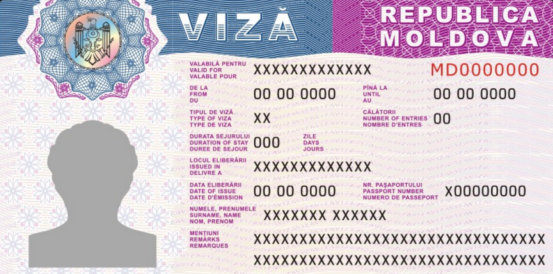
One of the agreements targeted is the one concerning visa-free travel for CIS citizens, signed in Bishkek in 1992. The denunciation of this agreement will directly affect citizens of Tajikistan and Kyrgyzstan, who will need a visa to enter Moldova.

State Secretary Mihai Mitu said that the decision to denounce the visa-free travel agreement was inevitable:

“The European Commission has recommended that we adjust Moldova's visa policy to the list of third countries that pose risks in terms of illegal migration or security.”

The official added that the denunciation of the agreement would have a direct effect on citizens of Tajikistan and Kyrgyzstan.

“In the negotiation process with these two countries, we propose concluding bilateral agreements for the mutual abolition of visas for holders of diplomatic and service passports.”

Referring to the history of negotiations, Mitu specified that “since 2004, these states have been proposed to conclude bilateral agreements concerning the mutual abolition of visas, but so far there has been no response on the subject.”

“According to information by border police, as of 2000 till 2025, about 10,748 Kyrgyz citizens entered Moldova, with 54 currently holding residence permits. In the case of Tajikistan, from 2022 to 2025, 16,680 citizens entered, with 117 currently holding residence permits. After the denunciation of the agreement, they will be able to get visas, including through Moldova's electronic visa platform or at diplomatic missions,” the official noted.

The other two agreements targeted for denunciation relate to the principles of levying indirect taxes on the export and import of goods between CIS states (signed in Moscow, 1998) and measures to ensure payments between economic organizations in CIS states (signed in Tashkent, 1992). In all cases, the treaty provisions are considered outdated and inapplicable.

So far, Moldova has denounced 64 CIS treaties, as part of an ongoing process of aligning with European norms and standards.
 Facebook
 Instagram
 X/Twitter
 Telegram
Alexandru Machidon officially takes over as Prosecutor General
Defence Ministry says object found in central district drone which illegally flew over Moldova on March 30
Doctoral studies system to be modernized, aligned with European standards in Moldova
PHOTO // Drone-like object discovered on field in central Moldova district: identified parts pose no danger
Mechanism for establishing state of emergency to be amended in Moldova according to European model
Moldovan government approves draft decision: new Moldova-Romania border crossing point to be created
Moldova to introduce new models of passports, travel documents
Moldova modernizes Register of road accidents, aligns it with EU standards
Moldovan Interior Ministry has new secretary general
PHOTO // Denim Day international campaign campaign; Moldovan Labour Ministry's employees stand in solidarity with violence victims
PHOTO // Promotion of Gagauz language supported through new educational measures
PHOTO GALLERY // Event dedicated to Gagauz language held in Chișinău
Protected areas in Moldova to be managed according to European standards, based on new guide supported by Austria
SIS officers, held captive in Russian Federation, returned to Moldova
Moldova's European future at center of high-level meeting in Yerevan
European Parliament member says Moldova continues to take concrete steps towards EU accession, political support for this goal stays strong
Moldovan PM says authorities choose to be prepared for any situations, to manage them as efficiently, professionally as possible
Reform of local public administration: nine mayoralties in north Moldova district rule to merge; incentives of 85 million lei provided by authorities
Governor of National Bank of Moldova in Bucharest says Moldova proves it can deliver concrete results, with direct impact on citizens, economy
Construction of Straseni–Gutinas power line to become strategic public utility project in Moldova
Moldovan weightlifter sets U-17 world, European record in the snatch
 National Bank of Moldova
Moldova's European future at center of high-level meeting in Yerevan
Voluntary amalgamation in north Moldova district: nine mayoralties merge, to receive 85 million lei in incentives
Moldovan PM says national resilience built through shared responsibility, coordination, preparedness
President received Japanese delegation led by Minister for Internal Affairs and Communications
Moldovan Speaker to attend EU Speakers Conference

President in Yerevan: European integration- main strategic project of Moldova
Expert Daniel Vodă on EPC Summit: Moldova asking Europe to see it as it really is – country of people who want peace and security
Moldova to take over Japanese models for emergency management
Moldovan Speaker attends EU Speakers' Conference in Copenhagen
BTA: Bulgarian President, Armenian PM Sign Strategic Partnership Declaration
Head of State on domestic violence and Ludmila Vartic case: We need justice, not speculation
ARMENPRESS // Ursula von der Leyen, Kaja Kallas and other EU leaders arrive in Armenia
ARMENPRESS: VIDEO // Moldovan President arrives in Armenia
President about informing citizens in risk situations and lessons from war in Ukraine: Panic can do more harm than lack of information
PHOTO // Republic of Moldova and Japan sign Memorandum of Cooperation in digital and artificial intelligence sectors
Moldova and Japan strengthen cooperation for faster response and modernized emergency services
European Union supports work of Moldovan journalists to ensure all citizens have access to objective information
President about Chernobyl: It is shared tragedy and lesson we must learn
BTA: Parties Spent over EUR 913,000 on Election Campaign Ads, Most in Small Number of Media – Analysis
Prime Minister’s message on World Press Freedom Day
President expresses gratitude to dedicated journalists who defend democracy and truth in Moldova
Receive the latest news directly to your email

Receive the latest news directly to your email