
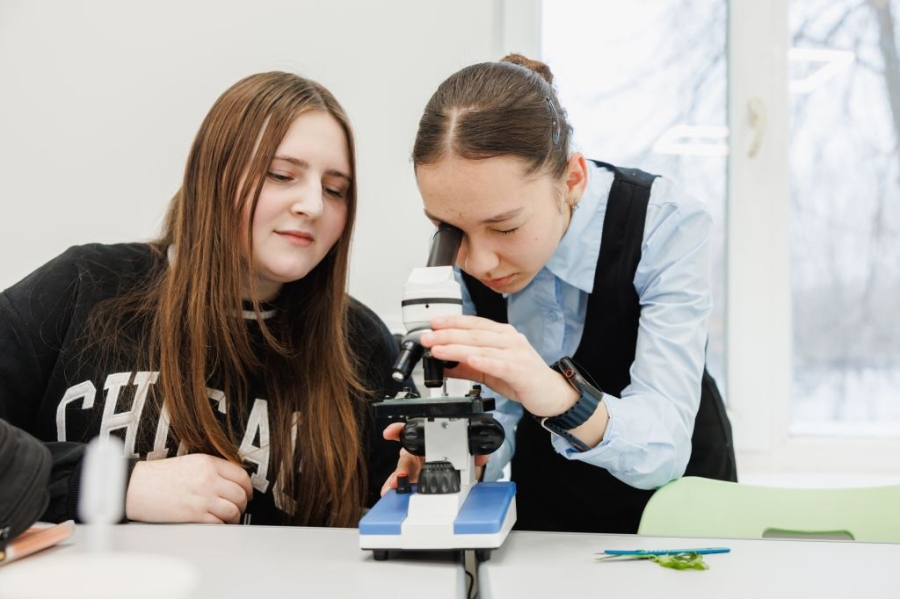
Modernized laboratories for students in nine model schools, with EU support
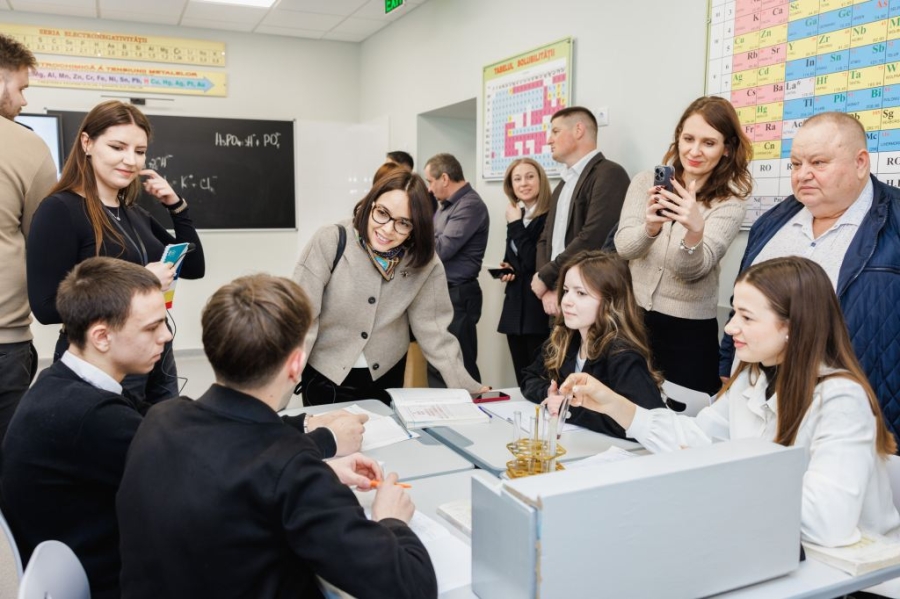
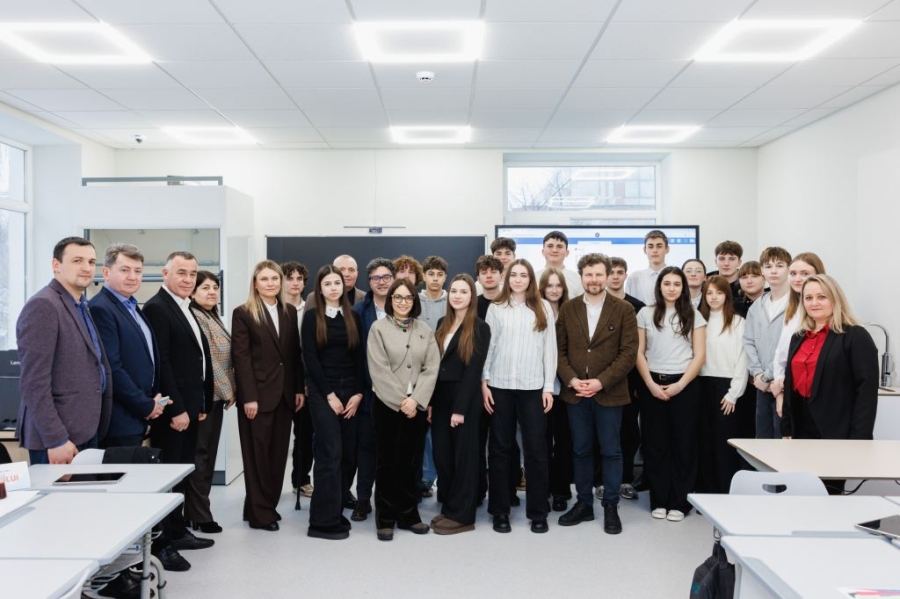
Around seven thousand students from nine model schools in the Republic of Moldova will study physics, chemistry, biology and mathematics in fully modernized laboratories, thanks to financial support from the European Union. Each institution has benefited from investments totaling over 150,000 euros, an amount that covers renovation works as well as new furniture and laboratory equipment. In total, 38 STEAM laboratories and mathematics classrooms have been renovated and equipped.

The initiative is part of the project Promoting quality education and lifelong learning opportunities for all, funded by the European Union and implemented by UNDP and UNICEF.

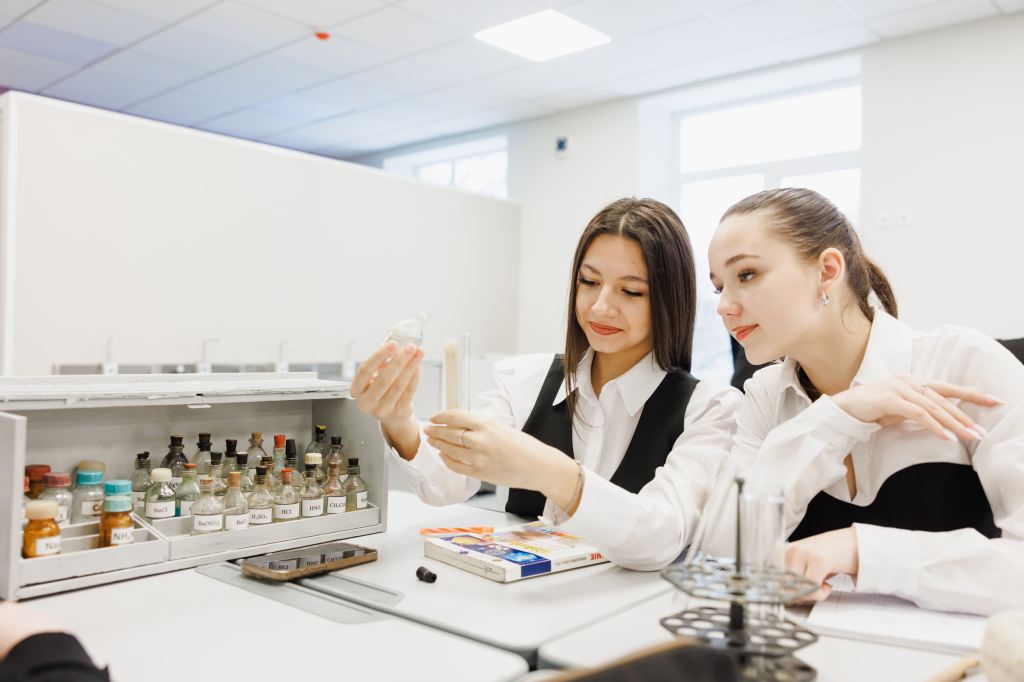
The laboratories are equipped with modern, flexible furniture, laboratory instruments, microscopes, wireless sensors, document cameras, and robotics kits. Each model school received PASCO sensor kits, which enable the collection and analysis of real data for physics, chemistry, and biology – from measuring oxygen concentration to analyzing light or conductivity.

The new equipment allows a shift from theoretical learning to experiment-based learning. Students can carry out high-precision experiments, use sensors to measure temperature, pressure, light, or movement, observe biological and chemical processes under the microscope, work on STEAM projects, and integrate robotics into their lessons using Arduino and Ozobot kits.

At the same time, in two of the nine beneficiary institutions, Grigore Vieru Lyceum in Briceni and Mihail Ceachir Lyceum in Ceadîr-Lunga, the school libraries have been renovated and reconceptualized. Their renovation and equipping were carried out with the support of UNDP Moldova and a banking institution, within Moldova for Education partnership launched by the Ministry of Education and Research, aimed at attracting support from the private sector for future model schools.

The libraries of the two institutions have been transformed into modern educational spaces, adapted to students’ needs and to new trends in education. Each library now includes a work area equipped with computers, partitioned desks, laptops, a multifunction printer, and a bulletin board.
 Facebook
 Instagram
 X/Twitter
 Telegram
Competitions for hospital leadership: Ministry of Health seeks managers for 20 institutions
Over 51,000 medical leave certificates issued digitally in first month after portal’s launch
As of 1 April drivers may drive without using low beam headlights during day
Higher pensions and social benefits: 6.84 percent indexation applied as of today
Over 1,800 hectares of forest to be planted in 15 districts along Dniester River, under World Bank–supported programme
Over 900,000 unique beneficiaries, representing 38% of population received reimbursed medicines through ePrescription system
Ben Gurion Airport in Tel Aviv remains closed until 16 April
Another Shahed-type drone detected while unauthorizedly flying over national airspace in Transnistrian segment
DOC // Official Journal publishes implementation mechanism for CEEPUS IV
Moldova’s airspace violated again: Shahed drone found in Dubăsari–Orhei area
Nicolae Testemitanu Medical University of Moldova launches new master’s programme, Health Promotion and Protection
Permanent teaching grades and less bureaucracy in schools
Prosecutor’s Office provides new details on investigation into death of Ludmila Vartic
Moldova, Romania to sign Agreement on extending coordinated control at Leuseni–Albita border crossing point
New oil slicks on Dniester River; Moldovan authorities order reinforcement, expansion of anti-pollution barriers
New wave of oil products' slicks detected on Dniester River; authorities convene for emergency meeting
Moldovan PM participates in awards ceremony recognizing rescuers' achievements
Large wind farms with energy storage systems to be built in Moldova: 16 bids submitted in tender
Environmental protection experts from two banks of Dniester hold new working meeting
Moldovan Central Electoral Commission accredits 14 national observers to monitor new local elections, local referendums
New milestone for green energy: Moldova surpassed 1 Gigawatt of installed renewable energy capacity
 National Bank of Moldova
Moldovan authorities step up prevention, response measures on Dniester, amid anticipated new pollution wave
Moldovan PM participates in awards ceremony recognizing rescuers' achievements
Environmental protection experts from two banks of Dniester hold new working meeting
Moldovan deputy PM has meeting with Ambassador of Germany
President met with U.S. Senator

President met with U.S. Senator
PAS faction to have new MP
VIDEO // Single institution to manage Moldova’s forests
CNMC: Eenergy sector remains fragile, ending state of emergency requires caution
Foreign Ministry: We condemn violation of airspace. Such actions endanger citizens’ security
Support for export promotion: 16 business associations to receive 14.6 million lei through Bridge Export Program
Over 20 media projects to get funding from media subsidy fund
Shahed drone illegally flew over airspace of Moldova
Over 25,000 residents from left bank of Dniester commute daily to right bank, Deputy Prime Minister for Reintegration says
BTA: Bulgarian Literature Has Become Increasingly Visible on International Stage - Deputy Culture Minister Stoyanov
Simple motion on public policies implemented by Ministry of Labour and Social Protection failed
Proposals for improving efficiency of ministries discussed at roundtable
PHOTO GALLERY // Premiere at Mihai Eminescu National Theater: “Intrigue and Love,” directed by Alexandru Cozub
Moldova to sign social security agreements with Quebec (Canada), Albania, Croatia and Ireland
Around 622,000 vulnerable families receive energy compensation
Prime Minister visited agricultural business in Unguri village, Ocnița district
Receive the latest news directly to your email

Receive the latest news directly to your email