
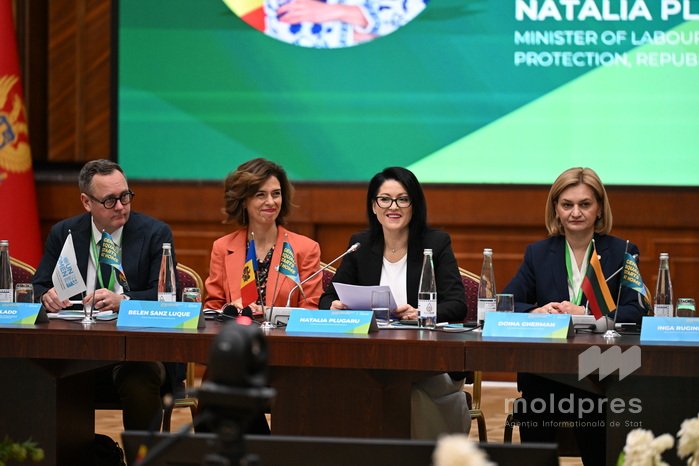
PHOTO // Europe and Central Asia Care Action Agenda 2026–2030 launched in Chișinău
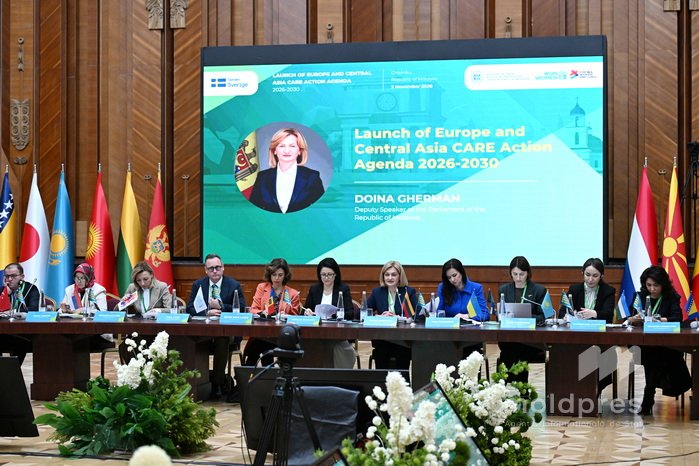
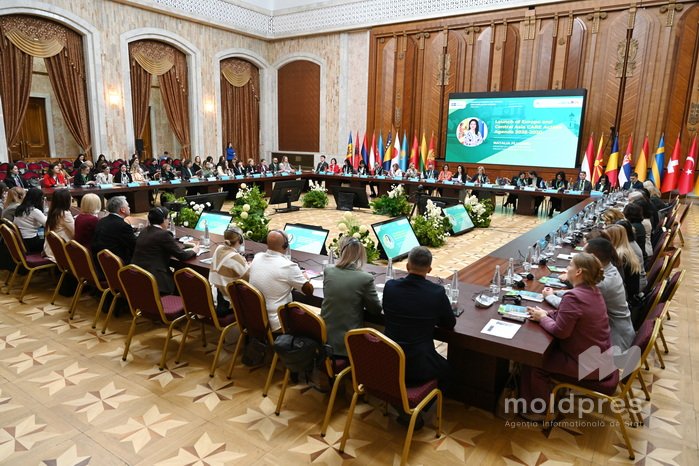
The Europe and Central Asia Care Action Agenda 2026–2030 will be launched today during the high-level meeting on investing in care systems for inclusive economic growth and gender equality. The event is taking place in Chișinău and brings together representatives of governments, international organizations, civil society and the private sector from more than 15 countries, who will exchange experience on care policies and practices.
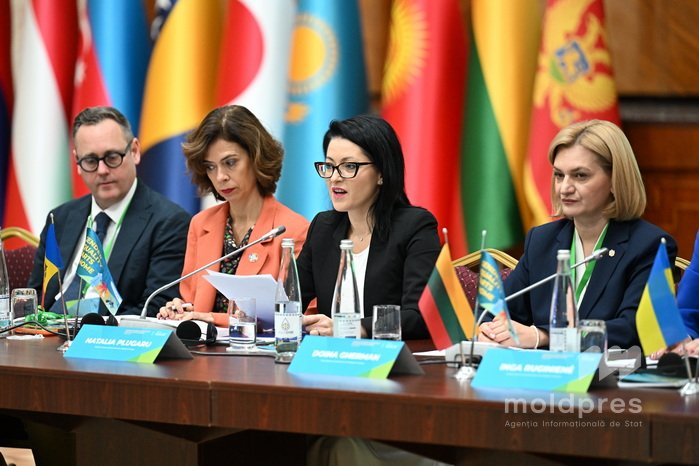
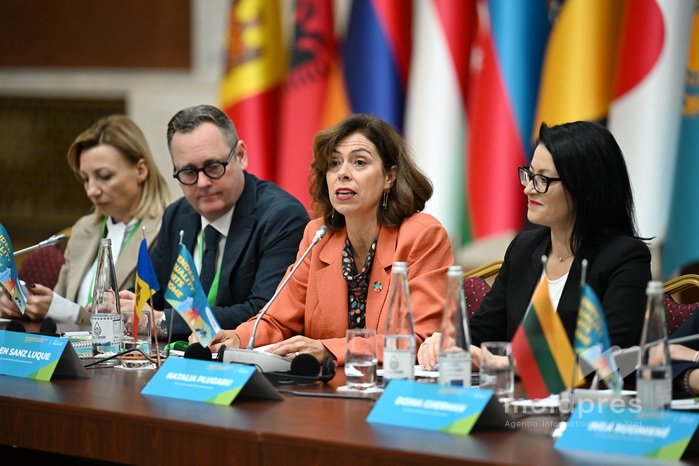
Opening the event, Minister of Labour and Social Protection Natalia Plugaru emphasized that today’s meeting builds a bridge between the first Regional Forum on Care in Europe and Central Asia, held in Istanbul, and the next steps needed to turn commitments into action.
“We are delighted that the Republic of Moldova is continuing this regional conversation with the launch of the agenda for 2026–2030. It is an honour for the Republic of Moldova to host this meeting, as strengthening care systems contributes to advancing our European integration agenda and putting into practice the principles of dignity, equality, solidarity and respect for human rights. Women continue to bear the burden of unpaid work, despite all the efforts made so far. We cannot ask women to participate equally in economic and social life as long as care responsibilities are distributed unequally. Investments in care create jobs and contribute to strengthening incomes and local economies. Their value is also measured in dignity. Whether we are talking about a child at the beginning of life or an older person receiving care, all these services are essential elements of economic infrastructure. Therefore, our policies and, above all, our budgets must recognize the importance of these factors,” Natalia Plugaru said.
The official emphasized that the regional agenda must be translated into concrete action at national and local levels, which requires a shared vision, quality services and a supported and sustained workforce.“We understand that there can be no single model for our diverse region and that each country must establish its own path for implementing this agenda. However, all actions must be based on human rights, gender equality and social inclusion. Regional cooperation will help us learn from the experience gained and identify what works and what does not. During this event, we will address practical questions: how to secure the necessary financial resources, how to connect services with people so that they receive the support they need, and how to attract and retain workers in the care sector. The government has responsibilities in this area, but we are also working with local authorities, employers, civil society, trade unions and development partners. Care workers need decent remuneration, while families need reliable services. Responsibilities must be shared more fairly among men and women, public institutions, communities and employers. This agenda must ensure the support families need, decent working conditions for care workers and independence for people who need care,” Natalia Plugaru noted.
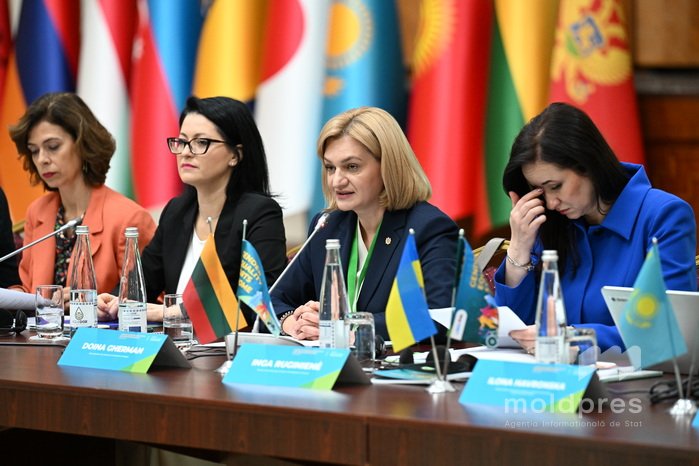
In turn, Deputy Speaker of Parliament Doina Gherman stressed that the discussions at the meeting address an issue that affects every family, every generation and the entire economy.
“European integration must mean more than aligning national legislation with EU standards. It must provide better opportunities for women, accessible care services and the support families need. This is why the Europe and Central Asia Care Action Agenda 2026–2030 is important for us. It gives us the opportunity to learn from one another, identify solutions that work and turn regional commitments into national action. As a country, we are ready to contribute our experience,” she said.
The official highlighted the importance of the joint involvement of public institutions, employers, civil society and development partners in ensuring accessible care services and supporting work–life balance.“No institution can succeed alone in this endeavour, whether we are talking about Parliament, the Government or local authorities. Employers, civil society and development partners also have responsibilities. Our joint effort is needed. I hope that today’s discussions will help us reach consensus not only on the changes needed, but also on the actions we are prepared to undertake. No woman should have to choose between caring for her family and building a career, and no family should be left alone to face care responsibilities. This is the future we want to build, and this is the European future we must ensure for our citizens,” Doina Gherman said.
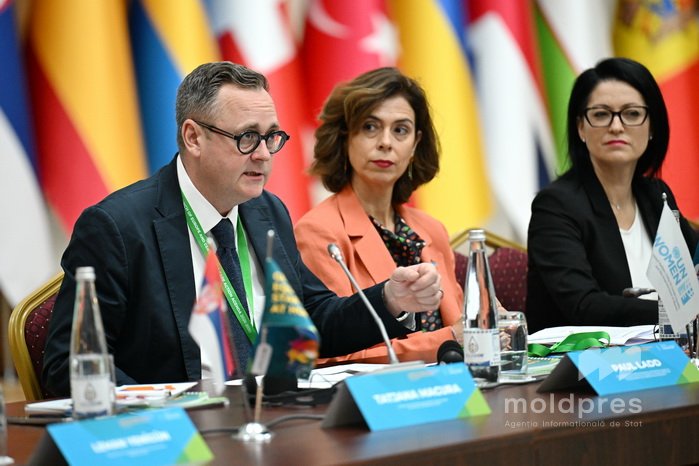
For his part, Paul Ladd, Director of the Sustainable Development and Population Division at the United Nations Economic Commission for Europe (UNECE) and Senior Adviser to the UNECE Executive Secretary, noted that demographic change, migration and population ageing are increasing the need to develop care services in Europe and Central Asia, while responses must be adapted to the realities of each country.
“Responsibilities must be shared fairly between women and men, and cooperation between governments, international organizations and civil society must be strengthened. We need a whole-of-society approach so that civil society organizations and human rights advocates can contribute to developing services tailored to people’s realities and needs. Health and workforce policies must also work together to ensure service delivery. The organization of economic life as a whole must enable people to care for one another without having to give up their own opportunities. Thus, the regional implementation strategy provides a basis for improving long-term care and strengthening support for families that need such services. We have a broader ambition: to develop a care economy that recognizes the value of this work,” Paul Ladd said.
UN Women Regional Director for Europe and Central Asia Belen Sanz Luque said that institutional efforts related to care services must focus on turning policies into action and action into concrete changes for citizens.“Care is an essential component of society and the economy, yet work in this area often remains invisible and is carried out predominantly by women. Globally, women provide 76% of all unpaid care work. Although countries have made international commitments to recognize and value care work, the main challenge remains turning these commitments into concrete action and lasting change. Investments in care services should not be viewed as expenses, but as opportunities for economic development, as they can generate two to three times more jobs than similar investments in other sectors. Globally, the development of care services could create nearly 300 million decent jobs by 2035 and contribute to economic growth, expanding the tax base and strengthening gender equality. Demographic change, migration and population ageing are increasing the need for accessible care services for children, older people and families, and in their absence, responsibilities are largely transferred to women. To address these challenges, comprehensive care systems are needed, bringing together the efforts of governments, public institutions and social partners and ensuring benefits for the economy, equality, resilience and human dignity,” Belen Sanz Luque said.
The forum continues the regional dialogue launched in May in Istanbul to identify solutions for developing care systems. The event brings together representatives of governments, international organizations, civil society, the private sector and other relevant institutions from more than 15 countries. Participants will exchange experience on care policies and practices, discuss opportunities for regional cooperation and identify directions for action to develop care services and support people and families who need them.The event is organized by the Ministry of Labour and Social Protection in cooperation with UN Women, with the support of Sweden.
 Facebook
 Instagram
 X/Twitter
 Telegram
Over 2,400 students from 31 countries admitted to Moldova’s universities
New guide set with Sweden’s support explains investigation of pollution, poaching and illegal logging
BUILDING MOLDOVA // Schools and universities at heart of European investment
Taras Shevchenko gymnasium's library enriched with Ukrainian children’s literature
Moldovan Speaker's message on National Greening Day
VIDEO // Remote medical consultations for village residents; Moldovan Health Ministry launches pilot project
Moldovan Foreign Affairs Ministry extends condolences to families of victims of railway accident in Spain
Train accident in Spain; Moldova's Foreign Affairs Ministry checks whether Moldovan citizens are among victims
Moldovan students can get scholarships for high school studies in USA and UK
EcoContact presents Moldova’s experience in biodiversity conservation at regional event in Armenia
Prime Minister on cyberattack targeting public digital services: Authorities investigating possible involvement of foreign actors
Moldova, Romania examine joint programmes for counter-drone defense
Moldovan PM says cybersecurity to stay priority for Moldova
STISC: Personal data of around 750,000 people may have been extracted following cyberattack on digital public services in Moldova
Moldovan government rejects allegations regarding Ukrainian grain in Giurgiulesti: “This is false information”
Over 32 per cent of voters cast ballots in Moldova by 18:00
Almost 25 per cent of voters cast ballots by 15:00 in seven Moldovan localities where elections are held
Elections, referendum held in Moldova: more than 2,800 people vote by noon; highest turnout recorded in Hasnasenii Mari
 National Bank of Moldova

Legislative activity in October: Parliament passed 29 legislative acts
New edition of LAW for YOU(th): More than 60 high school students simulated drafting and adopting laws
PM, industry representatives discuss development of medical tourism in Moldova
Summary of Moldovan parliament's plenary meeting of October 29, 2026
Moldovan president revokes Moldova's citizenship from three individuals

New rules for online purchases from abroad in Moldova; what changes as of November 1
Over 440 voters cast ballots by 09:00 in Moldova's localities where elections are held
Voters from seven settlements expected at polling stations for local elections, referendum on November 1
Moldovan government rejects reports of electronic signature's compromise; preliminary investigation results do not confirm forgery
Another drone illegally enters airspace of Moldova in northern region
Drone unauthorizedly flies over Moldova's airspace; air traffic temporarily restricted in northern Moldova
Moldovan Central Electoral Commission temporarily suspends online submission of electoral complaints
Moldovan voters to be able to vote only with physical identity documents at local elections on November 1
Drivers required to use low-beam headlights during the day too as of November 1
PHOTO // OSINT digital analysis, investigation laboratory inaugurated at Stefan cel Mare Academy; Moldovan Interior Ministry's employees to receive practical training in digital crimes' investigation
Moldova's Electronic Governance Agency activates mandatory update for EVO app
Confiscated criminal assets to be used for people's benefit in Moldova; commission for assets' management starts work
VIDEO // State institutions to accelerate measures to strengthen cybersecurity; Moldovan PM says main goal to rebuild citizens’ trust in digital state
VIDEO // Tax deductions of up to 20,000 lei for children’s education, professional training; Moldovan finance minister explains how people can benefit
Enhanced border security measures; Moldovan, Ukrainian authorities hold technical talks on implementing joint control on territory of Moldova
More than 60 digital public services restored, available on EVO portal in Moldova; 21 remain temporarily unavailable
Receive the latest news directly to your email

Receive the latest news directly to your email